


If one asks Taiwanese why house prices are so high or why the nation is so built up or why certain policies cannot be carried out, one common answer is that “Taiwan is too small.” This is actually true, though not in the way people think.
The National Property Administration (NPA), responsible for tracking and managing the government’s real estate assets, maintains statistics on how much land the government owns. As of the end of last year, land for official use constituted 293,655 hectares, for public use 1,732,513 hectares, for non-public use 216,972 hectares and for state enterprises 34 hectares, yielding a total of 2,243,174 hectares of land in government hands.
Taiwan has a total land area of roughly 3.6 million hectares, counting the islands under government administration. The main island has an area of 3.5 million hectares. Do the math: of the main island’s land, about 62 percent is government land, of which 44 percent is heavily forested mountain area, almost all of it government-owned.
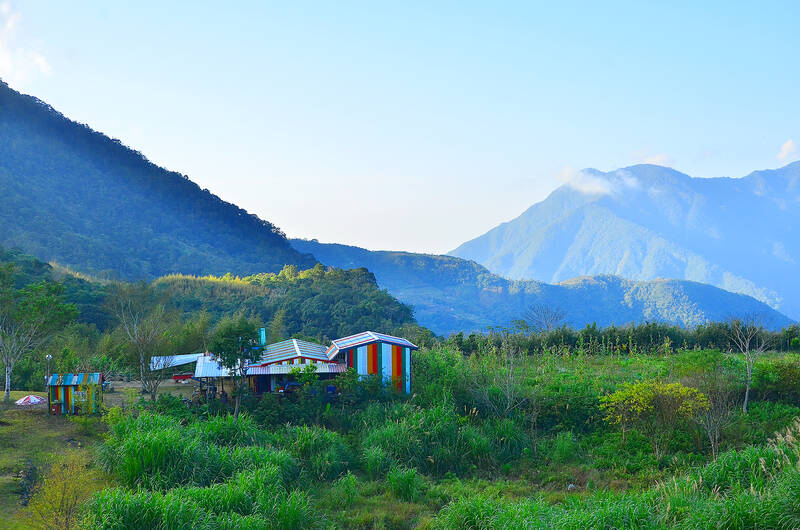
Photo courtesy of the Taroko National Park Administration
The remaining government land, 17-18 percent of the total land area of Taiwan proper, represents nearly a third of all the flat land available for use by the island’s modern urban and rural populations.
Yes, Taiwan is too small, and the government’s control of land is what has shrunk it.
Taiwan has an overall population density of around 650 people per square kilometer. The people are crammed onto the west coast plain, which has much higher density. Now subtract all the sparsely-populated government land from that figure. What is the real density of the populated areas?
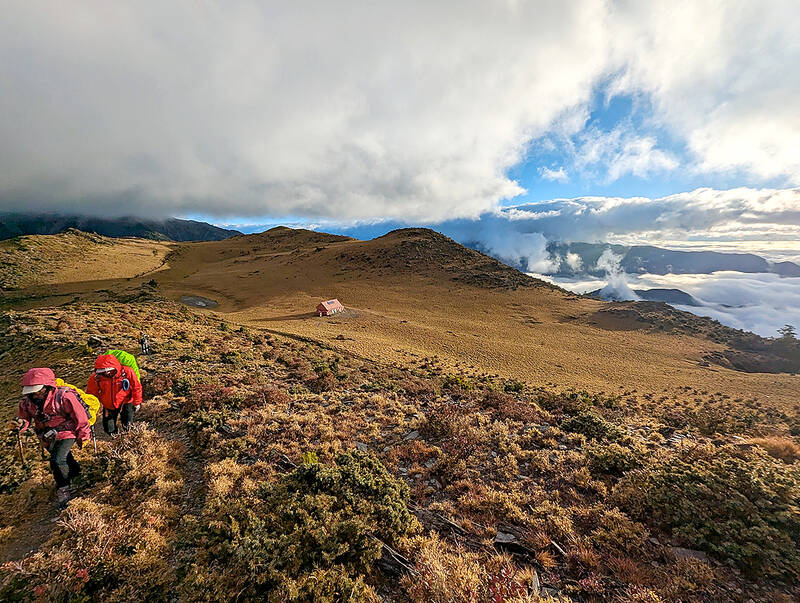
Photo: Wu Liang-yi, Taipei Times
TOO MANY RESTRICTIONS
Why are houses so expensive? One reason is because too much land is locked up under too many restrictions, artificially increasing the population density (which also pushes up prices). Land is kept out of potential development in a variety of ways. It is designated as farm land that has severe restrictions on buildings and building size, an outmoded holdover from the era in which “food security” meant being able to grow everything needed in Taiwan. Or it is outright owned by the government. Even where houses can be built, the government sets limits that determine their shapes and sizes.
The state’s ownership of land thus plays an important but hidden role in the unfolding demographic catastrophe. Developers build apartment buildings that crush birth rates, since land in urban and suburban areas is viewed as too valuable for single-family homes (developer profits being more valuable than children). The inflated population density of the populated areas itself has a separate, negative effect on birth rates. The state takes no action to promote the development of housing estates that would buoy birth rates. Land for single family homes exist, but it is locked up as farmland or state-owned land. Ironically, Taiwan is overbuilt — there are too many residences, but of the wrong kind, if one wants births. Instead of babies, the system produces billionaires.
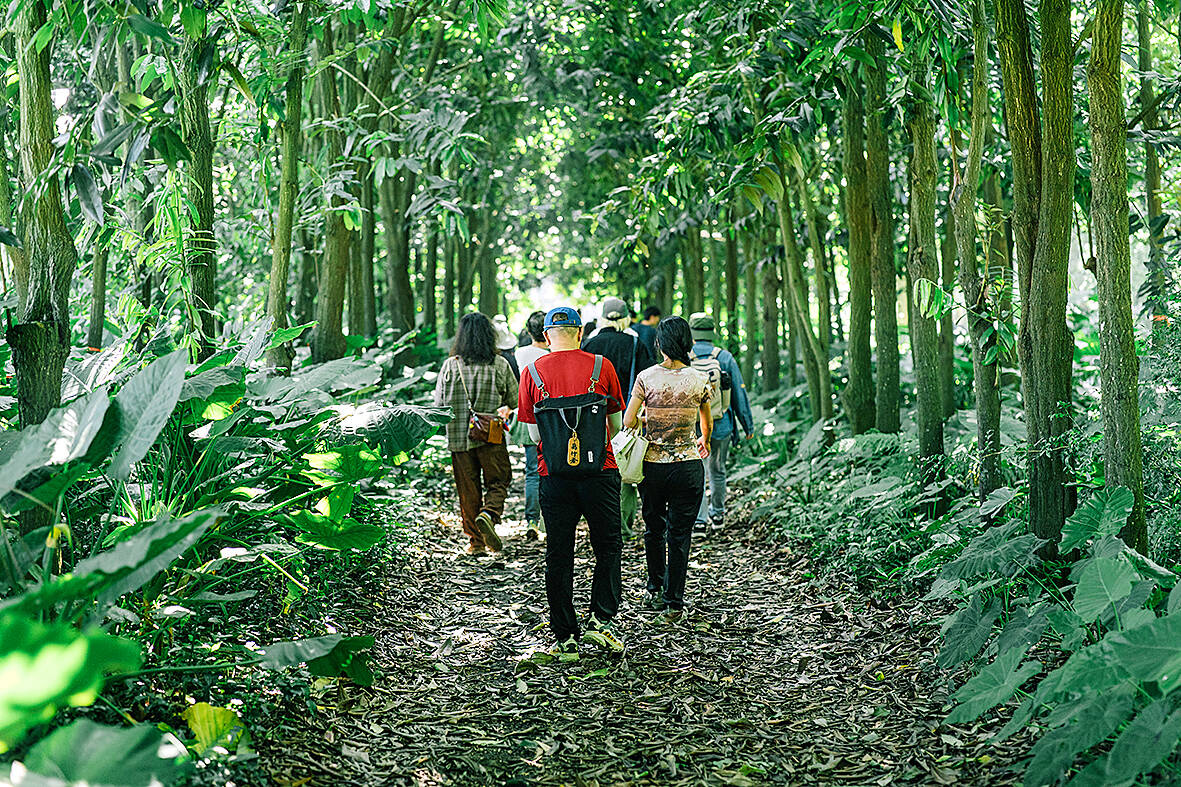
Photo courtesy of the Forestry and Nature Conservation Agency
The land is out there, though. The state has been providing a few hectares here and there for “social housing” (still apartment blocks, not houses).
“By the end of 2019, the appropriation of state-owned land in 34 locations and state-owned housing in 2 locations (10 units covering a total area of 21.35 hectares) and lease 3 locations of state-owned land covering a total area of 4.02 hectares had been completed,” says the NPA Web site.
That sounds like something, until one recalls the state owns 2.2 million hectares of land. A few hectares for social housing is merely a rounding error in the state’s land inventories, just the state sloughing off a few dead skin cells.
The phenomenon of state-owned land is one of the numerous relics of Chinese Nationalist Party (KMT) colonialism that continue to shape contemporary Taiwan. Much of the Republic of China’s state-owned land in the plains was converted from Japanese holdings. In the mountains According to historian John Hayashi, the Japanese took mountain land from the indigenous people, whose traditional agricultural practices they largely viewed as inimical to flood control and modern farming development. The Japanese also took large chunks from the plains indigenous, whom the KMT later declared had assimilated and no longer existed, meaning that the KMT did not have to give back their land.
TRANSITIONAL JUSTICE?
The idea of transitional justice, still elusive after all these years, is largely focused on the political killings and the KMT’s authoritarian security state injustices. For most involved, it has never encompassed the idea of land return, either to the Han settlers or to the indigenous peoples who once owned it (especially mountain land), or the state’s disinvestment of public lands. Yet, the seizure of Japanese state-owned land by the KMT was one of that party’s chief historical crimes. Because few voices call for return of the land, the state does not have to view itself as a colonial landholder. Instead, the state presents itself as holding its lands for the people, when in fact it is withholding them.
Democracy has legitimated the government’s authority over land activity: the same people whose forebears gave their lives for the freedoms of speech and political action nevertheless meekly accept the state’s mandates for the shape of their cookie-cutter homes.
Meanwhile in rural areas the state’s landholdings lead to a constant flow of injustices such as the cruel, thoughtless placement of an incinerator in the major tea producing area around Nantou County’s Mingjian Township (名間) that resulted in longtime farming families being pitilessly booted from the land, as I noted a few weeks ago (“Notes from Central Taiwan: When rational governance incinerates resistance,” March 19, 2026). Land-related injustices are not only injustices of the construction-industrial complex. They are colonial impositions as well. But because they happen far from Taipei, they garner little attention from the self-obsessed capital. That too is a colonial attitude.
Taiwanese, especially pro-KMT Taiwanese, often ask what is the use of transitional justice? Victims and perpetrators are long-dead, after all. Society has moved on, we hear. But the state’s land holdings are not only a great historical injustice, still ongoing, but have powerful effects on the economy and on individual wealth and economic freedom. Companies too: many times over the years I have heard factory owners complain about not having enough land. True enough, because the government shoe-horns 100 percent of the economy into less than half of the nation’s land.
What should be done? Very obviously, the state needs to rid itself of something like half of its overall land holdings, including almost all of its holdings on the plains. Restrictions on farmland development, especially near cities, need to be lifted. The government should mandate that lowland holdings need to be converted to single family homes, especially where there is good access to nearby cities, and that a certain ratio of tree cover be maintained. A moratorium must be placed on apartment construction. Wherever possible, the government needs to return Japanese-era holdings to surviving Pingpu and a large proportion of its mountain lands to the indigenous.
That will reduce population density, increase birth rates and lower home prices.
Why are house prices in Taiwan so high? This column has explored that question from many angles.
At least one answer is: colonialism.
Notes from Central Taiwan is a column written by long-term resident Michael Turton, who provides incisive commentary informed by three decades of living in and writing about his adoptive country. The views expressed here are his own.
Taiwan’s overtaking of South Korea in GDP per capita is not a temporary anomaly, but the result of deeper structural problems in the South Korean economy says Chang Young-chul, the former CEO of Korea Asset Management Corp. Chang says that while it reflects Taiwan’s own gains, it also highlights weakening growth momentum in South Korea. As design and foundry capabilities become more important in the AI era, Seoul risks losing competitiveness if it relies too heavily on memory chips. IMF forecasts showing Taiwan widening its lead over South Korea have fueled debate in Seoul over memory chip dependence, industrial policy and
“China wants to unify with Taiwan at the lowest possible cost, and it currently believes that unification will become easier and less costly as time passes,” wrote Amanda Hsiao (蕭嫣然) and Bonnie Glaser in Foreign Affairs (“Why China Waits”) this month, describing how the People’s Republic of China (PRC) is playing the long game in its quest to seize Taiwan. This has been a favorite claim of many writers over the years, easy to argue because it is so trite. Very obviously, if the PRC isn’t attacking Taiwan, it is waiting. But for what? Hsiao and Glaser’s main point is trivial,
May 18 to May 24 Gathered on Yangtou Mountain (羊頭山) on Dec. 5, 1972, Taiwan’s hiking enthusiasts formally declared the formation of the “100 Peaks Club” (百岳俱樂部) and unveiled the final list of mountains. Famed mountaineer Lin Wen-an (林文安) led this effort for the Chinese Alpine Association (中華山岳協會). Working with other experienced climbers, he chose 100 peaks above 10,000 feet (3,048m) that featured triangulation points and varied in difficulty and character. The list sparked an alpine hiking craze, inspiring many to take up mountaineering and competing to “conquer” the summits. A common misconception is that the 100 Peaks represent Taiwan’s 100 tallest
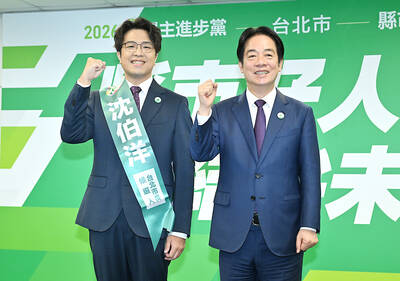
Yesterday, the Democratic Progressive Party (DPP) nominated legislator Puma Shen (沈伯洋) as their Taipei mayoral candidate, the Chinese Nationalist Party (KMT) put their stamp of approval on Wei Ping-cheng (魏平政) as their candidate for Changhua County commissioner and former legislator Tsai Pi-ru (蔡壁如) of the Taiwan People’s Party (TPP) has begun the process to also run in Changhua, though she has not yet been formally nominated. All three news items are bizarre. The DPP has struggled with settling on a Taipei nominee. The only candidate who declared interest was Enoch Wu (吳怡農), but the party seemed determined to nominate anyone


 RSS
RSS