


Yesterday, the Democratic Progressive Party (DPP) nominated legislator Puma Shen (沈伯洋) as their Taipei mayoral candidate, the Chinese Nationalist Party (KMT) put their stamp of approval on Wei Ping-cheng (魏平政) as their candidate for Changhua County commissioner and former legislator Tsai Pi-ru (蔡壁如) of the Taiwan People’s Party (TPP) has begun the process to also run in Changhua, though she has not yet been formally nominated.
All three news items are bizarre.
The DPP has struggled with settling on a Taipei nominee. The only candidate who declared interest was Enoch Wu (吳怡農), but the party seemed determined to nominate anyone but him. Apparently, Shen fit the bill as “anyone but Wu.”
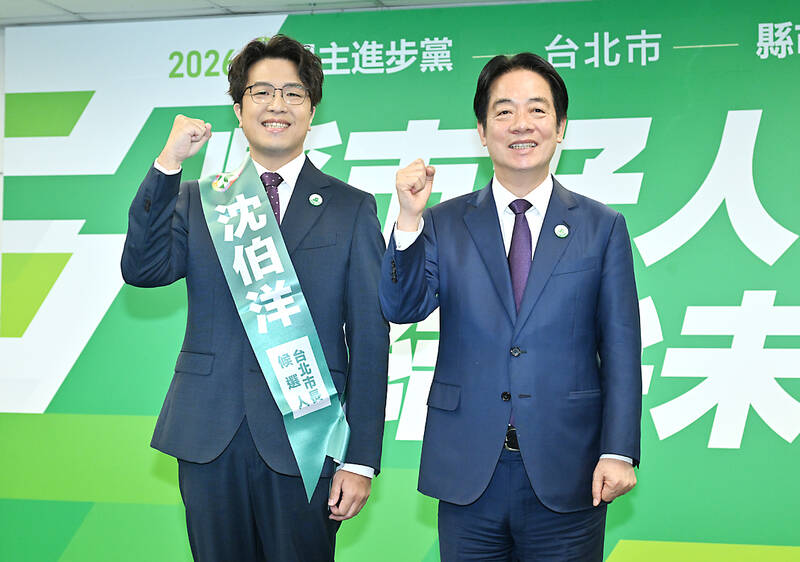
Photo: Tien Yu-hua, Taipei Times
Shen has many accomplishments to be proud of, including cofounding the civil defense organization Kuma Academy (黑熊學院) and his work uncovering Chinese influence operations at Doublethink Lab (台灣民主實驗室). However, he was also a very high-profile supporter of last year’s recall movements to oust KMT lawmakers that all went down in flames.
He is a baffling choice. His background seems almost engineered to turn off moderate voters in KMT-leaning Taipei. He did at least get positive press for cutting his famously unruly mop of a haircut.
The KMT is happy the DPP chose Shen. KMT lawmaker Hsu Chiao-hsin (徐巧芯) expressed her delight by laughingly commenting that this choice would “save the KMT.” She might be right.
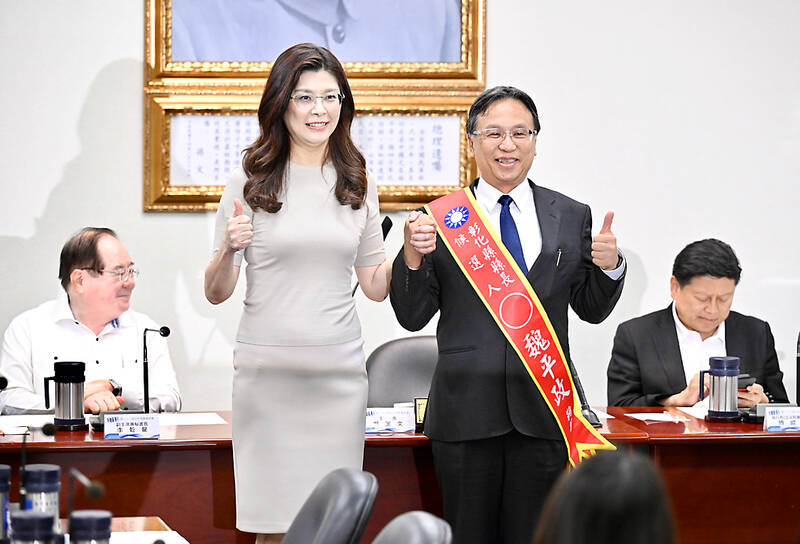
Photo: Peter Lo, Taipei Times
He will be facing off against the KMT’s popular incumbent Chiang Wan-an (蔣萬安), and the colorful character Kuo Hsi (郭璽) of the Taiwan Mahjong Greatest Party.
‘SWING STATE’ CHANGHUA
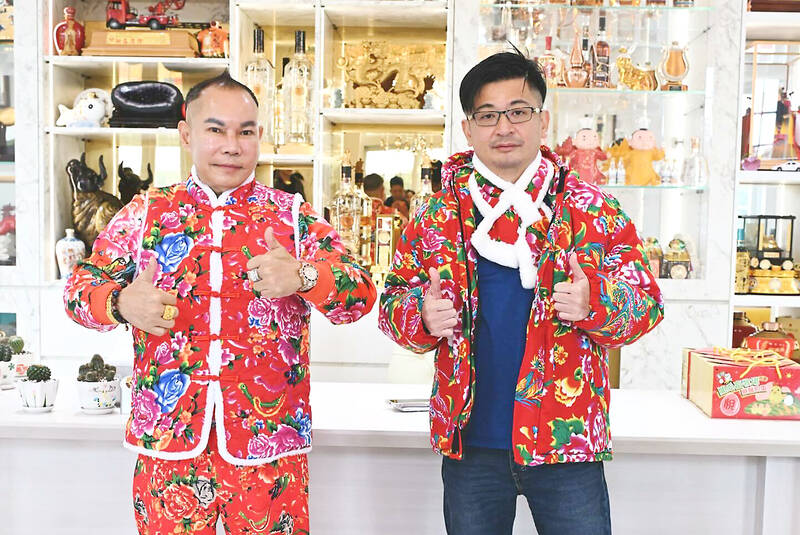
Photo taken from Hsieh Dien-lin’s Facebook page
For all the discord and discomfort the DPP suffered in Taipei, that is nothing compared to what the KMT has gone through in Changhua. It has been a disaster from start to finish, and they may lose the election as a result.
The KMT will struggle mightily with Wei Ping-cheng as their candidate for Changhua County commissioner. He is an absolute nobody; his only notable previous job was as the former chair of the KMT’s evaluation and discipline committee. In 2005, he ran for mayor of Changhua County’s Shetou Township (population just over 40,000) and lost.
Having served two terms, incumbent Wang Hui-mei (王惠美) of the KMT cannot run for re-election. Changhua is categorized as a “swing state” (搖擺州), a term borrowed from American politics to describe a region that could swing either way politically, despite Taiwan not having states.
The DPP has nominated a solid candidate in Chen Su-yueh (陳素月), who has a long history in Changhua politics and has represented her district in eastern Changhua as a lawmaker since winning a byelection in 2015.
In both Changhua and Taichung, the DPP has suffered from what has been dubbed the “one-term curse,” where every time they win, they always fail to win re-election.
Originally, there were three candidates on the KMT side: legislator Hsieh Yi-fong (謝衣鳯) and former vice commissioners Ko Cheng-fang (柯呈枋) and Hung Rong Zhang (洪榮章). In a previous losing primary attempt at a legislative seat, Ko’s followers started a brawl. It is unclear if Hung’s use of China’s Hanyu Pinyin for his given names is a political statement or not, but it often is.
HSIEH CLAN FACTION INTRIGUE
Hsieh was the frontrunner in polling, and all the drama surrounded her. She is from the Hsieh Clan, one of the most powerful KMT patronage factions in the country, often mentioned in the same list as the Yen (顏) Clan’s Taichung Black Faction, the Yunlin Chang (張) Clan and the Hualien Fu (傅) Clan.
Though not as old as the Red and White factions that formed in the early days of KMT rule, the Hsieh clan has been around for at least 44 years. Yi-fong and her brother Hsieh Dien-lin (謝典林) are third-generation politicians.
Among other things, in the first generation, the eldest brother allegedly rose to prominence through gambling and was respectfully referred to by insiders as the “Big Demon King.” His younger brother went into politics and faced the types of legal troubles that often plagued factional politicians of the era, like alleged bid-rigging.
The family is extraordinarily wealthy, and the list of firms and landholdings connected to them and their proxies is long. They are also famously media-savvy, and among their holdings is the local cable company.
The brother, Dien-lin, is a bit of a messy character. He is the county council speaker and for a time was the head of Taiwan’s basketball association, which was plagued with scandals on his watch. He is also known as a drinker and has admitted to making some very controversial social media posts while drunk.
During the 2024 KMT presidential primary, he backed Terry Gou (郭台銘). When Gou was eliminated, Dien-lin quit the KMT, and there were rumors he was considering joining the TPP. In the end, his paperwork to quit the KMT was never processed, so he remains in the party.
Yi-fong’s primary campaign hit a major problem: her own family refused to back her. They decided to concentrate their political capital on keeping Dien-lin as county speaker. Other factions in Changhua made it clear the Hsieh clan would face a revolt if they wanted both the speakership and the county commissioner.
Trying to avoid an ugly split in the party, the KMT tried to entice her with a high-ranking party position, but she refused and insisted on continuing her run.
The two Hsiehs also engaged in a war of words. When Dien-lin conducted a disastrous press interview showing off his huge, garish mansion, it was rumored Yi-fong set him up for this fall.
The other two candidates stood with her in demanding a public opinion polling primary, as the party was conducting in most other places. Party Chair Cheng Li-wun (鄭麗文) refused, under pressure from the Hsieh clan.
Faced with a dilemma where whichever local heavyweight she picked there would be trouble, she opted for the innocuous unknown Wei Ping-cheng. Upon hearing this would be the party’s choice, Yi-fong complained that she needed a “family permission slip” to run.
It is hard to imagine a weaker candidate than Wei, who could not even manage to win the mayorship of tiny Shetou Township.
This has created a potential opening for the TPP.
Tsai Pi-ru is a former lawmaker and is known as the “mother of the TPP” for her role in helping establish the party. In recent years, however, her relationship with party leadership has been rough, and she lost a bid to be party chair in a landslide.
Curiously, after having been in the wilderness for a while, she recently began reappearing at party events in a higher-profile role. It is possible she is back in the good graces of the party brass.
She is not a local, but she has far more electoral and leadership experience than Wei. She also has much higher name recognition. She would be a long shot to beat the DPP’s Chen, but she presents a far more formidable challenge than Wei.
Her application to run has been sent to the Changhua party committee for review, so her run is not yet official. If she is approved, as part of the agreement between the KMT and TPP, there would likely be an opinion poll runoff between her and Wei as to which candidate would represent their alliance.
If Tsai were to represent their alliance, that would be a big relief for Cheng. That way, she would not be responsible for a loss, that would fall on the TPP.
Donovan’s Deep Dives is a regular column by Courtney Donovan Smith (石東文) who writes in-depth analysis on everything about Taiwan’s political scene and geopolitics. Donovan is also the central Taiwan correspondent at ICRT FM100 Radio News, co-publisher of Compass Magazine, co-founder Taiwan Report (report.tw) and former chair of the Taichung American Chamber of Commerce. Follow him on X: @donovan_smith.
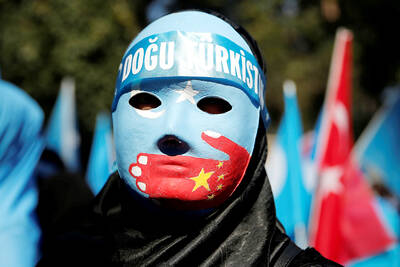
It seems every few days one bumps into one of those “real man” comments in which Taiwan is urged to “face reality” or similar, and “make a deal,” with the speaker implying that soon it will be too late. “Deal” advocates always present themselves as having a superior grip on reality, and the manly ability to make the “hard choice.” Their testosterone-laden language often echoes that of Taiwan sellout advocates. Note that such commentary always specifies a process (“make a deal, work with, make progress”), never the end state of what occupation by a violent authoritarian colonialist state will entail. In
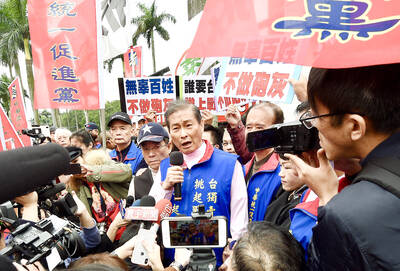
There are shadowy cabals plotting to sell out Taiwan to be annexed by China, by invasion if necessary. Fortunately, they are buffoons. In 2019, former Bamboo Union gangster and founder of the China Unification Promotion Party (CUPP), Chang An-le (張安樂, colorfully known as “White Wolf”), led a protest at the Legislative Yuan against comments made by then-premier Su Tseng-chang (蘇貞昌) that in the event of an attack by China, he would never surrender, but would protect the nation by fighting to the end, even if he only had a broom. Chang had party members bring a wooden casket that they
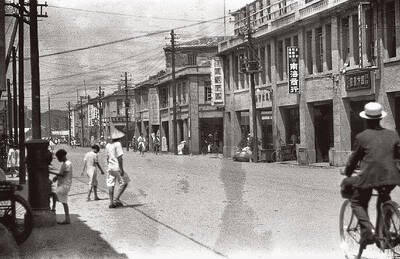
June 1 to June 7 "If all Taiwanese were as afraid of dying as you, then what would happen?” Physician Shih Chiang-nan (施江南) reportedly said this to his wife Chen Chiao-tung (陳焦桐) after she urged him to stop intervening on behalf of Taiwanese soldiers stranded overseas after serving in the Japanese Army during World War II. Shih had clashed with high-ranking officials over the issue, engaged in several heated arguments with Taiwan governor-general Chen Yi (陳儀) and allegedly shouted at general Ko Yuan-fen (柯遠芬), chief of staff of the Taiwan Garrison Command, over

Food prices have often played a major role in Taiwan’s history. The first major wave of migration from China occurred in 1628. A moderate drought, the Ming Dynasty maritime ban that prohibited fishing and trading (intended to reduce piracy) and a temporary tax, conspired to exhaust local resources, leading to famine in Fujian Province. The famed pirate and trader Zheng Zhilong (鄭芝龍), scooped up starving people from Fujian and transported them across the Taiwan Strait, where they settled under the Dutch. Two factors enabled Zheng. First, by 1624 he had settlements around today’s Beigang (北港) in Yunlin County with a small


 RSS
RSS