


June 1 to June 7
"If all Taiwanese were as afraid of dying as you, then what would happen?”
Physician Shih Chiang-nan (施江南) reportedly said this to his wife Chen Chiao-tung (陳焦桐) after she urged him to stop intervening on behalf of Taiwanese soldiers stranded overseas after serving in the Japanese Army during World War II.
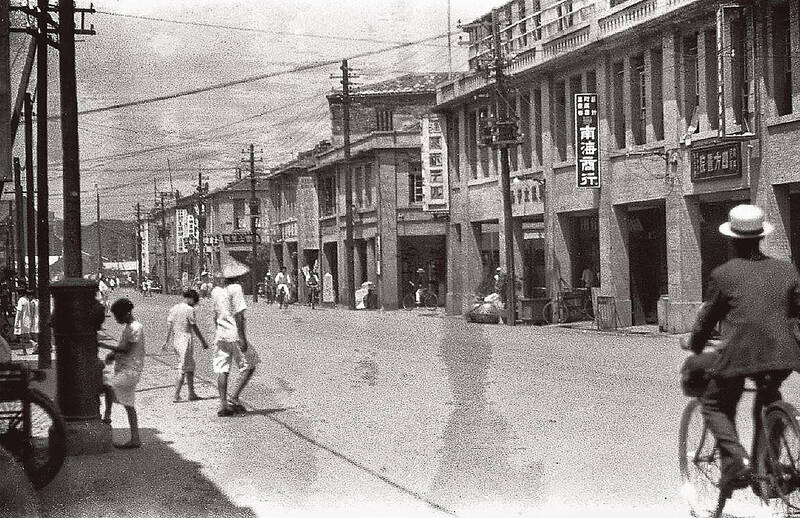
Photo courtesy of Taiwan Institute of Historical Resources Management
Shih had clashed with high-ranking officials over the issue, engaged in several heated arguments with Taiwan governor-general Chen Yi (陳儀) and allegedly shouted at general Ko Yuan-fen (柯遠芬), chief of staff of the Taiwan Garrison Command, over a snide remark. The Chinese Nationalist Party (KMT) largely viewed these soldiers as Japanese collaborators and traitors, offering little sympathy for their plight.
This activism may have led to Shih being taken away on March 11, 1947, during the aftermath of the 228 Incident, an anti-government uprising that was violently suppressed. Others believe his arrest stemmed from his testimony on behalf of a doctor being sued by a military officer after his wife died during childbirth. Or it could just be his broader involvement in public affairs and outspoken views.
He was never seen again, later charged with the common White Terror-era accusation of sedition. Chen raised their five daughters alone and remained silent about the incident for nearly 50 years, until she spoke to historians for the 1995 book, Taipei Nangang 228 Incident (台北南港二二八).
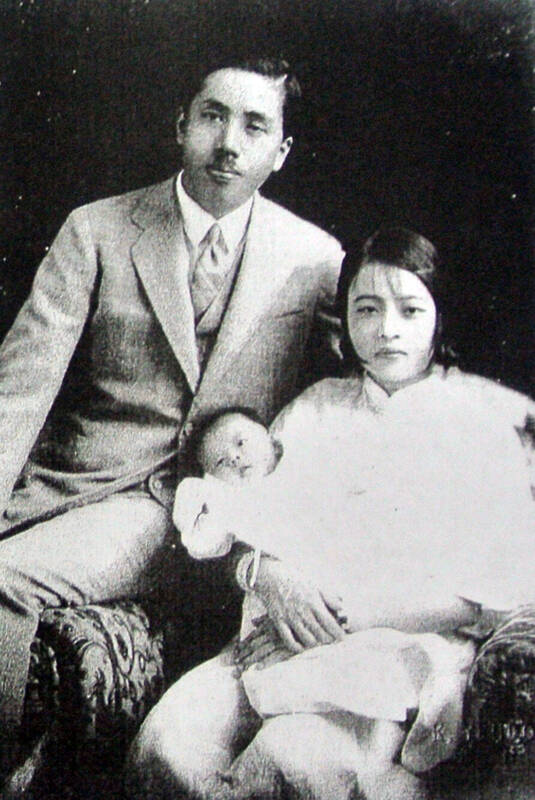
Photo courtesy of National Taiwan Normal University
On Monday, with Shih’s second daughter Shih Shu-chuan (施淑娟) in attendance, his former clinic on Taipei’s Tianshui Street (天水街), Sifang Hospital (四方醫院) was designated a municipal historic relic.
SECOND DOCTOR OF MEDICINE
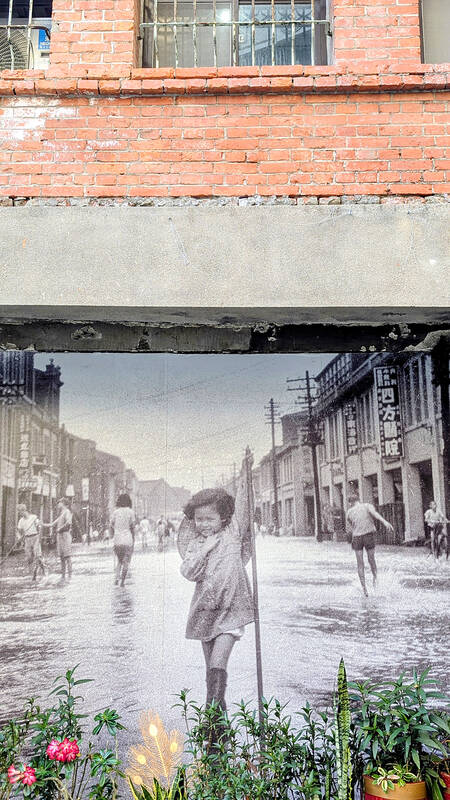
Photo: Han Cheung, Taipei Times
Shih was born in 1902 to a salt trading family in Changhua County’s Lukang Township (鹿港). His name meant “south of the river,” and his four brothers were also named after the cardinal directions. This later inspired the title of his clinic, Sifang Hospital (“Four Directions”). Two of his brothers also became physicians and opened clinics under the same name in different cities.
After graduating from Taiwan Governor-General’s Medical School (today’s National Taiwan University College of Medicine), Shih headed to Tokyo Imperial University to study internal clinical medicine. He graduated in 1930, becoming the second Taiwanese after Tu Tsung-ming (杜聰明) to obtain a Doctor of Medicine degree.
Shih briefly worked in Kyoto before returning to Taiwan to get married and teach at his alma mater. The salary wasn’t enough to support his growing family, so he resigned and opened his own practice in 1935. The clinic was housed in a three-story building that also served as ward and residence. The family often traveled to Yangmingshan, where Shih and nine friends had purchased a villa.
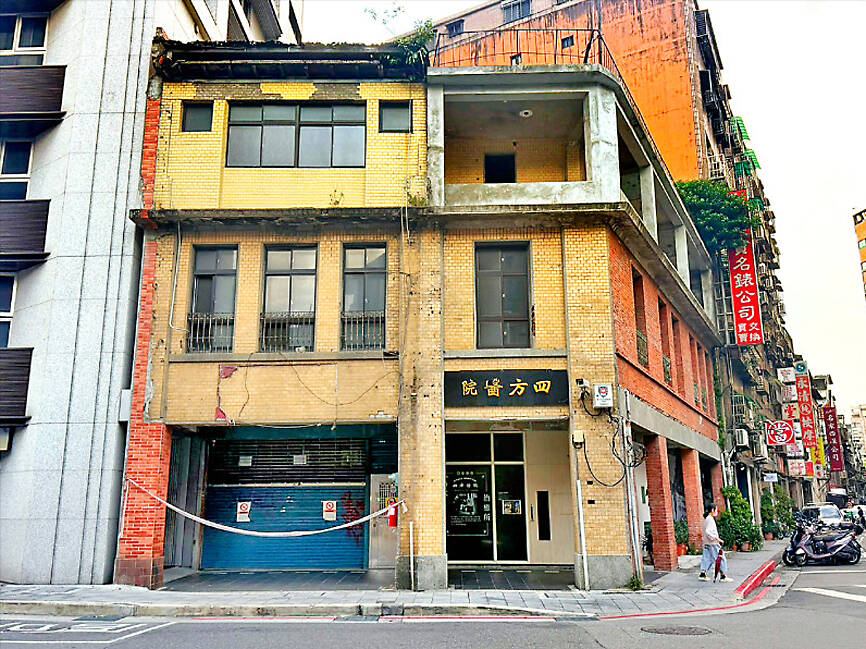
Photo: Sun Wei-jung, Taipei Times
In 1938, Shih was drafted as a medic for the Japanese Army. His friends and family threw a send-off party, but he returned that night without explanation; Chen surmises that he failed his physical.
The authorities wanted to make use of his influence and asked him to join — Chen said he was forced — the Kominka Association, which promoted the assimilation of Taiwanese into Japanese culture, as well as a patriotic physicians association. However, Shih refused to change his surname to a Japanese one.
PUBLIC ADVOCATE
.jpg)
Photo courtesy of Taiwan Institute of Historical Resources Management
Lee Hsiao-feng (李筱峰) writes in the book The Taiwanese Elites who Vanished during the 228 Incident (二二八消失的台灣菁英) that Shih became increasingly active after the Japanese defeat, first serving as deputy head of the Taipei Medical Association. He then launched the Taiwan Provincial Science Promotion Association, dedicated to public health and scientific education.
In March 1946, before the constitution was implemented in Taiwan, Shih started the Commission for the Protection of People’s Freedom, and also participated in the Taiwan Provincial Political Construction Association, where he strongly urged the government to employ Taiwanese talent. To counter the domination of Taiwan’s resources by corporations based in Zhejiang and Jiangsu provinces, he served on the board of the Dagong Enterprise Co (大公企業公司) to protect Taiwanese interests.
Chen said she often told Shih to focus on his patients, as being a good doctor was already contributing to society, but Shih’s public role only expanded.
He soon took up the cause of repatriation of stranded Taiwanese soldiers. With no response from authorities, he and others started an association and worked with the UN to bring them home. To charter ships for the journey, Shih even sold 200 pings of land. The government offered little support for the returnees, and many struggled to survive, prompting him to help start a vocational school that also taught Mandarin.
Another conflict with top military brass arose when a high-ranking officer’s wife died at the Mukae Maternity Hospital due to an adverse reaction to penicillin. The officer sued the hospital, and during the trial Shih testified that such a reaction could not have been predicted beforehand. The hospital was acquitted.
Shortly after the 228 Incident, both the presiding judge, Wu Hung-chi (吳鴻麒), and defense lawyer Liu Jui-han (劉瑞漢) — who worked with Shih on the soldier repatriation issue — disappeared.
THE DISAPPEARANCE
Huang Hui (黃輝), who worked at Taiwan Power Company where Shih was a contract physician, sent him a note offering protection as tensions grew. However, Shih reportedly replied, “There’s no need, I didn’t do anything wrong.”
While Shih was a member of the 228 Incident Settlement Committee, he only attended one meeting due to being bedridden with malaria. On March 11, 1947, someone arrived at the clinic asking to see a doctor. When Chen replied that the doctor was ill, several armed men broke down the door and said that their superiors wanted Shih for questioning. Chen tried to pay them off with many left over from the sale of land, but they refused, barging into Shih’s bedroom and dragging him away.
His eldest daughter Shih Ling-yu (施玲玉), who was 15, pleaded to go with them, but to no avail. Shih’s last words to his family were to place physician Hsu Chiang (許強) in charge of the clinic and to make sure staff continued caring for the patients.
Disappearing on the same day were Shih’s business partners, Lin Mao-sheng (林茂生) of the Minpao newspaper and Chen Hsin (陳炘) of Dagong Enterprise Co.
Chen spent the following years searching for her husband, writing countless petitions to the government with the wives of other victims. In 1948, the family received a response from the military, claiming that Shih had disappeared during the chaos and there was no record of his case.
Patients dwindled afterward, and in 1950 Hsu was arrested and executed for alleged communist ties. Chen sold the clinic and obtained her pharmacist’s license, opening a shop on Taipei’s Ningbo W Road. She encouraged her daughters to study, and all five entered the medical field.
Chen remained distrustful of the government when she was interviewed in 1995, saying she had no interest in participating in 228 Incident-related events.
“It’s all in the past, and they won’t tell the truth as long as we are alive anyway,” she said. “What is the point of (then-president) Lee Teng-hui (李登輝) apologizing? If he doesn’t mean it sincerely, it’s merely a formality.”
Taiwan in Time, a column about Taiwan’s history that is published every Sunday, spotlights important or interesting events around the nation that either have anniversaries this week or are tied to current events.
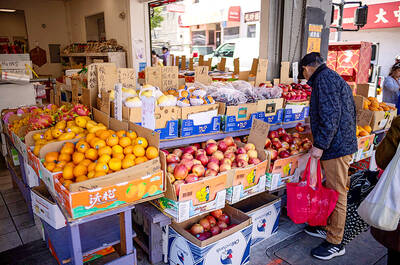
Ajay Verma, a consultant gastroenterologist at Kettering general hospital in Northamptonshire, says our gut is a “complex machine.” “It is constantly providing us with the nutrition we need, initially to grow and develop, and then for us to survive, thrive and repair from injury and illness.” How can we keep it functioning well? Put simply: “Make sure what you put into it is balanced, and that you clear out its waste products adequately,” Verma says. “In a general gastroenterology clinic, the most common conditions we see are irritable bowel syndrome (IBS), gastroesophageal reflux disease, inflammatory bowel disease and constipation,” says Nisha
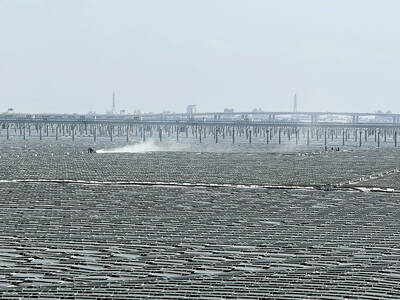
The arithmetic is straightforward and uncomfortable. By the end of 2025, Taiwan had committed itself to a 50-30-20 electricity mix — half natural gas, 30 per cent coal, 20 per cent renewables. The Ministry of Economic Affairs’s (MOEA) own monthly energy reports tell a different story. Natural gas reached 47.8 per cent of generation last year. Coal stood at 35.4 per cent, comfortably above its target ceiling. Renewables came in at 13.1 per cent, well short of the 20 per cent Taipei had pledged a decade earlier. Installed renewable capacity reached roughly half of the 12 gigawatts (GW) the government

Last week US President Donald Trump was asked by a reporter whether he would speak on the phone to the President of Taiwan. “l’ll speak to him. I speak to everybody. We have that situation very well in hand,” Trump said. This marked the second time in a couple of weeks he had said he would talk to the President of Taiwan. In 2016 he famously took a call from then-president Tsai Ing-wen (蔡英文), when he was president-elect. Despite warnings that the apocalypse was nigh because of a phone call, the world quickly forgot about the conversation between two democratically-elected presidents.
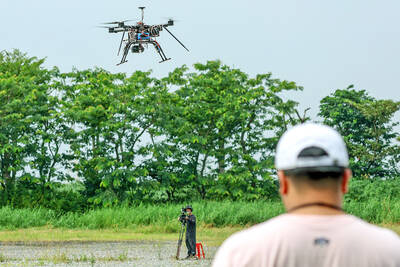
Taiwan’s drone exports are taking off, fuelled by the war in Ukraine, as Taiwanese companies seek a stake in the fast-growing global market for unmanned aerial vehicles (UAV). Low-cost drones used for reconnaissance and strikes are in high demand as governments around the world boost defense spending in the face of intensifying conflicts. A relative new player in the increasingly competitive industry, Taiwan’s pitch is to be an “Asian hub” for the production of UAVs and components free of Chinese materials, or “non-red.” That means its UAVs can be up to three times more expensive than their Chinese competitors, like the world’s biggest


 RSS
RSS