


On Monday morning, in quick succession, the Chinese Communist Party (CCP) and the Chinese Nationalist Party (KMT) released statements announcing “that the Central Committee of the Communist Party of China and General Secretary Xi Jinping (習近平) have invited KMT Chairwoman Cheng Li-wun (鄭麗文) to lead a delegation on a visit to the mainland” as the KMT’s press release worded it.
The KMT’s press release added “Chairwoman Cheng expressed her gratitude for the invitation and has gladly accepted it.” Beijing’s official Xinhua news release described Song Tao (宋濤), head of the Taiwan Work Office of the CCP Central Committee, as saying: “that since taking office, Cheng has expressed her willingness to visit the mainland on multiple occasions, and that the invitation was extended to promote the relations between the CPC [aka CCP] and the KMT and the peaceful development of cross-Strait relations.”
At 11am, Cheng held a hastily organized press conference. The short notice meant it was poorly attended by both the press and, as a journalist present noted to me, also by KMT officials — only vice chairmen Chang Jung-kung (張榮恭) and Hsiao Hsu-tsen (蕭旭岑) joined her. Cheng was only asked a handful of questions, but the party is expecting a big press turnout at the KMT’s upcoming regular Central Standing Committee meeting.
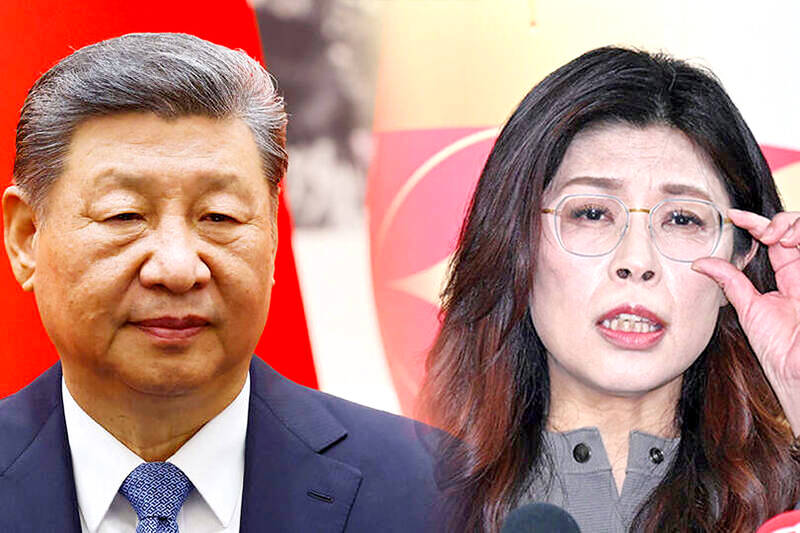
Photo: TT file photo
At this point, there are far more questions than answers about her itinerary and plans. The original announcement stated that she would be visiting Jiangsu, Shanghai and Beijing, but a visit to the Sun Yat-sen Mausoleum in Nanjing has since been added.
There is as yet no word on who Cheng will be meeting, but the KMT has promised: “Further details regarding subsequent arrangements will be announced once finalized.”
Alarm bells should be ringing. It appears that the KMT was caught off guard at the suddenness of the invitation, despite Cheng having dispatched delegations that met with Song previously.
It is hard to imagine her predecessors as party chair accepting and agreeing so hastily without prior negotiations on who they would meet, and where they would be going. This leaves the KMT subject to the whims of whatever the CCP offers.
That gives the CCP dominance and means Cheng and the KMT cannot adequately prepare and have given away much of their leverage.
This was vividly demonstrated when the KMT Culture and Communications Committee Director stated that if media outlets need to conduct interviews, they should apply directly to the CCP’s Taiwan Affairs Office. Unlike in the past, the media will not accompany the KMT for interviews, handing authority over to the CCP on how this trip will be portrayed in the media.
That is a potential public relations disaster for the KMT.
DREAMS OF PEACE
Cheng has repeatedly expressed her desire to meet with Xi, followed by a trip to the US, all by the end of June. On Monday, Cheng expressed hope that this trip would lay a solid first step toward enduring and sustainable peace across the Strait.
Though less specific on the timeline, she intends to present to the Taiwanese public a “framework for peace” ahead of the 2028 elections, if not earlier. She hopes to demonstrate to both the people of Taiwan and the international community that cross-strait relations are not destined for war, nor do they require military confrontation.
She is confident that she can both negotiate such a framework and convince the electorate to get behind it and vote for it. She stated: “Peace across the Strait is not a unilateral expectation of Taiwan alone, but also a shared aspiration from the mainland and Beijing at the highest level.”
She also stated she is willing to work toward cross-strait peace, regional stability and even contribute to global peace, so that the world can feel reassured and no longer fear the outbreak of conflict in the Strait.
Many in her own party are skeptical. The CCP would demand concessions that few Taiwanese would be willing to accept. Anyone with knowledge of the KMT’s own history with the CCP knows that their word is not to be trusted unless it is in the latter’s own interests.
Cheng is known for her perseverance and drive and appears not only convinced she can get an acceptable framework, but that Taiwanese will see it her way in the end and be “proud to be Chinese.”
She has also said that she feels “immense goodwill and sincerity” from Beijing, which begs the question: based on what?
For her plan to work, she needs Xi’s support, and for that she needs to meet him. Despite his name being on the invitation to visit, there has so far been no confirmation of a meeting.
The CCP is well aware of her hopes and aspirations and will demand concessions in exchange. Beijing will have known exactly what they want from her when issuing the invitation.
The CCP has the initiative, and the compressed timeline has left Cheng with little option but to either accept their demands or lose the chance to have the meeting as the climax of the trip that she has pinned so much on personally and politically.
WHAT BEIJING WANTS
Cheng at her press conference emphasized that the visit will adhere strictly — “not one inch more, not one inch less” — to the KMT’s established policy of “upholding the 1992 consensus and opposing Taiwan independence.” In her formulation, opposition to Taiwan independence helps avert war, while the “1992 consensus” enables peace.
The catch is that, as she herself notes, those have already been formally written into the KMT party charter.
Very likely, the CCP feels it is in a position to demand concessions beyond those two formulas in exchange for a Xi meeting. Cheng has boxed herself into a corner with few cards to play, leaving her in a “take it or leave it” situation.
If she does give them more public concessions, that opens a Pandora’s box of potential problems for her party in an election year.
According to reporting in the Liberty Times (Taipei Times’ sister newspaper), Beijing has already demanded private concessions, including on blocking defense spending. Cheng has denied this and has sued the Liberty Times.
It was after this that she backed the KMT’s NT$380 billion “+N” special military budget plan, likely in a bid to dispel suspicions. It did not, as it is a tiny fraction of the government’s proposed NT$1.25 trillion plan that is being openly backed by the US — and it ties up in bureaucratic knots any future promises of spending.
There is also speculation that one reason for the abrupt invitation may be related to the upcoming meeting between Xi and US President Donald Trump.
There are concerns that Xi will pressure Trump to change the carefully calibrated, nuanced diplomatic language that the US has used for decades on Taiwan’s sovereignty. They may be calculating that Trump does not understand or care about those nuances and will be willing to make a deal in exchange for concessions on more short-term priorities.
Whether or not such a strategy by Beijing would work with Trump is anyone’s guess, but it is very possible that they hope to use Cheng’s trip as part of their case. For example, by claiming the Taiwanese want “reunification” and therefore the US might as well make a strong commitment against “Taiwan independence.”
If Cheng gives them the desired propaganda tools to make such a case, she will be widely blamed, especially if Trump does give the CCP some concessions on Taiwan.
That would also put her goal of world peace even further out of reach.
Donovan’s Deep Dives is a regular column by Courtney Donovan Smith (石東文) who writes in-depth analysis on everything about Taiwan’s political scene and geopolitics. Donovan is also the central Taiwan correspondent at ICRT FM100 Radio News, co-publisher of Compass Magazine, co-founder Taiwan Report (report.tw) and former chair of the Taichung American Chamber of Commerce. Follow him on X: @donovan_smith.
“China wants to unify with Taiwan at the lowest possible cost, and it currently believes that unification will become easier and less costly as time passes,” wrote Amanda Hsiao (蕭嫣然) and Bonnie Glaser in Foreign Affairs (“Why China Waits”) this month, describing how the People’s Republic of China (PRC) is playing the long game in its quest to seize Taiwan. This has been a favorite claim of many writers over the years, easy to argue because it is so trite. Very obviously, if the PRC isn’t attacking Taiwan, it is waiting. But for what? Hsiao and Glaser’s main point is trivial,
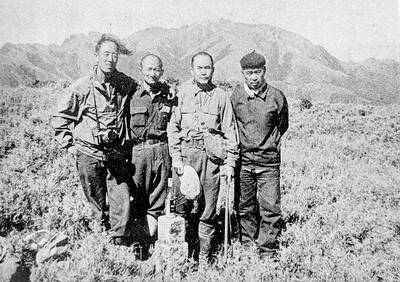
May 18 to May 24 Gathered on Yangtou Mountain (羊頭山) on Dec. 5, 1972, Taiwan’s hiking enthusiasts formally declared the formation of the “100 Peaks Club” (百岳俱樂部) and unveiled the final list of mountains. Famed mountaineer Lin Wen-an (林文安) led this effort for the Chinese Alpine Association (中華山岳協會). Working with other experienced climbers, he chose 100 peaks above 10,000 feet (3,048m) that featured triangulation points and varied in difficulty and character. The list sparked an alpine hiking craze, inspiring many to take up mountaineering and competing to “conquer” the summits. A common misconception is that the 100 Peaks represent Taiwan’s 100 tallest

Yesterday, the Democratic Progressive Party (DPP) nominated legislator Puma Shen (沈伯洋) as their Taipei mayoral candidate, the Chinese Nationalist Party (KMT) put their stamp of approval on Wei Ping-cheng (魏平政) as their candidate for Changhua County commissioner and former legislator Tsai Pi-ru (蔡壁如) of the Taiwan People’s Party (TPP) has begun the process to also run in Changhua, though she has not yet been formally nominated. All three news items are bizarre. The DPP has struggled with settling on a Taipei nominee. The only candidate who declared interest was Enoch Wu (吳怡農), but the party seemed determined to nominate anyone
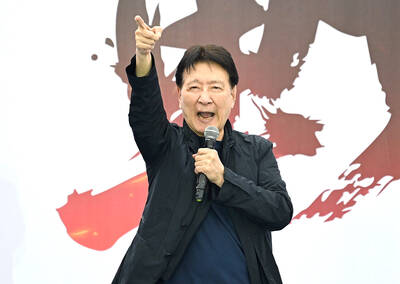
In a sudden move last week, opposition lawmakers of the Chinese Nationalist Party (KMT) and Taiwan People’s Party (TPP) passed a NT$780 billion special defense budget as a preemptive measure to stop either Chinese leader Xi Jinping (習近平) or US President Donald Trump from blocking US arms sales to Taiwan at their summit in Beijing, said KMT heavyweight Jaw Shaw-kong (趙少康), speaking to the Taipei Foreign Correspondents Club on Wednesday night in Taipei. The 76-year-old Jaw, a political talk show host who ran as the KMT’s vice presidential candidate in 2024, says that he personally brokered the deal to resolve


 RSS
RSS