


A few weeks ago Marilyn Devonish buttonholed a stranger to compliment her outfit. It was a natty, color-matched mauve jacket and pumps, but that wasn’t the point. Dashing home from a shopping trip, Devonish had noticed the woman’s harried look and slow, defeated gait.
“The weight of the world was on her shoulders, but she was dressed in such a lovely way and I just had to tell her that,” Devonish explains.
But the subject of her attention was taken aback.
Photo: AP
“Just minutes earlier she had caught her reflection in a shop window and told herself how bad she looked,” she says.
‘ANGEL OF GOOD DEEDS
Devonish, 54, is a stealth “angel of good deeds” who suffered depression into her own early adulthood and sees it as her calling to bring some sunshine into people’s days with a nice word about their shoes, hairstyle, jewelery or smile. Compliments bestowed, she melts back into the city streets, unnamed and untraceable.
Photo: AP
Devonish, who also enjoys anonymously returning neighbors’ errant wheelie bins and holding doors open for strangers, says: “The point is not to be known for your good deeds — though, of course, I’m talking about them now — but to do a little something for someone else to make the world a slightly nicer place in that moment.”
It’s a life philosophy which centers on radiating “human kindness and gratitude.”
Voluntary giving — be it a donation to charity or a kind word or deed — is one of the fastest and most reliable ways to improve a giver’s own mood and wellbeing. Many scientific papers have shown that it stimulates activity in brain regions associated with pleasure and reward, reduces physiological stress levels and leads, when giving becomes a habit, to long-term improvements in the life satisfaction of those who do good deeds.
Photo: EPA-EFE
In the past few years, though, a new breed of performative Samaritan has strode on to social media, toting wads of readies. They include Primenaz, a TikTok user who drops US$20 bills at strangers’ feet and gifts his targets extra cash if they attempt to return them; and Sydney-based Tom, who films himself hovering behind unsuspecting shoppers at the till as he pays their checkout bills. It’s a broadcasted form of giving, which often features the street homeless as the unwitting recipients of money or gifts, that has attracted criticism for repositioning acts of kindness as a form of humanitarian drama.
However, a 2015 study found that we might want to refrain from becoming charitable braggards. The study looked into whether publicized or unpublicized donations to charitable causes lead to greater happiness and discovered that unpublicized gifts brought the bearer a 16 percent greater sense of happiness. The Beijing University researchers hypothesized that this boon comes from the fact that showy gifting makes a donor doubt their own motivations. Are we giving to others, for example, to enhance our reputation or to genuinely do good?
Vic Wood finds TikTok’s loadsamoney random kindness actors “a bit crass, to say the least”. Wood, 43 and based in Sussex, subscribes to the “pay it forward” philosophy — a moment that has its roots in early 20th-century America.
Photo: AFP
Payitforwardism imagines that the happy recipient of a good deed will be prompted to go on and perform a good deed for a third other and so on in a global chain of kindness. The term was coined by southern anti-racist reformer Lily Hardy Hammond in her 1916 memoir In the Garden of Delight, as a comment on the inter-generational devotion parent figures exhibit towards their children.
“I never repaid Great Aunt Letitia’s love to her, any more than she repaid her mother’s,” she wrote. “You don’t pay love back, you pay it forward.”
SECRECY IS KEY
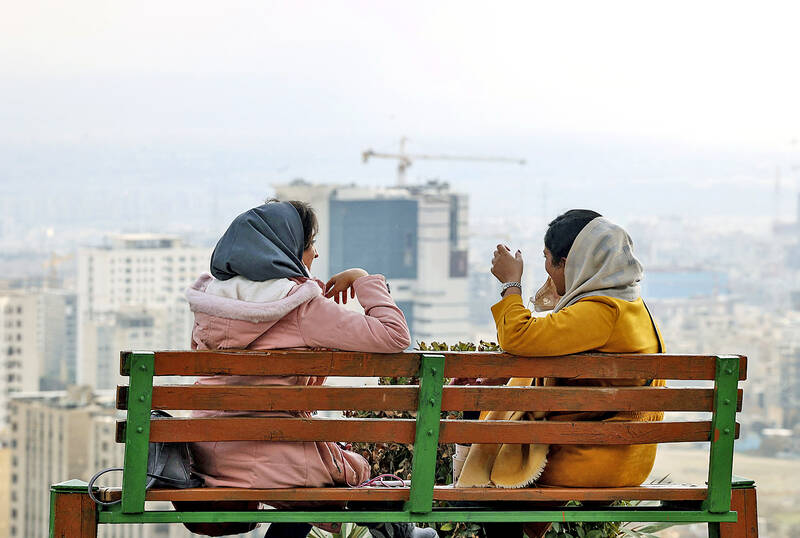
Photo: AFP
For Wood, who routinely leaves money for fares taped to bus stops and bunches of flowers accompanied by heartwarming notes on park benches around her Sussex village, secrecy is both the key to being a good Samaritan, and much of its art.
“I would love to pay for someone’s shopping by tapping my card on the payment machine, but it’s soooo hard not to be caught in the act,” she says.
For Wood’s 40th birthday she undertook to perform 40 anonymous good deeds in 40 days, encouraging her friends to do the same rather than buying her gifts.
“It was a lot of fun, but I really had to scratch my head to think of things,” she recalls.
She bought multiple cups of coffee for people behind her in cafe queues and money was stuck to bus stops across the country by Wood’s friends to commemorate her birthday.
“Even small gestures, I really recommend them,” she says. “I don’t know how to explain it other than it makes my heart feel really full.”
The power of anonymous good deeds has long been understood by many cultures. An Islamic hadith has it that Allah will “grant shade” to “the man who gives in charity and conceals it to such an extent that the left hand does not know what the right has given.”
Meanwhile, dana (giving) is an important part of Hindu’s dharma, or religious duty, and not necessarily in pursuit of a karmic quid pro quo. And the gospel according to Matthew schools Christians: “Do not your good works in public,” avoiding, it says “the trumpet fanfare.”
Maimonides, a 12th-century Sephardic sage, taught that charity could be categorized into eight groupings, arranged by order of virtue. “Double blind” charity, in which neither the giver nor the receiver knows each other’s identity, occupies the second slot, beneath proffering others an ongoing source of material income, or lifelong vocation. Former Girl Guides and Boy Scouts might, for their part, recall Brown Owl’s injunctions to do a humble daily “good turn.”
One 46-year-old woman in northwest London — who asked to be known only as Kate — sees herself as an example of the way the effects of a secret good deed can ripple through the years. In 2017, Kate posted on Twitter that she was scouring charity shops for gifts for her then eight-year-old son’s Christmas stocking.
“I was just chatting offhand about how pleased I was that he was quite chilled and not into stuff like video game consoles as I had no cash that year,” she says.
A few days later, Kate received a notification to visit the Brent Cross branch of John Lewis where a parcel was waiting for her. She arrived to find a large black bag containing a “massive” Lego set, a craft set, a luxury Christmas hamper and several bottles of wine.
“It was a literal sack of gifts,” Kate recalls, “as if Santa had come to life.”
In the intervening years, during which she learned her secret festive benefactor was one of her younger brother’s school friends, Kate has repaid the favor that “totally blew my mind as a skint single mum” by donating gifts to teenagers in her local authority’s care system.
“People always forget about older kids in these Christmas drives, so I wrap up boxes of Lynx and chocolates and put cash in them, as well as a note telling them how utterly cool they are,” she says. “The cash is frowned upon, by the way, but anyone who knows a teenager knows they have their own ideas about what they want to buy.”
WHY GIVE?
Cassandra Chapman studies the motivations behind charitable gift-giving at the University of Queensland Business School. She says we are driven to give “prosocially” (for the benefit of others or society) for complex reasons and often with a preference towards local recipients and causes (the charity adage “Give where you live,” echoing our instinctive preferences).
“Some of us donate for reputation-seeking reasons,” Chapman explains.
For many, though, it’s “for a mixture of motivations, including human empathy, sharing an identity with the beneficiary and having experienced suffering ourselves.”
Therapist Janey Holliday, 45, is based in Devon and uses anonymous good deeds as a therapeutic methodology with her group-coaching clients after taking to the habit herself 10 years ago as a means of overcoming her anxiety around money scarcity.
Holliday, a solo mum of three, tends to focus on helping fellow mothers, pulling off the trick of secretly paying for their shopping at supermarket tills and regularly slipping cash into people’s pockets. She allocates 5 percent of her monthly income for this purpose.
“I’ll always make sure I have some cash on me and I sit next to someone on a bench who I think might be in need and I just pop a note in there,” she says.
These days, Holliday advises her coaching clients to boost their own sense of self-worth by performing small good deeds as a daily practice.
“Time and again my clients say that they feel like their lives aren’t worthwhile,” she says.
The antidote to this sense of existential worthlessness, in Holliday’s view, is to become a good deed-doer — smiling at a glum-looking retail worker, for example, or complimenting someone’s shoes.
“It creates so much more good in the world, and a much greater sense of joy, than the things many people think they should pursue — being super-successful, say, or having pots of money.”

“China wants to unify with Taiwan at the lowest possible cost, and it currently believes that unification will become easier and less costly as time passes,” wrote Amanda Hsiao (蕭嫣然) and Bonnie Glaser in Foreign Affairs (“Why China Waits”) this month, describing how the People’s Republic of China (PRC) is playing the long game in its quest to seize Taiwan. This has been a favorite claim of many writers over the years, easy to argue because it is so trite. Very obviously, if the PRC isn’t attacking Taiwan, it is waiting. But for what? Hsiao and Glaser’s main point is trivial,
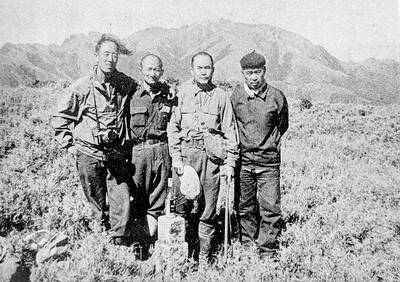
May 18 to May 24 Gathered on Yangtou Mountain (羊頭山) on Dec. 5, 1972, Taiwan’s hiking enthusiasts formally declared the formation of the “100 Peaks Club” (百岳俱樂部) and unveiled the final list of mountains. Famed mountaineer Lin Wen-an (林文安) led this effort for the Chinese Alpine Association (中華山岳協會). Working with other experienced climbers, he chose 100 peaks above 10,000 feet (3,048m) that featured triangulation points and varied in difficulty and character. The list sparked an alpine hiking craze, inspiring many to take up mountaineering and competing to “conquer” the summits. A common misconception is that the 100 Peaks represent Taiwan’s 100 tallest

Taiwan’s overtaking of South Korea in GDP per capita is not a temporary anomaly, but the result of deeper structural problems in the South Korean economy says Chang Young-chul, the former CEO of Korea Asset Management Corp. Chang says that while it reflects Taiwan’s own gains, it also highlights weakening growth momentum in South Korea. As design and foundry capabilities become more important in the AI era, Seoul risks losing competitiveness if it relies too heavily on memory chips. IMF forecasts showing Taiwan widening its lead over South Korea have fueled debate in Seoul over memory chip dependence, industrial policy and

Yesterday, the Democratic Progressive Party (DPP) nominated legislator Puma Shen (沈伯洋) as their Taipei mayoral candidate, the Chinese Nationalist Party (KMT) put their stamp of approval on Wei Ping-cheng (魏平政) as their candidate for Changhua County commissioner and former legislator Tsai Pi-ru (蔡壁如) of the Taiwan People’s Party (TPP) has begun the process to also run in Changhua, though she has not yet been formally nominated. All three news items are bizarre. The DPP has struggled with settling on a Taipei nominee. The only candidate who declared interest was Enoch Wu (吳怡農), but the party seemed determined to nominate anyone


 RSS
RSS