


The National Theater Concert Hall (NTCH) has pulled together an eclectic program of 22 productions, with a total of 68 shows, for this year’s Taiwan International Festival of Arts, grouped under the theme Unlimited Classics Around the Globe.
The eight theater pieces, six dance shows and eight concerts or recitals feature homegrown troupes such as Tang Mai Yun Taiwanese Opera Company (唐美雲歌仔戲團), ? Q Theatre (二分之一Q劇場), WCDance (林文中舞團), Dance Forum Taipei (舞蹈空間) and the National Symphony Orchestra (國家交響樂團) and acclaimed companies such as Cheek by Jowl from the UK, the Switzerland-based Compania Finzi Pasca, Ballet Flamenco Eva Yerbabuena from Spain and the Budapest Festival Orchestra, Canadian pianist Angela Hewitt as well as renowned Czech choreographer Jiri Kylian. In all, 22 countries will be represented.
There seems to be at least one show with something to appeal to everyone, whether you are a fan of Taiwanese folk singer and activist Kimbo (胡德夫), who is at the Concert Hall on Feb. 21 or a classical music lover — be it Chinese, Indian or Western — there is When Bianzhong Meets Organ (當編鐘遇上管風琴) on Feb. 28, The Music of India (來自印度的天籟) on March 22 and A Musical Feast (英倫盛宴) by National Symphony Orchestra (國家交響樂團) on March 28.
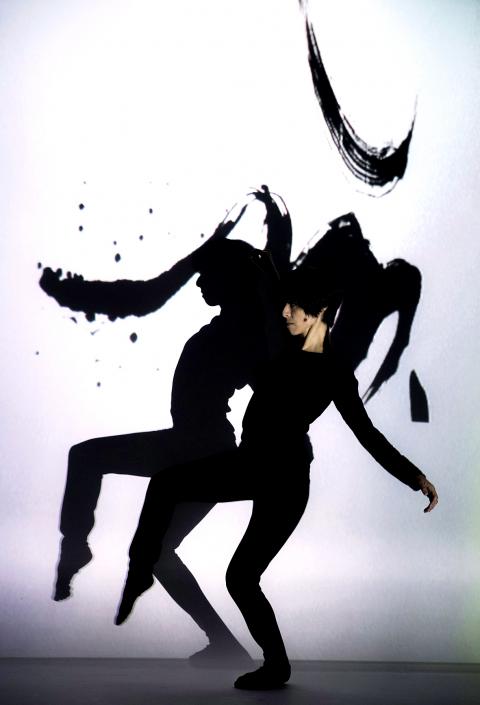
Photo courtesy of the National Theater Concert Hall
There are modern dance collaborations, a Kun opera/installation piece, Taiwanese puppet theater and a circus-style show that pays homage to Russian writer Anton Chekhov — Finzi Pasca’s DONKA — A Letter to Chekhov (華麗夢境 — 給契訶夫的一封信) at the National Theater from March 14 to March 16.
Given that the NTCH’s marketing team began promoting the festival even before tickets went on sale in November last year, plus the fame of some performers and the uniqueness of the productions, a few shows have already sold out. These include a NTCH commissioned play based on author Kenneth Pai’s (白先勇) 1983 novel Crystal Boys (孽子); calligrapher Grace Tong’s (董陽孜) collaboration with choreographer Bulareyaung Pagarlava and five other artists, Sao (騷); Josef Najd and CCn d’Orleans’ Woyzeck, ou l’ebauche du vertige (伍采克); and Y2D Production and Chameleon Production’s Leo (李奧先生幻想曲).
That tickets for the last three went so fast is no surprise; they are all being staged in the small Experimental Theater, which seats about 150 to 200 people depending on the staging configurations.
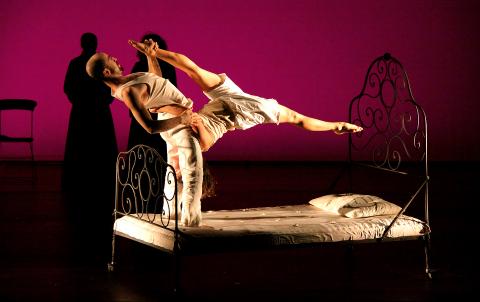
Photo courtesy of the National Theater Concert Hall
However, Crystal Boys selling out the National Theater so quickly is a tribute to both to Pai and director Tsao Jui-yuan (曹瑞原) and his cast. The show looks like it will be the NTCH’s most successful special TIFA commission to date.
If you missed buying a ticket for Leo, you still have a chance to see the show, although you have to go to Chiayi. The show will be at the Chiayi Performing Arts Center on March 18; tickets are just NT$400.
Ticket prices range from NT$500 up to NT$6,000 depending on whether the show is in the main halls or the two smaller venues and whether it is a homegrown production or an import. Seats are going quickly for several other productions, such as Yerbabuena’s Lluvia at the National Theater from March 28 to March 30 — there are only a few tickets left in the NT$500 (student) and NT$700 ranges.
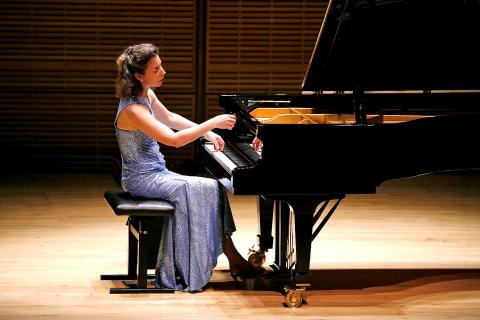
Photo courtesy of the National Theater Concert Hall
Le Theatre de Aimer’s Les Ecorches (愛情剖面) is a play based on two other plays: French playwright Pierre de Marivaux’s Disputes (1744) and Brition Sarah Kane’s 1998 Crave. Though written more than 250 years apart, they both focus on the essence of cruelty in life. The 60-minute-long Les Ecorches will be performed in Mandarin at the Experimental Theater from Feb. 28 to March 2. Tickets are NT$600 and the Saturday matinee is sold out.
Seats run from NT$500 to NT$3,200 for Tang Mai Yun Taiwanese Opera Company’s (唐美雲歌仔戲團) innovative I See You, Mr. Fox (狐公子綺譚) at the National Theater from March 6 to March 8. The top seats for Sunday’s matinee are already gone. The production turns the classic Chinese legends about fox fairies that bewitch young men on its head by featuring a male fox that seduces married women.
Both the Saturday and Sunday matinees of ? Q Theatre’s Romance of the Red Chamber(風月) in the Experimental Theater from March 28 to March 30 are sold out, but some tickets (NT$600) are still left for the evening shows.
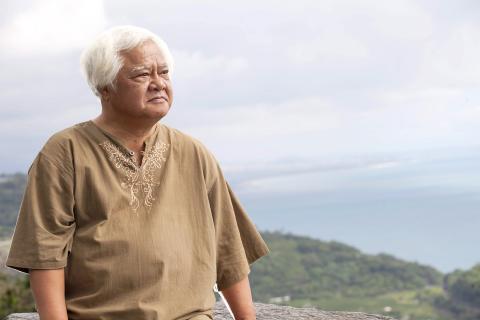
Photo courtesy of the National Theater Concert Hall
Shows in the music section are moving a bit slower, although only a few NT$400 seats are left for Lo Cor de la Plana in Recital Hal1 on March 7 and March 8, and the cheaper tickets are all gone for the Budapest Festival Orchestra’s appearances on March 14 and March 15 — the tickets left range from NT$2,400 to NT$6,000.
For a complete rundown on the festival, the NTCH Web site has a program page both in Chinese (tifa.ntch.edu.tw/2014/tw/) and English (tifa.ntch.edu.tw/2014/en/), that includes details such as the languages used in the shows, running times and warnings for things like partial nudity or smoke effects. Tickets can be purchased at the NTCH box offices, online at www.artsticket.com.tw or at 7-Eleven ibon and other convenience chain store kiosks.
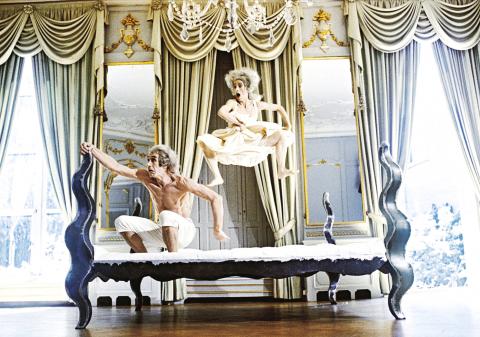
Photo courtesy of the National Theater Concert Hall
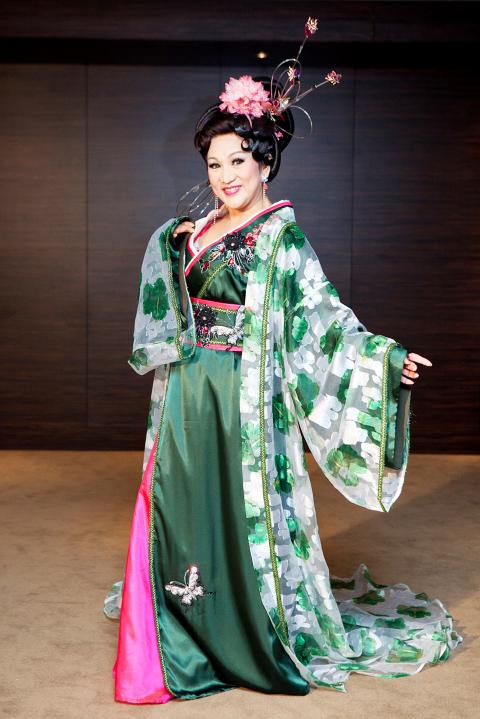
Photo courtesy of the National Theater Concert Hall
Taiwan’s overtaking of South Korea in GDP per capita is not a temporary anomaly, but the result of deeper structural problems in the South Korean economy says Chang Young-chul, the former CEO of Korea Asset Management Corp. Chang says that while it reflects Taiwan’s own gains, it also highlights weakening growth momentum in South Korea. As design and foundry capabilities become more important in the AI era, Seoul risks losing competitiveness if it relies too heavily on memory chips. IMF forecasts showing Taiwan widening its lead over South Korea have fueled debate in Seoul over memory chip dependence, industrial policy and
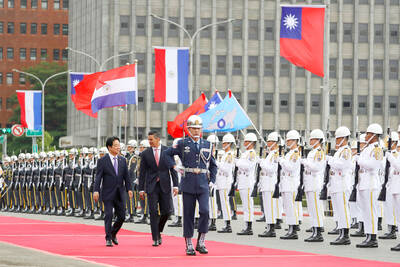
“China wants to unify with Taiwan at the lowest possible cost, and it currently believes that unification will become easier and less costly as time passes,” wrote Amanda Hsiao (蕭嫣然) and Bonnie Glaser in Foreign Affairs (“Why China Waits”) this month, describing how the People’s Republic of China (PRC) is playing the long game in its quest to seize Taiwan. This has been a favorite claim of many writers over the years, easy to argue because it is so trite. Very obviously, if the PRC isn’t attacking Taiwan, it is waiting. But for what? Hsiao and Glaser’s main point is trivial,
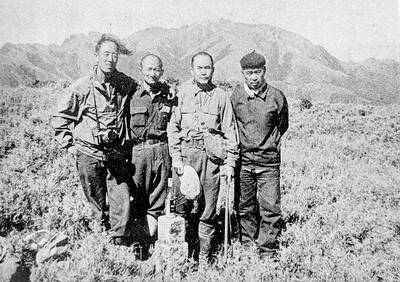
May 18 to May 24 Gathered on Yangtou Mountain (羊頭山) on Dec. 5, 1972, Taiwan’s hiking enthusiasts formally declared the formation of the “100 Peaks Club” (百岳俱樂部) and unveiled the final list of mountains. Famed mountaineer Lin Wen-an (林文安) led this effort for the Chinese Alpine Association (中華山岳協會). Working with other experienced climbers, he chose 100 peaks above 10,000 feet (3,048m) that featured triangulation points and varied in difficulty and character. The list sparked an alpine hiking craze, inspiring many to take up mountaineering and competing to “conquer” the summits. A common misconception is that the 100 Peaks represent Taiwan’s 100 tallest

Yesterday, the Democratic Progressive Party (DPP) nominated legislator Puma Shen (沈伯洋) as their Taipei mayoral candidate, the Chinese Nationalist Party (KMT) put their stamp of approval on Wei Ping-cheng (魏平政) as their candidate for Changhua County commissioner and former legislator Tsai Pi-ru (蔡壁如) of the Taiwan People’s Party (TPP) has begun the process to also run in Changhua, though she has not yet been formally nominated. All three news items are bizarre. The DPP has struggled with settling on a Taipei nominee. The only candidate who declared interest was Enoch Wu (吳怡農), but the party seemed determined to nominate anyone


 RSS
RSS