


Among the trendy cafes and restaurants lining the alleys of Nanjing West Road (南京西路) near Zhongshan MRT Station (中山捷運站), Galerie Bistro holds an edge with its selection of classic French, Italian and American dishes and a unique location.
This upscale restaurant, which opened two years ago, is housed in a three-story mansion that dates back to the 1930s, built during the Japanese occupation, and belongs to the family of owner Ely Liu (劉怡利).
The all-white interior suits the clientele — boutique shoppers, business executives and ladies who lunch — while the outdoor patio and garden, with its marble tables, comfy chairs and large white umbrellas, offers an idyllic setting for afternoon tea.
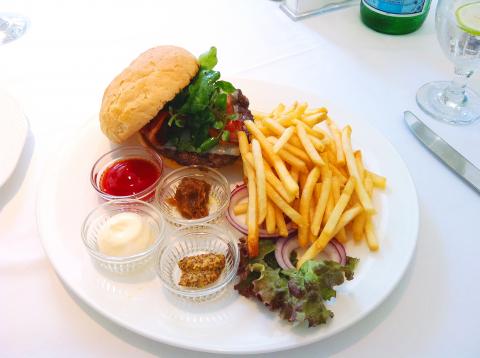
PHOTO: DAVID CHEN, TAIPEI TIMES
But the real attraction is the excellent food. The menu was designed by an American chef who was a former consultant to the Ambassador Hotel (國賓飯店), according to manager John Chiu (邱靖倫).
Be ready to splurge a little, especially for items such as Fine de Claire oysters imported from France, which cost NT$260 for one, NT$1,500 for six and NT$2,980 for a dozen.
Dinner sets include soup, salad and a side dish, and range from NT$680 for ravioli with tomato sauce to NT$1,480 for an eight ounce cut of US prime rib eye.
Business lunch sets can run up to NT$850, but you don’t need access to a corporate expense account for a decent midday meal.
Galerie Bistro touts its savory crepes as a customer favorite. Choices include garden vegetables with sauce bechamel (NT$310), the andouille, (NT$320), which is filled with Emmental (Swiss) cheese, mushrooms and pork sausage, and a spinach, egg and cheese crepe for NT$360.
It’s hard to find a good sandwich in Taipei, which makes it easy to appreciate the Burgundy ham and Emmental cheese panini (NT$390). The melted cheese oozes out through the ham slices, and the focaccia bread is toasted to a perfect, crispy brown.
Other panini choices include the albacore tuna melt (NT$360) and California grilled chicken melt (NT$390), which is garnished with red pepper, onion, avocado, and pepper jack cheese. The sandwiches come with a generous portion of thin and crispy french fries spiced with garlic and cheese (ignore the note on the menu listing an additional cost of NT$100 for fries).
A few items seem overpriced. My dining companion didn’t think the roasted beetroot salad, which is on this season’s menu, was worth NT$380, despite the top-notch ingredients: buffalo mozzarella, feta cheese, organic arugula, beetroot, candied walnuts and a honey-lemon vinaigrette. Everything is fresh, but the portion won’t do as a lunch for one.
Scoff all you want at the NT$500 hamburger, but Galerie Bistro gets it right in ways that most places in Taipei don’t.
Aside from the snobby name, the Galerie burger experience de lux 8oz delivers on the details. The ground beef patty, which measured around 2.5cm thick (and yes, it looked like 8oz), was flavorful, thanks to a good proportion of fat and meat, and slightly charred on the outside. The cheese was melted on top so that it was one with the patty.
The bun, which was buttered and lightly toasted, was just right and practically made up for the burger’s shortcomings. It was soft and light but had a slightly crispy top, and most importantly, it wasn’t too sweet. I wish Taipei’s better burger joints — Bongos, Forkers, KGB Burgers to name a few — served theirs with rolls like this.
Galerie’s burger is worth a repeat trip, but it isn’t perfect. The bacon wasn’t crispy enough and the burger was cooked well done. If yours must be medium rare, let the wait staff know.
The service was attentive and meticulous (the staff place the cloth napkins on your lap for you), but the food was a little slow to arrive on two separate visits.
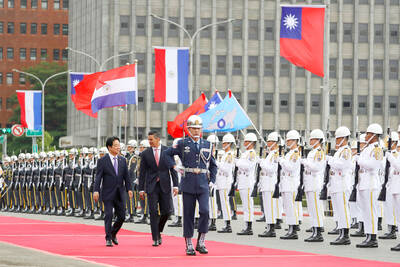
“China wants to unify with Taiwan at the lowest possible cost, and it currently believes that unification will become easier and less costly as time passes,” wrote Amanda Hsiao (蕭嫣然) and Bonnie Glaser in Foreign Affairs (“Why China Waits”) this month, describing how the People’s Republic of China (PRC) is playing the long game in its quest to seize Taiwan. This has been a favorite claim of many writers over the years, easy to argue because it is so trite. Very obviously, if the PRC isn’t attacking Taiwan, it is waiting. But for what? Hsiao and Glaser’s main point is trivial,
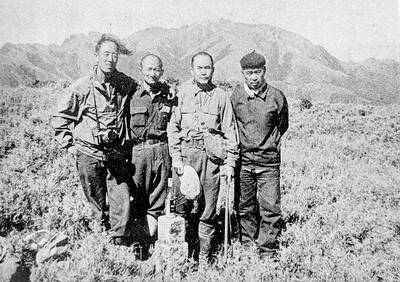
May 18 to May 24 Gathered on Yangtou Mountain (羊頭山) on Dec. 5, 1972, Taiwan’s hiking enthusiasts formally declared the formation of the “100 Peaks Club” (百岳俱樂部) and unveiled the final list of mountains. Famed mountaineer Lin Wen-an (林文安) led this effort for the Chinese Alpine Association (中華山岳協會). Working with other experienced climbers, he chose 100 peaks above 10,000 feet (3,048m) that featured triangulation points and varied in difficulty and character. The list sparked an alpine hiking craze, inspiring many to take up mountaineering and competing to “conquer” the summits. A common misconception is that the 100 Peaks represent Taiwan’s 100 tallest
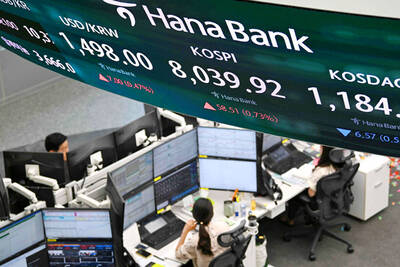
Taiwan’s overtaking of South Korea in GDP per capita is not a temporary anomaly, but the result of deeper structural problems in the South Korean economy says Chang Young-chul, the former CEO of Korea Asset Management Corp. Chang says that while it reflects Taiwan’s own gains, it also highlights weakening growth momentum in South Korea. As design and foundry capabilities become more important in the AI era, Seoul risks losing competitiveness if it relies too heavily on memory chips. IMF forecasts showing Taiwan widening its lead over South Korea have fueled debate in Seoul over memory chip dependence, industrial policy and

Yesterday, the Democratic Progressive Party (DPP) nominated legislator Puma Shen (沈伯洋) as their Taipei mayoral candidate, the Chinese Nationalist Party (KMT) put their stamp of approval on Wei Ping-cheng (魏平政) as their candidate for Changhua County commissioner and former legislator Tsai Pi-ru (蔡壁如) of the Taiwan People’s Party (TPP) has begun the process to also run in Changhua, though she has not yet been formally nominated. All three news items are bizarre. The DPP has struggled with settling on a Taipei nominee. The only candidate who declared interest was Enoch Wu (吳怡農), but the party seemed determined to nominate anyone


 RSS
RSS