


A rashi (花月嵐) is a Japanese ramen chain that made its Taipei debut last year and now has three locations across the city, including a new restaurant in the Eslite (誠品) building on Dunhua South Road (敦化南路). Its signature garlic pork broth ramen noodles — the name literally translates as “fist of garlic ramen” (大蒜拳骨拉麵, NT$160) — was once voted “strongest-flavored ramen in history” by Yahoo Japan readers. The strong flavor of the soup, which is made by boiling pig bones, garlic cloves and other ingredients together for several hours, is part of Arashi’s “we dare you to try it” marketing strategy. When the restaurant’s wait staff takes your order and brings you your noodles, they make sure to let you know that their chefs will be happy to add some clear broth if the soup is too much to handle.
Something must have gotten lost in translation, however, on Arashi’s way to Taipei. The broth is flavorful, but not particularly strong or very garlicky. Even the “white broth” variation (大蒜拳骨白濃拉麵, NT$160) flavored with Japanese salt and the miso broth version (大蒜拳骨味噌拉麵, NT$160) (both are tastier than the original garlic pork noodles) are relatively gentle on the palate.
In fact, the flavor of the broth pales in comparison to other ingredients, including the marinated and seasoned bamboo shoots and slices of fatty pork (to be fair, I noticed on separate visits that the soup’s garlic aroma is the strongest during peak lunch and dinner hours). The noodles, on the other hand, are the saving grace of the dish. Cooked appealingly al dente, they have a robust and chewy texture. Arashi’s garlic pork broth noodles also come in a chili-flavored version (大蒜拳骨激辣拉麵, NT$190).
To add some extra zip to your ramen, consider one or more of the add-ins that Arashi sells for NT$30 each. Dried seaweed, ground sesame seeds and corn are all available, while a poached egg is an agreeable alternative to the hard-boiled slice served with each bowl. Each table also sports a large tray of spices, oils and very hot seasoned green onions to mix into the dish. Arashi’s set meals are good value; for an extra NT$55 to NT$65, you can select a drink and a serving of salad, pork rice or fried chicken.
The restaurant’s pork rice (蒜香豬肉飯), which is sold separately for NT$45, is especially good and much punchier than any of the noodle dishes. The diced pork is
stir-fried in a garlic-flavored sauce and served on top of white rice with seaweed and chopped green onions. The only non-noodle main course at Arashi is its fried rice (鐵板炒飯), which comes in an iron skillet and is topped with a ridiculously large pat of butter. Flavors include soy sauce (醬油奶香), garlic (蒜香奶油油) and curry (咖哩奶油), all NT$160 each.
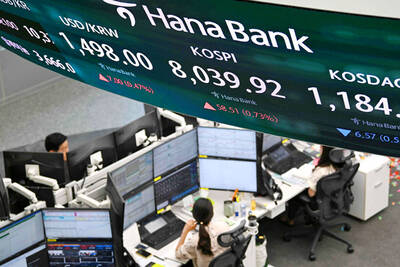
Taiwan’s overtaking of South Korea in GDP per capita is not a temporary anomaly, but the result of deeper structural problems in the South Korean economy says Chang Young-chul, the former CEO of Korea Asset Management Corp. Chang says that while it reflects Taiwan’s own gains, it also highlights weakening growth momentum in South Korea. As design and foundry capabilities become more important in the AI era, Seoul risks losing competitiveness if it relies too heavily on memory chips. IMF forecasts showing Taiwan widening its lead over South Korea have fueled debate in Seoul over memory chip dependence, industrial policy and
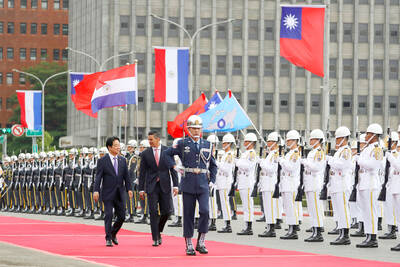
“China wants to unify with Taiwan at the lowest possible cost, and it currently believes that unification will become easier and less costly as time passes,” wrote Amanda Hsiao (蕭嫣然) and Bonnie Glaser in Foreign Affairs (“Why China Waits”) this month, describing how the People’s Republic of China (PRC) is playing the long game in its quest to seize Taiwan. This has been a favorite claim of many writers over the years, easy to argue because it is so trite. Very obviously, if the PRC isn’t attacking Taiwan, it is waiting. But for what? Hsiao and Glaser’s main point is trivial,
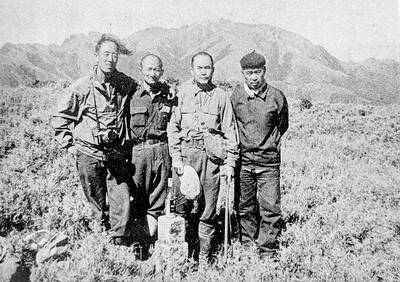
May 18 to May 24 Gathered on Yangtou Mountain (羊頭山) on Dec. 5, 1972, Taiwan’s hiking enthusiasts formally declared the formation of the “100 Peaks Club” (百岳俱樂部) and unveiled the final list of mountains. Famed mountaineer Lin Wen-an (林文安) led this effort for the Chinese Alpine Association (中華山岳協會). Working with other experienced climbers, he chose 100 peaks above 10,000 feet (3,048m) that featured triangulation points and varied in difficulty and character. The list sparked an alpine hiking craze, inspiring many to take up mountaineering and competing to “conquer” the summits. A common misconception is that the 100 Peaks represent Taiwan’s 100 tallest

Yesterday, the Democratic Progressive Party (DPP) nominated legislator Puma Shen (沈伯洋) as their Taipei mayoral candidate, the Chinese Nationalist Party (KMT) put their stamp of approval on Wei Ping-cheng (魏平政) as their candidate for Changhua County commissioner and former legislator Tsai Pi-ru (蔡壁如) of the Taiwan People’s Party (TPP) has begun the process to also run in Changhua, though she has not yet been formally nominated. All three news items are bizarre. The DPP has struggled with settling on a Taipei nominee. The only candidate who declared interest was Enoch Wu (吳怡農), but the party seemed determined to nominate anyone


 RSS
RSS