


This is American fried rice," said US Department of Agriculture representative Keith Schneller in American-accented Mandarin, as he passed out portions of jambalaya for a group of chefs at the Taipei Vocational Cooking School on Wednesday. The occasion: a Cajun cooking class conducted by Louisiana culinary guru Roy Lyons. The word Cajun refers to a part of the southern US settled by French-speakers, as well as their culture and food. Jambalya, which is not fried, is named after the French word for "ham" and an African word meaning "rice." Several Taipei restaurants such as Malibu West and the Cosmopolitan Grill already serve Cajun food — there's even a New Orleans Kitchen on Roosevelt Road across from National Taiwan University. But this was the first opportunity most of the assembled chefs had to see how it's really done.
"What we made before was just a copy," said New Orleans Kitchen's Wang Wen-yu (王文裕), who said he's thinking of adopting Chef Roy's jambalaya and gumbo recipes. "I might add this to my spring menu," said Malibu West's William Gan, as he devoured one of Chef Roy's duck and chicken wraps. Earlier, Gan and Wang watched as Roy demonstrated his techniques to roughly 50 chefs from two-dozen restaurants. Among the advice: taste jambalaya's seasoning in the water before you cook the rice; and use Louisiana hot sauce — not Tabasco sauce — to flavor buffalo wings.
Most food promotions held in Taiwan cater to five-star hotels and expensive restaurants. But the New Orleans Jazz and Cajun Flavors Promotion, which runs through the end of May, actively sought the participation of mid-range places like Wang and Gan's. Members of the general public will get the chance to see Chef Roy give free Cajun cooking classes at Jason's Supermarket in Taipei 101 Mall tomorrow from noon to 2pm and on Sunday from 2pm to 4pm. And restaurants across the island have signed up to serve one or two of Chef Roy's recipes through May. (See last week's Taipei Times story.) If the promotion is successful, expect to see "American fried rice" on the menu of your local Western restaurant.

PHOTO: RON BROWNLOW, TAIPEI TIMES
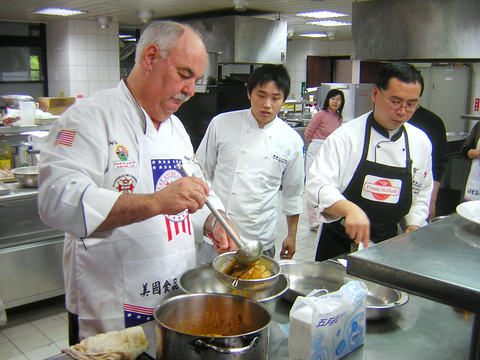
PHOTO: RON BROWNLOW, TAIPEI TIMES
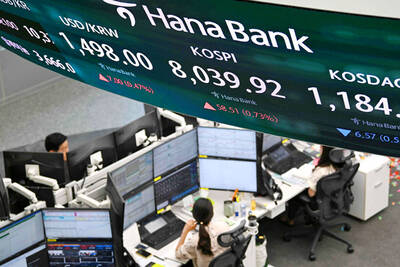
Taiwan’s overtaking of South Korea in GDP per capita is not a temporary anomaly, but the result of deeper structural problems in the South Korean economy says Chang Young-chul, the former CEO of Korea Asset Management Corp. Chang says that while it reflects Taiwan’s own gains, it also highlights weakening growth momentum in South Korea. As design and foundry capabilities become more important in the AI era, Seoul risks losing competitiveness if it relies too heavily on memory chips. IMF forecasts showing Taiwan widening its lead over South Korea have fueled debate in Seoul over memory chip dependence, industrial policy and
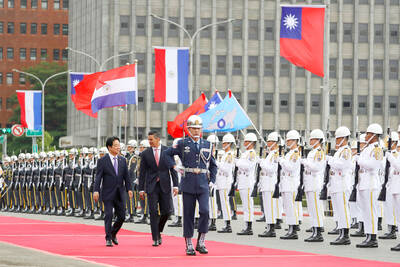
“China wants to unify with Taiwan at the lowest possible cost, and it currently believes that unification will become easier and less costly as time passes,” wrote Amanda Hsiao (蕭嫣然) and Bonnie Glaser in Foreign Affairs (“Why China Waits”) this month, describing how the People’s Republic of China (PRC) is playing the long game in its quest to seize Taiwan. This has been a favorite claim of many writers over the years, easy to argue because it is so trite. Very obviously, if the PRC isn’t attacking Taiwan, it is waiting. But for what? Hsiao and Glaser’s main point is trivial,
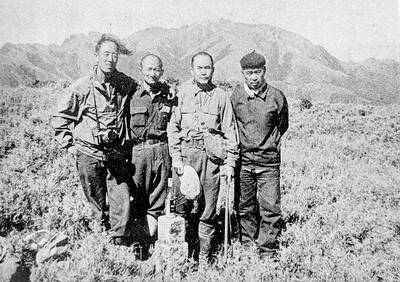
May 18 to May 24 Gathered on Yangtou Mountain (羊頭山) on Dec. 5, 1972, Taiwan’s hiking enthusiasts formally declared the formation of the “100 Peaks Club” (百岳俱樂部) and unveiled the final list of mountains. Famed mountaineer Lin Wen-an (林文安) led this effort for the Chinese Alpine Association (中華山岳協會). Working with other experienced climbers, he chose 100 peaks above 10,000 feet (3,048m) that featured triangulation points and varied in difficulty and character. The list sparked an alpine hiking craze, inspiring many to take up mountaineering and competing to “conquer” the summits. A common misconception is that the 100 Peaks represent Taiwan’s 100 tallest

Yesterday, the Democratic Progressive Party (DPP) nominated legislator Puma Shen (沈伯洋) as their Taipei mayoral candidate, the Chinese Nationalist Party (KMT) put their stamp of approval on Wei Ping-cheng (魏平政) as their candidate for Changhua County commissioner and former legislator Tsai Pi-ru (蔡壁如) of the Taiwan People’s Party (TPP) has begun the process to also run in Changhua, though she has not yet been formally nominated. All three news items are bizarre. The DPP has struggled with settling on a Taipei nominee. The only candidate who declared interest was Enoch Wu (吳怡農), but the party seemed determined to nominate anyone


 RSS
RSS