


If you walk into the office of SQV Design International (
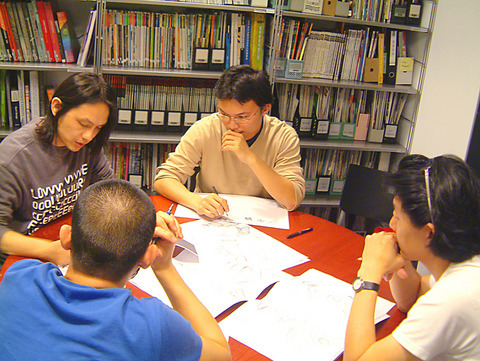
It looks like a designer's playground and it is, to a certain extent. "Everything starts from here. This is where our designers do brainstorming and free association, sometimes with our customers too," marketing and sales supervisor Gloria Sun (
Following closely behind Japan and South Korea, Taiwan's industrial design sector has gradually gained international recognition and has become a frequent visitor on the global design scene.
PHOTOS COURTESY OF SQV DESIGN INTERNATIONAL INC
With nearly 20 years of experience in the field, SQV is the biggest independent design firm in Taiwan, with numerous international design awards under its belt, such as the IF Design Award in Germany, the IDEA Design Award in US and the Good Design Award in Japan. Over the years, the design team has developed a wide range of ideas, from hi-tech IT products to household appliances and medical devices. It has built up a long list of clients, including major enterprises such as Acer Corp, Asustek Computer Inc (
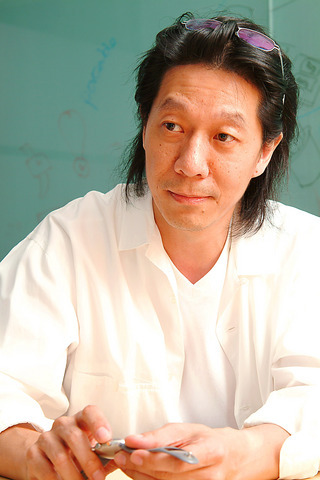
The founder of the company, Daniel Koo (顧明德), started his design career in the late 1980s in the US and then dabbled in Taiwan's market. In 1991, Koo decided to settle in Taiwan and established SQV Design's forerunner, the I+U design team.
"I came back to Taiwan with a clear goal and direction in mind, that is, to inject global views in local manufacturing businesses. Since Taiwan is an exporting country it needs international design concepts to enhance the value and marketability of its products," Koo said.
In 2003, I+U joined SQV Group and expanded into an extensive firm that also included mechanical design, marketing and sales, and project management. Now the firm can boast not just innovative design but a complete range of services ranging from brand-building to setting a marketing strategy. With its own research teams, SQV can carry out a project all the way from product appearance, to market analysis, to consumer behavior research, to product launch planning and sales-channel counselling.
"Every product needs marketability. To design a product you need to understand the market. By taking such aspects into consideration, we can create an identity for the product, a story behind the design that our clients can follow and shape their market strategies," Koo said.
"The designers at the firm are able to create market-oriented design with assistance from experts in different fields," Sun said. "When our designers start forming design concepts, they will be joined by our research staff, and together, they will try to answer questions such as, `Who are the targeted users?' `What are their habits and life styles?' `In what situation and environment will the products be used?' `What are the future trends in the market?'"
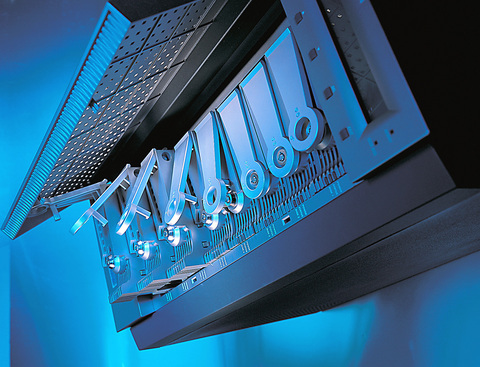
Not surprisingly, some of the firm's main clients are large electronics manufacturers who are interested in transforming themselves from OEM (original equipment manufacturing) to ODM (original design manufacturing) businesses. Building a brandname is the key to success in the competitive global market these days.
The Smart Phone ET960 from Lenovo Corp (
"We insist on quality design. If we are sure about our design then we won't give in. I think this is partially the reason why we have such a fine reputation in the field," Koo said.
Since many electronics manufacturers have put more resources into their ODM businesses and established their own design centers in recent years, what are the advantages SQV has over other designers?
As Sun explained it, design teams in most companies can only specialize in limited types of products. SQV, on the other hand, has a rich experience of various sectors and can easily adopt design
concepts and materials from one sector to another. "For example, we once applied the material of carbon fiber from carbon cycles to computer design," Sun said.
Moreover, the designers at SQV also take seriously their roles as visionary pioneers who set future trends in the conceptual design business.
"Unlike in-house design teams, we have more comprehensive knowledge and ideas about design in general. So lots of companies come to us because they want to develop never-before-seen products, something that is new and advanced in concept," Sun said.
Cyber Home 2000, for example, is a conceptual design commissioned by Acer in 1995. Acer asked the team to conceive of new roles and functions for computers within a five-year timeframe. The firm spent more than a year creating a hi-tech household connected by one single computerized system, a vision that has been partially realized today.
SQV has developed long-term strategic alliances with overseas companies and secured agents and partners in major cities such as Tokyo, London, Los Angeles and Shanghai.
When asked how he sees the future of the company, Koo said, "We will always be a Taipei-based design firm aiming at the global market and striving to innovate ourselves with cutting-edge ideas and better systems and techniques."
“China wants to unify with Taiwan at the lowest possible cost, and it currently believes that unification will become easier and less costly as time passes,” wrote Amanda Hsiao (蕭嫣然) and Bonnie Glaser in Foreign Affairs (“Why China Waits”) this month, describing how the People’s Republic of China (PRC) is playing the long game in its quest to seize Taiwan. This has been a favorite claim of many writers over the years, easy to argue because it is so trite. Very obviously, if the PRC isn’t attacking Taiwan, it is waiting. But for what? Hsiao and Glaser’s main point is trivial,
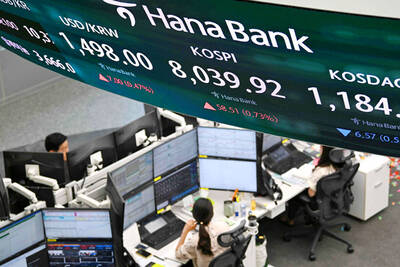
Taiwan’s overtaking of South Korea in GDP per capita is not a temporary anomaly, but the result of deeper structural problems in the South Korean economy says Chang Young-chul, the former CEO of Korea Asset Management Corp. Chang says that while it reflects Taiwan’s own gains, it also highlights weakening growth momentum in South Korea. As design and foundry capabilities become more important in the AI era, Seoul risks losing competitiveness if it relies too heavily on memory chips. IMF forecasts showing Taiwan widening its lead over South Korea have fueled debate in Seoul over memory chip dependence, industrial policy and
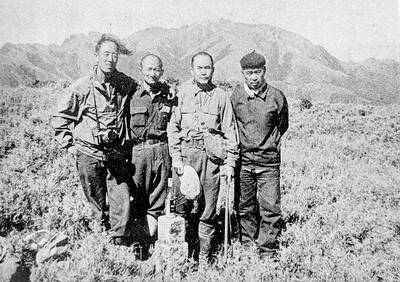
May 18 to May 24 Gathered on Yangtou Mountain (羊頭山) on Dec. 5, 1972, Taiwan’s hiking enthusiasts formally declared the formation of the “100 Peaks Club” (百岳俱樂部) and unveiled the final list of mountains. Famed mountaineer Lin Wen-an (林文安) led this effort for the Chinese Alpine Association (中華山岳協會). Working with other experienced climbers, he chose 100 peaks above 10,000 feet (3,048m) that featured triangulation points and varied in difficulty and character. The list sparked an alpine hiking craze, inspiring many to take up mountaineering and competing to “conquer” the summits. A common misconception is that the 100 Peaks represent Taiwan’s 100 tallest
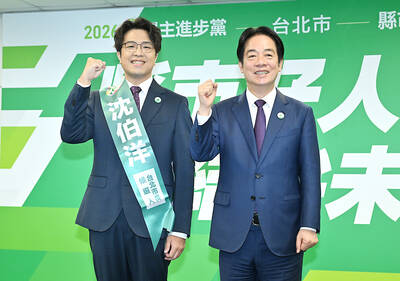
Yesterday, the Democratic Progressive Party (DPP) nominated legislator Puma Shen (沈伯洋) as their Taipei mayoral candidate, the Chinese Nationalist Party (KMT) put their stamp of approval on Wei Ping-cheng (魏平政) as their candidate for Changhua County commissioner and former legislator Tsai Pi-ru (蔡壁如) of the Taiwan People’s Party (TPP) has begun the process to also run in Changhua, though she has not yet been formally nominated. All three news items are bizarre. The DPP has struggled with settling on a Taipei nominee. The only candidate who declared interest was Enoch Wu (吳怡農), but the party seemed determined to nominate anyone


 RSS
RSS