


When the owners of one house near the farthest southern boundary of this city return, they will find a crater 12.2m across and 2.4m deep, with one wall still standing and recognizable pieces of a ceiling strewn beside it. A broken kebab stand, its canopy collapsed, its two wheels exposed, leans over crazily into one lip of the crater.
The entire street in this district looks about the same. On Monday morning, after they had seemingly been crushed the day before, insurgents began firing from windows, bunkers and piles of rubble, setting off a five-hour gun battle. The street, once flat, has been hit with so many 500-pound bombs that it looks like a zone of collision between oceanic ice sheets, with huge dips and shelves of pavement and soil.

PHOTO: NY TIMES
Now the US military faces the urgent but almost paradoxical imperative of rebuilding the city it just destroyed in order to defeat the rebels who had held it for so long. The devastation that the battle has wrought will not be easy to repair. The human and political effects of that devastation could rapidly spread far beyond Fallujah.
Military engineers are already starting to deploy throughout the city with tens of millions of dollars at their disposal to fix some of the damage. If the engineers do not succeed, then the outrage that is likely to be generated among returning residents at the sight of obliterated mosques, cratered houses and ground-up streets will spread.
Either way, the results will deeply mark the US-backed Iraqi government's ability to gain the trust of the people here and carry out elections in late January.
The radio code name for the artillery crews who bring in many of the big shells is "steel rain." That is what came down when the battle started here at 7am Monday. The day before, tanks and fighting vehicles had come roaring through here shooting at anything that moved, but dozens of the insurgents apparently lay low.
As always in this battle, at the center of the fight was one of the mosques the insurgents have surrounded with ramparts and firing positions, and where they have placed weapons caches. At one point the fighting swirled on all sides of the mosque, and Marine companies became confused about exactly where friendly troops were.
"We've got a back-alley gunfight going on," said Captain Read Omohundro, commander of Company B of the 1st Battalion, 8th Marines. "So watch where you fire into the mosque!"
A tank fired a round at an insurgent sniper in the minaret and punched a hole straight through the middle of it -- and scored a direct hit on the insurgent. "We turned a guy into rubble," a Marine said.
But the minaret, smoking like a chimney, stood there with the daylight showing through it, and later a marine in Company B was killed while climbing stairs inside, shot by an insurgent who had somehow remained above. After two other Marines retrieved his body, a pair of 500-pound bombs were called in and the mosque was no more.
The insurgents killed at least one other Marine on Monday -- he looked into a room where half a dozen were waiting, and they shot him before dragging off his body and his gun.
Despite what appeared to be the collapse of the insurgency here, Lieutenant Colonel Gareth Brandl cautioned: "This is not won yet. Now we have to rebuild the city."

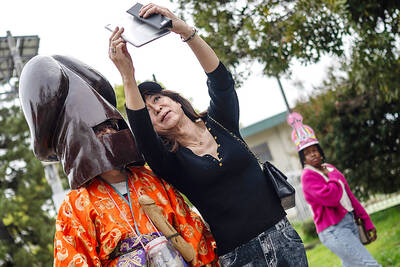
Showcasing phallus-shaped portable shrines and pink penis candies, Japan’s annual fertility festival yesterday teemed with tourists, couples and families elated by its open display of sex. The spring Kanamara Matsuri near Tokyo features colorfully dressed worshipers carrying a trio of giant phallic-shaped objects as they parade through the street with glee. The festival, as legend has it, honors a local blacksmith in the Edo Period (1603-1868) who forged an iron dildo to break the teeth of a sharp-toothed demon inhabiting a woman’s vagina that had been castrating young men on their wedding nights. A 1m black steel phallus sits in the courtyard of
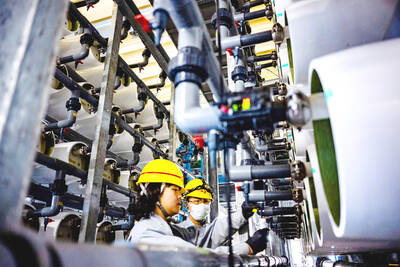
HIGH HOPES: The power source is expected to have a future, as it is not dependent on the weather or light, and could be useful for places with large desalination facilities A Japanese water plant is harnessing the natural process of osmosis to generate renewable energy that could one day become a common power source. The possibility of generating power from osmosis — when water molecules pass from a less salty solution to a more salty one — has long been known. However, actually generating energy from that has proved more complicated, in part due the difficulty of designing the membrane through which the molecules pass. Engineers in Fukuoka, Japan, and their private partners think they might have cracked it, and have opened what is only the world’s second osmotic power plant. It generates
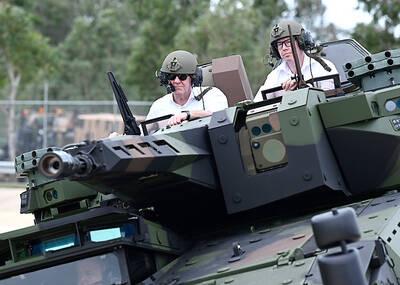
JAN. 1 CLAUSE: As military service is voluntary, applications for permission to stay abroad for over three months for men up to age 45 must, in principle, be granted A little-noticed clause in sweeping changes to Germany’s military service policy has triggered an uproar after it emerged that the law requires men aged up to 45 to get permission from the armed forces before any significant stay abroad, even in peacetime. The legislation, which went into effect on Jan. 1 aims to bolster the military and demands all 18-year-old men fill out a questionnaire to gauge their suitability to serve in the armed forces, but stops short of conscription. If the “modernized” model fails to pull in enough recruits, parliament will be compelled to discuss the reintroduction of compulsory service, German
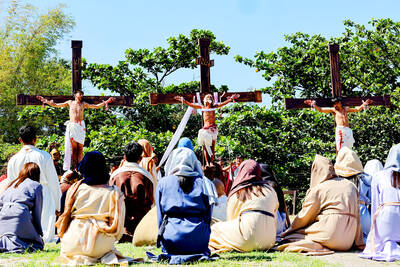
Hundreds of Filipinos and tourists flocked to a sun-bleached field north of Manila yesterday, on Good Friday, to witness one of the country’s most blood-soaked displays of religious fervor, undeterred by rising fuel prices. Scores of bare-chested flagellants with covered faces walked barefoot through the dusty streets of Pampanga Province’s San Fernando as they flogged their backs with bamboo whips in the scorching heat. Agence France-Presse (AFP) journalists said they saw devotees deliberately puncturing their skin with glass shards attached to a small wooden paddle to ensure their bleeding during the ritual, a way to atone for sins and seek miracles from


 RSS
RSS