

Nepal's Prime Minister Lokendra Bahadur Chand yesterday resigned from his post, adding to the growing political confusion in the Himalayan kingdom and throwing a shadow over peace talks with Maoist rebels.
A palace statement announced the resignation and said King Gyanendra immediately summoned political leaders for consultations on a possible successor and a new council of ministers.
Chand, appointed after the king on October 4 sacked the then-prime minister Sher Bahadur Deuba and dissolved parliament, has been the focus of increasingly violent street protests in Kathmandu and other towns.
The resignation was a bid to defuse the growing anger against the monarch by members of five political parties who were represented in the now-dissolved parliament, a highly-placed government source said.
The political parties, supported by students, have been leading street protests in support of the reinstatement of parliament, with many political leaders injured in recent weeks in police baton charges.
The political parties are also opposed to a ceasefire the Chand government signed with Maoist rebels in January.
Two rounds of peace talks between the government and the Maoists have since been held, both boycotted by the parties.
"Prime Minister Lokendra Bahadur Chand has tendered his resignation to His Majesty King Gyanendra and the king has accepted his resignation," the palace statement said.
Madhav Kumar Nepal, general secretary of the Nepal Communist Party United Marxist and Leninist, the largest political group in Nepal, welcomed the resignation.
"The king should seek the cooperation and consent of all political parties," Nepal said, adding, "The new government should be composed of all parties which were represented in the dissolved parliament."
He also urged the king to return sovereign and executive authority, which he had claimed on October 4, to the new government.
If he does not do this, political protests would continue, Nepal warned.
Chand's resignation comes a day after Nepal was in the world spotlight when it celebrated the 50th anniversary of the conquest of its most famous mountain, Everest, by Sir Edmund Hillary and the late Tenzing Norgay Sherpa.
The prime minister, in his last public function, Thursday presented medals to Everest summiters at a colorful ceremony attended by Hillary and later by the king.
But behind the festivities, political parties opposed to Chand took advantage of the large media presence to press home their demands.
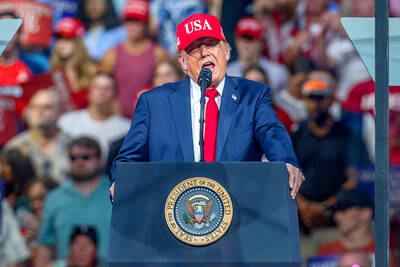
US President Donald Trump on Wednesday threatened to take action against the EU if it moves forward with European Commission President Ursula von der Leyen’s proposal to make Canada the bloc’s first associate member. “If they do that, if I think it’s at all a hostile act; I will put very serious tariffs or stop trading with Europe on many things,” Trump told reporters en route to an event in North Carolina, calling the proposal “laughable.” “If it’s a good intention, that’s fine. If it’s a bad intention, we’ll put very heavy tariffs on Europe,” he said. Von der Leyen made the proposal
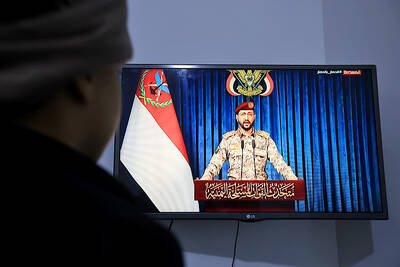
ON THE MOVE: Trump unexpectedly cut short a trip to return to the White House, while the State Department warned Americans to avoid travel to the Middle East The US on Saturday warned that hostilities between Saudi Arabia and Iran-backed Houthis could “escalate rapidly” after a missile attack targeted Riyadh for the first time since the Yemen conflict resumed. US President Donald Trump on Saturday cut short a weekend at Camp David, a secluded presidential complex in rural Maryland, to return unexpectedly to the White House. The White House gave no explanation for the early return, which comes as a new threshold was crossed in the conflict between Saudi Arabia and the Houthis, who control a large part of Yemen and are fighting government forces backed by a coalition led
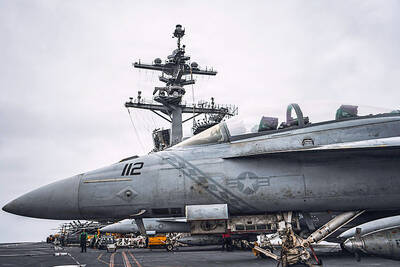
The US military came close to boarding a Chinese vessel in the Middle East earlier this year based on a flawed intelligence report prepared with the help of artificial intelligence (AI), CNN said on Friday. US intelligence indicated the ship was carrying nuclear weapons-related components, leading US forces to prepare to intercept it, the broadcaster reported, citing four anonymous sources familiar with the incident. However, the operation was called off after officials determined that an AI chatbot used by an analyst had misidentified the material the ship was carrying. The report was “entirely false,” but “almost started a war,” CNN quoted one source
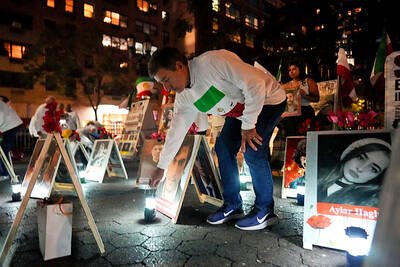
World leaders gather in New York this week for the UN General Assembly, bracing for US President Donald Trump’s return to the rostrum for a second year running, with talks centering on the widening conflicts in the Middle East and Ukraine and the risks of artificial intelligence (AI). Nearly 130 heads of state meet with the post-World War II order under strain and with the UN itself struggling to remain relevant and weathering attacks from Trump, who has slashed the US’ contributions and withdrawn from dozens of UN bodies. Chinese President Xi Jinping (習近平), who last addressed the diplomatic jamboree via video


 RSS
RSS