


The Ministry of Transportation and Communications is to authorize police to conduct roadside saliva tests by the end of the year to deter people from driving while under the influence of narcotics, it said yesterday.
The ministry last month unveiled a draft of amended regulations governing traffic safety rules and penalties, which included provisions empowering police to conduct mandatory saliva tests on drivers.
While currently rules authorize police to use oral fluid testing kits for signs of drug use, they do not establish penalties for noncompliance or operating procedures for officers to follow, the ministry said.
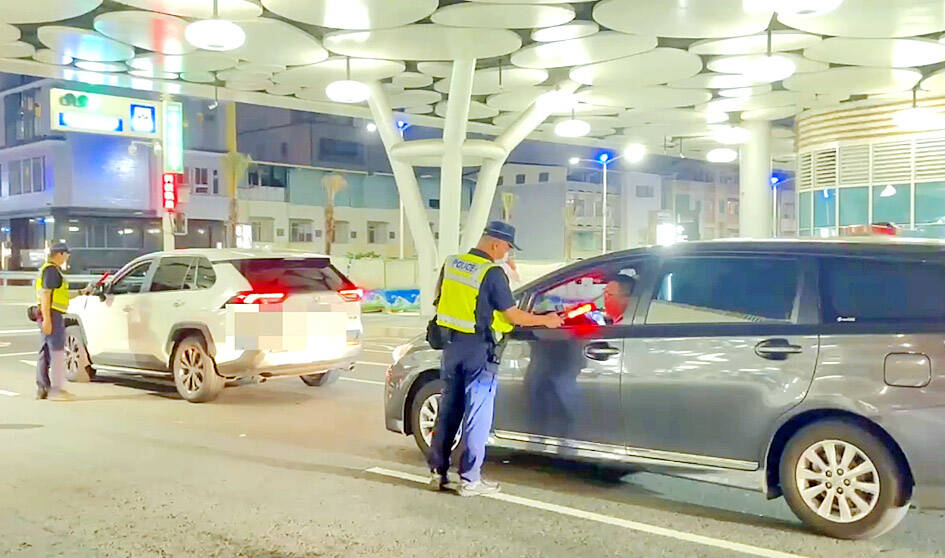
Photo: Huang Liang-chieh, Taipei Times
The proposed changes to the regulations require police to video the test, which should be performed at the side of the road, it said.
Officers would be able to demand that drivers present themselves at a law enforcement facility to undergo saliva tests if circumstances do not permit tests to be performed at the side of the road, it added.
Police must immediately inform the driver of their test results and obtain their signature, the ministry said.
A positive result in a saliva drug test would result in a two-year license suspension for the driver and their vehicle, and a fine of up to NT$180,000 (US$5,857), it said.
The government would confiscate the vehicle of a driver who caused a severe injury or death while driving under the influence of drugs, the ministry said.
A car or motorbike driver who refused a second saliva test within 10 years would be fined up to NT$360,000, while those who refused a third time would be fined another NT$180,000 and lose their license, it said.
The ministry would publish the name and photograph of those who lost their license by refusing to take saliva tests and rescind the license plate of their vehicle for two years, it added.
Drivers of low-speed vehicles — a legal category that includes bicycles, electric bicycles and light electric scooters — must comply with saliva tests or face a NT$4,800 fine, the ministry said.
Light electric scooters could be temporarily confiscated if a driver refuses to comply with the test, it said.
Meanwhile, the ministry on Tuesday said that drivers who commit certain traffic violations more than three times in one year would be required to attend a three-hour class to improve their driving safety awareness starting in March next year.
In a Facebook post, the ministry said the violations include running red lights, failing to observe right of way at intersections with no signals, and not slowing down as required when passing crosswalks, hospitals or schools.
Professional drivers of large commercial vehicles would be required to take the class after two offenses within a year, it said.
The mandate is part of a slew of new traffic regulations to be gradually rolled out next year with the aim of reducing the number of deaths on the road by 7 percent each year, according to a statement by the ministry on Oct. 1.
These include eliminating the true/false questions from the driver’s license test, testing yielding responses in road tests, holding classes for repeat offenders caught driving without a license under the age of 18 and imposing stricter rules for elderly drivers, who would have to renew their driving license at age 70 instead of 75.
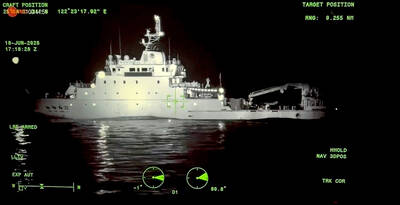
EXCUSES: Beijing is using government and research vessels as a pretext to harass the nation and enter its EEZ, and engage in ‘hegemonic expansion,’ the coast guard said The Coast Guard Administration yesterday said it drove away Chinese oceanographic research vessel Xiang Yang Hong 22 (向陽紅33) from restricted waters after warning it that it was in Taiwan’s exclusive economic zone (EEZ). The Chinese vessel entered restricted waters off the coast of Yilan County’s Suao (蘇澳) at 11:35pm on Thursday, the coast guard said, adding that it dispatched the Lanyu patrol vessel and the boat PP-10077 to shadow the Chinese ship and issue radio warnings ordering it to leave. China has no sovereignty over waters off Taiwan’s east coast, Lanyu’s crew told Xiang Yang Hong 22 over the radio, and demanded

BAIT AND SWITCH: Allowing KMT-run counties to sell to China while the threat of abrupt cancelations hangs overhead is another form of coercion, officials said Beijing is using agricultural purchase offers announced during the Straits Forum to deepen Taiwan’s dependence on the Chinese market, a Taiwanese official said yesterday as they criticized the Taitung County commissioner’s participation in the initiative. During the Straits Forum held in Xiamen on Saturday, Chinese officials announced a sales and purchase agreement for agricultural products from some counties led by the Chinese Nationalist Party (KMT). Taitung County Commissioner Yao Ching-ling (饒慶鈴), who was barred from attending the event in person by the Mainland Affairs Council, participated via video. Under the agreement, China would purchase atemoyas, pomeloes, tea and grouper harvested in Taitung,
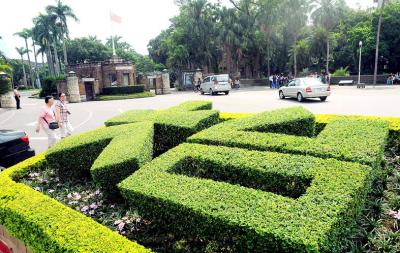
Four Taiwanese universities have been ranked among the world's top 200 institutions in the Quacquarelli Symonds (QS) World University Rankings for next year, the highest Taiwan has ever placed in the category, with National Taiwan University (NTU) achieving its best performance at 54th globally and 17th in Asia. The four Taiwanese institutions in the global top 200 are NTU (54th), National Tsing Hua University (142nd), National Yang Ming Chiao Tung University (177th) and National Cheng Kung University (191st), the rankings showed. All four universities achieved their highest-ever global rankings this year, QS data showed. National Cheng Kung University entered the top 200 for
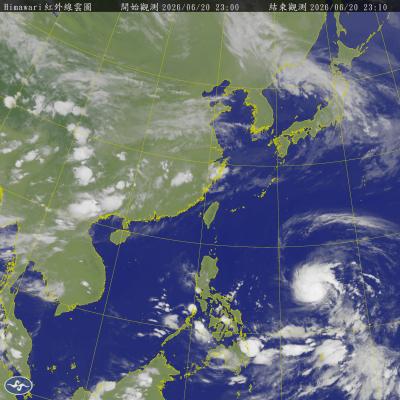
Tropical Storm Mekkhala is forecast to strengthen into a typhoon tomorrow and could come close enough to Taiwan later in the week to prompt a sea warning, the Central Weather Administration (CWA) said yesterday. As of 2 pm, the storm was located 1,870 kilometers southeast of Taiwan's southern tip and moving west- northwest at 23 km per hour. CWA forecaster Cheng Chieh-jen (鄭傑仁) said Mekkhala is expected to continue moving west-northwest through Tuesday under the influence of the Pacific high- pressure system before gradually turning north toward waters east of Taiwan or south of the Ryukyu Islands. The timing and angle of the


 RSS
RSS