


People can preregister to receive their NT$10,000 (US$325) cash distributed from the central government on Nov. 5 after President William Lai (賴清德) yesterday signed the Special Budget for Strengthening Economic, Social and National Security Resilience, the Executive Yuan told a news conference last night.
The special budget, passed by the Legislative Yuan on Friday last week with a cash handout budget of NT$236 billion, was officially submitted to the Executive Yuan and the Presidential Office yesterday afternoon.
People can register through the official Web site at https://10000.gov.tw to have the funds deposited into their bank accounts, withdraw the funds at automated teller machines (ATMs) of designated financial institutions and Chunghwa Post, or collect it at postal office counters during business hours.

Photo: Chen Chih-chu, Taipei Times
Specific groups can receive direct deposits to their existing accounts without needing to register, while inmates in correctional facilities would receive the handout through lists prepared by the Ministry of Justice.
In specific areas, including Pingtung County’s Shihzih Township (獅子), Hualien County’s Wanrong Township (萬榮) and Taitung County’s Jinfong Township (金峰), local police stations or substations would distribute the handouts.
The preregistration of the cash handout program is to begin on Nov. 5, while registration would officially open on Nov. 10, the Executive Yuan said.
Distribution of the funds is to start on Nov. 12. Those who wish to collect funds from ATMs or postal office counters can do so on Nov. 17 and Nov. 24 respectively.
The registration and collection of the funds would end on April 30 next year. For babies born between April 1 and April 30, parents can pick up their funds by May 22.
For more information visit http://10000.gov.tw or call the service hotline at 1988, which would be activated at 8:30am today.
People who are eligible to receive the cash include Republic of China (ROC) citizens; stateless nationals with residence permits; foreign nationals with permanent residence permits; spouses of ROC nationals from China, Hong Kong, Macau and countries who have obtained residence permits; and government personnel assigned abroad for official duties and their family members who hold ROC nationality.

The Tourism Administration yesterday announced that it would reward repeat international visitors with incentives of up to NT$8,000 to boost inbound tourism. The incentives are available to all international tourists, it said, adding that repeat visitors would be rewarded with NT$5,000 and would receive an additional NT$3,000 if they bring travel companions. The nation received 2,990,657 inbound visitors during the first quarter, marking a 3.8 percent increase from the same period last year, agency data showed. Japanese nationals are among groups visiting Taiwan the most. About 1.48 million Japanese tourists arrived last year, a year-on-year increase of more than 12
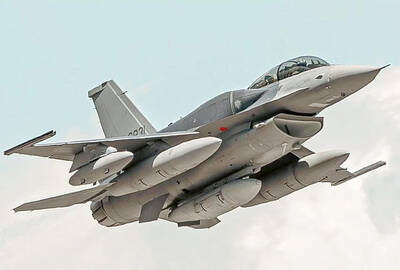
66 FIGHTER JETS: The aircraft is likely undergoing preparations for its transfer to Taiwan — a significant step forward in the nation’s modernization program, a lawmaker said The first of Taiwan’s order of F-16V Block 70 aircraft has been sighted in Texas ahead of delivery, Democratic Progressive Party (DPP) Legislator Wang Ting-yu (王定宇) said. Taiwan’s first F-16V Block 70 two-seat aircraft, tail number 6831, was seen flying from Lockheed Martin’s production facility in Greenville, South Carolina, to Naval Air Station Joint Reserve Base Fort Worth in Texas, Wang wrote on Facebook yesterday. The plane is likely undergoing preparations for its transfer to Taiwan, marking a significant step forward in the Republic of China Air Force’s modernization program, Wang said, citing military analysts. The F-16V Block 70 is a new-build version
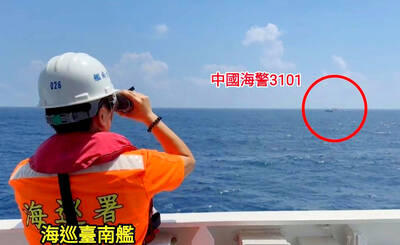
‘BRAZEN’: The holiday did not stop China from activities that infringe on Taiwan’s maritime jurisdiction, but the CGA is ready to defend the nation, Kuan Bi-ling said Beijing is intensifying maritime pressure on Taiwan, but the nation will never yield, Ocean Affairs Council Deputy Minister Sung Chen-en (宋承恩) said. The Coast Guard Administration (CGA) has adopted a “shadowing and monitoring” approach to avoid falling into a Chinese trap to escalate tensions and deepen the conflict, Sung said in an interview published yesterday in the Chinese-language Liberty Times (the Taipei Times’ sister newspaper). China Coast Guard formations patrolling waters east of Taiwan, as well as official Chinese vessels entering areas around Itu Aba Island (Taiping Island, 太平島) and Pratas Islands (Dongsha Islands, 東沙群島) show Beijing’s attempts to significantly step up
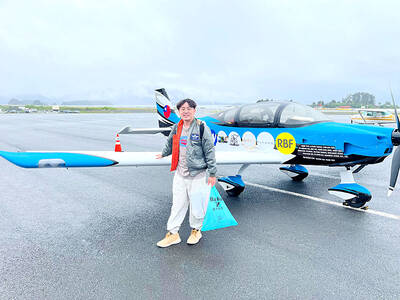
Taiwanese aviator Roger Lin (林睿哲) returned to Taiwan on Saturday after completing a nine-day round-the-world journey in a single-engine aircraft, becoming the first Taiwanese pilot to achieve the feat. Lin departed on June 5 from Los Angeles, California, and continued through Alaska, Japan, Taiwan, the Philippines, Indonesia, Malaysia, Thailand, Nepal, Jordan, Norway, Iceland and Canada before landing at the Taipei International Airport (Songshan) via Los Angeles and Japan. Lin shared numerous photos and videos of his journey on a Facebook page titled “Pilot Roger’s Around the World Flight,” including a video showing his aircraft flying over the Danjiang Bridge and


 RSS
RSS