


Reading this book was, yes, wonderful. Yes, inspiring. But it was also like reading a series of many, many long text messages from a dear friend. Or perhaps the posts of a really great, just discovered, and somehow still genuine social media feed.
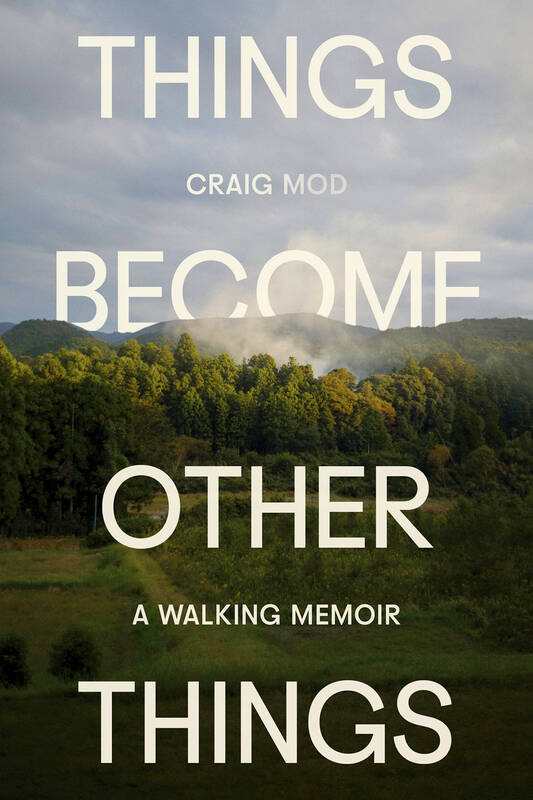
The premise of Craig Mod’s Things Become Other Things: A Walking Memoir is the author taking a very long walk through a neglected and — like much of the countryside in East Asia — depopulating area of rural Japan. Specifically, it’s the Kii peninsula.
As Mod walks hundreds of kilometers, sometimes over 40km a day, he considers the things he encounters, this foreign yet familiar Japan, this land, which, as he sees it, through some sort of cosmic beneficence has given him a sort of second chance in life.
At the same time, he also ponders big identity questions: who he is, where he came from, his history of adoption (a lot of baggage there) and growing up amidst the neglect of a lower middle class Connecticut home, including his mother’s boyfriend, who lived in an actual trailer park.
Again and again (and I can’t say I fully bought into this as a reader, though as his steps piled up, I came to understand his investment) Mod keeps addressing his words to a childhood friend, who (no spoiler here) is clearly no longer around, having succumbed to some still-after-all-these-years-difficult-to-talk-about fate (we can only infer it was bad).
You do find out in the end what happened to the friend, Bryan. But for the reader, it’s a trauma viewed from a distance — literally 9,000 miles away and 20 years in the past. There on the Kii peninsula, Mod slowly pulls off the bandages and shows us his scars.
This story (in the conventional sense, it’s a travelogue) is the vehicle for what I believe to be the remarkable and possibly more important thing about this walking, this telling, this “book.” And that is its incredibly positive language, a language that almost wills a sort of teleology of an individual human life, a language that is full of awe and wonder and hyperbole, and also largely absent cynicism, sarcasm, irony. It’s a voice which I wouldn’t necessarily think I’d like, though Mod persuades me, almost instantly.
This language, which feels both oddly familiar and strangely comfortable, is a sort of social media language. It’s like a cross between the way people write on LinkedIn and Facebook, which is really about building up, sharing, and promoting the good. It’s a casual language, like that of teenagers, in which things are “bongkers” or “bananas” and there are lots of jokes about “farts.” Honestly, I feel like there’s a sort of algorithm, part human and part technology, that incentivises us to write this way on certain platforms. It’s totally different from the X (or Twitter) voice, by the way, which is about tearing everything to shreds.
Mod’s personal story, his life before this book, is of a kind of bootstrapping success, that of a lost North American kid when he was just 19 moved to Japan, eventually became a writer, really figured it out, then wrote stories for big influential publications — Wired, the New Yorker, the New York Times. In one casual aside, he mentions the time he took Jeff Bezos walking along one section of his current track on the Kii peninsula.
Mod was originally drawn to Japan in the year 2000 by affordable college tuition. Looking back on that moment 25 years later, he argues that he is in fact a “migrant” and not an “‘expat,’ that word of extreme privilege applied to Westerners moving east, a word charged with connotations of asymmetric power, of non-permanence, of elevation above and immunity from local laws and customs, of your ‘home’ being better, a place to which you’d obviously return.”
Mod is best known for writing about technology, and especially for going offline, sometimes for weeks at a time. This offline-ness is a key element of his long walks and how he came to delineate the difference between “short loop” attention (omg did you just see that post?) and “long loop” attention (family, friends, consistently meaningful relationships).
While Mod’s high profile bylines must have helped him get this, his first book with a major publisher, released, it’s possible he may not have needed them. Before Things Become Other Things, Mod had already built a following on his own terms, a legion of supporters who place advance orders for his personal passion projects, like limited edition books of text and/or photos, which, up until Things, he self-published through advanced orders, Kickstarter-style, in runs of 500 or 1,000.
In other words, Mod had already managed to crack the code on how to exist as a writer during our current, hermeneutically chaotic, social-media-dominated slice of history. And for the most part he’s done so without Instagram, Facebook, Twitter or any of the other platforms controlled by America’s information-mogul billionaires.
Instead, Mod built his following by (of all things!) a newsletter, a simple list of e-mails, which slowly grew into a loyal audience, now over 40,000. These followers allowed him to publish his first book on long walks in Japan, Kissa by Kissa (it’s about small-town Japanese diners called kissaten that serve pizza toast), which was published in 2022 through the Special Projects section of his Web site.
For Mod, this farm-to-table approach to writing-as-job began by authoring an article for Wired on self-publishing. Having done his research, he took his own advice, and is now living a sort of writer’s dream, writing what he wants to write, as long as he keeps his followers engaged.
I’ve been a subscriber to Mod’s newsletter, the free one (the freemium one?), Roden, for at least seven years now. While reading Things Become Other Things (I read his entire book on my iphone, 62 percent of it while riding the subways of Tokyo), I regularly flipped between my Kindle app and other apps (it’s inevitable, right?). At one point, his latest newsletter, “Roden #107: Summer Heatray Daze,” landed in my inbox. It described the book tour for this very book, its aftermath, and the incredible humidity of the Tokyo summer I was also then experiencing. What struck me was how this e-mail newsletter flowed seamlessly into and out of this e-book I was reading at the same time.
As Mod makes this long walk, he contrasts the “scarcity” of the life of his childhood, which was rife with stupidity and violence, with the abundance he finds in rural Japan. This abundance is not necessarily of wealth (incomes in the two places are comparable) but of intangibles: care, love, a feeling of safety. To describe this, Mod borrows the Japanese term yoyu, a word that “can be applied to hearts, wallets, Sunday afternoons.” It’s “a word that somehow means: the excess provided when surrounded by a generous abundance.” There is of course an implied criticism of America here, but he offers it by focusing on the positive, the extollation of yoyu.
In the book, Mod also writes of a friend named John, who is older, a fellow American, a mentor and an expert on all things Japanese. John, according to Mod, has a magical force of personality, something he calls the “John effect.” I found a similar power in Mod and his language. Let’s call it the Craig Mod effect. It is a power to inspire.
Ajay Verma, a consultant gastroenterologist at Kettering general hospital in Northamptonshire, says our gut is a “complex machine.” “It is constantly providing us with the nutrition we need, initially to grow and develop, and then for us to survive, thrive and repair from injury and illness.” How can we keep it functioning well? Put simply: “Make sure what you put into it is balanced, and that you clear out its waste products adequately,” Verma says. “In a general gastroenterology clinic, the most common conditions we see are irritable bowel syndrome (IBS), gastroesophageal reflux disease, inflammatory bowel disease and constipation,” says Nisha
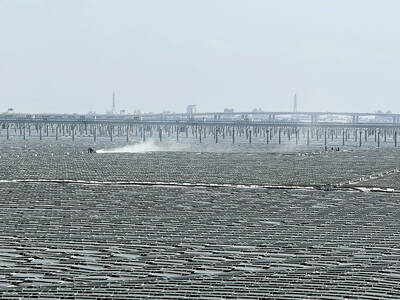
The arithmetic is straightforward and uncomfortable. By the end of 2025, Taiwan had committed itself to a 50-30-20 electricity mix — half natural gas, 30 per cent coal, 20 per cent renewables. The Ministry of Economic Affairs’s (MOEA) own monthly energy reports tell a different story. Natural gas reached 47.8 per cent of generation last year. Coal stood at 35.4 per cent, comfortably above its target ceiling. Renewables came in at 13.1 per cent, well short of the 20 per cent Taipei had pledged a decade earlier. Installed renewable capacity reached roughly half of the 12 gigawatts (GW) the government

Last week US President Donald Trump was asked by a reporter whether he would speak on the phone to the President of Taiwan. “l’ll speak to him. I speak to everybody. We have that situation very well in hand,” Trump said. This marked the second time in a couple of weeks he had said he would talk to the President of Taiwan. In 2016 he famously took a call from then-president Tsai Ing-wen (蔡英文), when he was president-elect. Despite warnings that the apocalypse was nigh because of a phone call, the world quickly forgot about the conversation between two democratically-elected presidents.
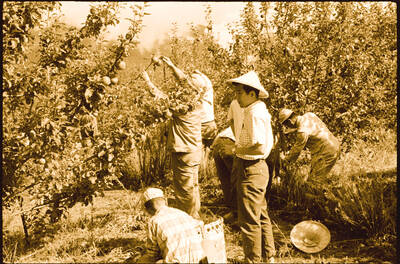
May 25 to May 31 Few believed that apples could be cultivated on a commercial scale in Taiwan’s high mountains. When horticulturalist Cheng Chao-hsiung (程兆熊) first proposed the idea in 1955, both American and Taiwanese colleagues dismissed it as implausible, arguing that temperate fruit could not be reliably grown on a subtropical island, especially on rugged terrain. However, it was this terrain in the Central Mountain Range where many Chinese Civil War veterans were resettled in the late 1950s. With limited job prospects and no family in Taiwan, they were placed on cooperative farms aimed toward self-sufficiency. Some say the conditions


 RSS
RSS