


It has long been known that dogs have less between their ears than wolves, but now research has suggested their brains started to get smaller at least 5,000 years ago.
Experts say the results offer fresh insights into the domestication of our canine companions. However, the findings are unlikely to explain why your spaniel will only drink from a muddy puddle: the researchers say a reduction in brain size does not mean dogs are dafter than their wolf-like ancestors.
“The way our dogs live nowadays doesn’t give them the opportunity to always express most of their intelligence,” said Thomas Cucchi, first author of the study from the French National Center for Scientific Research.

Photo: Reuters
“But they are extremely clever and domestication didn’t make them stupid, but made them really capable of reading us and communicating with us.”
The relationship between humans and canines is ancient, with research revealing the oldest direct genetic evidence for domestic dogs dates back more than 15,000 years.
But while a reduction in brain size is typically considered a hallmark of domestication, there has long been debate over exactly when dogs ended up with smaller brains than wolves, with some experts suggesting this may have occurred early in the dog-human relationship.
However, others argue smaller brain size is not a hallmark of domestication but instead reflects the emergence of pedigree breeds in the last 200 years.
Writing in the journal Royal Society Open Science, Cucchi and colleagues studied CT scans of the skulls of 22 prehistoric wolves and dogs, dating from 35,000 to 5,000 years ago, as well as CT scans from the skulls of 59 modern wolves and 104 modern dogs. The latter included different modern breeds as well as stray or “village” dogs, and dingoes.
The researchers used the scans to track how brain size changed over the evolutionary history of dogs.
The results reveal that, taken together, modern dog breeds, dingoes, village dogs and Late Neolithic dogs had a 32 percent smaller brain than ancient and modern wolves.
More specifically, dogs that lived in the Late Neolithic period — about 5,000 to 4,500 years ago — had brains 46 percent smaller in size than wolves from the same period, with brains of a similar size to those of pugs today. Further work revealed these dogs had significantly smaller brains than ancient wolves even once body size was taken into account — an important consideration given they were smaller overall..
However, the team found no sign that the brains of two canines that lived alongside humans 35,000 and 15,000 years ago — sometimes called “protodogs” — were smaller than those ancient wolves. Indeed, one brain was relatively larger, with the authors suggesting that raises the possibility brain size may actually have increased in the early stages of the domestication.
Cucchi said it is unclear why domestication resulted in dogs with smaller bodies and brains than their wolf-like ancestors.
However, he noted research has suggested that when the size of the brain is reduced, it reorganizes, meaning smaller dogs are less trainable and more wary of changes in their environment, making them potentially useful as “alarm systems.”
But Cucchi said it could also have been that limited food resources in the Neolithic village environment favored smaller dogs with smaller brains, as these require less energy.
Juliane Kaminski, an expert in canine cognition at the University of Portsmouth who was not involved in the study, said a particularly important revelation was that “protodogs” did not have smaller brains than wolves.
“They didn’t yet show this sign of domestication that we thought is [a] standard part of this domestication syndrome,” she said.
Kaminski said the study suggested the relationship between humans and dogs may have begun rather loosely before developing into a very strong bond.
“What [the authors] are simply saying is: OK, the timeline of the full domestication syndrome being in place is maybe a little bit later than the genetic data suggests,” she said.

Ajay Verma, a consultant gastroenterologist at Kettering general hospital in Northamptonshire, says our gut is a “complex machine.” “It is constantly providing us with the nutrition we need, initially to grow and develop, and then for us to survive, thrive and repair from injury and illness.” How can we keep it functioning well? Put simply: “Make sure what you put into it is balanced, and that you clear out its waste products adequately,” Verma says. “In a general gastroenterology clinic, the most common conditions we see are irritable bowel syndrome (IBS), gastroesophageal reflux disease, inflammatory bowel disease and constipation,” says Nisha

And so, in the wake of US President Donald Trump’s trip to the People’s Republic of China (PRC), all the experts on the Strait of Hormuz suddenly became experts on US-China-Taiwan relations. The Internet has certainly expanded human knowledge. Lots of these sudden experts made noise this week about Trump’s words after the meeting with PRC dictator Xi Jin-ping (習近平). Trump is going to sell out Taiwan! Longtime Taiwan commentator J. Michael Cole summed the situation up neatly in the Guardian: “We need to keep in mind that he has a tendency to say many things — sometimes contradicting himself within

Last week US President Donald Trump was asked by a reporter whether he would speak on the phone to the President of Taiwan. “l’ll speak to him. I speak to everybody. We have that situation very well in hand,” Trump said. This marked the second time in a couple of weeks he had said he would talk to the President of Taiwan. In 2016 he famously took a call from then-president Tsai Ing-wen (蔡英文), when he was president-elect. Despite warnings that the apocalypse was nigh because of a phone call, the world quickly forgot about the conversation between two democratically-elected presidents.
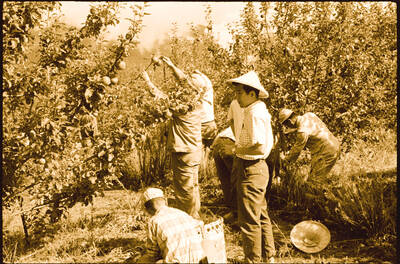
May 25 to May 31 Few believed that apples could be cultivated on a commercial scale in Taiwan’s high mountains. When horticulturalist Cheng Chao-hsiung (程兆熊) first proposed the idea in 1955, both American and Taiwanese colleagues dismissed it as implausible, arguing that temperate fruit could not be reliably grown on a subtropical island, especially on rugged terrain. However, it was this terrain in the Central Mountain Range where many Chinese Civil War veterans were resettled in the late 1950s. With limited job prospects and no family in Taiwan, they were placed on cooperative farms aimed toward self-sufficiency. Some say the conditions


 RSS
RSS