


And so, in the wake of US President Donald Trump’s trip to the People’s Republic of China (PRC), all the experts on the Strait of Hormuz suddenly became experts on US-China-Taiwan relations. The Internet has certainly expanded human knowledge.
Lots of these sudden experts made noise this week about Trump’s words after the meeting with PRC dictator Xi Jin-ping (習近平). Trump is going to sell out Taiwan! Longtime Taiwan commentator J. Michael Cole summed the situation up neatly in the Guardian: “We need to keep in mind that he has a tendency to say many things — sometimes contradicting himself within 24 hours — in the moment, based on what he recently heard or whom he spoke with.”
Trump’s remarks, widely reported in Taiwan, gave a lift to the pro-PRC side in Taiwan’s politics, which exploited them to yell at the Democratic Progressive Party (DPP) about its pro-independence flank. But this is old hat. A CNN report observed that a declaration of independence by Taiwan “is not part of the one-China policy,” the US President said. Anyone know which US President said that?
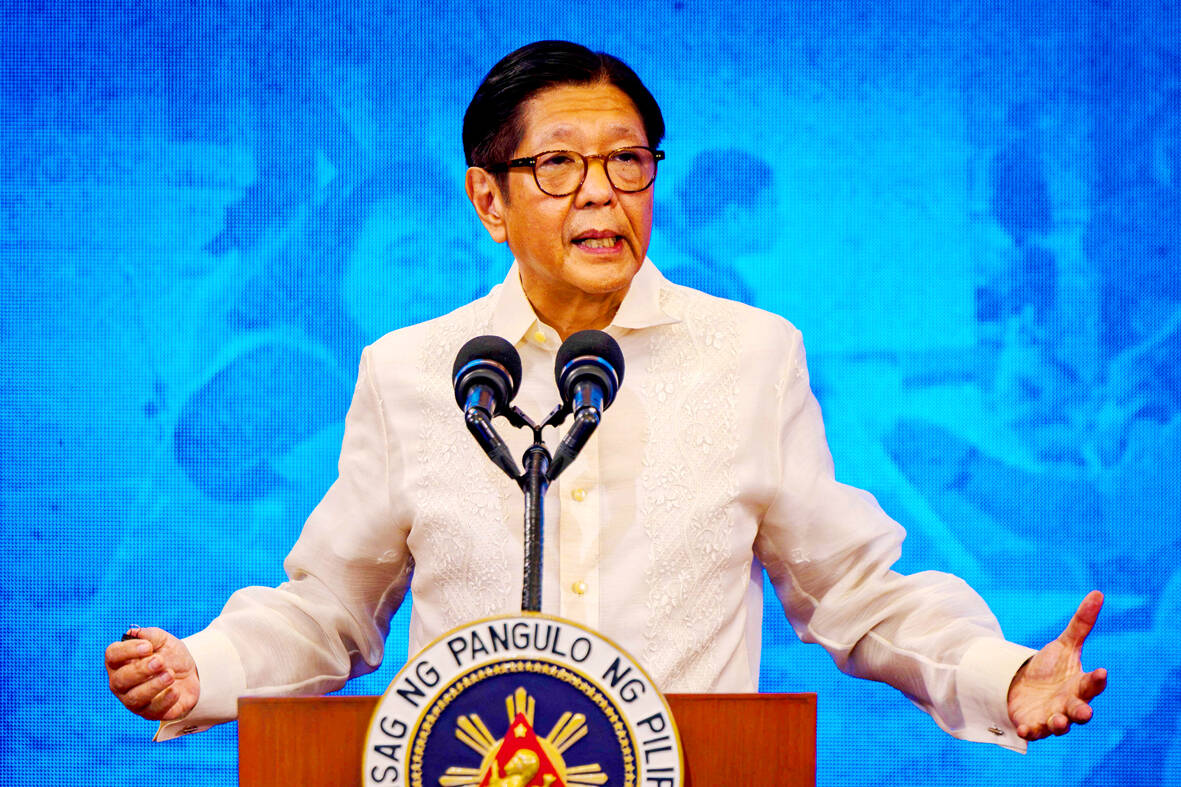
Photo: AFP
Official Washington pretends to be convinced that Taiwan could “declare independence,” a self-serving position that also helps the PRC, as I have observed (Notes from Central Taiwan: Independence in rhetoric and reality, April 15, 2024). Each time the US puts forth some version of “ZOMG they could declare independence!” politicians from the pro-China side jump on it. Their claims, that they refuse to be “pawns” of the US, or that the DPP-US relationship and arms purchases are hotbeds of corruption, are standard propaganda, decades old.
This pavane of the US president speaking on Taiwan and then underlings walking it back is an old dance in US-Taiwan relations. “[The President’s] comments represent the strongest and most specific language a US leader has used, and an apparent shift in US policy,” as CNN noted — not of Trump, but of Bush in 2001. The following day an administration official was quoted in the CNN follow-up piece: “no change [in US Taiwan policy] was intended.”
While the Internet was melting down about Trump, the thing that struck quieter observers was how normal everything was. Trump met with the leader of the PRC, and nothing seriously changed. Normal. The president then made Taiwan-related noises, which were quickly walked back. Again, normal. The president deprecated Taiwan independence, presenting it as a cause of the issue. The president told the PRC and Taiwan to both cool it. Every president has made that false equivalence between perps and victims — it is a normal part of US policy. These are inevitably followed by commentators explaining that nothing has really changed, like this essay, also perfectly normal.
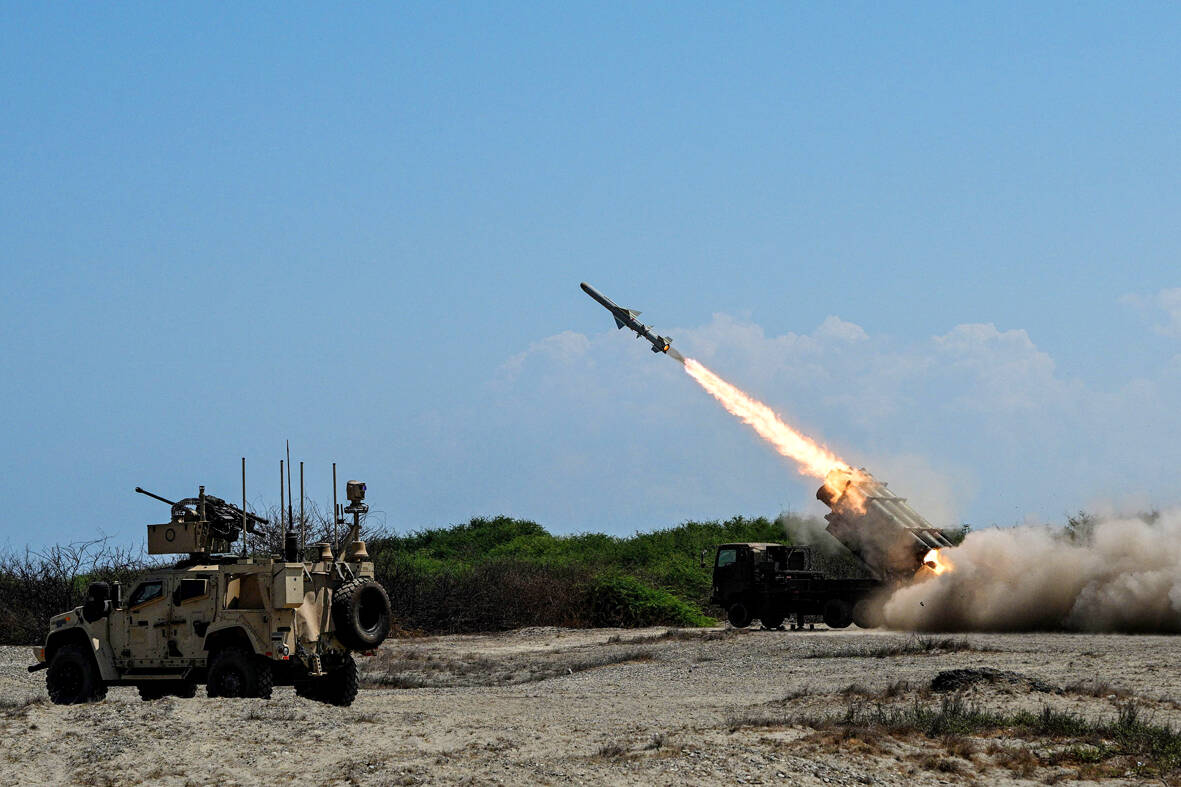
Photo: Reuters
Several US presidents have made “major shifts” in Taiwan policy, only to see Taiwan policy slowly flow back to its more or less normal mode. Much inertia yet remains in US Taiwan policy. Policy-makers, commentators and think-tankers work tirelessly whenever the dikes are breached to force US Taiwan policy back to its old streambed of the Six Assurances, strategic ambiguity, the communiques and the Taiwan Relations Act (TRA). Somewhere in the mud of that river lie the fossilized remains of the wishes of the Taiwan people.
Will the US defend Taiwan? The Internet was filled with voices saying that Trump had sold out Taiwan. Yet US Secretary of State Marco Rubio said that US Taiwan policy was “unchanged.” Other signals are out there, should anyone want to read them.
Earlier this month the US tested its Typhon missile launcher system, based in the Philippines since 2024, by firing a Tomahawk missile, hitting a target 600 kilometers away in the Philippines. Tomahawk missiles can also reach the Taiwan Strait and parts of the PRC from their bases in the Philippines. The PRC has objected vociferously to the deployment of the missiles, since they have only one obvious target: the PRC and its military.
If the US isn’t planning to intervene in a PRC invasion of Taiwan, why is it ramping up its military presence in the Philippines, especially in the north, under the Trump Administration?
The US in late 2023 began rebuilding the World War II airfields on Tinian island in the Pacific, a US commonwealth territory. Tinian is famed as the airfield from which the US launched B-29 raids on Japan late in the war.
“Today, amid tensions between the US and China over Beijing’s threats toward Taiwan, Tinian has been picked as one of several World War II-era military bases to be refurbished,” Radio Liberty said.
If the US isn’t planning on defending Taiwan in a war with the PRC, why is it repairing bases in the Pacific under the Trump Administration?
Philippine President Ferdinand Marcos Jr said last week that the Philippines would likely become involved in any conflict over Taiwan, given the nation’s geographical proximity and 200,000 migrant workers here. Marcos was later forced to clarify, saying “when it comes to Taiwan, as far as the Philippines is concerned, we do not interfere with something that is an internal matter,” observing that Philippine policy is that Taiwan is part of China, adding “we do not want to be involved in any war, we do not want to be involved in any conflict.”
Marcos very obviously has his own domestic audience to address, but it is difficult to see how the Philippines could stay out of a war between the US and China over Taiwan, especially if it is trying to repatriate its nationals. Northern Luzon will likely be a staging area for supplies to Taiwan, and for US air and sea assets fighting over Taiwan. Manila and Washington have a mutual defense treaty that could well be triggered in the event of a PRC attack on either.
To the north Japan has in the last few years placed missiles on islands close to Taiwan and announced evacuation plans for the residents of said islands. Prime Minister Takaichi Sanae’s announcement that an invasion of Taiwan would be “existential” for Japan highlights another issue in the US intervention calculus: the involvement of nearby states.
Let’s assume Trump decides initially not to intervene in a PRC invasion, as many of his remarks over the years tend to indicate. He refuses to say openly one way or another, which gives him leverage he appears to enjoy.
In that case, imagine the immense pressure that will be brought to bear on him. Japan and the Philippines will be weighing in, since they are next on Beijing’s expansionist list. The US Congress, where Taiwan remains a popular bipartisan issue, will be pressuring for intervention. Voices in the government, intelligence community and Pentagon will be arguing for it as well, as will think-tankers and commentators of all stripes. Taiwanese-American groups will also be in that fight. Polls show defending Taiwan has broad public support in the US.
Of course, Trump could render all this speculation pointless simply by dying, as 80 year olds often do. What will President J. D. Vance do?
Let’s hope Taiwan policy still has inertia.
Notes from Central Taiwan is a column written by long-term resident Michael Turton, who provides incisive commentary informed by three decades of living in and writing about his adoptive country. The views expressed here are his own.
Taiwan’s overtaking of South Korea in GDP per capita is not a temporary anomaly, but the result of deeper structural problems in the South Korean economy says Chang Young-chul, the former CEO of Korea Asset Management Corp. Chang says that while it reflects Taiwan’s own gains, it also highlights weakening growth momentum in South Korea. As design and foundry capabilities become more important in the AI era, Seoul risks losing competitiveness if it relies too heavily on memory chips. IMF forecasts showing Taiwan widening its lead over South Korea have fueled debate in Seoul over memory chip dependence, industrial policy and
“China wants to unify with Taiwan at the lowest possible cost, and it currently believes that unification will become easier and less costly as time passes,” wrote Amanda Hsiao (蕭嫣然) and Bonnie Glaser in Foreign Affairs (“Why China Waits”) this month, describing how the People’s Republic of China (PRC) is playing the long game in its quest to seize Taiwan. This has been a favorite claim of many writers over the years, easy to argue because it is so trite. Very obviously, if the PRC isn’t attacking Taiwan, it is waiting. But for what? Hsiao and Glaser’s main point is trivial,
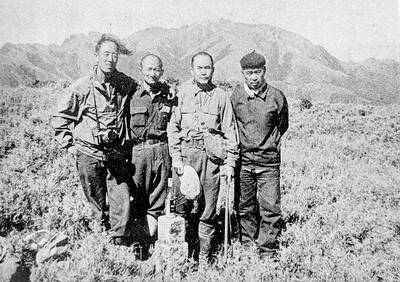
May 18 to May 24 Gathered on Yangtou Mountain (羊頭山) on Dec. 5, 1972, Taiwan’s hiking enthusiasts formally declared the formation of the “100 Peaks Club” (百岳俱樂部) and unveiled the final list of mountains. Famed mountaineer Lin Wen-an (林文安) led this effort for the Chinese Alpine Association (中華山岳協會). Working with other experienced climbers, he chose 100 peaks above 10,000 feet (3,048m) that featured triangulation points and varied in difficulty and character. The list sparked an alpine hiking craze, inspiring many to take up mountaineering and competing to “conquer” the summits. A common misconception is that the 100 Peaks represent Taiwan’s 100 tallest
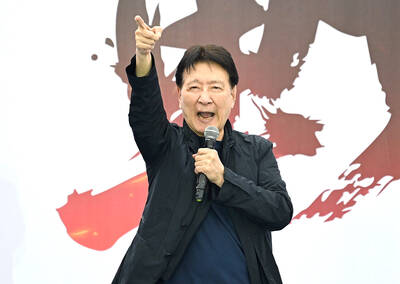
In a sudden move last week, opposition lawmakers of the Chinese Nationalist Party (KMT) and Taiwan People’s Party (TPP) passed a NT$780 billion special defense budget as a preemptive measure to stop either Chinese leader Xi Jinping (習近平) or US President Donald Trump from blocking US arms sales to Taiwan at their summit in Beijing, said KMT heavyweight Jaw Shaw-kong (趙少康), speaking to the Taipei Foreign Correspondents Club on Wednesday night in Taipei. The 76-year-old Jaw, a political talk show host who ran as the KMT’s vice presidential candidate in 2024, says that he personally brokered the deal to resolve


 RSS
RSS