


There are some early cues that the new animated Animal Farm is not your grandmother’s Animal Farm. Like when one critter asks, “What’s up?” and another says, “Totally rad.” Did George Orwell really have one of his pigs scream, “Check it before you wreck it”?
I don’t want to get all prudish here; I’m all for reinventions and reintroductions. But screenwriter Nicholas Stoller and director Andy Serkis’ awfully misguided Disneyfication of one of the greatest allegorical satires in the English language is a cinematic car crash. It’s an adaptation for the PAW Patrol set made by filmmakers with the movie equivalent of baseball caps worn backward. They should have checked it before they wrecked it.
Stoller hasn’t made just demure alterations to Orwell’s 1940s novella, he’s dragged it through an abattoir, changing small things (a windmill becomes a watermill) to large (a new main character, the piglet Lucky). That whole anti-totalitarian thing that Orwell intended has been given a confusing side-message — a warning about Big Corporatization. (“I want that land. I need that land,” says Freida Pilkington, remade as a venal corporate CEO.)
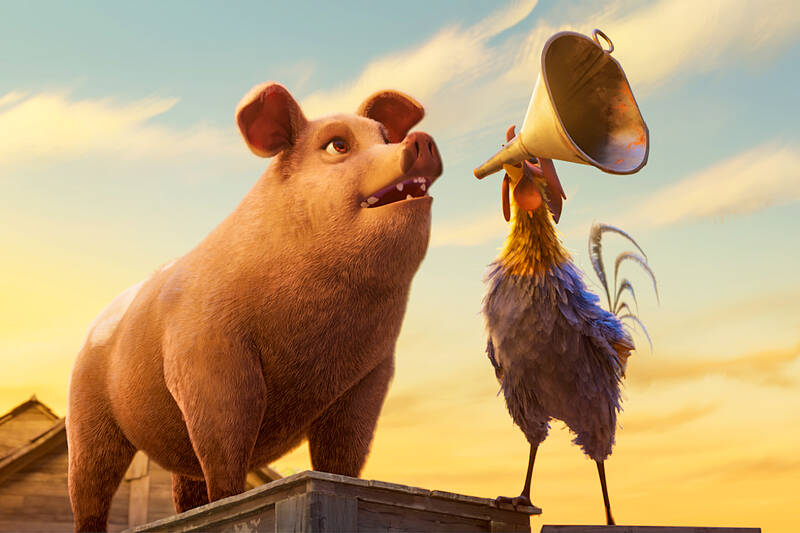
Photo: AP
The self-owns keep coming: An animal field trip to a human mall (“Don’t think, just buy it! Buy it all!” the villain pig Napoleon screams), a rom-com grafted for Lucky, a nod to Midnight Cowboy (“I’m walkin’ here!”), an alcohol-fueled pool party and a nadir when Napoleon — here renamed “NaPoPo” — farts loudly and exclaims: “This is the sound of freedom!”
Here’s an Animal Farm made modern and cheery, complete with iPhones, sports cars with gull wings, camera-loaded drones, Hazmat suits and digital screens. Instead of an ever-darkening color palette, it’s as bright and bouncy as Daniel Tiger’s Neighborhood, even though Charles Addams is a better fit than Nickelodeon. There are adorable, giggling piglets. In the book, many are executed. Here they cavort.
An all-star voice cast has been convinced, somehow, to participate, led by Seth Rogen as Napoleon. Initially, that seemed like a total miscast when Rogen leans into his silly, stoner persona, replete with “heh-heh-heh” chuckle. But he later pulls off menace and manipulation surprisingly well. I didn’t have Seth Rogen as Stalin on my bingo card for 2026.
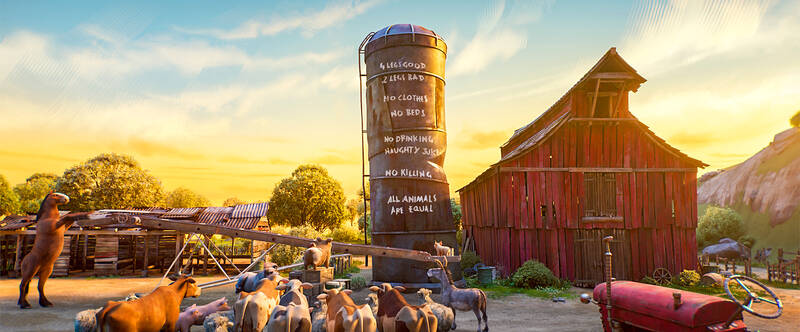
Photo: AP
Stranger Things star Gaten Matarazzo voices plucky Lucky; Laverne Cox is great as NaPoPo’s porcine rival, Snowball; Steve Buscemi is a smarmy human employee from the bank; Kieran Culkin is NaPoPo’s piggy lieutenant, Squealer; Woody Harrelson tenderly voices the loyal horse Boxer; and Glenn Close is Pilkington, employing some sort of weird, plumby Southern accent. Jim Parsons and Kathleen Turner are in there, too.
As much as you might hold your nose and let the little ones watch to get the essence before they pick up the book in high school, the movie’s finale — concocting a Mission: Impossible-style revenge caper led by Lucky to right all the wrongs, dubbed “Operation Party Pooper” and ending with an underwater fight scene — is easily the most egregious movie mistake since Johnny Depp was cast in Sweeney Todd.
Despite the apparent blessing of the Orwell estate, only the barest outlines of the author’s story and tone remain — a group of farm animals rebel against their owner and try to create a utopia, only to end up in chains again. But, here, it’s like, “Oh, bro, we totally oink-ed it up, no cap.” The movie actually has a hopeful, happy ending, folks — Animal Farm remade as cheerful?
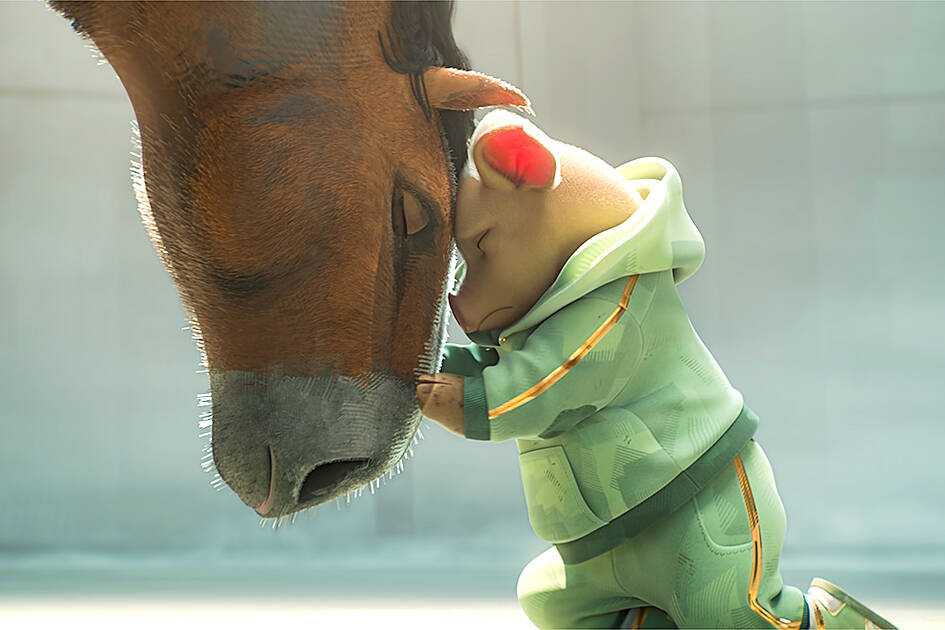
Photo: AP
Put down Orwell’s book and you’ll shiver, convinced to redouble your efforts to protect civil society, stand for dignity and fight for the rule of law. Walk out of this new animated movie and you’ll likely just want to inhale more M&Ms. And fart.
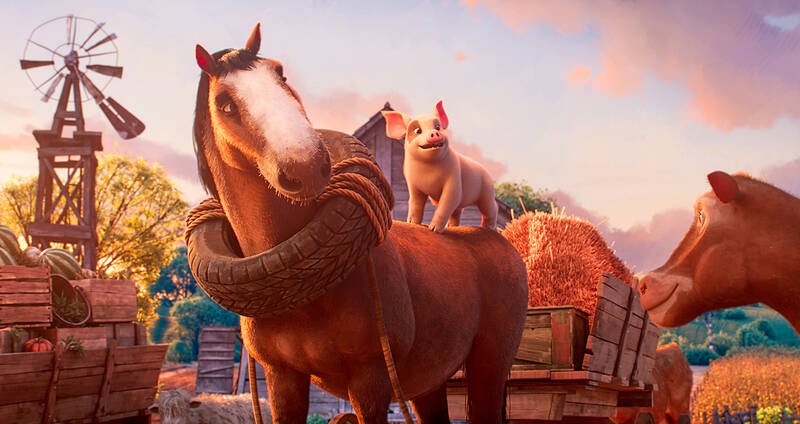
Photo: AP
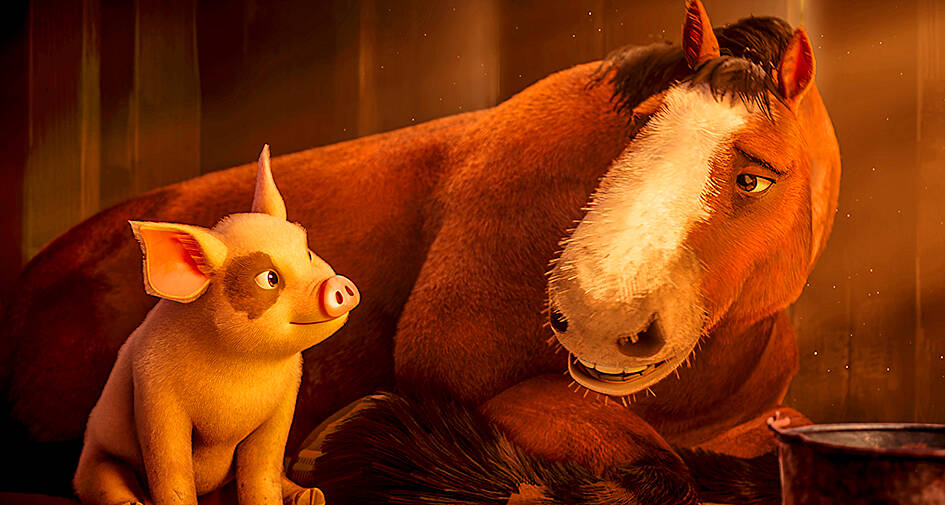
Photo: AP

Ajay Verma, a consultant gastroenterologist at Kettering general hospital in Northamptonshire, says our gut is a “complex machine.” “It is constantly providing us with the nutrition we need, initially to grow and develop, and then for us to survive, thrive and repair from injury and illness.” How can we keep it functioning well? Put simply: “Make sure what you put into it is balanced, and that you clear out its waste products adequately,” Verma says. “In a general gastroenterology clinic, the most common conditions we see are irritable bowel syndrome (IBS), gastroesophageal reflux disease, inflammatory bowel disease and constipation,” says Nisha

And so, in the wake of US President Donald Trump’s trip to the People’s Republic of China (PRC), all the experts on the Strait of Hormuz suddenly became experts on US-China-Taiwan relations. The Internet has certainly expanded human knowledge. Lots of these sudden experts made noise this week about Trump’s words after the meeting with PRC dictator Xi Jin-ping (習近平). Trump is going to sell out Taiwan! Longtime Taiwan commentator J. Michael Cole summed the situation up neatly in the Guardian: “We need to keep in mind that he has a tendency to say many things — sometimes contradicting himself within

Last week US President Donald Trump was asked by a reporter whether he would speak on the phone to the President of Taiwan. “l’ll speak to him. I speak to everybody. We have that situation very well in hand,” Trump said. This marked the second time in a couple of weeks he had said he would talk to the President of Taiwan. In 2016 he famously took a call from then-president Tsai Ing-wen (蔡英文), when he was president-elect. Despite warnings that the apocalypse was nigh because of a phone call, the world quickly forgot about the conversation between two democratically-elected presidents.
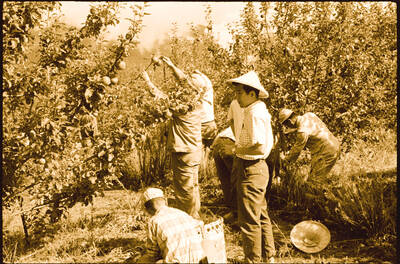
May 25 to May 31 Few believed that apples could be cultivated on a commercial scale in Taiwan’s high mountains. When horticulturalist Cheng Chao-hsiung (程兆熊) first proposed the idea in 1955, both American and Taiwanese colleagues dismissed it as implausible, arguing that temperate fruit could not be reliably grown on a subtropical island, especially on rugged terrain. However, it was this terrain in the Central Mountain Range where many Chinese Civil War veterans were resettled in the late 1950s. With limited job prospects and no family in Taiwan, they were placed on cooperative farms aimed toward self-sufficiency. Some say the conditions


 RSS
RSS