


April 27 to May 3
Everything about Castrated Chicken (閹雞) followed the rules — until the Taiwanese folk songs began. As the male choir sang Diu Diu Deng (丟丟銅仔) and June Fields (六月田水), the audience danced and sang along, even calling for the songs to be repeated several times.
It was a bold move by the Housheng Theater Research Group (厚生演劇研究會), formed on April 29, 1943 amid tightening Japanese colonial control over culture and growing concern over the direction of local theater.
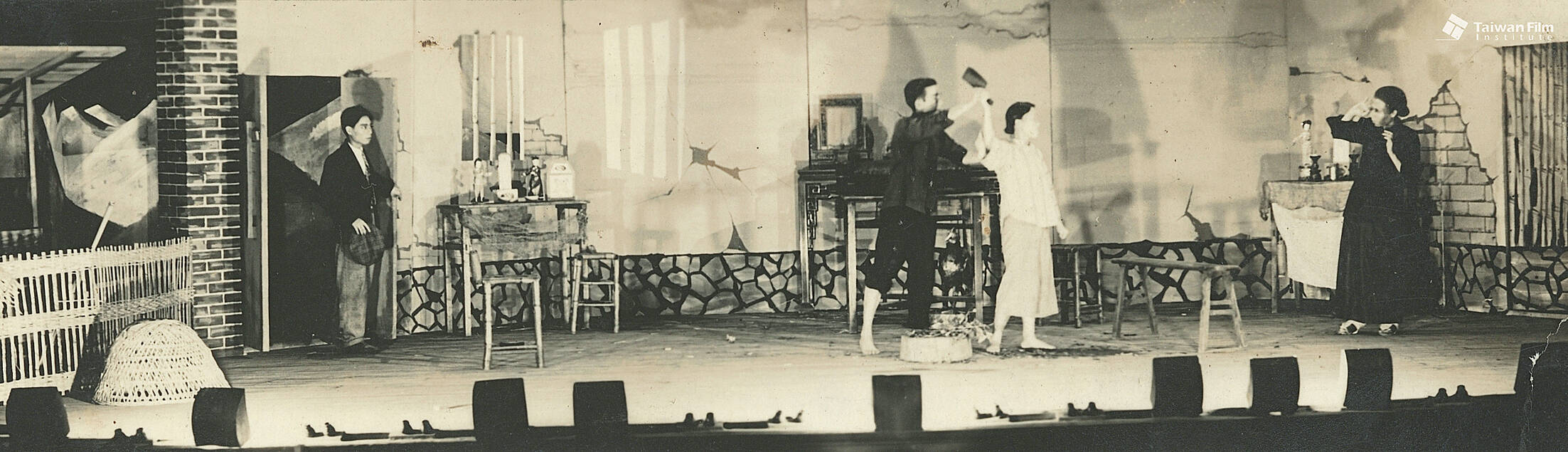
Photo courtesy of Taiwan Film and Audiovisual Institute
The next morning, troupe leader Wang Ching-chuan (王井泉) was summoned to the police station. He feared that the remaining performances would be banned, but he was instead warned not to include those songs again, as they did not fit with the Kominka cultural assimilation policy.
Housheng soon disbanded, but Castrated Chicken grew in stature within Taiwanese theater lore, in part because it aligned with the Chinese Nationalist Party’s (KMT) anti-Japanese narrative. Some later accounts even claim that the entire play was performed in Hoklo (also known as Taiwanese) as a direct challenge to wartime colonial policy, writes Shih Wan-shun (石婉舜) in “Study of the 1943 Housheng Drama Research Group Taiwan” (1943年台灣的厚生演劇研究會).
The reality, however, was more complex. Castrated Chicken was just one of four plays in Housheng’s debut program, all written by Lin Tuan-chiu (林摶秋) and rooted in local life and culture, as the troupe sought to assert cultural leadership within the constraints of its time.
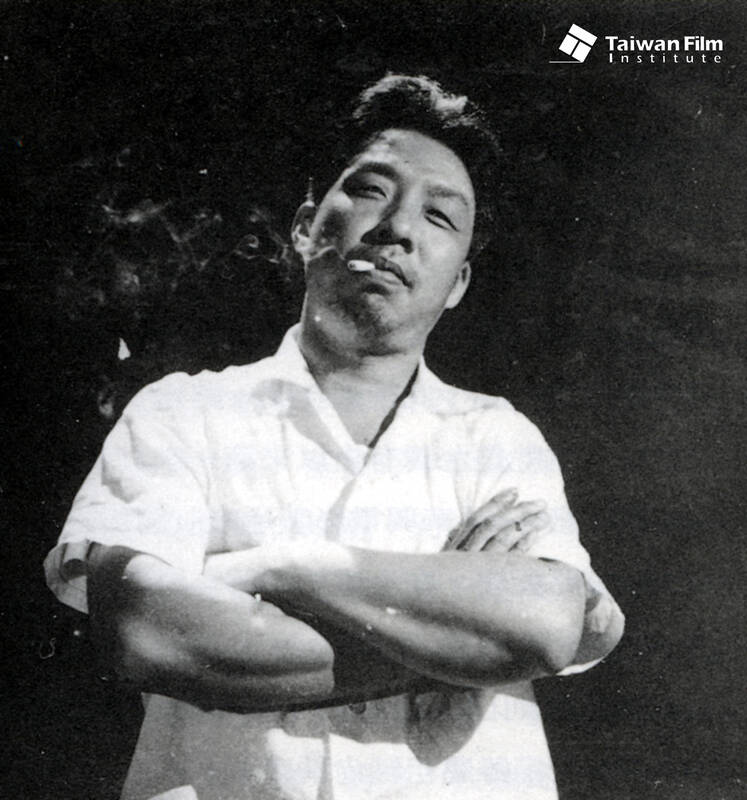
Photo courtesy of Taiwan Film and Audiovisual Institute
CULTURAL CENSORSHIP
After Japan’s invasion of China in 1937, colonial authorities intensified the Kominka campaign, cracking down on local language and cultural expression. Because the “new drama” movement of the 1920s had been closely tied to political and social activism, the theater industry came under increasingly strict censorship, Shih writes. In 1938, all forms of Taiwanese drama, including traditional opera, were banned.
Many Taiwanese opera troupes responded by shifting their costumes and settings to Japanese or Western contexts while retaining much of their original performance style. Modern theater groups, by contrast, began adopting Japanese scripts and films wholesale. This development troubled intellectuals and cultural figures.
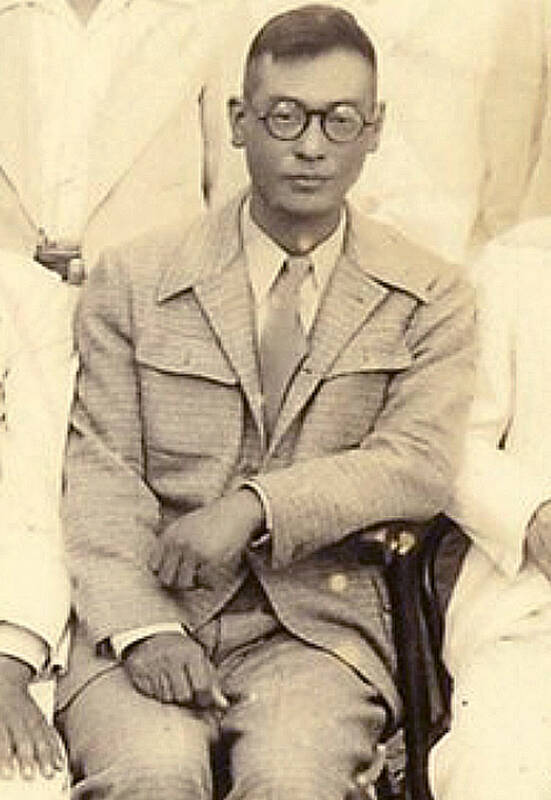
Photo courtesy of Open Museum
In 1940, the policy shifted. Rather than simply suppressing local culture without providing an alternative, the new governor-general saw the need to preserve certain elements while gradually guiding the people toward Japanese ways.
While many traditional arts were revived, their content still had to conform to the Kominka framework, with authorities retaining the power to make changes before granting approval.
In July 1941, a Kominka entertainment committee composed of both Taiwanese and Japanese was formed to advise, improve and promote these arts within official boundaries.
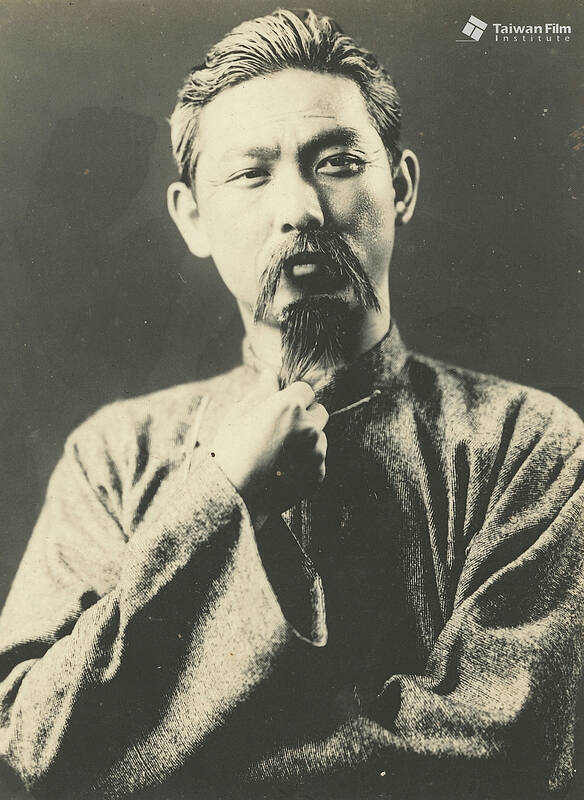
Photo courtesy of Taiwan Film and Audiovisual Institute
‘TRUE ENTERTAINMENT’
A month later, the Taiwan Folk Drama Research Group (台灣鄉土演劇研究會) was established. Although little documentation of its activities survives, their writings reveal dissatisfaction with the quality of theater resulting from Kominka regulations, in particular the unconvincing scripts.
In 1942, the Taiwan Theater Association (台灣演劇協會) was formed as the sole authority overseeing performance troupes. It was headed by playwright Toru Matsui, who believed that popular theater was an effective “weapon” for the war effort. In 1943, Xingnan News (興南新聞) formed the Arts and Culture Research Group (藝能文化研究會) with Matsui as leading figure.
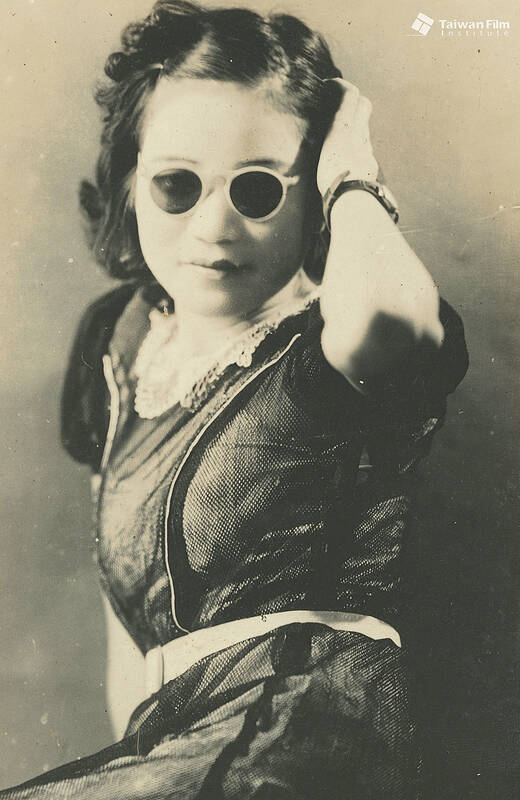
Photo courtesy of Taiwan Film and Audiovisual Institute
In July 1943, the research group staged the Japanese play Equator, promoting ideals of self-sacrifice for the nation. This alarmed local theater enthusiasts who were dismayed that a pro-Taiwanese newspaper collaborated with Matsui instead of supporting local talent, and that the choice of Equator ran against their efforts to reintroduce local culture into theater.
Wang, a tireless patron of the arts, opposed the importation of Japanese scripts, believing they would not resonate with local audiences. In response, he co-launched Housheng at his Shanshuiting (山水亭) banquet hall, a longtime gathering place for Taiwanese cultural figures.
The group’s goal, he wrote, was to create “true entertainment” for the masses that was grounded in everyday realities.
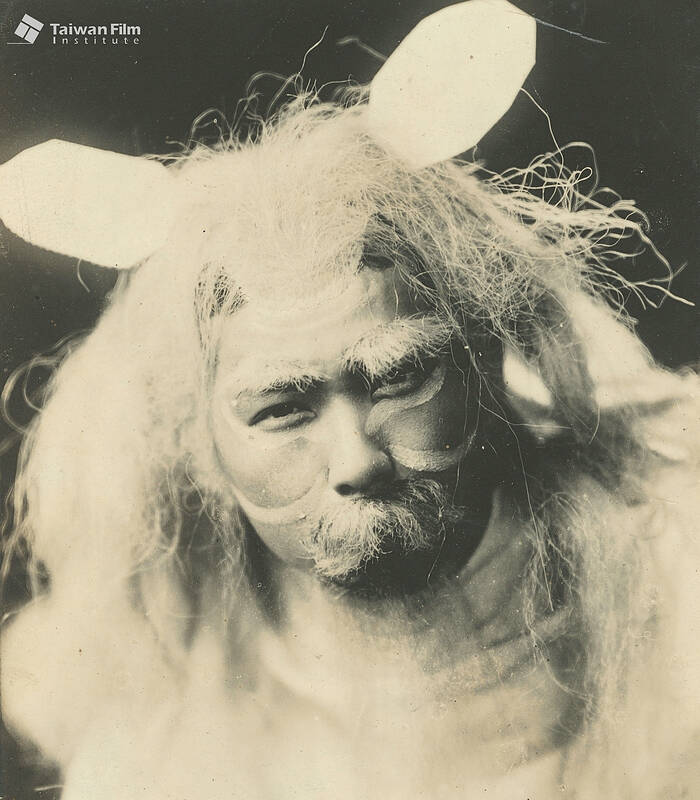
Photo courtesy of Taiwan Film and Audiovisual Institute
Wang served as group leader, with Lin Tuan-chiu as writer and director. Advisors were Hsieh Huo-lu (謝火爐), Chang Wen-huan (張文環), Eiichi Nawa, Lu He-ruo (呂赫若) and Lu Chuan-sheng (呂泉生). Also present were 35 young members recruited from the greater Taipei area.
ACCALIMED PERFORMANCES
The son of a mine owner, Lin was training to become an Olympic swimmer when a throat injury derailed his career. While attending university in Tokyo, he began submitting plays to the acclaimed Moulin Rouge Shinjuku theater, later joining its writing and directing staff. He honed his craft there by producing one play a month for the troupe, known for its intellectual, satirical comedies, while also selling scripts to the more commercial Asakusa theaters.
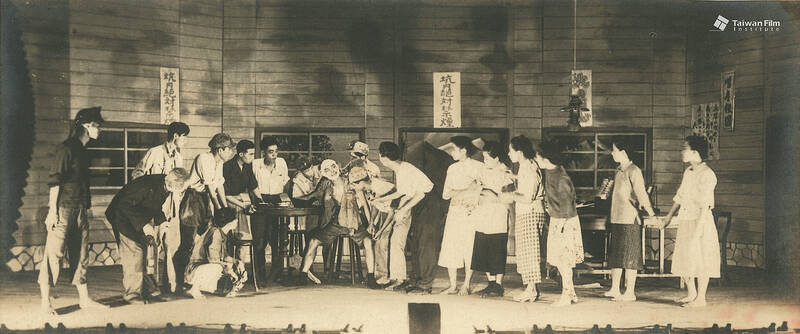
Photo courtesy of Taiwan Film and Audiovisual Institute
During a trip home in February 1943, he became acquainted with the local Kominka youth theater and directed their play Alishan (阿里山) to great fanfare. He was subsequently coerced by colonial authorities to remain and advise the Taiwan Theater Association, writes Shih in her biography of Lin. At the same time, he grew close to the regulars at Shanshuiting, who were older than him and took him around Taiwan to show him local customs and culture.
After much discussion, the troupe decided to debut four contrasting productions for their first public performance, all written by Lin. Castrated Chicken (閹雞), adapted from a novella by Chang Wen-huan, was set in rural Taiwan and depicted the hardships of local families, particularly women. The novel was a tragic love story critical of capitalism, patriarchy and colonialism, but Lin’s script was more lighthearted with a relatively optimistic ending.
Takasago Inn (高砂館) was a more introspective and ambitious work, telling the story of a hotel owner and his daughter as they awaited the return of his son and her boyfriend — friends who had left for Manchuria in search of opportunity. Meanwhile, characters come and go from the inn, each with their own hopes and disappointments.
Geothermal (地熱) was an earlier work that Lin had staged in Japan, depicting a conflict between miners and a mine owner following a shaft collapse. Little documentation survives of Lights of the Marketplace from the Mountain (從山上看街市的燈火), except that it was a family-friendly musical that featured anthropomorphic animals.
The six performances in September 1943 proved so popular that an additional show was added, drawing nearly 10,000 spectators. Reviews in major newspapers were overwhelmingly positive, with Taihoku Imperial University professor Sadaharu Takita writing in the Kominka movement’s official mouthpiece, New Construction that Housheng’s performance marked the “dawn of the modern drama movement.
However, as the war turned against Japan that year, resources were tightened and cultural activity was further redirected toward the war effort. The government soon took direct control over all literary and theater groups, effectively bringing Housheng to an end.
Taiwan in Time, a column about Taiwan’s history that is published every Sunday, spotlights important or interesting events around the nation that either have anniversaries this week or are tied to current events.

Ajay Verma, a consultant gastroenterologist at Kettering general hospital in Northamptonshire, says our gut is a “complex machine.” “It is constantly providing us with the nutrition we need, initially to grow and develop, and then for us to survive, thrive and repair from injury and illness.” How can we keep it functioning well? Put simply: “Make sure what you put into it is balanced, and that you clear out its waste products adequately,” Verma says. “In a general gastroenterology clinic, the most common conditions we see are irritable bowel syndrome (IBS), gastroesophageal reflux disease, inflammatory bowel disease and constipation,” says Nisha
The arithmetic is straightforward and uncomfortable. By the end of 2025, Taiwan had committed itself to a 50-30-20 electricity mix — half natural gas, 30 per cent coal, 20 per cent renewables. The Ministry of Economic Affairs’s (MOEA) own monthly energy reports tell a different story. Natural gas reached 47.8 per cent of generation last year. Coal stood at 35.4 per cent, comfortably above its target ceiling. Renewables came in at 13.1 per cent, well short of the 20 per cent Taipei had pledged a decade earlier. Installed renewable capacity reached roughly half of the 12 gigawatts (GW) the government

Last week US President Donald Trump was asked by a reporter whether he would speak on the phone to the President of Taiwan. “l’ll speak to him. I speak to everybody. We have that situation very well in hand,” Trump said. This marked the second time in a couple of weeks he had said he would talk to the President of Taiwan. In 2016 he famously took a call from then-president Tsai Ing-wen (蔡英文), when he was president-elect. Despite warnings that the apocalypse was nigh because of a phone call, the world quickly forgot about the conversation between two democratically-elected presidents.
May 25 to May 31 Few believed that apples could be cultivated on a commercial scale in Taiwan’s high mountains. When horticulturalist Cheng Chao-hsiung (程兆熊) first proposed the idea in 1955, both American and Taiwanese colleagues dismissed it as implausible, arguing that temperate fruit could not be reliably grown on a subtropical island, especially on rugged terrain. However, it was this terrain in the Central Mountain Range where many Chinese Civil War veterans were resettled in the late 1950s. With limited job prospects and no family in Taiwan, they were placed on cooperative farms aimed toward self-sufficiency. Some say the conditions


 RSS
RSS