


They’re missing a trick here, I thought, when the staff brought out the Minced Century Egg with Tender Tofu (馬告松花皮蛋豆腐, NT$360). Then I said it out loud.
Unlike the original bill of fare, Chiou Hwa Restaurant’s English-language menu — which otherwise can’t be faulted — fails to mention the dish’s most intriguing ingredient: mountain peppercorn, known to Mandarin speakers as magao (馬告) and to Taiwan’s Atayal indigenous people as maqaw.
Maqaw has been talked up in the New York Times, no less. For foreign foodies, seeing this word could well make them forgo restraint and order one more item. But revising the English menu probably isn’t a priority for management. The clientele, I was told, is overwhelmingly Taiwanese, and in the short time the Taichung branch of Chiou Hwa has been open, Minced Century Egg with Tender Tofu has emerged as the single most popular dish. Understandably so — we both thought the egg-maqaw mix hit the sweet spot between understatement and flavor inundation, while the thin slices of tofu barely diminished our appetites, ensuring we’d fully enjoy the more substantial dishes that soon arrived.
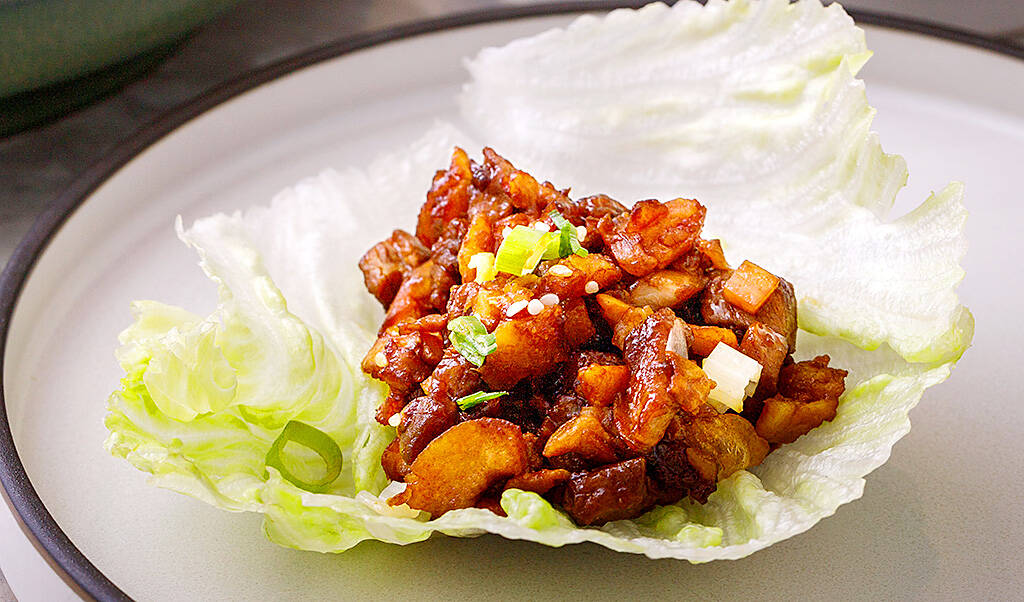
Photo courtesy of Chiou Hwa Restaurant
Chiou Hwa has been serving Cantonese cuisine at its Taipei location since 1987, but it wasn’t until last year that its owners, Gloria Hotel Group (華泰大飯店集團), opened this second branch. The menu at both is identical, leading with classics including Gloria Signature Peking Duck (華泰招牌片皮鴨) and Glorious Hang-Roasted Chicken (乳香金牌吊燒雞, NT$780/1,280). I can’t speak for the flagship restaurant, but the decor in Taichung is classy yet unobtrusive.
Before the duck was wheeled out, we worked our way through half a dozen dishes, almost all of which I’d joyfully eat again. Each slice of the Deep-fried Stuffed You-tiao (百花釀油條, NT$590) was a dense delight of shrimp, sesame and water chestnut. The Woodfired Honey Roasted Char Siu (柴燒蜜汁叉燒皇, NT$580; “in limited supply,” the menu warns) had us praising its near-ideal fat-to-lean ratio, but taking opposite sides when it came to the merits of Cantonese glazed pork versus Taiwanese braised pork belly.
The sliced ginger atop the Braised Chitterlings with Traditional Marinade (滷水肥大腸, NT$420) functions perfectly as a palate-cleanser, removing any lingering greasiness so you can properly relish what comes next. The Dried Scallop and Egg White Fried Rice (瑤柱水晶蝦炒飯, NT$460) contains another crop associated with indigenous cuisine, djulis (紅藜, “red quinoa”).
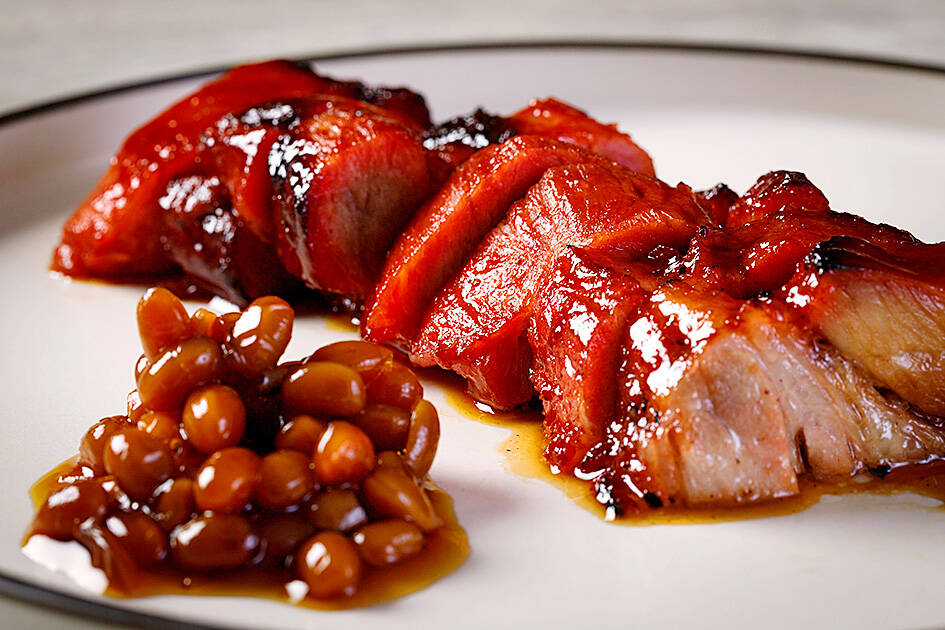
Photo courtesy of Chiou Hwa Restaurant
The menu lists several vegetable options, and I enjoyed the enigmatically-labeled Stewed Pigweed in Broth with Fresh Bean Curd and Salangida (腐竹小魚炆莧菜, NT$450). This vegetable is better known as amaranth; in the West, people eat the quinoa-like seeds rather than the leaves and stems. Readers of Chinese will guess that salangida are little fish. Yet the Steamed Egg and Luffa with Garlic Paste (蒜蓉蒸澎湖角瓜, NT$420) — before I say this, I want to emphasize that overall I had a superb dining experience — felt like a dish without a purpose.
Carving up a roasted duck and serving it “two ways” or “three ways” isn’t unusual in Taiwan, but Chiou Hwa (where it’s priced NT$3,280/3,580) offers a twist. As you’d expect, the Signature Peking Duck Wraps (麥餅片皮鴨) all contain succulent meat with crispy skin. Some of them, however, come with a generous dash of popping candy.
I’m pretty conservative where counter-intuitive taste combinations are concerned, yet this one works. It’s a novelty well worth experiencing, for sure, but it isn’t the “way” that’ll bring me back to this restaurant. That would be the Duck Lettuce Wrap with Brunoise Water Chestnut (荸薺鴨鬆美生菜), in which the meat is diced and stir-fried. The crunch of the lettuce and the umami layers of the filling were richly comforting. I could eat it every day for a week.
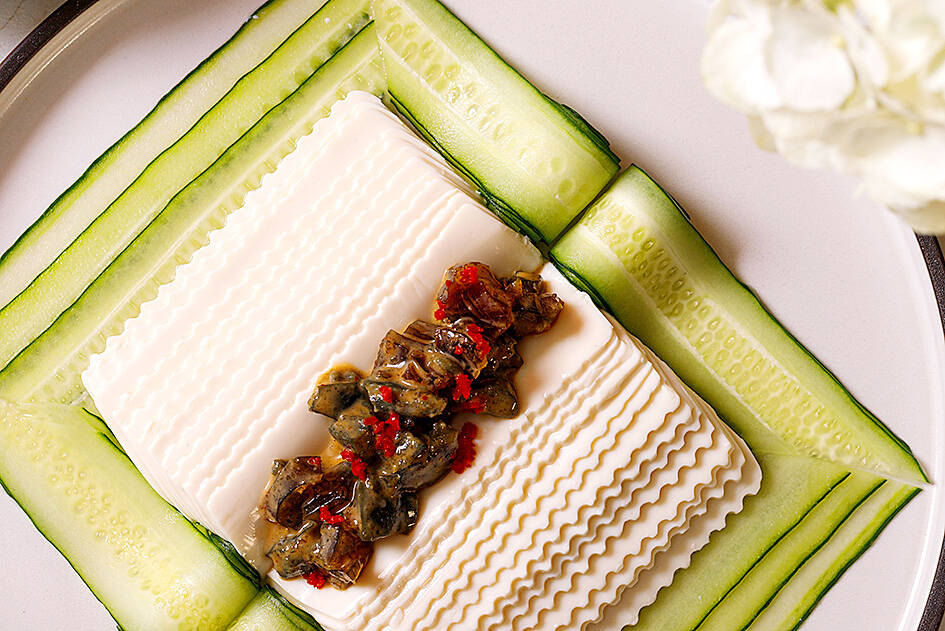
Photo courtesy of Chiou Hwa Restaurant
Speaking of tofu, the Matsutake Mushroom Chrysanthemum Tofu Soup (松茸美白菊花盅, NT$320) is a sight to behold. To create this dish, the chef slices the tofu without detaching any, then adds liquid to make it “bloom” like a flower. But if you’re getting full, I’d advise you to skip this dish and save space for the exquisite Handmade Duck Yolk Pudding (手工鴨蛋黃布丁, NT$350; portion large enough for three people) — and run the risk that subsequent desserts are likely to disappoint.
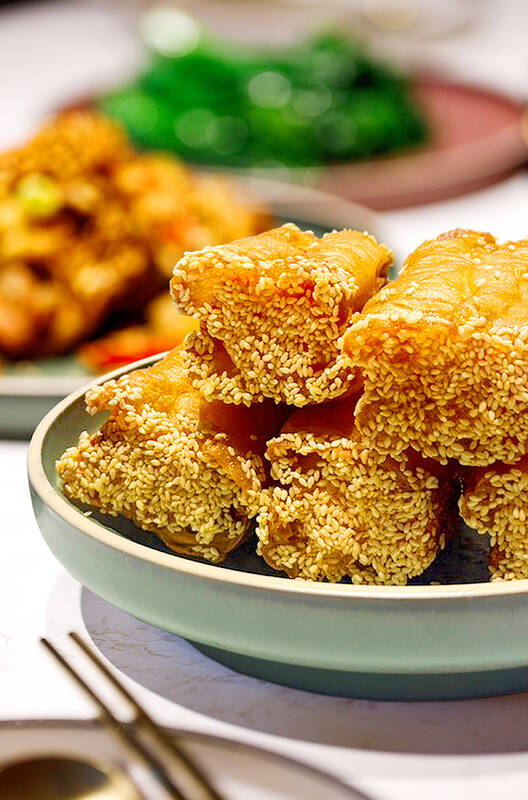
Photo courtesy of Chiou Hwa Restaurant
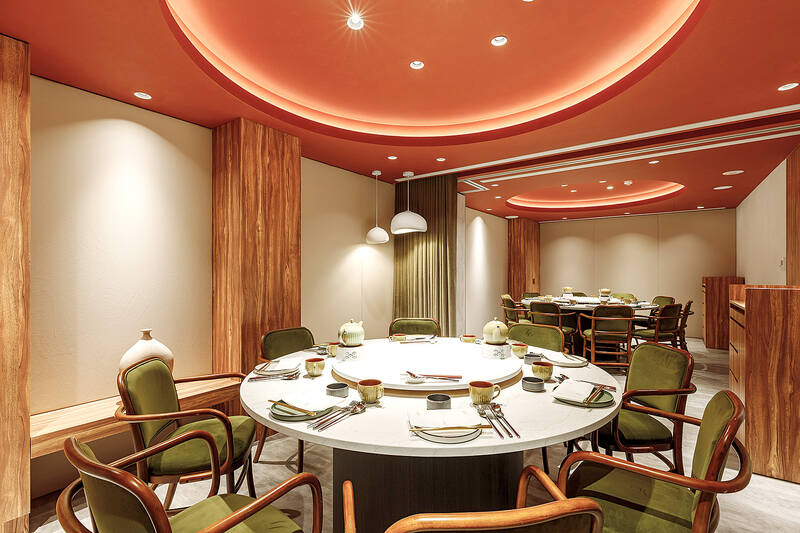
Photo courtesy of Chiou Hwa Restaurant
Ajay Verma, a consultant gastroenterologist at Kettering general hospital in Northamptonshire, says our gut is a “complex machine.” “It is constantly providing us with the nutrition we need, initially to grow and develop, and then for us to survive, thrive and repair from injury and illness.” How can we keep it functioning well? Put simply: “Make sure what you put into it is balanced, and that you clear out its waste products adequately,” Verma says. “In a general gastroenterology clinic, the most common conditions we see are irritable bowel syndrome (IBS), gastroesophageal reflux disease, inflammatory bowel disease and constipation,” says Nisha

And so, in the wake of US President Donald Trump’s trip to the People’s Republic of China (PRC), all the experts on the Strait of Hormuz suddenly became experts on US-China-Taiwan relations. The Internet has certainly expanded human knowledge. Lots of these sudden experts made noise this week about Trump’s words after the meeting with PRC dictator Xi Jin-ping (習近平). Trump is going to sell out Taiwan! Longtime Taiwan commentator J. Michael Cole summed the situation up neatly in the Guardian: “We need to keep in mind that he has a tendency to say many things — sometimes contradicting himself within

Last week US President Donald Trump was asked by a reporter whether he would speak on the phone to the President of Taiwan. “l’ll speak to him. I speak to everybody. We have that situation very well in hand,” Trump said. This marked the second time in a couple of weeks he had said he would talk to the President of Taiwan. In 2016 he famously took a call from then-president Tsai Ing-wen (蔡英文), when he was president-elect. Despite warnings that the apocalypse was nigh because of a phone call, the world quickly forgot about the conversation between two democratically-elected presidents.
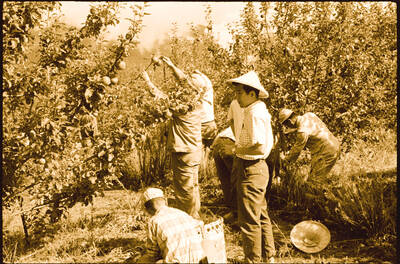
May 25 to May 31 Few believed that apples could be cultivated on a commercial scale in Taiwan’s high mountains. When horticulturalist Cheng Chao-hsiung (程兆熊) first proposed the idea in 1955, both American and Taiwanese colleagues dismissed it as implausible, arguing that temperate fruit could not be reliably grown on a subtropical island, especially on rugged terrain. However, it was this terrain in the Central Mountain Range where many Chinese Civil War veterans were resettled in the late 1950s. With limited job prospects and no family in Taiwan, they were placed on cooperative farms aimed toward self-sufficiency. Some say the conditions


 RSS
RSS