


March 16 to March 22
Hidden for decades behind junk-filled metal shacks, trees and overgrowth, a small domed structure bearing a Buddhist swastika resurfaced last June in a Taichung alley.
It was soon identified as a remnant of the 122-year-old Gokokuzan Taichuu-ji (Taichung Temple, 護國山台中寺), which was thought to have been demolished in the 1980s. In addition, a stone stele dedicated to monk Hoshu Ono, who served as abbot from 1914 to 1930, was discovered in the detritus.
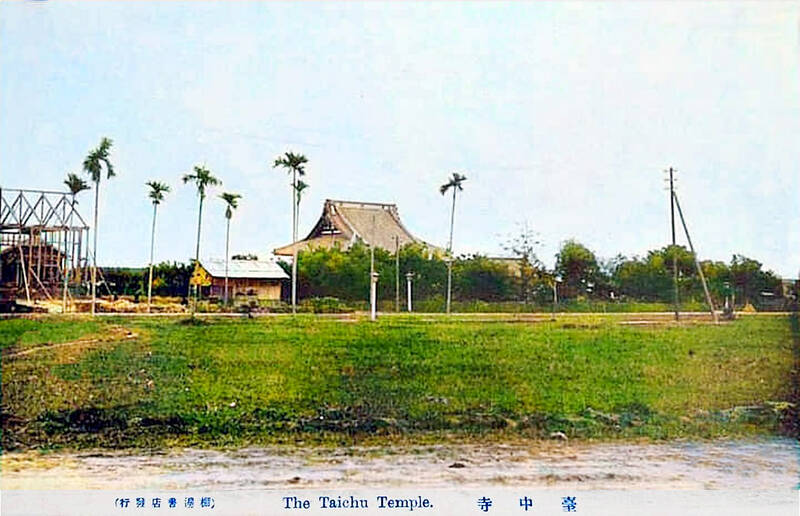
Photo courtesy of Facebook group “Old Taichung Nostalgic Memories”
The temple was established in 1903 as the local center for the Soto school of Zen Buddhism, introduced to Taiwan at the beginning of Japanese colonial rule. At its peak, it served more than 2,000 worshippers.
Like many Japanese structures after World War II, the complex was repurposed and eventually torn down amid rapid urbanization before cultural heritage preservation became a priority.
But last month, many were surprised when the Taichung City Government’s Cultural Landscape Assessment Committee (文化景觀審議會) voted unanimously not to grant the site historical relic status, arguing that the main temple no longer exists and the remaining structure, which was likely built later, has little “artistic, technical or historic value.” They only decided to protect the stele, which was moved to the Dali Tobacco Factory.
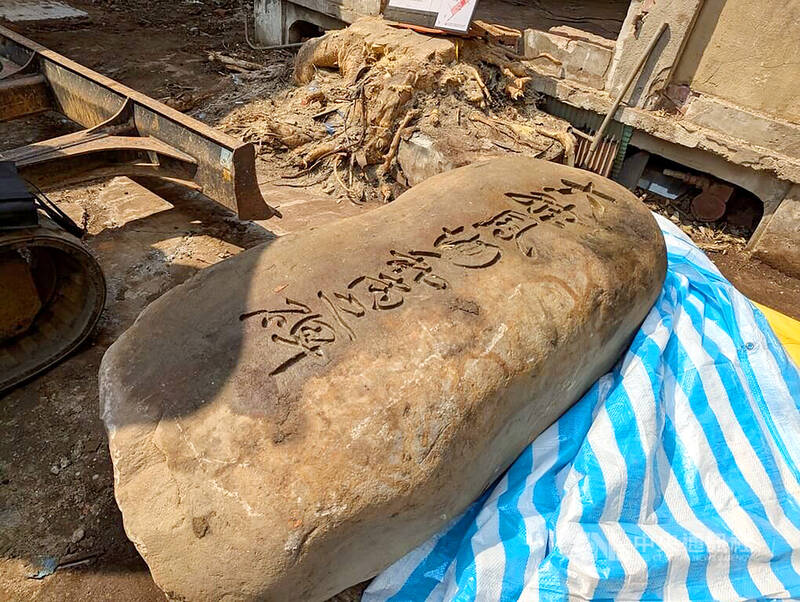
Photo: CNA
According to the Liberty Times, however, the landowner does not currently plan to demolish the building.
ARRIVAL OF SOTO
The Soto school entered Japan from China during the 13th century and went on to become the country’s largest Buddhist sect. Japanese Buddhism arrived in Taiwan in 1895, when Buddhist chaplains accompanied troops to secure the newly acquired colony, writes nun and scholar Shi Huiyan (釋慧嚴) in the Chung-Hwa Buddhist Journal (中華佛學學報).
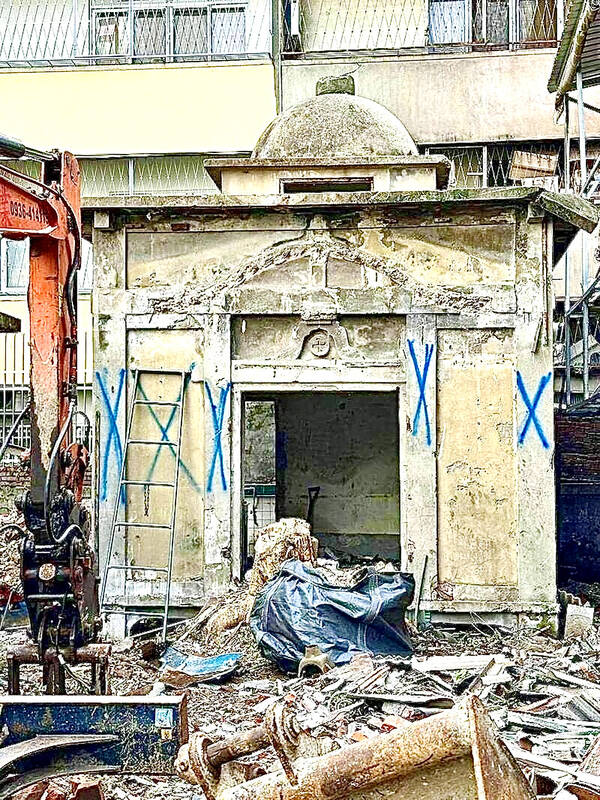
Photo courtesy of Taichung City Government
Their main goal was to provide religious services to the troops, such as offering spiritual comfort and encouragement, conducting sermons and performing funeral rites. Since the Japanese had to deal with fierce local resistance and subsequent uprisings, the role of the chaplains remained vital after official colonial rule began.
Chinryu Sasaki from the Soto school first accompanied the Japanese Army to northeastern China. He returned to Japan on May 24, 1895, and left a week later for Taiwan. Chueh Cheng-chung (闕正宗) writes in a study on Sasaki that he entered Taipei on June 15 and stayed at Longshan Temple, spending the next six months “providing spiritual comfort and performing memorial rites.” He also traveled to Penghu, where more than 350 soldiers had died after falling ill and failing to adjust to local conditions, and also to Tainan, where he reached agreements with several temples.
Sasaki then returned to Japan to report to the head temple, which approved his request to establish the Soto school in Taiwan with the help of six additional monks. In their petition to the governor-general, they pledged to continue supporting the military while working to help “civilize” the restive population and “enlighten” the local monks, whom Sasaki thought were not doing enough to spread the religion.
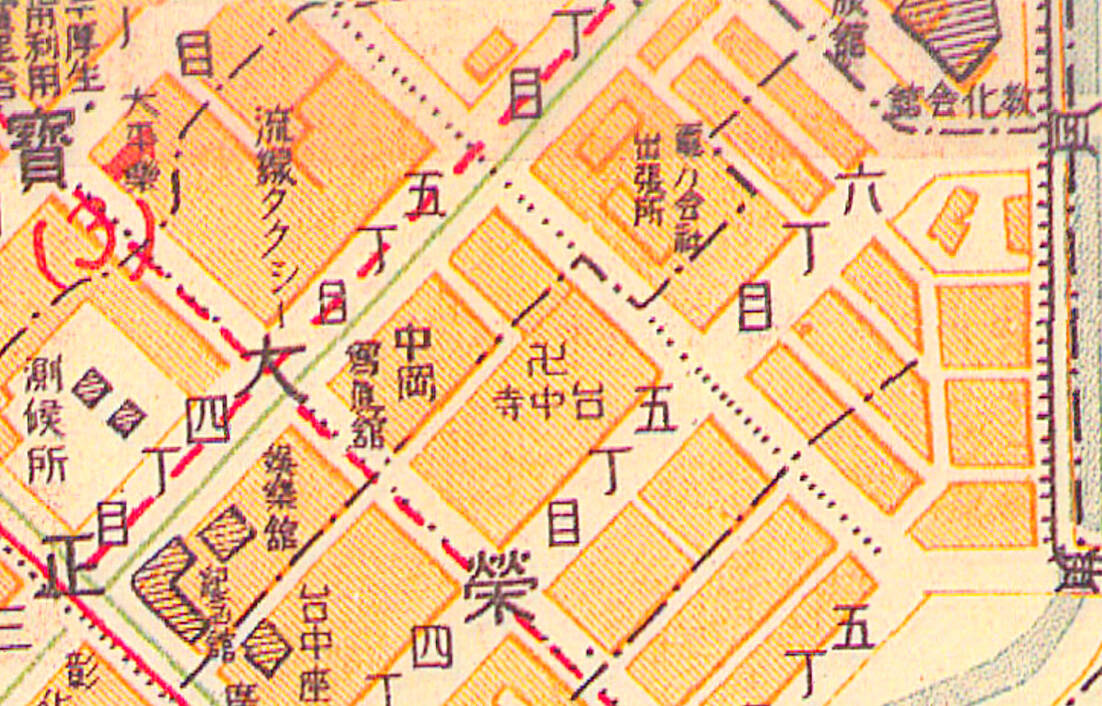
Photo courtesy of Center for GIS, Academia Sinica
While Caodong (曹洞), the Chinese counterpart of Soto, did exist in Taiwan, sectarian distinctions were loose and the clergy lacked strong institutional organization — something Sasaki hoped to rectify. Since Taiwanese were generally familiar with Buddhism, he believed that it could be an effective way to pacify them.
PREACHING IN TAICHUNG
In April 1896, the monks departed for their respective posts across the island and began preaching. Sasaki took charge of Taipei, while Fumei Adachi was assigned to the Taichung area, setting up base at Yuanching Temple (元清觀) in Changhua.
In July, Adachi was joined by Kansan Nagata. The two set up a Japanese-language school for locals at the temple, and also held Buddhism classes that were mostly attended by Japanese soldiers, Huiyan writes. They also preached in local prisons.
In 1898, Nagata held a 7-day precept ritual that drew 400 to 500 attendees, during which 84 people formally joined the school. He was aided much by Taiwanese monk Tunghsing (東性) and lay follower Su Cheng-te (蘇鄭德), who combined their speaking ability with traditional puppetry to attract crowds.
According to the 1934 History of Taichung City, Nagata later established a preaching center in Taichung. By 1903, the district had 103 Japanese and 1,417 Taiwanese worshippers.
That same year, Nagata began constructing the Taichung Temple, and in June 1904, a ceremony was held to enshrine the Buddha statue. Huiyan writes that the two head temples in Japan provided less than one-fourth of the construction budget, with most of the remainder coming from Taiwanese followers — demonstrating the success of their missionary efforts. Over the years, additional structures were added.
Hoshu Ono, to whom the recently discovered stele was dedicated, was the temple’s fourth abbot. He arrived in Taiwan in 1908, and preached in Chiayi and Tainan before arriving in Taichung. In 1930, he left the Taichung Temple to lead the Soto school’s head temple in Taipei (today’s Donghe Chan Temple, 東和禪寺). He died in 1933.
REPURPOSED AND REMOVED
Taichung Temple became government property after World War II as the Chinese Nationalist Party (KMT) took over Japanese assets. It was still marked as a Buddhist temple in a 1948 map of Taichung, but like many other shrines, it was occupied by soldiers retreating from China in 1949.
According to a government document, former city councilor Kao Kuo-hsi (高國禧), who was a member of the Martial Arts Research Association (國術研究會), acquired the site in the early 1950s. A 1952 map shows the site as the organization’s film archives.
By the 1960s, the site hosted the Xinle Theater (新樂戲院), which was known for its Taiwanese opera performances. In a Taichung Renaissance Association (台中文史復興組合) article, a local resident recalled that there were also two private residences and a dormitory for the performers.
It became a hotel in the 1970s and was razed and replaced by shops and apartments in the 1980s — but somehow, that one structure survived.
Taiwan in Time, a column about Taiwan’s history that is published every Sunday, spotlights important or interesting events around the nation that either have anniversaries this week or are tied to current events.
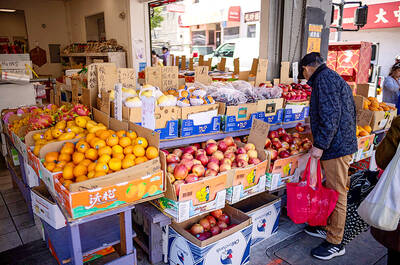
Ajay Verma, a consultant gastroenterologist at Kettering general hospital in Northamptonshire, says our gut is a “complex machine.” “It is constantly providing us with the nutrition we need, initially to grow and develop, and then for us to survive, thrive and repair from injury and illness.” How can we keep it functioning well? Put simply: “Make sure what you put into it is balanced, and that you clear out its waste products adequately,” Verma says. “In a general gastroenterology clinic, the most common conditions we see are irritable bowel syndrome (IBS), gastroesophageal reflux disease, inflammatory bowel disease and constipation,” says Nisha
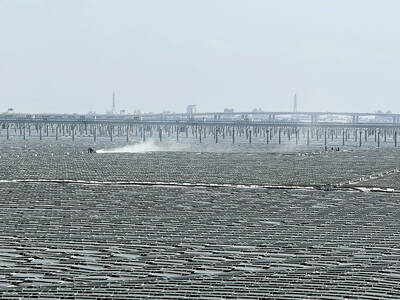
The arithmetic is straightforward and uncomfortable. By the end of 2025, Taiwan had committed itself to a 50-30-20 electricity mix — half natural gas, 30 per cent coal, 20 per cent renewables. The Ministry of Economic Affairs’s (MOEA) own monthly energy reports tell a different story. Natural gas reached 47.8 per cent of generation last year. Coal stood at 35.4 per cent, comfortably above its target ceiling. Renewables came in at 13.1 per cent, well short of the 20 per cent Taipei had pledged a decade earlier. Installed renewable capacity reached roughly half of the 12 gigawatts (GW) the government

Last week US President Donald Trump was asked by a reporter whether he would speak on the phone to the President of Taiwan. “l’ll speak to him. I speak to everybody. We have that situation very well in hand,” Trump said. This marked the second time in a couple of weeks he had said he would talk to the President of Taiwan. In 2016 he famously took a call from then-president Tsai Ing-wen (蔡英文), when he was president-elect. Despite warnings that the apocalypse was nigh because of a phone call, the world quickly forgot about the conversation between two democratically-elected presidents.
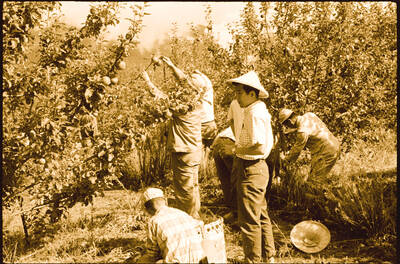
May 25 to May 31 Few believed that apples could be cultivated on a commercial scale in Taiwan’s high mountains. When horticulturalist Cheng Chao-hsiung (程兆熊) first proposed the idea in 1955, both American and Taiwanese colleagues dismissed it as implausible, arguing that temperate fruit could not be reliably grown on a subtropical island, especially on rugged terrain. However, it was this terrain in the Central Mountain Range where many Chinese Civil War veterans were resettled in the late 1950s. With limited job prospects and no family in Taiwan, they were placed on cooperative farms aimed toward self-sufficiency. Some say the conditions


 RSS
RSS