


Recently the Chinese Nationalist Party (KMT) and its Mini-Me partner in the legislature, the Taiwan People’s Party (TPP), have been arguing that construction of chip fabs in the US by Taiwan Semiconductor Manufacturing Co (TSMC, 台積電) is little more than stripping Taiwan of its assets.
For example, KMT Legislative Caucus First Deputy Secretary-General Lin Pei-hsiang (林沛祥) in January said that “This is not ‘reciprocal cooperation’ ... but a substantial hollowing out of our country.”
Similarly, former TPP Chair Ko Wen-je (柯文哲) contended it constitutes “selling Taiwan out to the United States.” The two pro-China parties are proposing a bill that would limit semiconductor technology transfers.
Photo: Ou Su-mei, Taipei Times
The claims of the KMT and TPP, while meeting a receptive audience given the economic anxieties so common in Taiwan, are appeals to ignorance. Taiwan’s chip dominance is in no way threatened by its investments in the US.
FAB CONSTRUCTION
Current TSMC plans call for the construction of six to eight facilities in Arizona over the next decade. Note “decade.” TSMC last year said that when completed, its Arizona cluster would have six fabs, two advanced packaging facilities and a research and development center. Its total development package represents an investment of US$165 billion.
Photo: EPA
By contrast, this year alone in Taiwan TSMC plans start construction on or build 10 fabs distributed across the island, according to media reports. These include process nodes and advanced packaging facilities. TSMC will continue to maintain a large presence in Taiwan.
Nor is that the only chip-related infrastructure going in at home. The excellent online publication Domino Theory observed in its March Round Up that the government’s Industrial Technology Research Institute (ITRI), is putting in an Advanced Semiconductor R&D Base in Hsinchu, in cooperation with TSMC. Other projects are in play as well. It is very obvious the industry will stay in Taiwan.
The ruling Democratic Progressive Party (DPP) is working to assuage public anxiety and retain the key technologies. Vice Premier Cheng Li-chiun (鄭麗君) last month stated that Taiwan cannot transfer 40 percent of its chip-making facilities abroad (as US Commerce Secretary Howard Lutnick demanded in a January CNBC interview), adding that the nation’s most advanced processes will remain in Taiwan. Lien Hsien-ming (連賢明), president of the Chung-Hua Institution for Economic Research (CIER), said in January that less than 15 percent of TSMC’s advanced manufacturing processes will be in the US by 2029.

Photo: AP
At present Taiwan makes 60 percent of the world’s chips, and 90 percent of the most advanced semiconductors. The competitive environment, however, is changing. Across Asia (including India), at the end of last year, 23 fabs were going in, while 17 were under construction in the US. India just this month completed its first semiconductor assembly and test facility. Taiwan’s chip dominance is going to be tested, especially as India comes online.
The pro-China KMT and TPP make noises about offshoring production to the US, but do little about the long-term threats facing the industry, never mind their neglect of defense against the threat of invasion from China.
Labor shortages are already hurting the chip industry. Focus Taiwan reported in July last year that the industry had 34,000 unfilled jobs. The mass employment of migrant workers in the chip industry’s upstream and downstream firms masks the true extent of labor shortages — if they fled home due to war or war threats, the industry would collapse. Where are the KMT-TPP policy proposals for addressing the labor shortage issue?
The demographics are ugly. The number of students graduating in science, engineering and math fields is declining. More students are able to study abroad, meaning that they will be recruited by foreign firms, which are also desperate for warm bodies. Taiwan’s brutal work culture and low salaries are not attractive to foreign talent. Of course, neither major party is pushing policies aimed at meaningful change in the birth rate or the work culture.
POWER, WATER
Another issue facing the industry is the build out of both power sources and the electrical grid. Last week Taiwan Power Co (Taipower, 台電) Chairman Tseng Wen-sheng (曾文生) stated that the estimated additional electricity consumption from this year to 2030 will be 5.3 to 5.4 GW, averaging 1 GW increase in demand per year, based on semiconductor and AI demand. He said that this was an unprecedented rise in demand. He also warned that AI industry growth could generate additional demand for power.
Tseng said that four new plants totaling 5.2 GW will be put into operation just this year, with additional units under construction and going out for tender later this year. Two new private units are also going in at Mailiao in Yunlin County. The demand from AI and semiconductors, he observed, may triple demand from industrial parks. He also said that because AI-related facilities are smaller than factories and can be located in cities, the grid is going to experience unprecedented loads in urban areas. Tseng explained the future urban planning is going to have to account for the grid and the greater load needs.
In many cases, Taiwan sources energy in the south, especially solar power, but sends it north, a reflection of the way the north treats the south like a resource colony. However, it is central government policy to shift the semiconductor industry southward. This may help ameliorate some of the demand and grid issues.
The KMT last year withheld supplementary funding to pay Taipower’s debt. KMT legislators claimed that Taipower had failed to provide a more detailed explanation of the financial effects of renewable energy purchases, a clear hint to Taipower about renewables. Moreover, playing political games with Taipower’s funding simply makes it more difficult for it to build up Taiwan’s power infrastructure.
The semiconductor industry’s demand for water I have discussed before. At some point Taiwan will have to deeply overhaul its water pricing and distribution systems as the demand for water from fabs, data centers and power plants puts pressure on the water system. The industry’s growing water demand will also have political effects, from lower support for the ruling party to demands for new dam projects. This at a time when the Central Weather Administration on Feb. 24 said that Western Taiwan witnessed the least winter rainfall since 1951, with five weather stations across the nation recording the least cumulative rainfall since records began.
The emphasis on the potential loss of technology to the US in the propaganda of the two pro-China parties, likely driven by their fear and hatred of the US, helps obscure a range of threats to Taiwan’s semiconductor dominance. As with Taiwan’s nuclear power programs, that may well be the key purpose of the constant noise they make. By focusing public attention and government energy on apparent threats that are actually non-issues, when the semiconductor industry’s inevitable decline sets in, they can blame the ruling party. When conflicts grow over the chip fabs’ demand for power and water, the KMT — which will have done nothing while actively impeding progress — will again blame the DPP.
KMT noises should be seen for what they are: distractions intended to set up the ruling DPP for a fall created by KMT malice and inaction.
Notes from Central Taiwan is a column written by long-term resident Michael Turton, who provides incisive commentary informed by three decades of living in and writing about his adoptive country. The views expressed here are his own.
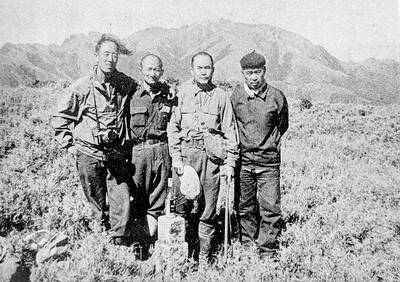
May 18 to May 24 Gathered on Yangtou Mountain (羊頭山) on Dec. 5, 1972, Taiwan’s hiking enthusiasts formally declared the formation of the “100 Peaks Club” (百岳俱樂部) and unveiled the final list of mountains. Famed mountaineer Lin Wen-an (林文安) led this effort for the Chinese Alpine Association (中華山岳協會). Working with other experienced climbers, he chose 100 peaks above 10,000 feet (3,048m) that featured triangulation points and varied in difficulty and character. The list sparked an alpine hiking craze, inspiring many to take up mountaineering and competing to “conquer” the summits. A common misconception is that the 100 Peaks represent Taiwan’s 100 tallest

Yesterday, the Democratic Progressive Party (DPP) nominated legislator Puma Shen (沈伯洋) as their Taipei mayoral candidate, the Chinese Nationalist Party (KMT) put their stamp of approval on Wei Ping-cheng (魏平政) as their candidate for Changhua County commissioner and former legislator Tsai Pi-ru (蔡壁如) of the Taiwan People’s Party (TPP) has begun the process to also run in Changhua, though she has not yet been formally nominated. All three news items are bizarre. The DPP has struggled with settling on a Taipei nominee. The only candidate who declared interest was Enoch Wu (吳怡農), but the party seemed determined to nominate anyone
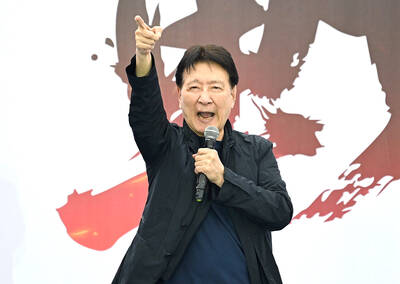
In a sudden move last week, opposition lawmakers of the Chinese Nationalist Party (KMT) and Taiwan People’s Party (TPP) passed a NT$780 billion special defense budget as a preemptive measure to stop either Chinese leader Xi Jinping (習近平) or US President Donald Trump from blocking US arms sales to Taiwan at their summit in Beijing, said KMT heavyweight Jaw Shaw-kong (趙少康), speaking to the Taipei Foreign Correspondents Club on Wednesday night in Taipei. The 76-year-old Jaw, a political talk show host who ran as the KMT’s vice presidential candidate in 2024, says that he personally brokered the deal to resolve
“China wants to unify with Taiwan at the lowest possible cost, and it currently believes that unification will become easier and less costly as time passes,” wrote Amanda Hsiao (蕭嫣然) and Bonnie Glaser in Foreign Affairs (“Why China Waits”) this month, describing how the People’s Republic of China (PRC) is playing the long game in its quest to seize Taiwan. This has been a favorite claim of many writers over the years, easy to argue because it is so trite. Very obviously, if the PRC isn’t attacking Taiwan, it is waiting. But for what? Hsiao and Glaser’s main point is trivial,


 RSS
RSS