


“M yeolgong jajangmyeon (anti-communism zhajiangmian, 滅共炸醬麵), let’s all shout together — myeolgong!” a chef at a Chinese restaurant in Dongtan, located about 35km south of Seoul, South Korea, calls out before serving a bowl of Korean-style zhajiangmian —black bean noodles. Diners repeat the phrase before tucking in.
This political-themed restaurant, named Myeolgong Banjeom (滅共飯館, “anti-communism restaurant”), is operated by a single person and does not take reservations; therefore long queues form regularly outside, and most customers appear sympathetic to its political theme. Photos of conservative public figures hang on the walls, alongside political slogans and poems written in Chinese characters; South Korean military songs play in the background.
Owner and chef Yoo Seung-kun (俞勝軍) says he opened the restaurant in 2017 under the name Beijing Restaurant (北京飯館).
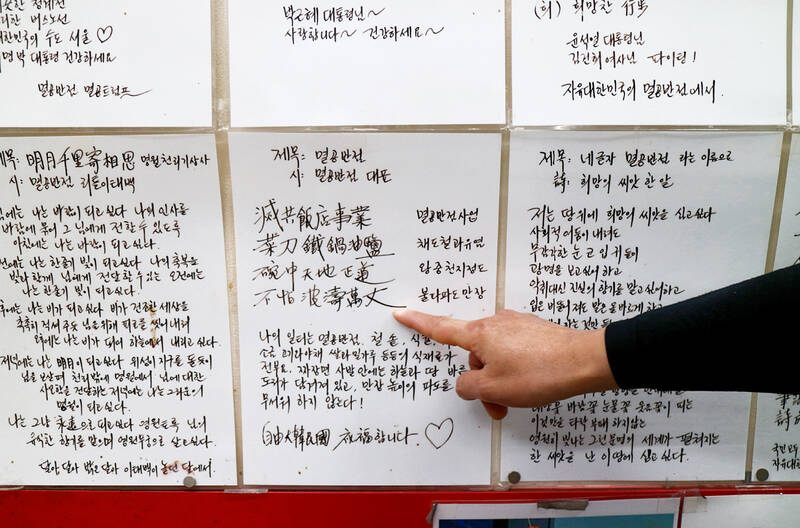
Photo: Don Huh
“I was apolitical at that time, and business was steady,” he says. “But in 2020, during the COVID-19 pandemic, I changed the signboard.”
Yoo says he believed pandemic restrictions reflected what he describes as “fake democracy.” He cites packed subway cars while restaurants required proof of vaccination and distancing between diners as examples of “communist ways.”
“After switching the name, some regulars stopped visiting [for political reasons],” he says. “But after videos spread on YouTube and Instagram, popularity revived.”
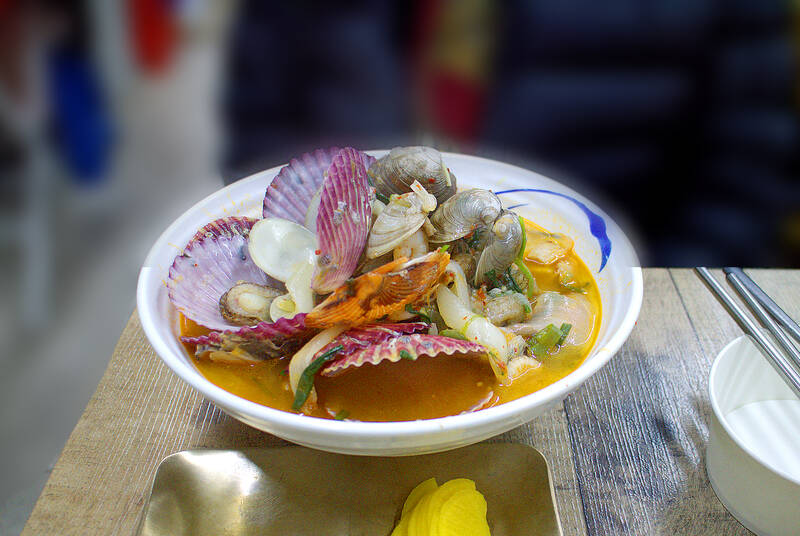
Photo: Don Huh
Yoo was born in China’s Jilin Province as a Korean Chinese and moved to South Korea in 2000 in his 20s. He later became a naturalized South Korean citizen.
“I chose to move here after learning that South Korea had embraced liberal democracy,” he says. “Communism doesn’t fit human society.”
“My grandparents [in China] always told me not to forget my roots,” he adds. “They told me to go to South Korea and become a shining star.”
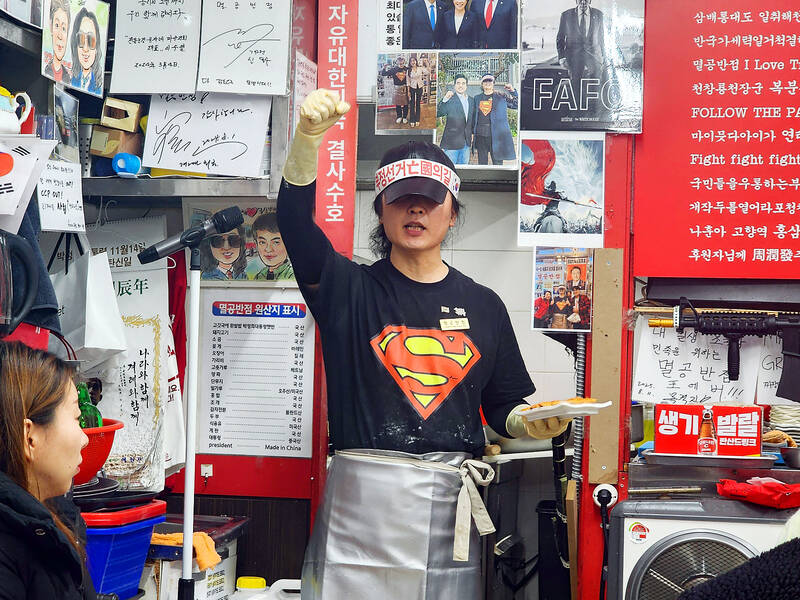
Photo: Don Huh
Since Yoo cooks, serves, handles accounts and cleans by himself, the menu is limited to four Korean-Chinese staples: jajangmyeon, jjamppong (spicy seafood noodle soup, 韓式強棒麵), sweet-and-sour pork (糖水肉) and fried dumplings (炸餃子), along with a few drinks. He has, however, renamed them with political overtones, including “Coronavirus Damn Jjamppong,” “Election Fraud Investigation Sweet-and-Sour Pork,” and Chow Yun Fat (周潤發) Ice Cream, as well as a Chinese liquor renamed “Taiwan Election Same-Day Manual Count Erguotou (二鍋頭酒).”
EMULATE TAIWAN
Yoo singles out Taiwan’s election procedures while explaining the liquor’s name.
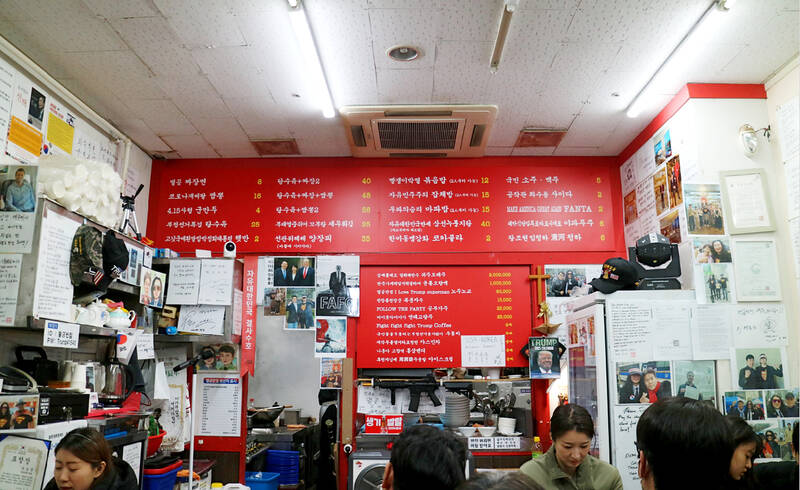
Photo: Don Huh
“Taiwan does same-day voting and immediate manual counting,” he says. “It is the cleanest way. Due to suspicions of fraud [caused by the current left-wing election commission], South Korea should eliminate its vote-counting machines.”
Yoo says South Korea should emulate Taiwan’s system.
“I like Taiwan because it is a liberal democracy,” he says, “If Taiwan were under communists, I would not like it. Communism has already been proven over the past century — it is a system where only a small power group lives well; ordinary people become like slaves.”
Several Taiwanese media outlets have mentioned the restaurant on YouTube and Instagram, though none have conducted on-site reporting.
Yoo says some Taiwanese have visited, usually business travelers staying at nearby hotels.
“They found us online and came to eat,” he says, “There has not been deep exchange though.”
He adds that Japanese visitors and YouTubers, US soldiers from nearby bases, overseas Koreans and even some visitors from China have stopped by after seeing online posts.
“Taiwan and South Korea share the values of liberal democracy,” he says, “South Korea has problems at the moment, but Taiwan should remain vigilant. Long live Taiwan’s liberal democracy!”
COMPLAINTS, THREATS
Yoo says he has received unwelcome attention from people he identified as Korean Chinese.
“About two years ago, some approached the restaurant and offered money to take down the anti-communist sign,” he says, “I declined. They later returned and claimed to be representatives of a Chinese authority, warning me to consider the safety of my family.”
He expresses concern that such individuals are able to travel freely in South Korea, although he, in his opinion, is not officially protected by any South Korean authority.
He also expresses frustration with South Korea’s largest Internet portal, Naver.
“A few days ago, I checked my restaurant’s menu listing on Naver and found that ‘Anti-Communist Jajangmyeon’ and ‘Corona Damn Jjamppong’ had been changed to just ‘Jajangmyeon’ and ‘Jjamppong,’” he says, “Why can’t we even oppose communism in a country that claims to oppose it?”
Yoo says he has also received online criticism and complaints to the public health center, which can halt restaurant operations in South Korea for sanitary infractions.
“I stick to strict cleaning schedules,” he says.
HIGH PRICES?
On the other hand, some online reviews applaud the bold concept and food quality, while others question the prices.
A bowl of jjamppong costs KRW16,000 (about NT$350), higher than the country average of about KRW10,000.
Yoo defends the pricing.
“The price reflects the ingredients,” he says, “I do not skimp on materials.”
Regardless of its political theme, the restaurant offers a distinctive take on Korean-Chinese cuisine, which Taiwanese travelers can enjoy; the noodles in the jajangmyeon and jjamppong are pale, not fortified yellow, and the seafood in the jjamppong is piled high. The sweet-and-sour pork is chewy and freshly fried.
In South Korea, restaurants must publicly list the origins of their ingredients. Many Chinese restaurants in the country indicate some ingredients are sourced from China. The ingredient list at Myeolgong Banjeom does not show any from China.
Yoo says he hopes to eventually turn the restaurant into a “national project” focused on civic education about liberal democracy.
“This restaurant is my gift to the Republic of Korea,” he says.
Handwritten patriotic poems cover one corner of the dining room, and Yoo says he occasionally recites them at rallies. He ends the interview by reciting a poem he wrote:
“I write to my descendants to love their land and liberty. Protect the free Republic of Korea with your life.”
Myeolgong Banjeom is located at: 160 Dongtanbanseok-ro, Hwaseong City, Gyeonggi Province, South Korea.
— Yoo Seung-kun, owner and chef of the ‘anti-communism restauran
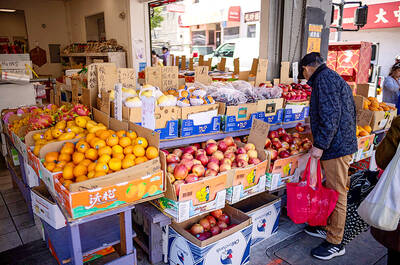
Ajay Verma, a consultant gastroenterologist at Kettering general hospital in Northamptonshire, says our gut is a “complex machine.” “It is constantly providing us with the nutrition we need, initially to grow and develop, and then for us to survive, thrive and repair from injury and illness.” How can we keep it functioning well? Put simply: “Make sure what you put into it is balanced, and that you clear out its waste products adequately,” Verma says. “In a general gastroenterology clinic, the most common conditions we see are irritable bowel syndrome (IBS), gastroesophageal reflux disease, inflammatory bowel disease and constipation,” says Nisha

And so, in the wake of US President Donald Trump’s trip to the People’s Republic of China (PRC), all the experts on the Strait of Hormuz suddenly became experts on US-China-Taiwan relations. The Internet has certainly expanded human knowledge. Lots of these sudden experts made noise this week about Trump’s words after the meeting with PRC dictator Xi Jin-ping (習近平). Trump is going to sell out Taiwan! Longtime Taiwan commentator J. Michael Cole summed the situation up neatly in the Guardian: “We need to keep in mind that he has a tendency to say many things — sometimes contradicting himself within

Last week US President Donald Trump was asked by a reporter whether he would speak on the phone to the President of Taiwan. “l’ll speak to him. I speak to everybody. We have that situation very well in hand,” Trump said. This marked the second time in a couple of weeks he had said he would talk to the President of Taiwan. In 2016 he famously took a call from then-president Tsai Ing-wen (蔡英文), when he was president-elect. Despite warnings that the apocalypse was nigh because of a phone call, the world quickly forgot about the conversation between two democratically-elected presidents.
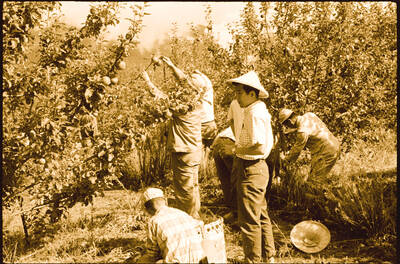
May 25 to May 31 Few believed that apples could be cultivated on a commercial scale in Taiwan’s high mountains. When horticulturalist Cheng Chao-hsiung (程兆熊) first proposed the idea in 1955, both American and Taiwanese colleagues dismissed it as implausible, arguing that temperate fruit could not be reliably grown on a subtropical island, especially on rugged terrain. However, it was this terrain in the Central Mountain Range where many Chinese Civil War veterans were resettled in the late 1950s. With limited job prospects and no family in Taiwan, they were placed on cooperative farms aimed toward self-sufficiency. Some say the conditions


 RSS
RSS