


Taiwan’s Chinese-language news media landscape is dramatic, richly textured and moves at lightning speed. It is also surprisingly large, boasting a complexity and variety one would expect from a far larger country. Taiwan is a nation of news junkies.
The more neutral outlets come in two varieties. The Central News Agency (“Focus Taiwan” in English) is government-funded and must be extremely careful in their reporting, making them reliable, but bland. The other type has a business model more focused on attracting readers and viewers than making any partisan point, though individual journalists may lean one way or another. What sells is what runs.
By far the most powerful of these is Mirror Media’s weekly magazine (鏡週刊) and Web site. There is an affiliated cable news channel that is mired in controversies, but that is a complex subject beyond the scope of this column.
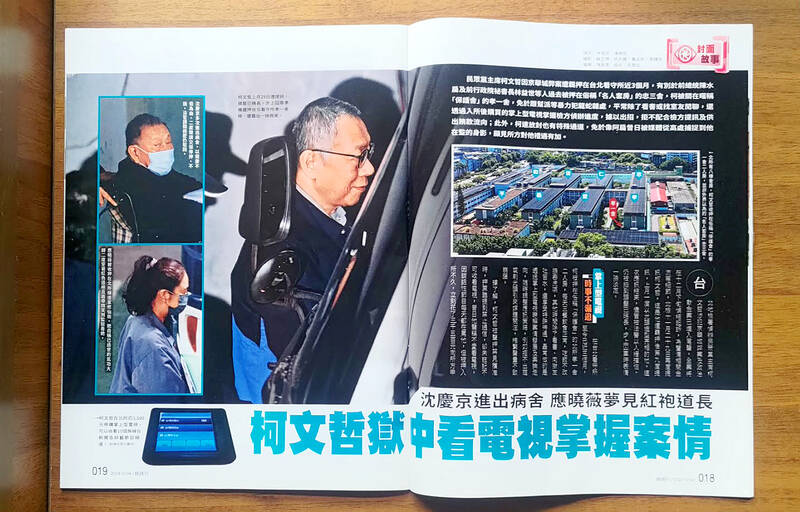
Photo: Courtney Donovan Smith, Taipei Times
Much of what Mirror Media covers is similar to other outlets: traffic accidents, baseball, food, sex scandals and any excuse to feature pictures of scantily clad women. These are the bread-and-butter drivers of viewership of most news outlets, for better or worse. Where the outlet really stands out is their investigative journalism and prodigious talent for enticing leakers, exerting a gravitational pull over the entire news landscape. They drop bombshell after bombshell, leaving all the other news outlets scrambling to cover it.
This has landed the outlet in more than a few controversies and conspiracy theories. Single-handedly driving so much of the news cycle (even sometimes in English), they deserve scrutiny.
BIAS
They are frequently accused of partisan bias, particularly when a bombshell negatively impacts one party or another. After many years of reading their content, my sense is they are primarily driven by money.
In my bookmark folders, the number of Mirror reports in “Chinese Nationalist Party (KMT) scandals” and “Democratic Progressive Party (DPP) scandals” are roughly simila. The number in the Taiwan People’s Party (TPP) folder, however, is huge. Is this bias, or just what they were able to find to drive traffic?
FACTUALITY
On factuality, in very rare occasions Mirror Media’s reporting has proven to be outright false. For example, in August 2024 when prosecutors were conducting raids and beginning to arrest people in the Core Pacific case that alleges that former Taipei mayor and TPP founder Ko Wen-je (柯文哲) engaged in a corruption conspiracy, Mirror reported that prosecutors had raided the legislative office of Vivian Huang (黃珊珊), a then-TPP lawmaker and former deputy mayor when Ko ran Taipei City.
They were correct about the raid, but wrong about which lawmaker. It turned out to be Lin I-chin (林宜瑾) of the DPP over a totally unrelated case. Other news outlets rushed out reports based on Mirror’s false reporting.
However, such cases are rare. The vast majority of their reporting is accurate.
MISLEADING REPORTING
More problematic is that their content is often misleading. While writing this column, for example, Mirror Media released reports on DPP Legislator Wang Ting-yu (王定宇) having an extramarital affair with a corporate executive. Wang released a statement, however, saying that he had quietly gotten amicably divorced awhile back, which appears confirmed by his ex-wife. Clearly, though the reporters had tailed Wang and demonstrated he was spending time with the woman in question, they were unaware that his marital status had changed and what they had discovered was — it now appears — to be a private, consensual affair between single adults.
Mirror Media famously ran a string of leaks related to the Core Pacific case, especially related to Ko Wen-je.
Following Ko’s arrest and detention incommunicado, the TPP accused the president and the DPP of “weaponizing the judiciary” to “expunge political opponents.”
There is no proof it goes that high up the food chain, but they are absolutely correct in highlighting the volume and nature of the leaks Mirror Media was running. Someone — or some people — with access to the prosecutor’s office was leaking in a big way.
Given juicy leaks, of course any news outlet is going to run with them. Mirror Media was doing what news outlets do, but somehow, a very high percentage of leaks of all kinds go to this one outlet.
RAISING QUESTIONS
The leaks raise a lot of questions.
Who was doing the leaking and what was their motivation?
Initially, these leaks hit Ko and the TPP’s poll numbers hard. People rushed to the conclusion that he was guilty, which is problematic because nobody at that point knew if he was guilty. But the leaks gave that impression.
How selective were the leaks, and how much context did they leave out? Without a full picture, cherry-picked details can be dangerously misleading.
There is a liklihood that the leaks were done with an agenda. The problem with Mirror Media is not that they ran with the leaks, but failed to inform readers of the potential for such risks or the context — or lack thereof.
This led to too many people coming to partisan conclusions without adequate facts, from DPP supporters hoping to see Ko fall, to TPP supporters spinning wild conspiracies.
On March 26, the judges will deliver their ruling. By then, they will have seen all the evidence for and against — not cherry-picked details for public consumption. They will have spent months deliberating and should rule based on their extensive knowledge of the law. In theory, they should apply the law impartially and professionally — and appeals can be filed if that is in question.
Until then, Ko remains unconvicted of any crime and should be presumed innocent.
In this case, and many others, it is crucial to remember that a democracy is rule by law, not trial by Mirror Media.
Donovan’s Deep Dives is a regular column by Courtney Donovan Smith (石東文) who writes in-depth analysis on everything about Taiwan’s political scene and geopolitics. Donovan is also the central Taiwan correspondent at ICRT FM100 Radio News, co-publisher of Compass Magazine, co-founder Taiwan Report (report.tw) and former chair of the Taichung American Chamber of Commerce. Follow him on X: @donovan_smith.
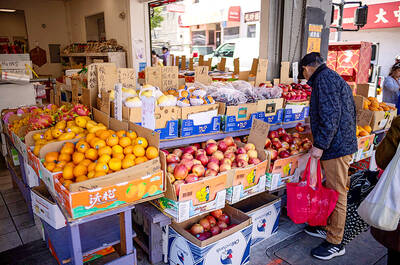
Ajay Verma, a consultant gastroenterologist at Kettering general hospital in Northamptonshire, says our gut is a “complex machine.” “It is constantly providing us with the nutrition we need, initially to grow and develop, and then for us to survive, thrive and repair from injury and illness.” How can we keep it functioning well? Put simply: “Make sure what you put into it is balanced, and that you clear out its waste products adequately,” Verma says. “In a general gastroenterology clinic, the most common conditions we see are irritable bowel syndrome (IBS), gastroesophageal reflux disease, inflammatory bowel disease and constipation,” says Nisha
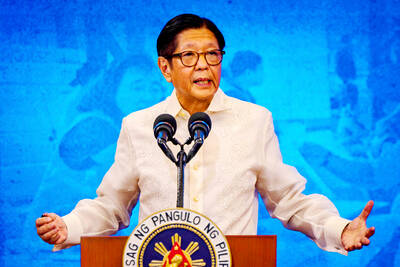
And so, in the wake of US President Donald Trump’s trip to the People’s Republic of China (PRC), all the experts on the Strait of Hormuz suddenly became experts on US-China-Taiwan relations. The Internet has certainly expanded human knowledge. Lots of these sudden experts made noise this week about Trump’s words after the meeting with PRC dictator Xi Jin-ping (習近平). Trump is going to sell out Taiwan! Longtime Taiwan commentator J. Michael Cole summed the situation up neatly in the Guardian: “We need to keep in mind that he has a tendency to say many things — sometimes contradicting himself within

Last week US President Donald Trump was asked by a reporter whether he would speak on the phone to the President of Taiwan. “l’ll speak to him. I speak to everybody. We have that situation very well in hand,” Trump said. This marked the second time in a couple of weeks he had said he would talk to the President of Taiwan. In 2016 he famously took a call from then-president Tsai Ing-wen (蔡英文), when he was president-elect. Despite warnings that the apocalypse was nigh because of a phone call, the world quickly forgot about the conversation between two democratically-elected presidents.
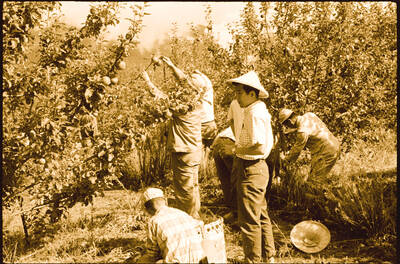
May 25 to May 31 Few believed that apples could be cultivated on a commercial scale in Taiwan’s high mountains. When horticulturalist Cheng Chao-hsiung (程兆熊) first proposed the idea in 1955, both American and Taiwanese colleagues dismissed it as implausible, arguing that temperate fruit could not be reliably grown on a subtropical island, especially on rugged terrain. However, it was this terrain in the Central Mountain Range where many Chinese Civil War veterans were resettled in the late 1950s. With limited job prospects and no family in Taiwan, they were placed on cooperative farms aimed toward self-sufficiency. Some say the conditions


 RSS
RSS