


Feb. 16 to Feb. 22
Pai Ko’s (白克) film career appeared poised to reach new heights in 1962 with the completion of the highly-anticipated, star-studded Romance of Longshan Temple (龍山寺之戀). Despite being mainly in Hoklo (commonly known as Taiwanese), the film promoted harmony between those born in China and Taiwan, aligning with the official cultural policy at the time.
However, he soon disappeared. Colleagues found out he was arrested and accused of colluding with communists.
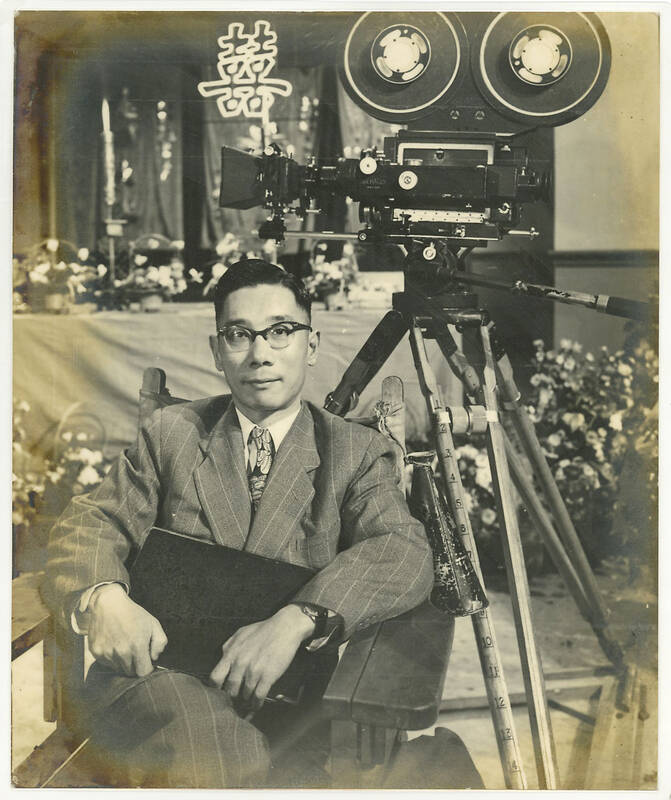
Photo courtesy of Taiwan Film and Audiovisual Institute
It was not his first run-in with the ruling Chinese Nationalist Party (KMT). As a university student in China, he joined the anti-Japanese Anti-Imperialism League and was detained for helping run publications that, according to a former classmate, were critical of the government’s focus on combating communists rather than resisting Japanese aggression.
Pai remained in custody and was subject to repeated torture until he signed a “confession.” His wife was also detained for a month, leaving their children at home alone. The last time they visited him, he was suffering from a skin disease, his body covered in festering sores. The guards, however, ignored their pleas to get him medical help, recalls his daughter Pai An-chi (白安琪).
On Feb. 22, 1964, Pai was executed. He was 50 years old.
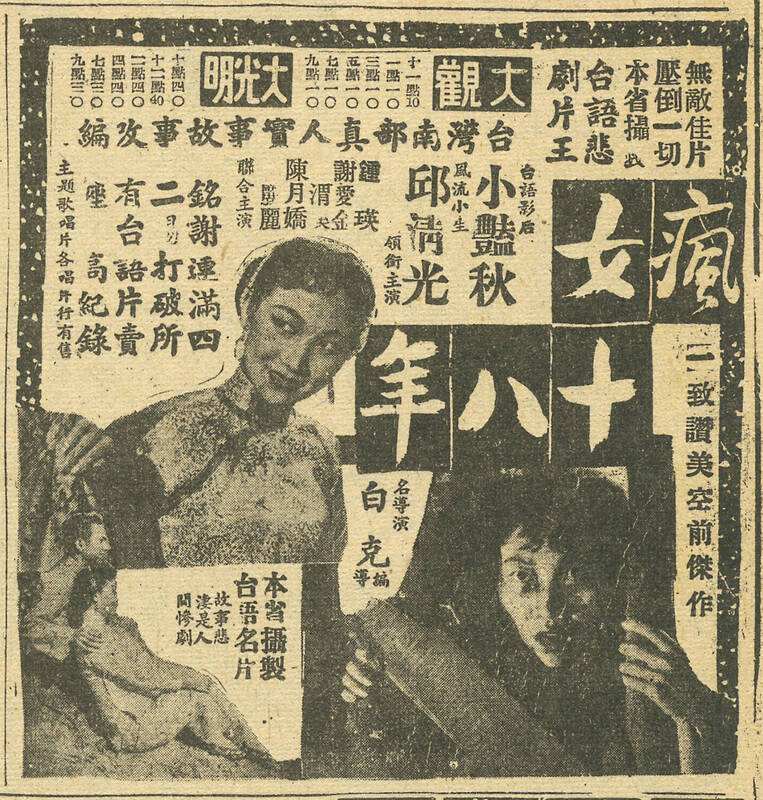
Photo courtesy of Taiwan Film and Audiovisual Institute
FROM TEACHER TO DIRECTOR
Much of what’s known about Pai’s life comes from the 2003 book Memorial Collection for Director Pai Ko and Selected Posthumous Work (白克導演紀念文集?遺作選輯), edited by his friend and long-time film critic Huang Jen (黃仁).
Pai was born in 1914 in Xiamen, China. His grandfather was a close associate of Qing-era Taiwan governor Tang Ching-sung (唐景崧) and took part in the short-lived Republic of Formosa’s resistance against the Japanese takeover in 1895. This family history reportedly piqued Pai’s interest in Taiwan.
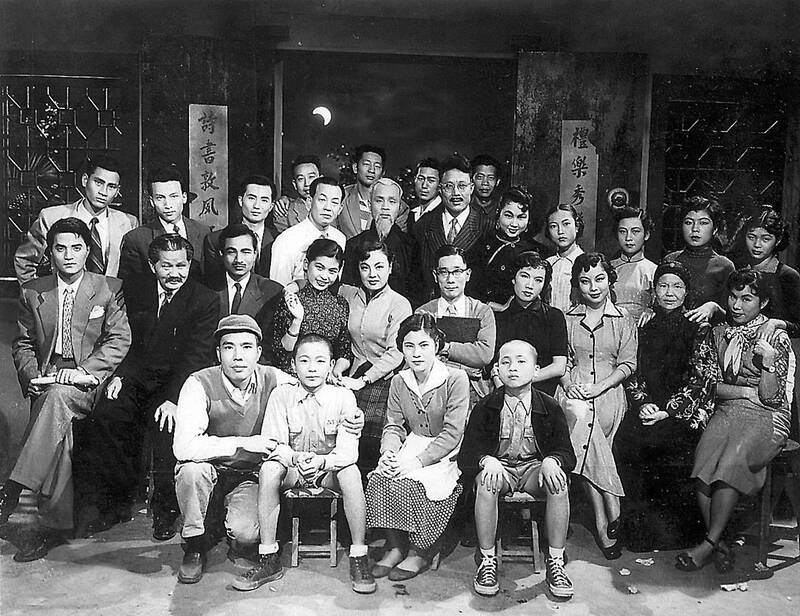
Photo courtesy of Taiwan Film and Audiovisual Institute
Pai studied education at Xiamen University, where he was first arrested. With the help of family connections, he avoided imprisonment. He later taught at the university, but soon resigned to pursue his passion for filmmaking. One of his first gigs was assisting filmmakers Yuan Muzhi (袁牧之) and Situ Huimin (司徒慧敏), who would become top officials in communist China’s film administration.
During the Sino-Japanese War, his relative, KMT general Pai Chung-hsi (白崇禧) recruited him to produce propaganda videos to support the war effort.
On Oct. 15, 1945, Pai arrived in Taipei — just 10 days before Japan formally handed Taiwan over to the KMT. He filmed governor-general Chen Yi (陳儀) accepting Japanese surrender and the jubilant celebrations that followed. The footage was broadcast in Nanjing and Shanghai.
Afterward, Pai assumed control of existing Japanese film organizations and established the Taiwan Provincial Office Publicity Committee Film Studio (台灣省電影攝製場). The studio made use of existing equipment and retained seven Japanese technicians before acquiring new gear.
They produced newsreels, documentaries, educational and propaganda videos, and helped advise and promote the local film industry.
NEWSPAPER INCIDENT
Pai was also a prolific film critic and theorist; Huang writes that he was Taiwan’s first film critic in the modern sense. Pai argued in a 1953 essay that while movies should strive for technical realism, artistically they must transcend the limits of reality. He was a proponent of the montage technique, and was also a respected university professor.
In January 1946, Pai cofounded the People’s News-Leader (人民導報) with Sung Fei-ju (宋斐如) and others. The paper grew increasingly critical of Chen Yi’s policies leading up to the 228 Incident, the 1947 anti-government uprising that was brutally suppressed. Authorities shut down the paper shortly afterward and dragged Sung from his home, never to be seen again.
Pai reportedly avoided the same fate due to intervention by Pai Chung-hsi, who arrived in Taiwan to handle the aftermath of the incident. He accompanied Pai Chung-hsi on his island-wide inspection tour, serving as publicist and translator.
However, his association with the paper was later cited in his death sentence verdict, which stated that although the paper targeted Chen, it had “indirectly attacked the KMT and the government, thus serving as propaganda for the communist bandits.”
Pai Ko remained on the government watchlist and was questioned for his former ties with the communist filmmakers in China. Meanwhile, Pai Chung-hsi fell out of favor and could no longer protect him.
RISE OF TAIWANESE CINEMA
In 1955, the first Taiwanese-language film, Romance of the Western Chamber (六才子西廂記), hit the theaters. Wang recalled that he was the only reporter invited, and he brought Pai along.
Fluent in Xiamenese — which is similar to Taiwanese — Pai entered the industry as it gained momentum. His first effort was the government-sponsored Descendants of the Yellow Emperor (黃帝子孫) in 1956.
Pai went on to direct 11 Taiwanese-language films, most notably the 1957 hit The Mad Woman’s 18 Years. It was the breakout feature for actress Hsiao Yen Chiu (小艷秋), who recalled, “Working on one of director Pai’s films was equivalent to working on 10 for other directors. I learned so much from him. In my heart, he was my true mentor.”
Based on a true story, the film recounts the ordeal of a woman confined in a bamboo cage behind a temple for 18 years after reportedly losing her sanity at 23, when her husband brought another woman into their home.
Pai told reporters that what struck him was that people had seen her before the story broke, yet no one reached out until newspaper coverage turned it into a sensation. He also aimed to critique certain social practices and harmful superstitions.
“How cold this society is, and yet how full of human warmth,” he said. “Film, after all, is a reflection of life. And is this pitiful madwoman not the most real of cinematic stories?”
Film critic Wang Liu-chao (王榴照) wrote: “It is common to see Taiwanese-language films as a step below Mandarin films. This film is precisely the kind that can overturn that stereotype.”
In 1962, Keng Sheng Daily News reporter Chen Hsiang (陳香) admitted to meeting with former communist colleagues in Hualien, including Pai. The exact circumstances leading to Pai’s arrest remain in dispute. His verdict described the Anti-Imperialism League as an organ of the Communist Youth Corps, and accused Pai of promoting communism ever since his student days.
His name was subsequently erased from film history, not even appearing in commemorative issues of the Taiwan Provincial Film Studio that he started. He was rehabilitated in 2002.
Taiwan in Time, a column about Taiwan’s history that is published every Sunday, spotlights important or interesting events around the nation that either have anniversaries this week or are tied to current events.
Ajay Verma, a consultant gastroenterologist at Kettering general hospital in Northamptonshire, says our gut is a “complex machine.” “It is constantly providing us with the nutrition we need, initially to grow and develop, and then for us to survive, thrive and repair from injury and illness.” How can we keep it functioning well? Put simply: “Make sure what you put into it is balanced, and that you clear out its waste products adequately,” Verma says. “In a general gastroenterology clinic, the most common conditions we see are irritable bowel syndrome (IBS), gastroesophageal reflux disease, inflammatory bowel disease and constipation,” says Nisha
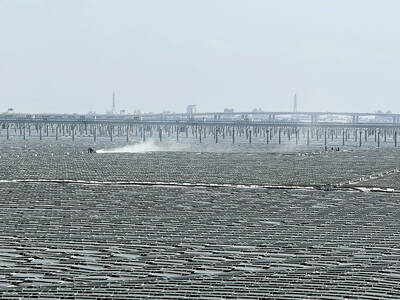
The arithmetic is straightforward and uncomfortable. By the end of 2025, Taiwan had committed itself to a 50-30-20 electricity mix — half natural gas, 30 per cent coal, 20 per cent renewables. The Ministry of Economic Affairs’s (MOEA) own monthly energy reports tell a different story. Natural gas reached 47.8 per cent of generation last year. Coal stood at 35.4 per cent, comfortably above its target ceiling. Renewables came in at 13.1 per cent, well short of the 20 per cent Taipei had pledged a decade earlier. Installed renewable capacity reached roughly half of the 12 gigawatts (GW) the government

Last week US President Donald Trump was asked by a reporter whether he would speak on the phone to the President of Taiwan. “l’ll speak to him. I speak to everybody. We have that situation very well in hand,” Trump said. This marked the second time in a couple of weeks he had said he would talk to the President of Taiwan. In 2016 he famously took a call from then-president Tsai Ing-wen (蔡英文), when he was president-elect. Despite warnings that the apocalypse was nigh because of a phone call, the world quickly forgot about the conversation between two democratically-elected presidents.
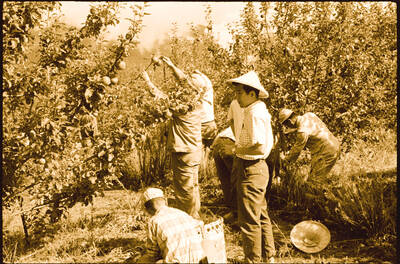
May 25 to May 31 Few believed that apples could be cultivated on a commercial scale in Taiwan’s high mountains. When horticulturalist Cheng Chao-hsiung (程兆熊) first proposed the idea in 1955, both American and Taiwanese colleagues dismissed it as implausible, arguing that temperate fruit could not be reliably grown on a subtropical island, especially on rugged terrain. However, it was this terrain in the Central Mountain Range where many Chinese Civil War veterans were resettled in the late 1950s. With limited job prospects and no family in Taiwan, they were placed on cooperative farms aimed toward self-sufficiency. Some say the conditions


 RSS
RSS