


“I haven’t eaten in centuries,” says the stooped, wrinkled man knocking at a convent door, seeking food and shelter.
LOL! It’s a funny line, given that this is a disguised Count Dracula — who indeed has not eaten in centuries, unless you count human blood. And it’s especially funny given that Dracula is not now, nor has ever been, a comedy.
But the humor’s a nice touch, as are the splashes of color, the lovely 19th-century gowns, the rendering of Parisian salons and vivid street celebrations that are part of Luc Besson’s reimagining of the oft-told tale (more like the told-all-the-time tale), starring Caleb Landry Jones. And yes, the story of Dracula is not usually set in Paris. There’s a lot that’s familiar in this version, but enough variety, panache and bravado to raise it up a notch and give it, well, a raison d’etre.
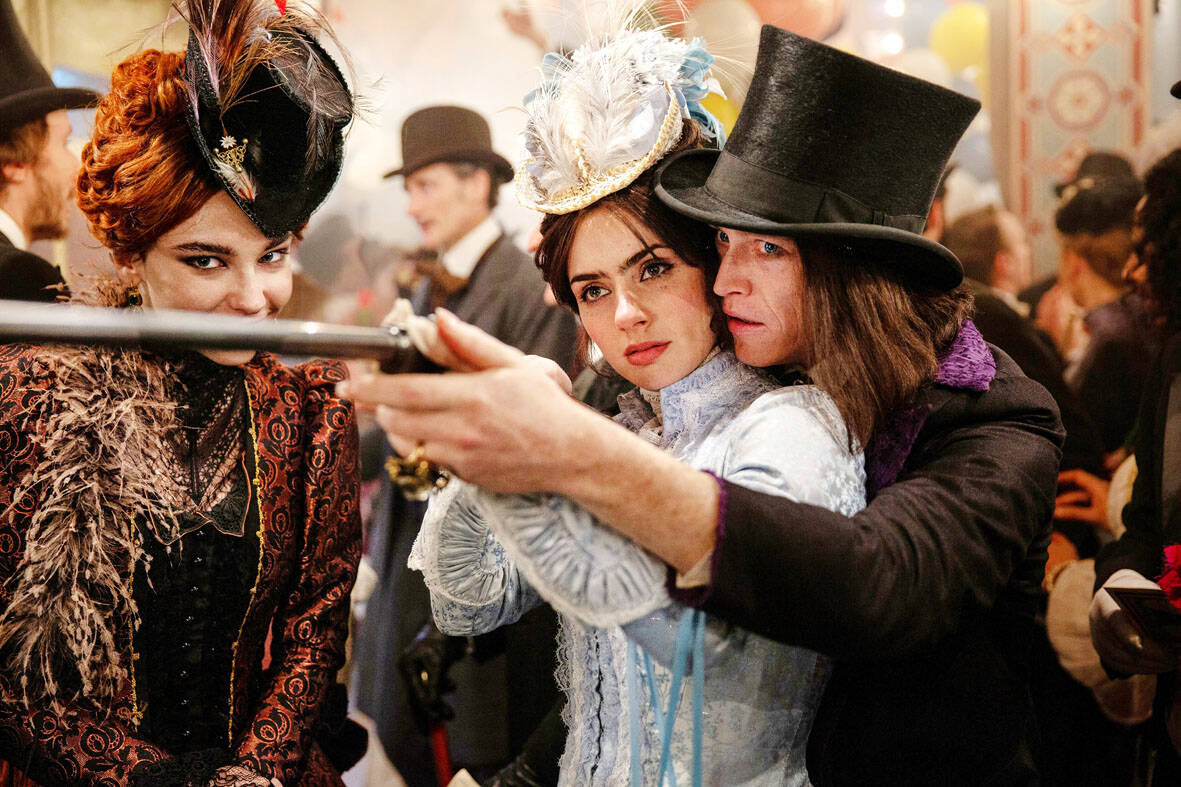
Photo: AP
Writer-director Besson’s calling card is romance — the original title was Dracula: A Love Tale — and, maybe more to the point, sex. Unlike Robert Eggers’ 2024 Nosferatu, which was beautiful but bleak to look at and featured an ugly, fearsome vampire, Besson imbues his main character with a swashbuckling sexiness that suits his star’s craggy appeal.
Which is why, even when he’s aged four whole centuries, a pack of nuns at the convent can’t resist climbing all over Dracula, presenting their necks for the taking. He may be wrinkled, but he’s wearing a homemade scent they can’t resist — no women can, even nuns.
But we begin back in the year 1480, in a remote castle, where a handsome prince — Vlad’s his name, for now — is frolicking in the bedroom with beautiful bride Elisabeta (Zoe Bleu). Their playtime is stopped suddenly by Vlad’s men: War is at hand, and it’s time to fight.
Vlad’s main concern is his wife. He asks the Orthodox priest to swear that God will protect the life of Elisabeta — after all, they’re fighting in God’s name. Alas, escaping through the forest in the snow, Elisabeta is killed in an ambush. A grief-stricken Vlad returns to kill the priest with his cross, renounce God, damn heaven — and is thus cursed with immortal life. A life he will spend trying to find his wife, reincarnated.
Four hundred years later, Vlad, now Count Dracula, resides — shriveled but stylish, with an incredible flowing, white wig that looks like something Elvis might have worn if he were a 400-year-old vampire — in the Carpathian Mountains. But the action shifts to Paris, mainly just because Besson loves Paris, where citizens are joyously celebrating the centenary of the French Revolution.
Paris is also where we meet a prominent vampire-hunter from Bavaria — and unnamed priest — played by Christoph Waltz, who you might imagine is perfect for this role. Like Javert hunting Valjean in Les Miserables, this priest is determined to find his prey, wherever that takes him.
And Dracula’s on his own mission. In his gloomy castle, where he lives with a gaggle of CGI gargoyles, he prepares to kill a young solicitor (Ewens Abid) who came to see him about his property, hanging him upside down until the blood pools in his head.
But then he sees a picture of the frightened young man’s intended, Mina, and becomes obsessed with finding her, certain she’s his reincarnated bride. He spares the man’s life and heads to Paris.
The scenes in the French capital are full of welcome color and life — everything from receptions in salons or at Versailles to a street carnival to a mermaid swimming in an aquarium — all chances to display sumptuous costumes by Corinne Bruand.
When, aided by one of his vampire followers, Maria (Matilda De Angelis), Dracula finds Mina — also played by Bleu (the real-life daughter of Rosanna Arquette) — he immediately knows she’s his eternal love. Now, all he needs to do is win her heart, and get back to Transylvania to escape the vampire hunters. Luckily for him, he’s looking good — those nuns at the convent gave him all the fresh blood he needed to look young and handsome again.
There are plenty of Bessonian flourishes along the way — those gargoyles sure are weird, and they don’t remain gargoyles — but in the end, it’s too bad there weren’t even more, to further distinguish this Dracula telling from many before it. In any case it all leads to a fairly satisfying confrontation between Dracula and the priest, saved until the very end, a la Pacino and De Niro in Heat.
Here, it’s fun to watch Jones and Waltz sink their teeth — well for Jones, his fangs — into a story that’s old as time, but can always use another fairly watchable remake.

Ajay Verma, a consultant gastroenterologist at Kettering general hospital in Northamptonshire, says our gut is a “complex machine.” “It is constantly providing us with the nutrition we need, initially to grow and develop, and then for us to survive, thrive and repair from injury and illness.” How can we keep it functioning well? Put simply: “Make sure what you put into it is balanced, and that you clear out its waste products adequately,” Verma says. “In a general gastroenterology clinic, the most common conditions we see are irritable bowel syndrome (IBS), gastroesophageal reflux disease, inflammatory bowel disease and constipation,” says Nisha
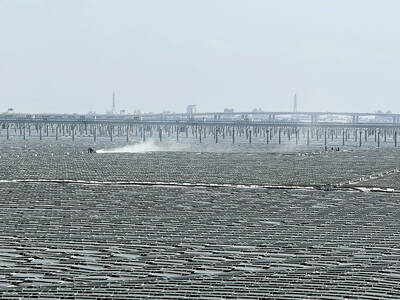
The arithmetic is straightforward and uncomfortable. By the end of 2025, Taiwan had committed itself to a 50-30-20 electricity mix — half natural gas, 30 per cent coal, 20 per cent renewables. The Ministry of Economic Affairs’s (MOEA) own monthly energy reports tell a different story. Natural gas reached 47.8 per cent of generation last year. Coal stood at 35.4 per cent, comfortably above its target ceiling. Renewables came in at 13.1 per cent, well short of the 20 per cent Taipei had pledged a decade earlier. Installed renewable capacity reached roughly half of the 12 gigawatts (GW) the government

Last week US President Donald Trump was asked by a reporter whether he would speak on the phone to the President of Taiwan. “l’ll speak to him. I speak to everybody. We have that situation very well in hand,” Trump said. This marked the second time in a couple of weeks he had said he would talk to the President of Taiwan. In 2016 he famously took a call from then-president Tsai Ing-wen (蔡英文), when he was president-elect. Despite warnings that the apocalypse was nigh because of a phone call, the world quickly forgot about the conversation between two democratically-elected presidents.
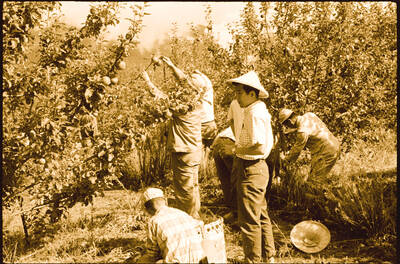
May 25 to May 31 Few believed that apples could be cultivated on a commercial scale in Taiwan’s high mountains. When horticulturalist Cheng Chao-hsiung (程兆熊) first proposed the idea in 1955, both American and Taiwanese colleagues dismissed it as implausible, arguing that temperate fruit could not be reliably grown on a subtropical island, especially on rugged terrain. However, it was this terrain in the Central Mountain Range where many Chinese Civil War veterans were resettled in the late 1950s. With limited job prospects and no family in Taiwan, they were placed on cooperative farms aimed toward self-sufficiency. Some say the conditions


 RSS
RSS