


Highlights from a trove of more than 200 love letters that tell the story of a couple’s courtship and marriage during World War II are now on display digitally through the Nashville Public Library, offering an intimate picture of love during wartime.
The letters by William Raymond Whittaker and Jane Dean were found in a Nashville home that had belonged to Jane and her siblings. They were donated in 2016 to the Metro Nashville Archives.
Whittaker, who went by Ray, was from New Rochelle, New York. He moved to the Tennessee capital to attend the historically Black Meharry Medical College, according to the library’s metropolitan archivist, Kelley Sirko. That’s where he met and dated Jane, another student at the college.
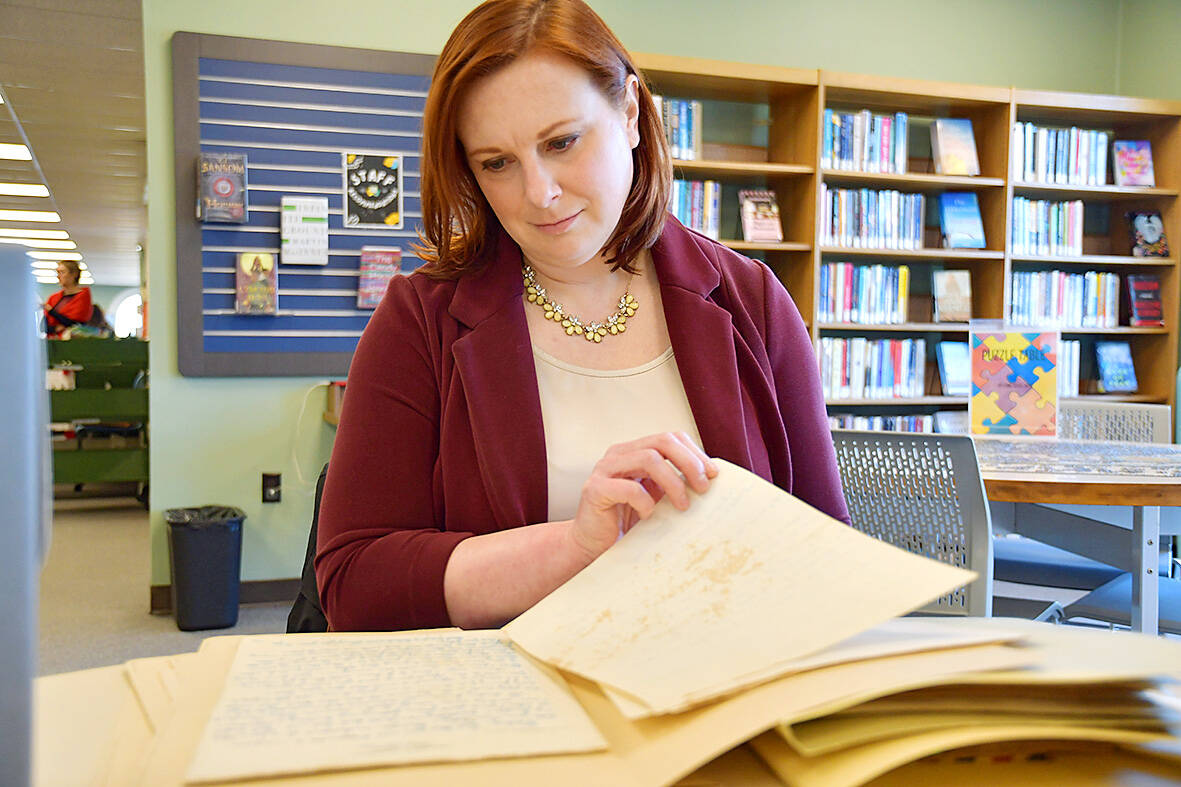
Photo: AP
The pair lost touch when Ray left Nashville. In the summer of 1942 he was drafted into the Army. Stationed at Fort Huachuca in Arizona, he decided to reestablish contact with Jane, who was then working as a medical lab technician at Vanderbilt University.
‘A PLEASANT AND SAD SURPRISE’
The library doesn’t have Ray’s first letter to Jane, but it does have her reply. She greets him somewhat formally as “Dear Wm R.”
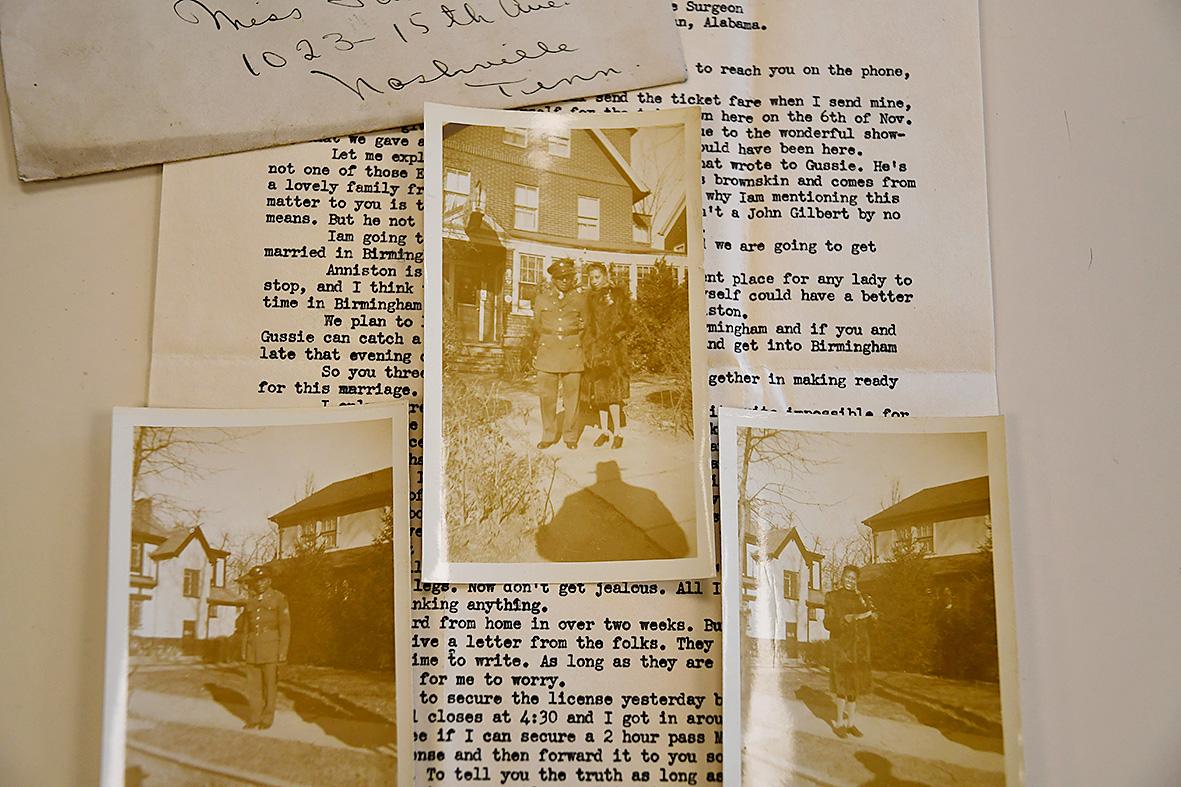
Photo: AP
“It sure was a pleasant and sad surprise to hear from you,” she writes on July 30, 1942. “Pleasant because you will always hold a place in my heart and its nice to know you think of me once in a while. Sad because you are in the armed forces — maybe I shouldn’t say that but war is so uncertain, however I’m proud to know that you are doing your bit for your country.”
Jane then goes on to list — perhaps as a hint? — a string of mutual acquaintances who have gotten married recently, noting those who have had children or are rumored to be having children. She signs
A STORY IN LETTERS
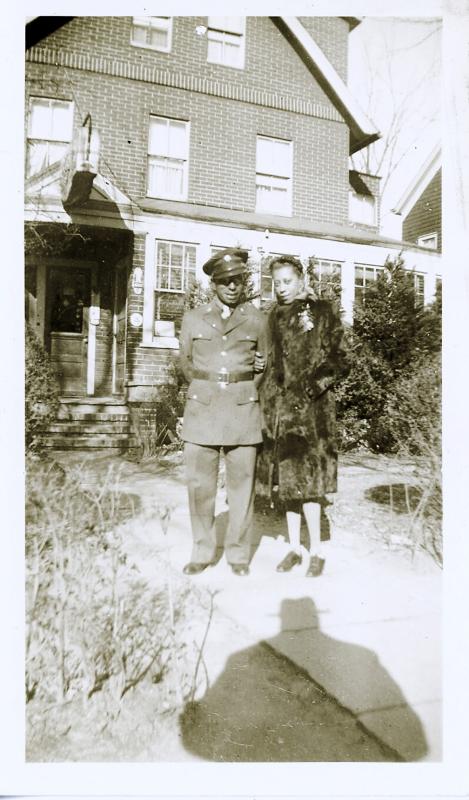
Photo: AP
“You can’t help but smile when you read through these letters,” Sirko said. “You really can’t. And this was just such an intimate look at two regular people during a really complicated time in our history.”
Sirko said Nashville archivists have not been able to locate any living relatives of Ray and Jane, so most of what they know about them is from the letters. The couple did not have any children, according to an obituary for Ray, who died in Nashville in 1989.
The donation also included a few photographs and Ray’s patch from the historically Black fraternity Alpha Phi Alpha.
Beyond a love story, the collection gives “this in-the-moment perspective of ... what it’s like just navigating certain racial issues, certain gender issues, their work, the life of a soldier, all of these things,” Sirko said. That’s why the archivists wanted to make it more accessible to the public.
LOVE AND DOUBTS
Just two months after the first letters, the romance has heated up. Ray has been assigned to Fort McClellan in Alabama, where he will help organize the reactivated — and segregated — 92nd Infantry Division, which went on to see combat in Europe.
In an undated letter from September 1942, he tells Jane, “I have something very important to tell you when I do see you and you will be surprise to know as to what it is.
“I might even ask you to marry me. One never knows.”
He teases her by saying that if he goes to officer training school, he will be able to “draw down a fat juicey salary” — about US$280 a month if he is married and US$175 if single.
“Really I can’t leave my excess amount of money to the government and must have someone to help me spend it,” he writes.
At first Jane is skeptical. “What makes you think you still love me?” she asks on Sept. 23. “Is it that you are lonesome and a long way from home. I’m sure I want you to love me but not under those conditions.”
A Sept. 24 letter from Ray is more serious. “Events are changing so rapidly these days that one can’t really plan for the future. But I am going to make a decisive decision in matters of most importances,” he writes.
Ray says that he had thought he and Jane could not be together because they lived so far apart. He says he dated other women but “I didn’t find the companionship and love that I so dearly wanted to find. All I ran into was trouble and more trouble.”
A ‘DARLING HUSBAND’
Soon Ray wins her over, and they are married on Nov. 7 in Birmingham.
In a letter from Nov. 9, Jane addresses Ray as “my darling husband.” She is rapturous about the marriage but sad that the couple has to remain apart for now. She has already returned to her job and family in Nashville while he has returned to the Army base.
“It’s a wonderful thing to have such and sweet and lovely husband. Darling you’ll never know how much I love you. The only regret is that we didn’t marry years ago... As it is now things are so uncertain and we are not together but such a few happy hours. But maybe this old war will soon be over and we can be together for always.”
She concludes, “Darling be sweet and write to me soon. I want a letter from my husband. Remember I’ll always love you. Always — from Your Wife”

Taiwan’s overtaking of South Korea in GDP per capita is not a temporary anomaly, but the result of deeper structural problems in the South Korean economy says Chang Young-chul, the former CEO of Korea Asset Management Corp. Chang says that while it reflects Taiwan’s own gains, it also highlights weakening growth momentum in South Korea. As design and foundry capabilities become more important in the AI era, Seoul risks losing competitiveness if it relies too heavily on memory chips. IMF forecasts showing Taiwan widening its lead over South Korea have fueled debate in Seoul over memory chip dependence, industrial policy and

“China wants to unify with Taiwan at the lowest possible cost, and it currently believes that unification will become easier and less costly as time passes,” wrote Amanda Hsiao (蕭嫣然) and Bonnie Glaser in Foreign Affairs (“Why China Waits”) this month, describing how the People’s Republic of China (PRC) is playing the long game in its quest to seize Taiwan. This has been a favorite claim of many writers over the years, easy to argue because it is so trite. Very obviously, if the PRC isn’t attacking Taiwan, it is waiting. But for what? Hsiao and Glaser’s main point is trivial,
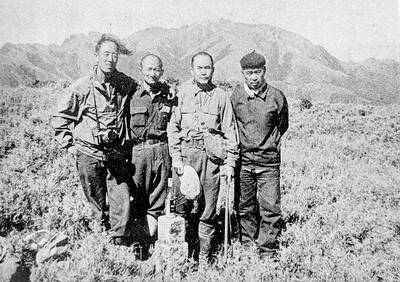
May 18 to May 24 Gathered on Yangtou Mountain (羊頭山) on Dec. 5, 1972, Taiwan’s hiking enthusiasts formally declared the formation of the “100 Peaks Club” (百岳俱樂部) and unveiled the final list of mountains. Famed mountaineer Lin Wen-an (林文安) led this effort for the Chinese Alpine Association (中華山岳協會). Working with other experienced climbers, he chose 100 peaks above 10,000 feet (3,048m) that featured triangulation points and varied in difficulty and character. The list sparked an alpine hiking craze, inspiring many to take up mountaineering and competing to “conquer” the summits. A common misconception is that the 100 Peaks represent Taiwan’s 100 tallest

Yesterday, the Democratic Progressive Party (DPP) nominated legislator Puma Shen (沈伯洋) as their Taipei mayoral candidate, the Chinese Nationalist Party (KMT) put their stamp of approval on Wei Ping-cheng (魏平政) as their candidate for Changhua County commissioner and former legislator Tsai Pi-ru (蔡壁如) of the Taiwan People’s Party (TPP) has begun the process to also run in Changhua, though she has not yet been formally nominated. All three news items are bizarre. The DPP has struggled with settling on a Taipei nominee. The only candidate who declared interest was Enoch Wu (吳怡農), but the party seemed determined to nominate anyone


 RSS
RSS