


It’s a good thing that 2025 is over. Yes, I fully expect we will look back on the year with nostalgia, once we have experienced this year and 2027. Traditionally at New Years much discourse is devoted to discussing what happened the previous year. Let’s have a look at what didn’t happen.
Many bad things did not happen. The People’s Republic of China (PRC) did not attack Taiwan. We didn’t have a massive, destructive earthquake or drought. We didn’t have a major human pandemic. No widespread unemployment or other destructive social events.
Nothing serious was done about Taiwan’s swelling birth rate catastrophe. Both parties proposed various forms of subsidies, which are known to have little effect. The wrenching changes to the boss and work cultures and the built environment necessary to get people to make babies were not begun. The president’s New Year’s Day speech mentioned births once, in the context of subsidies in next year’s budget (stalled by the pro-China parties) and immigration not at all.

Photo: Lo Pei-der
DEMOGRAPHIC SUICIDE
Instead, Taiwan is now committed to demographic suicide in order to preserve its current political economy. Yet that cannot last: simply put, economic growth equals productivity growth plus labor (population growth). If the population plummets, so does economic output and growth. Imports of migrant workers are a stopgap. An economy in which each young person supports two or three seniors will not work — the young people will leave. In a decade or two, the nation will be competing for young people with all of the nice places to live in southeast Asia and elsewhere. Taiwan’s leaders have not adjusted to that reality.
The proposal to build a major highway through the east coast Rift Valley, extend the HSR down the east coast and shove a tunnel through the mountains from Taichung to the Rift Valley was not funded or implemented.
Photo: Lo Kuo-chia
Increased taxes on the rich were not implemented. This idea remains beyond the bounds of public discussion. Taiwan’s tax take remains low relative to other developed economies. This helps cripple funding for defense and other urgent needs.
The government did not ban Tiktok, though it should.
REAL ESTATE
Housing prices were not aggressively attacked. Taxes on real estate remain far too low, driving massive overbuilding and inflated house prices. The government simply uses the central bank to keep things churning despite the crisis. Developers retain their ability to abuse transferable development rights (TDR) and other subsidies to overbuild. Local governments remain able to exploit land laws to drive higher housing prices, via public auctions of land and designating zones for urban development, both of which function as anchors for new, higher housing prices.
Illegal structures on farmland, from illegal factories to warehouses to campgrounds, along with illegal waste dumping, continue. Rising rents have not been comprehensively addressed, and the nation continues to tumble toward a future inhabited by an underclass of permanent renters. Social housing was not created in massive volumes. Badly in need of reform, the crazed land and real estate laws are an underlying driver of many of the nation’s urgent problems.
The pro-China parties — the Chinese Nationalist Party (KMT) and the Taiwan People’s Party (TPP) — did not review the 2026 budget, or pass the special budget for defense. They continued to block the development of civil defense programs integrated with the military and its needs. They did not pass a cornucopia of bills related to urgent national needs, such as immigration, births and wages, or housing, land and real estate reforms. They did not propose alternative defense policies or programs for negotiation with the administration. They did not heed Constitutional restrictions or the public debt laws. Instead, they used the “partisan divide” as a smokescreen to cover their evident unconcern for the future of Taiwan.
IMMIGRATION
The government did not institute a rational, simple immigration policy. No policy aims at acquiring families with young children or young people on a priority basis. No policy permits young migrant workers to naturalize and bring in their families. No policy uses citizenship as a carrot to bring in talent.
Despite decades of begging, most spouses on spouse visas linked to working resident foreigners are still forbidden from working for the first five years, though almost every industry faces massive labor shortages and tens of thousands of Taiwanese work outside Taiwan. The stubborn, persistent irrationality of that rule is breathtaking.
The premier did not countersign the KMT’s amendments to the fiscal allocation act that would have impacted numerous government programs by redistributing money away from the central government to local governments. The amendments are not law — yet.
Taiwan still has no real policy to promote foreign adventure tourism to take advantage of its magnificent mountains and seascapes. Trekking remains underdeveloped. Hotel prices, currently driving away tourists and reducing domestic tourism, continue to rise, unaddressed by urgent government policy.
The National Health Insurance (NHI) system for reimbursing hospitals for their expenses, the perverse floating cap under which compensation falls as hospital expenses rise, remains unrevised. The slow erosion of health services will continue.
The government’s failures to ruthlessly address impediments to renewable energy development continued. There is no policy to develop local level offices, especially in KMT-run areas where foot-dragging by local governments continues. Rooftop solar for electric power, which could be used to drive the development of a local solar power industry, is tiny. Investments in geothermal power remain pitiful, despite studies showing that Taiwan could fill the bulk of its baseload needs with geothermal power.
Taiwan did nothing serious about its chronic gangster problem. Then again, of what year can that not be said?
US POLICY
The US did not slash tariffs to support the current administration and raise export revenues for Taiwan to enable it to procure needed weapons systems. It did not give weapons to Taiwan under the guise or genuine action of prepositioning weapons for use in wartime. It did not provide incentives for the government to spend more on defense, nor did it punish the KMT for blocking defense spending. It did not source munitions from Taiwan to help the nation expand its defense production. Few of the recommendations of the US House China Committee for helping Taiwan were actually implemented.
There was no US pivot to Asia. No trade-off of Europe for more investment and visibility in Asia and especially in defense of Taiwan.
The US Congress did not abandon Taiwan.
Taiwan did not screw up its response to the PRC end of year drills. The government remained resolute. The public went blissfully about its business, complacent as usual.
Happy 2026, folks. May it only be good news for you, dear readers.
Notes from Central Taiwan is a column written by long-term resident Michael Turton, who provides incisive commentary informed by three decades of living in and writing about his adoptive country. The views expressed here are his own.
Ajay Verma, a consultant gastroenterologist at Kettering general hospital in Northamptonshire, says our gut is a “complex machine.” “It is constantly providing us with the nutrition we need, initially to grow and develop, and then for us to survive, thrive and repair from injury and illness.” How can we keep it functioning well? Put simply: “Make sure what you put into it is balanced, and that you clear out its waste products adequately,” Verma says. “In a general gastroenterology clinic, the most common conditions we see are irritable bowel syndrome (IBS), gastroesophageal reflux disease, inflammatory bowel disease and constipation,” says Nisha
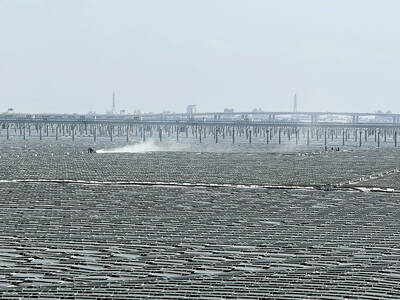
The arithmetic is straightforward and uncomfortable. By the end of 2025, Taiwan had committed itself to a 50-30-20 electricity mix — half natural gas, 30 per cent coal, 20 per cent renewables. The Ministry of Economic Affairs’s (MOEA) own monthly energy reports tell a different story. Natural gas reached 47.8 per cent of generation last year. Coal stood at 35.4 per cent, comfortably above its target ceiling. Renewables came in at 13.1 per cent, well short of the 20 per cent Taipei had pledged a decade earlier. Installed renewable capacity reached roughly half of the 12 gigawatts (GW) the government

Last week US President Donald Trump was asked by a reporter whether he would speak on the phone to the President of Taiwan. “l’ll speak to him. I speak to everybody. We have that situation very well in hand,” Trump said. This marked the second time in a couple of weeks he had said he would talk to the President of Taiwan. In 2016 he famously took a call from then-president Tsai Ing-wen (蔡英文), when he was president-elect. Despite warnings that the apocalypse was nigh because of a phone call, the world quickly forgot about the conversation between two democratically-elected presidents.
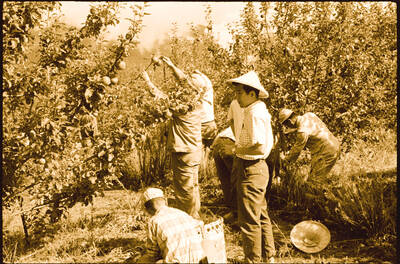
May 25 to May 31 Few believed that apples could be cultivated on a commercial scale in Taiwan’s high mountains. When horticulturalist Cheng Chao-hsiung (程兆熊) first proposed the idea in 1955, both American and Taiwanese colleagues dismissed it as implausible, arguing that temperate fruit could not be reliably grown on a subtropical island, especially on rugged terrain. However, it was this terrain in the Central Mountain Range where many Chinese Civil War veterans were resettled in the late 1950s. With limited job prospects and no family in Taiwan, they were placed on cooperative farms aimed toward self-sufficiency. Some say the conditions


 RSS
RSS