


Jan. 5 to Jan. 11
Of the more than 3,000km of sugar railway that once criss-crossed central and southern Taiwan, just 16.1km remain in operation today.
By the time Dafydd Fell began photographing the network in earnest in 1994, it was already well past its heyday. The system had been significantly cut back, leaving behind abandoned stations, rusting rolling stock and crumbling facilities.
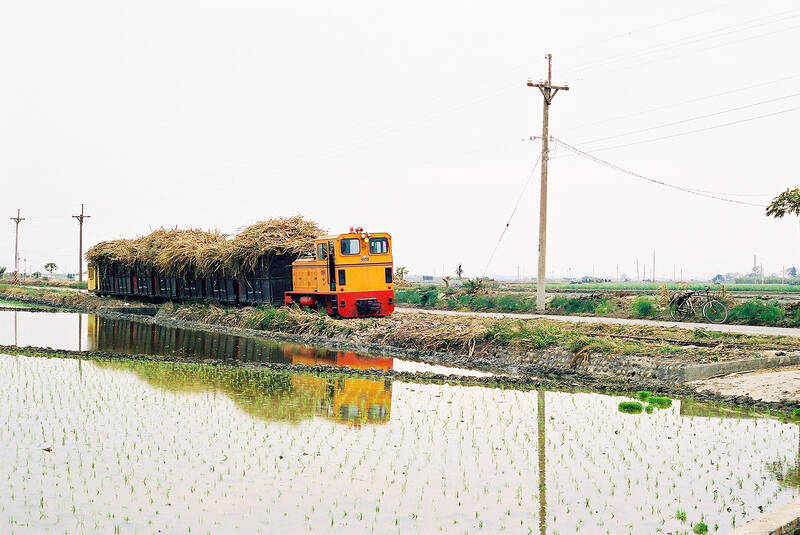
Photo courtesy of Dafydd Fell
This reduction continued during the five years of his documentation, adding urgency to his task. As passenger services had already ceased by then, Fell had to wait for the sugarcane harvest season each year, which typically ran from November to March or April. Many trips to remote locations required overnight stays. He would ride out on his bicycle early in the morning and sometimes wait in the bushes for hours — and on one occasion he was nearly arrested.
The evocative photographs appear in Fell’s latest book, The Twilight Years of Taiwan’s Sugar Railways, which offers a fascinating glimpse into a vanished past and rural Taiwan in the 1990s. Alongside the technical details that will surely delight railway enthusiasts, Fell weaves in his personal experiences, observations of Taiwanese society and broader historical context. Further depth is provided by co-author Wang Hsiang (王翔), a fellow railway documentarian who has conducted interviews with more than 200 retired sugar rail workers and their families.
“Taiwan in Time” ran a two-part series in 2024 about the rise and fall of Taiwan’s sugar railways, (“The sugar express,” Sept. 8, 2024 and “The sugar rail reaches its peak and goes downhill,” Sept. 15, 2024). These diminutive trains were used not just by the sugar plants but also transported other goods and thousands of passengers per day from localities that the Taiwan Railways Administration did not reach.

Photo courtesy of Dafydd Fell
Due to the mechanization of sugar harvesting and the advent of road transport, the network began to decline in the 1970s. Passenger services ended in 1982. The series devoted only one paragraph to the 1990s; Fell and Wang’s book fills in this often overlooked chapter with immense detail.
‘EXTRAORDINARY’ RAILWAY
Established in 1907 during the Japanese colonial era, the majority of Taiwan’s sugar railways ran on a narrow 762mm-gauge railroad. The diminutive trains were nicknamed wufenche (五分車), literally “half-cars,” a reference to them being roughly half the size of the standard gauge railway, or that they ran at about half the speed of regular trains.

Photo courtesy of Dafydd Fell
Fell describes it as “arguably the world’s most extraordinary industrial railway network,” noting that it quickly exceeded its original purpose of transporting sugarcane a short distance from the fields to the mills. Within a few years after its inception, the lines began carrying commercial freight and passengers, eventually evolving into a dense, interconnected network that spanned the western plans from Taichung to Pingtung.
During the Japanese era, the individual lines linked up to the Taiwan Railway Administration’s (TRA) Western Trunk Line, but not to each other. After World War II, the government nationalized the sugar industry and built the South North Line (SNL), also for military purposes. Completed in 1953, it marked the beginning of the sugar railway’s glory days.
At its peak, the sugar railway surpassed the reach of the TRA — boasting a larger fleet and more daily train movements during sugar season, Fell writes. It was also technically more advanced in many ways. He also found impressive the diversity of the freight, and how every plant had distinctive features and modes of operation.

Natural disasters, plant closures and changes in transportation gradually reduced the SNL. It’s interesting to see in the photos brightly-colored cars passing directly through towns along the streets; but as urbanization increased, accidents became more frequent, prompting calls to remove the tracks. By the time Fell began photographing in 1994, the SNL was a shadow of its former self; by 1998 it had completely shut down.
FIRST DISCOVERY
Fell first stumbled upon the sugar railway by accident while riding a motorcycle near Kaohsiung during his year abroad as a language student in 1990; he did not know what he photographed then. There was soon a personal connection, as his future father-in-law was the director of the Beigang Sugar Factory. His commute passed the Qiaotou sugar mill, which he saw suddenly come to life during sugarcane season in November 1994. This sparked his determination to photograph as much as he could; despite there still being 1,552km of running track at that time, the railway was rapidly disappearing.
By the time Wang became enamored with the sugar railway, only a single industry line remained. His first expedition was in high school, searching for traces of the tracks that his maternal grandmother recalled once ran through her hometown of Xiancaopu (仙草埔) in Tainan. During his journeys, he met many retired railway workers, several of whom later passed away, compelling him to begin conducting interviews and uncovering information not recorded in the archives.
The book is presented from Fell’s perspective, organized chronologically by harvest season, showing his growing knowledge of the railway and the evolving methods and strategies he used for travel and documentation. Under each image, he provides detailed captions outlining the specifications and functions of the line, station or vehicle, railroad operations such as route signs and signalling, and the design and connectivity of the routes. He also records the various accidents that occurred along the network. Personal anecdotes — from missed classes and angry security guards to burst tires — along with reflections on the most memorable trips and railway features, bring warmth to the photographs.
LOSS AND LAMENT
Fell also discusses the industry and railway’s wider social role, as it provided vital services for residents, from transportation to employment. The Dalin Sugar Factory even offered rides in open cane wagons for relatives visiting military conscripts at a nearby base. Other issues such as politics, pollution and economic decline are also touched upon.
Wang’s interviews shed light on the challenges of day-to-day operations with fascinating anecdotes such as a train plowing into a plane, which routes were notoriously perilous and which crews were disliked for their rowdy, drunken behavior.
Since photos are the focus of the book and the main text is in the captions, the narrative can at times feel disjointed, especially given the sheer number of stations and lines featured. It’s hard to keep track, even with maps as reference. Still, it provides a vivid general and comprehensive picture, conveying the scope of the railway and why it remains beloved.
Throughout the book, there’s a sense of loss and lament as Fell’s documentation was during years of great change. He notes missed opportunities to better preserve it or repurpose it into passenger lines, but instead “poor planning has led to widespread destruction of the country’s rich industrial railway heritage.”
Although some structures remain and five short tourist lines operate today, more tracks have been covered up and converted into cycling paths. Enthusiasts are not optimistic, and Fell implores readers to visit what’s left before it’s too late.
Taiwan in Time, a column about Taiwan’s history that is published every Sunday, spotlights important or interesting events around the nation that either have anniversaries this week or are tied to current events.
Ajay Verma, a consultant gastroenterologist at Kettering general hospital in Northamptonshire, says our gut is a “complex machine.” “It is constantly providing us with the nutrition we need, initially to grow and develop, and then for us to survive, thrive and repair from injury and illness.” How can we keep it functioning well? Put simply: “Make sure what you put into it is balanced, and that you clear out its waste products adequately,” Verma says. “In a general gastroenterology clinic, the most common conditions we see are irritable bowel syndrome (IBS), gastroesophageal reflux disease, inflammatory bowel disease and constipation,” says Nisha
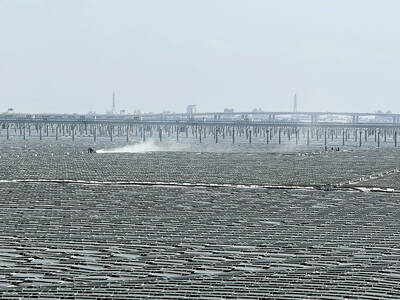
The arithmetic is straightforward and uncomfortable. By the end of 2025, Taiwan had committed itself to a 50-30-20 electricity mix — half natural gas, 30 per cent coal, 20 per cent renewables. The Ministry of Economic Affairs’s (MOEA) own monthly energy reports tell a different story. Natural gas reached 47.8 per cent of generation last year. Coal stood at 35.4 per cent, comfortably above its target ceiling. Renewables came in at 13.1 per cent, well short of the 20 per cent Taipei had pledged a decade earlier. Installed renewable capacity reached roughly half of the 12 gigawatts (GW) the government

Last week US President Donald Trump was asked by a reporter whether he would speak on the phone to the President of Taiwan. “l’ll speak to him. I speak to everybody. We have that situation very well in hand,” Trump said. This marked the second time in a couple of weeks he had said he would talk to the President of Taiwan. In 2016 he famously took a call from then-president Tsai Ing-wen (蔡英文), when he was president-elect. Despite warnings that the apocalypse was nigh because of a phone call, the world quickly forgot about the conversation between two democratically-elected presidents.
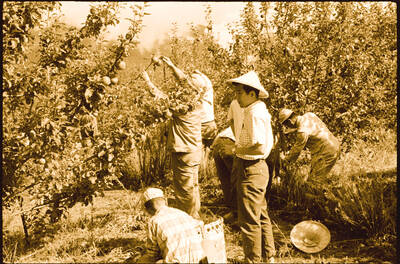
May 25 to May 31 Few believed that apples could be cultivated on a commercial scale in Taiwan’s high mountains. When horticulturalist Cheng Chao-hsiung (程兆熊) first proposed the idea in 1955, both American and Taiwanese colleagues dismissed it as implausible, arguing that temperate fruit could not be reliably grown on a subtropical island, especially on rugged terrain. However, it was this terrain in the Central Mountain Range where many Chinese Civil War veterans were resettled in the late 1950s. With limited job prospects and no family in Taiwan, they were placed on cooperative farms aimed toward self-sufficiency. Some say the conditions


 RSS
RSS