


Towering high above Taiwan’s capital city at 508 meters, Taipei 101 dominates the skyline.
The earthquake-proof skyscraper of steel and glass has captured the imagination of professional rock climber Alex Honnold for more than a decade. Tomorrow morning, he will climb it in his signature free solo style — without ropes or protective equipment. And Netflix will broadcast it — live.
The event’s announcement has drawn both excitement and trepidation, as well as some concerns over the ethical implications of attempting such a high-risk endeavor on live broadcast. Many have questioned Honnold’s desire to continues his free-solo climbs now that he’s a married father of two young girls.
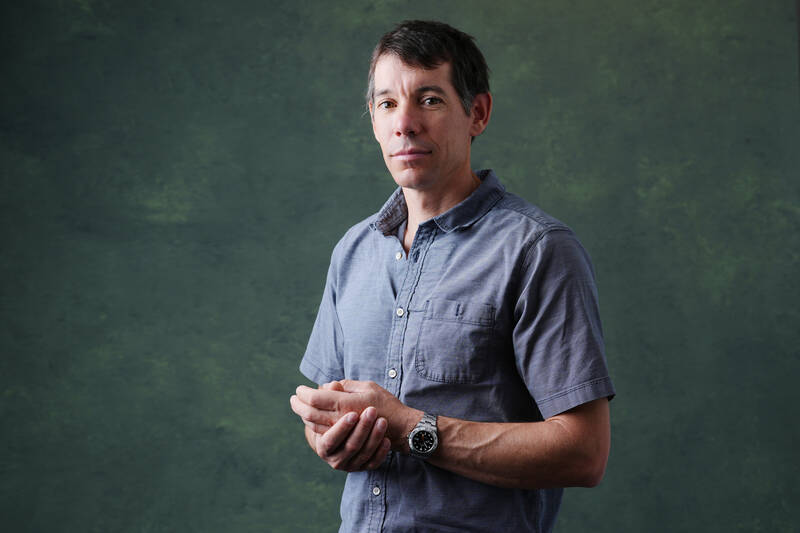
Photo: AP
Known for his legendary ropeless ascent up Yosemite National Park’s El Capitan, documented in Free Solo, Honnold is intent on pushing the limits of climbing around the world.
“When you look at climbing objectives, you look for things that are singular,” Honnold said last year. “Something like El Capitan where it’s way bigger and way prouder than all the things around it.”
Something like Taipei 101.
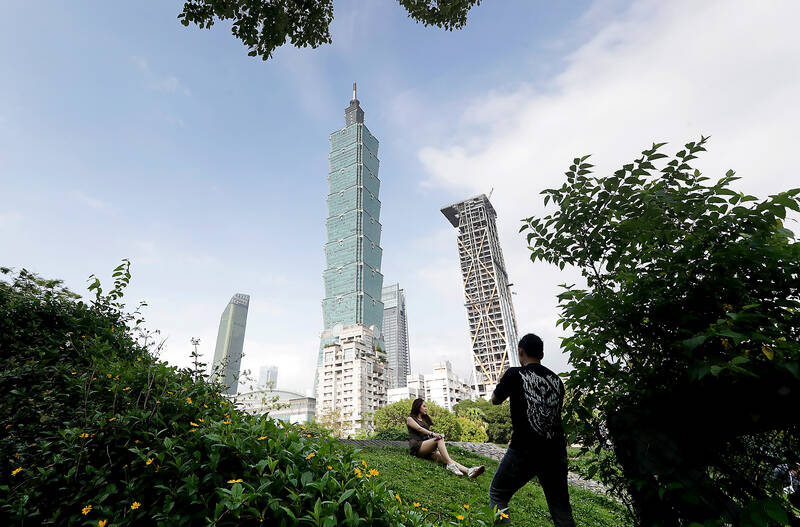
Photo: AP
HOW TO FREE SOLO A SKYSCRAPER
Honnold won’t be the first climber to ascend the skyscraper, but he will be the first to do so without a rope. French rock climber Alain Robert scaled the building on Christmas Day in 2004, as part of the grand opening of what was then the world’s tallest building. He took nearly four hours to finish, almost twice as long as what he anticipated, all while nursing an injured elbow and battered by wind and rain.
Honnold, who has been training for months, doesn’t think his climb will be hard. He’s practiced the moves on the building and spoke with Robert on his climbing podcast.
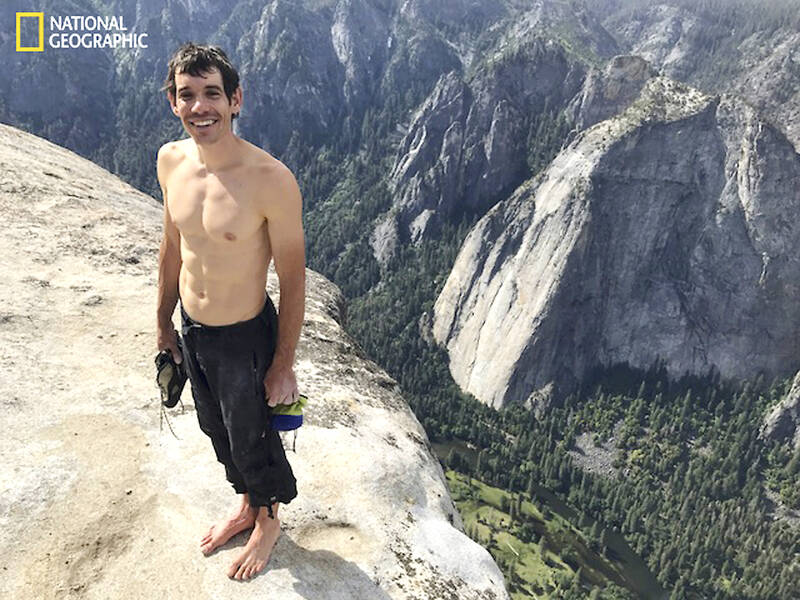
Photo: National Geographic via AP
“I don’t think it’ll be that extreme,” Honnold said. “We’ll see. I think it’s the perfect sweet spot where it’s hard enough to be engaging for me and obviously an interesting climb.”
The building has 101 floors, with the hardest part being the 64 floors comprising the middle section — the “bamboo boxes” that give the building its signature look. Divided into eight, each segment will have eight floors of steep, overhanging climbing followed by a balcony that Honnold would be able to rest on.
The Skyscraper Live broadcast will be on a 10-second delay and begin tonight for viewers in the US.
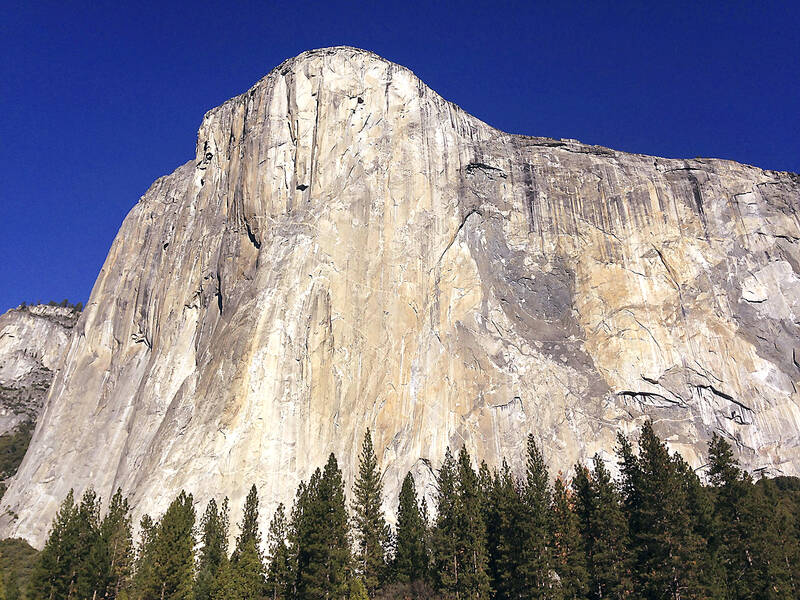
Photo: AP
James Smith, an executive with event producer Plimsoll Productions, said he consulted safety advisers almost immediately after he first spoke with Honnold about attempting the climb. Smith works with a risk management group for film and TV called Secret Compass, which has supported productions in filming penguins in Antarctica and helping Chris Hemsworth walk across a crane projecting from an Australian skyscraper’s roof, alike.
Smith and Honnold will be able to communicate throughout the event. They’ll have cameramen positioned inside the building, various hatches and places to bail during the climb and four high-angle camera operators suspended on ropes.
“These people all know Alex. They trust Alex. They’re going to be close to him throughout the whole climb,” Smith said. “They’re going to get us kind of amazing shots, but they’re also there just to keep an eye on him, and if there’s any problems, they can kind of help.”
The production has also commissioned professional weather forecasters to provide updates leading up to climb day. There’s currently a small chance of light rain in the morning, Smith said. Ultimately, if conditions are bad, Honnold won’t climb.
At his local gym, Taiwanese rock climber Chin Tzu-hsiang said he’s grown up always looking up at the Taipei 101 and wondering if he could climb it. Honnold is a household name among rock climbers even in Taiwan, and Chin said he has students who have only been climbing for a year or two who are excited to watch. Based on watching Honnold in his other climbs, Chin said he trusts him to prepare for the challenge and not to recklessly take risks.
“For Alex Honnold to finish the climb, it’s like he’s helping us fulfill our dream,” Chin said.
ETHICAL CONSIDERATIONS
The novelty and risk involved in the climb are almost built for television.
“This will be the highest, the biggest urban free solo ever,” Smith said. “So we’re kind of writing history and those events, I think, have to be broadcast and watched live.”
Those same factors are crucial when discussing the ethics of the climb, according to Subbu Vincent, director of media and journalism ethics at Santa Clara University.
It’s important that Honnold has a “back-off clause” and the production aspect of the event doesn’t increase the risk he’s already taking, Vincent said. One action that Vincent believes is crucial is using a delay in the live broadcast so it can be stopped immediately if something goes wrong.
“I don’t think it’s ethical to proceed to livestream anything after,” Vincent said.
Taipei 101 officials declined to comment and Secret Compass did not respond to interview requests.
Another consideration is the influence Honnold may have on impressionable youth who may feel more emboldened to take risks after watching him climb, a debate that has existed since Evel Knievel’s televised daredevil stunts.
Many climbers have died from free-soloing, including an 18-year-old rock climber from Texas who fell last June in Yosemite. A trend called “roof-topping” — where people gain access to the tops of skyscrapers, often illegally, to take photos of themselves dangling from the edge — has also led to several deaths.
Jeff Smoot, who authored the book All and Nothing: Inside Free Soloing, shares those concerns. But what the general public might not understand is that embracing risk has always been a significant part of climbing culture, he said.
Smoot began climbing in the 1970s watching legendary climbers like John Long and John Bachar free-solo regularly.
“From the public’s perspective, this is thrill-seeking. From the climber’s perspective, it’s a meditative art form,” Smoot said.
When he first heard Honnold would be ascending Taipei 101 without ropes, Smoot had questions — why do it at all, why do it without ropes, why film it live?
But, he concluded, “If it wasn’t dangerous, would people want to watch?”
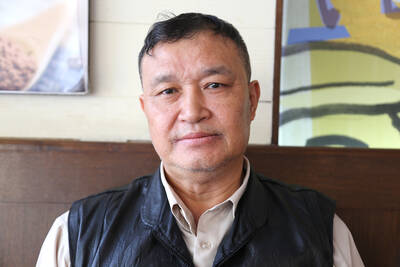
Taiwan has next to no political engagement in Myanmar, either with the ruling military junta nor the dozens of armed groups who’ve in the last five years taken over around two-thirds of the nation’s territory in a sprawling, patchwork civil war. But early last month, the leader of one relatively minor Burmese revolutionary faction, General Nerdah Bomya, who is also an alleged war criminal, made a low key visit to Taipei, where he met with a member of President William Lai’s (賴清德) staff, a retired Taiwanese military official and several academics. “I feel like Taiwan is a good example of
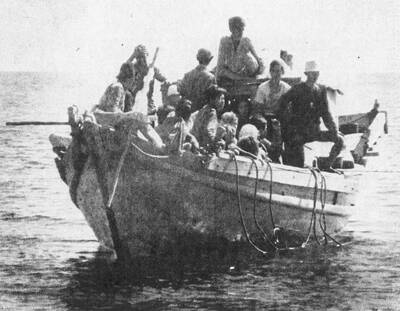
March 2 to March 8 Gunfire rang out along the shore of the frontline island of Lieyu (烈嶼) on a foggy afternoon on March 7, 1987. By the time it was over, about 20 unarmed Vietnamese refugees — men, women, elderly and children — were dead. They were hastily buried, followed by decades of silence. Months later, opposition politicians and journalists tried to uncover what had happened, but conflicting accounts only deepened the confusion. One version suggested that government troops had mistakenly killed their own operatives attempting to return home from Vietnam. The military maintained that the

Jacques Poissant’s suffering stopped the day he asked his daughter if it would be “cowardly to ask to be helped to die.” The retired Canadian insurance adviser was 93, and “was wasting away” after a long battle with prostate cancer. “He no longer had any zest for life,” Josee Poissant said. Last year her mother made the same choice at 96 when she realized she would not be getting out of hospital. She died surrounded by her children and their partners listening to the music she loved. “She was at peace. She sang until she went to sleep.” Josee Poissant remembers it as a beautiful
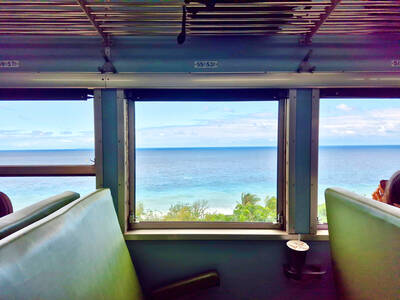
Before the last section of the round-the-island railway was electrified, one old blue train still chugged back and forth between Pingtung County’s Fangliao (枋寮) and Taitung (台東) stations once a day. It was so slow, was so hot (it had no air conditioning) and covered such a short distance, that the low fare still failed to attract many riders. This relic of the past was finally retired when the South Link Line was fully electrified on Dec. 23, 2020. A wave of nostalgia surrounded the termination of the Ordinary Train service, as these train carriages had been in use for decades


 RSS
RSS