


March 2 to March 8
Gunfire rang out along the shore of the frontline island of Lieyu (烈嶼) on a foggy afternoon on March 7, 1987. By the time it was over, about 20 unarmed Vietnamese refugees — men, women, elderly and children — were dead. They were hastily buried, followed by decades of silence.
Months later, opposition politicians and journalists tried to uncover what had happened, but conflicting accounts only deepened the confusion. One version suggested that government troops had mistakenly killed their own operatives attempting to return home from Vietnam.
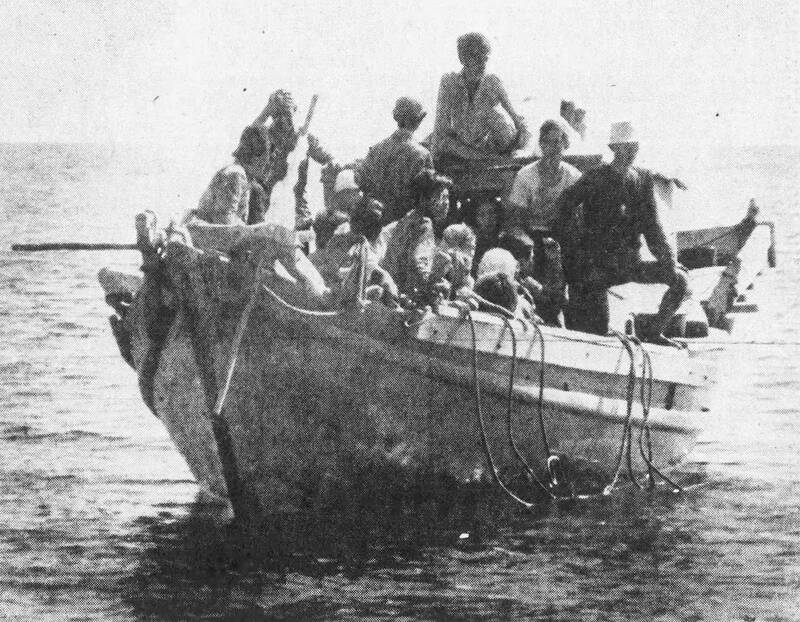
Photo courtesy of Wikimedia Commons
The military maintained that the victims were “communist bandits” possibly sent by Beijing to infiltrate Taiwan, and therefore barred from landing under any circumstances. Previously, an officer who had allowed two Chinese refugees to seek shelter was punished, reinforcing this hardline policy.
Still, commanding officers, including General Chao Wan-fu (趙萬富), lost their posts, and the soldiers were convicted for failing to report the incident, ultimately receiving suspended sentences.
Only when Hau Pei-tsun (郝柏村), who was chief of general staff at the time, published his diary in 2000 was it revealed that the victims were indeed Vietnamese refugees. The Control Yuan released a detailed report in 2022, but the victims’ families continue to seek answers.
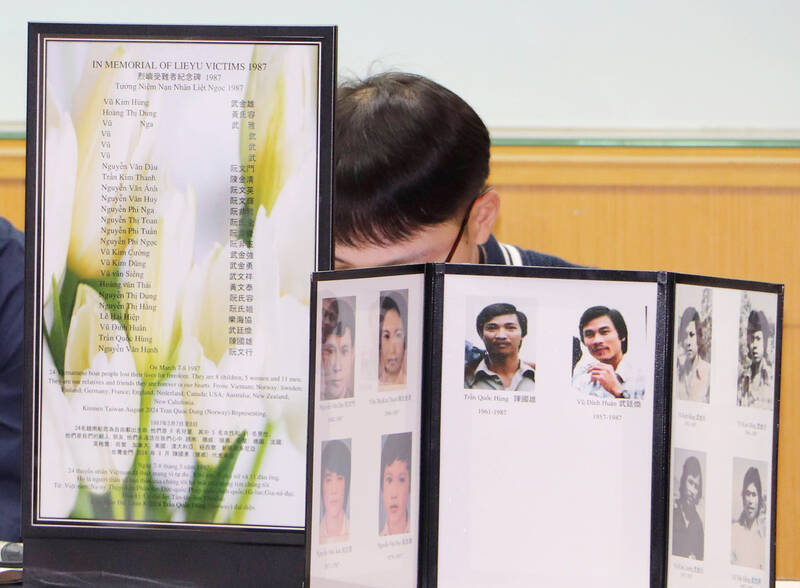
Photo courtesy of Amnesty International
THE MASSACRE
Lieyu, also known as Little Kinmen, lies about 5km from the Chinese coast and has long been heavily militarized. According to the military, the 1980s saw an increase in fishing vessels from China approaching Kinmen, raising concerns about infiltration and intelligence gathering.
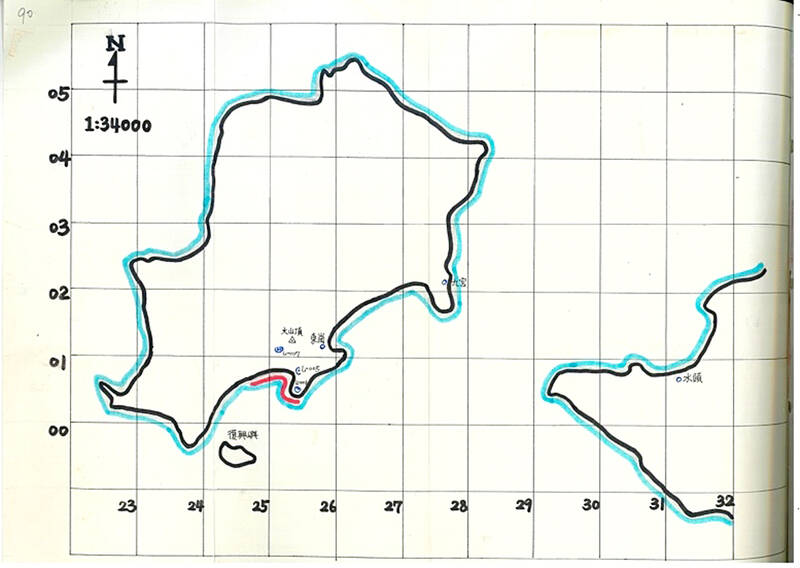
Photo courtesy of Control Yuan
There were also claims of Beijing sending spies disguised as refugees or defectors. Hau’s diary recorded discussions suggesting that some North Vietnamese refugees who had fled overland to China were allegedly being paid by Chinese authorities to attempt landings on Kinmen. Under regulations at that time, both Chinese and Vietnamese vessels were prohibited from coming ashore.
The rules stipulated that soldiers fire warning shots at unidentified approaching vessels. If the warnings were ignored and the ships displayed hostile intent — particularly at night or in conditions of low visibility — troops were authorized to open fire, and if necessary, destroy them.
That afternoon, with visibility limited by thick fog, a Vietnamese refugee boat approached a stretch of Lieyu’s coastline that troops later described as a blind spot. Warning shots were fired, and when the vessel did not turn back, the soldiers opened fire.
According to the Control Yuan report, three passengers who left the boat to plead for help were shot. As the vessel continued drifting toward shore, troops fired a 66mm anti-tank weapon, destroying it. Four more people who disembarked to beg for their life were then shot. Soldiers then boarded the wreckage and killed the remaining survivors, including children.
The bodies were buried in a shallow grave, and later reburied after they were dug up by stray dogs.
THE COVER UP
The soldiers later claimed that Kinmen had longstanding implicit orders to shoot on sight any “communist bandits” who made it ashore, citing several similar incidents in previous years.
A year earlier, two defectors had landed on nearby Dadan Island (大膽), leading to the removal of the commanding officer. In the Control Yuan report, several soldiers say they were ordered to “kill on sight” during the incident, and one recalled that General Chao even praised the troops for their actions afterward.
After searching the victims, some soldiers realized they may have killed the wrong people. While some belongings were Chinese, other items suggested the victims were Vietnamese. Some soldiers also recalled hearing them plead in Chinese, though many refugees were ethnic Chinese or had spent time in China.
A soldier told the Control Yuan that after the burial, the brigade commander reiterated the Dadan incident before adding, “You may feel that it was cruel as there were women and children … But if we showed them mercy by killing the adults and leaving the children, when the children grow up, they would hate our country. Therefore, it had to be done.”
The incident was never reported to military headquarters as reports indicate that the officers involved realized they had overreacted. Hau only learned of it two months later and summoned then-Army Commander Chiang Chung-ling (蔣仲苓), who was also unaware of what had happened. Hau then ordered Chiang to conduct an investigation.
Hau’s diary indicates that they already knew that the vessel carried Vietnamese refugees. However, the military investigation stated that “no Vietnamese vessels had been detected in the area. The vessel in question has been confirmed to be a Chinese fishing boat, and there was no possibility that Vietnamese refugees had been mistakenly killed.”
The identities of the victims were never officially released.
THE AFTERMATH
In June, Democratic Progressive Party (DPP) Legislator Wu Shu-chen (吳淑珍) questioned the Ministry of National Defense about the incident. According to her account, which was dated May 20, the refugees were actually government agents attempting to return to Taiwan. She alleged that after the three passengers who came ashore were shot, the troops decided to kill the rest to silence them. The ministry declined to respond.
Her claims sparked a flurry of media speculation, but the ministry denied all allegations, maintaining that the vessel had been a communist ship.
Four high-ranking officers were dismissed — a general, two major generals and a colonel — although historian Kuan Jen-chien (管仁健) notes that they were later able to resume their careers. Chao went on to become deputy chief of general staff and military strategy advisor to the president. The four officers directly involved in the incident were detained and initially sentenced to more than two years in prison. After appealing, their sentences were reduced to suspended terms of 20 to 22 months, and they were allowed to remain in the army until retirement.
The incident was censored for two decades until Hau’s diary was published, and it took until 2022 for Control Yuan member Kao Yong-cheng (高涌誠) to launch an investigation.
In 2024, relatives of the victims visited Lieyu, holding a ceremony to honor the dead. According to an Amnesty International report, the boats set out from Vietnam at the same time, but upon arriving in Xiamen in April 1987, they heard that another refugee ship was attacked in Taiwan a month earlier.
Kao has called on the Ministry of National Defense to reopen the investigation and either release or return the evidence and personal belongings recovered from the ship.
Taiwan in Time, a column about Taiwan’s history that is published every Sunday, spotlights important or interesting events around the nation that either have anniversaries this week or are tied to current events.
Ajay Verma, a consultant gastroenterologist at Kettering general hospital in Northamptonshire, says our gut is a “complex machine.” “It is constantly providing us with the nutrition we need, initially to grow and develop, and then for us to survive, thrive and repair from injury and illness.” How can we keep it functioning well? Put simply: “Make sure what you put into it is balanced, and that you clear out its waste products adequately,” Verma says. “In a general gastroenterology clinic, the most common conditions we see are irritable bowel syndrome (IBS), gastroesophageal reflux disease, inflammatory bowel disease and constipation,” says Nisha
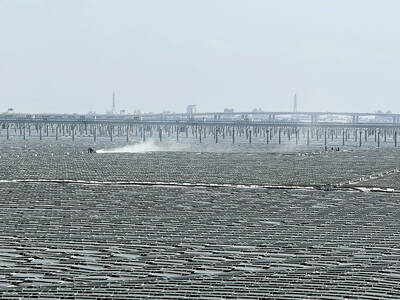
The arithmetic is straightforward and uncomfortable. By the end of 2025, Taiwan had committed itself to a 50-30-20 electricity mix — half natural gas, 30 per cent coal, 20 per cent renewables. The Ministry of Economic Affairs’s (MOEA) own monthly energy reports tell a different story. Natural gas reached 47.8 per cent of generation last year. Coal stood at 35.4 per cent, comfortably above its target ceiling. Renewables came in at 13.1 per cent, well short of the 20 per cent Taipei had pledged a decade earlier. Installed renewable capacity reached roughly half of the 12 gigawatts (GW) the government

Last week US President Donald Trump was asked by a reporter whether he would speak on the phone to the President of Taiwan. “l’ll speak to him. I speak to everybody. We have that situation very well in hand,” Trump said. This marked the second time in a couple of weeks he had said he would talk to the President of Taiwan. In 2016 he famously took a call from then-president Tsai Ing-wen (蔡英文), when he was president-elect. Despite warnings that the apocalypse was nigh because of a phone call, the world quickly forgot about the conversation between two democratically-elected presidents.
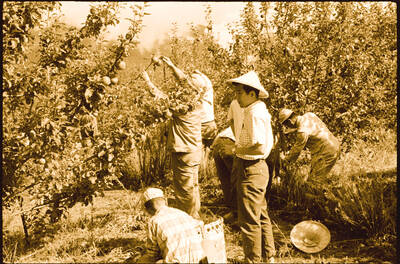
May 25 to May 31 Few believed that apples could be cultivated on a commercial scale in Taiwan’s high mountains. When horticulturalist Cheng Chao-hsiung (程兆熊) first proposed the idea in 1955, both American and Taiwanese colleagues dismissed it as implausible, arguing that temperate fruit could not be reliably grown on a subtropical island, especially on rugged terrain. However, it was this terrain in the Central Mountain Range where many Chinese Civil War veterans were resettled in the late 1950s. With limited job prospects and no family in Taiwan, they were placed on cooperative farms aimed toward self-sufficiency. Some say the conditions


 RSS
RSS