


Today Taiwanese accept as legitimate government control of many aspects of land use. That legitimacy hides in plain sight the way the system of authoritarian land grabs that favored big firms in the developmentalist era has given way to a government land grab system that favors big developers in the modern democratic era.
Articles 142 and 143 of the Republic of China (ROC) Constitution form the basis of that control. They incorporate the thinking of Sun Yat-sen (孫逸仙) in considering the problems of land in China. Article 143 states: “All land within the territory of the Republic of China shall belong to the whole body of citizens. Private ownership of land, acquired by the people in accordance with law, shall be protected and restricted by law.”
Similarly, Article 142 proclaims that the “National economy shall be based on the Principle of the People’s Livelihood and shall seek to effect equalization of land ownership and restriction of private capital in order to attain a well-balanced sufficiency in national wealth and people’s livelihood.”
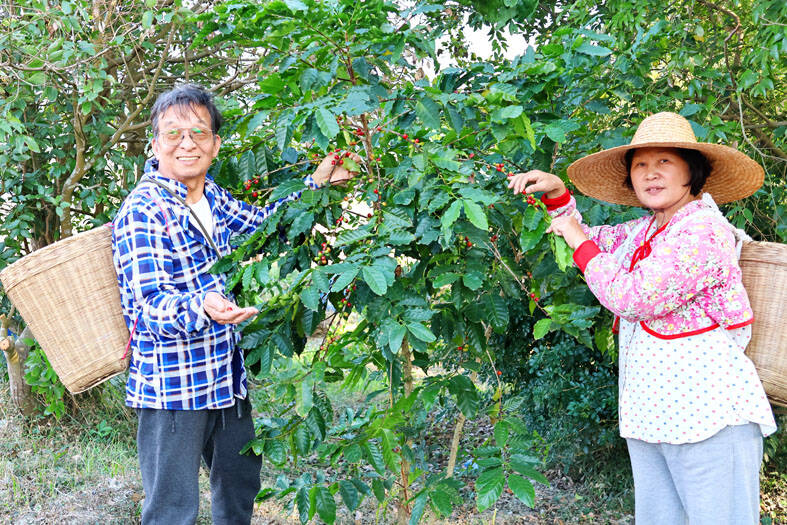
Photo: Chen Kuan-pei, Taipei Times
The basis of this legal framework is Sun’s vision of the “state as mediator between the primary public ownership and the individual private owner,” as one scholar put it. Despite these high-minded words, the Constitution provides little guidance on how eminent domain was supposed to work, explains a 2016 working paper from the University of Chicago. There was no “just compensation” clause or “public use” clause. In practice, this gave government regulatory and administrative bodies powerful influence over how takings worked.
PUBLIC DOMAIN
Rights activist Linda Gail Arrigo chronicled some cases of land seizures and similar issues in the early 1990s in a 1994 paper in the Bulletin of Concerned Scholars. At that time it was obvious that Taiwan was beginning a transition to democracy, and she predicted: “It is likely that in this advanced phase of transition from dictatorship to bourgeois democracy, land and other assets will be privatized largely to the benefit of the sectors that dominated under the old political order by control of the state; but that social costs will remain in the public domain.”
Much ink has been expended on Taiwan’s “land to the tiller” land reforms of the early 1950s, but the separate and just as pressing problem of industrial land remained unresolved. The Constitutional articles relating to land made no clear provision for the acquisition and use of land for industry. Under Japanese-era land laws, land could only be transferred to a new owner if the new owner planned to till it. Hence, would-be industrialists had little access to new land for factories at the dawn of the Chinese Nationalist Party (KMT) era.
This was rectified in 1960 with a new law, the Statute for Encouragement of Investments. Chapter III, “Acquisition of Land for Industrial Use,” created the legal basis for the development of Taiwan’s famed industrial parks. The law enabled the government to redesignate agricultural land as an industrial district and seize it via a program of eminent domain, and sell it off to private factory investors. Massive amounts of land were seized and transferred to big firms at below-market rates. Such land was often re-sold by the new owners at an enormous profit.
The statute made provision for negotiations between the land owner and the investors. However, since the investors could always call on the government to enforce requisition, that stipulation was no more than a fig leaf. Though there were numerous protests of land seizures, the authoritarian government usually suppressed them.
Similar to the land grab system for industrial land was Article 50 of the Urban Planning Law (都市計畫法), which was finally revised in 1988. It stipulated that once private land had been zoned for a public use (now called “reserved land”), it could not be used in other ways for a 15-year period. It did stipulate that the private landowners had to be paid, but the payout date could be delayed until Sept 5, 1988. Hence, by 1988 a full-blown crisis emerged: 13,000 hectares of land had been reserved but no compensation had been paid. National budgetary disaster loomed. Unable to pay for the land, the legislature chose to abolish the time limit instead. Once land is reserved, it sometimes enters a zombie state, often unused by local governments, owned by multiple land owners and used illegally by locals. Other land is used as intended, but the owners have never been compensated.
TRANSFERABLE DEVELOPMENT RIGHTS
By the late 1990s, as chronicled in a detailed 2015 article in Urban Studies, land developers began imagining how they could commodify the reserve land rights and sell them using the system of transferable development rights (TDRs) that cities began experimenting with in the late 1990s. TDRs were developed in the US to give cities greater control over the urban development process, and were also implemented in Japan, but this system has been completely subverted in Taiwan. A whole system of brokers arose to purchase the reserve land from the original owners and then “donate” it to the city in return for TDRs, which enable developers to add extra floor space to construction elsewhere in the same city.
The cities even permit the reserve land to be chopped up into tiny parcels for distribution of TDRs more profitably.
“In the sending sites, piecemeal transfer is the dominant spatial pattern,” the article notes, adding “a reserved land parcel undergoes TDR multiple times, with each transfer involving only a fraction of the total parcel area.”
This results in complications for city planners and managers, compromising the whole TDR idea. Under this system, historical preservation, originally a rationale for the TDR system, declines.
When locals fight this, asking for more parks or roads as intended, developers deploy their lobbying machines. Moreover, the article observes, the brokers seldom compete against each other, meaning that landowners generally face only one buyer for their reserve land and do not receive just compensation. Given that the state cannot afford compensation, this system is the way land owners can receive something for their land.
This system of land development has had predictable consequences. The reserve land system is so useful to land developers it has expanded over time. A 2013 paper estimated that total reserve land had doubled from 13,000 hectares in 1988 to 25,000. Another result of this is the cookie cutter housing and apartment estates which create built environments of extreme density and ugliness, constructed to adhere as tightly to regulations as possible, to save money. If a fire lane for a site has a legal size of 1.5 meters, it will be built to that size and not a millimeter more.
Notes from Central Taiwan is a column written by long-term resident Michael Turton, who provides incisive commentary informed by three decades of living in and writing about his adoptive country. The views expressed here are his own.
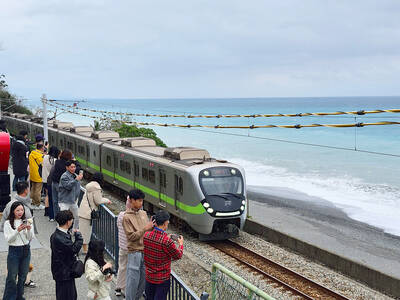
The small platform at Duoliang Train Station in Taitung County’s Taimali Township (太麻里) served villagers from 1992 to 2006, but was eventually shut down due to lack of use. Just 10 years later, the abandoned train station had become widely known as the most beautiful station in Taiwan, and visitors were so frequent that the village had to start restricting traffic. Nowadays, Duoliang Village (多良) is known as a bit of a tourist trap, with a mandatory, albeit modest, admission fee of NT$10 giving access to a crowded lane of vendors with a mediocre view of the ocean and the trains

For many people, Bilingual Nation 2030 begins and ends in the classroom. Since the policy was launched in 2018, the debate has centered on students, teachers and the pressure placed on schools. Yet the policy was never solely about English education. The government’s official plan also calls for bilingualization in Taiwan’s government services, laws and regulations, and living environment. The goal is to make Taiwan more inclusive and accessible to international enterprises and talent and better prepared for global economic and trade conditions. After eight years, that grand vision is due for a pulse check. RULES THAT CAN BE READ For Harper Chen (陳虹宇), an adviser
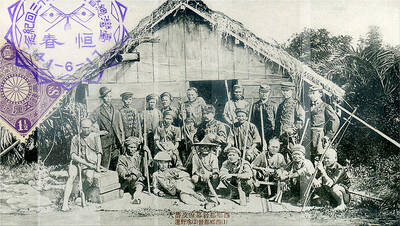
Traditionally, indigenous people in Taiwan’s mountains practice swidden cultivation, or “slash and burn” agriculture, a practice common in human history. According to a 2016 research article in the International Journal of Environmental Sustainability, among the Atayal people, this began with a search for suitable forested slopeland. The trees are burnt for fertilizer and the land cleared of stones. The stones and wood are then piled up to make fences, while both dead and standing trees are retained on the plot. The fences are used to grow climbing crops like squash and beans. The plot itself supports farming for three years.
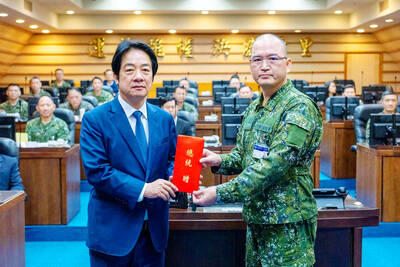
President William Lai (賴清德) on Nov. 25 last year announced in a Washington Post op-ed that “my government will introduce a historic US$40 billion supplementary defense budget, an investment that underscores our commitment to defending Taiwan’s democracy.” Lai promised “significant new arms acquisitions from the United States” and to “invest in cutting-edge technologies and expand Taiwan’s defense industrial base,” to “bolster deterrence by inserting greater costs and uncertainties into Beijing’s decision-making on the use of force.” Announcing it in the Washington Post was a strategic gamble, both geopolitically and domestically, with Taiwan’s international credibility at stake. But Lai’s message was exactly


 RSS
RSS