


Lines between cop and criminal get murky in Joe Carnahan’s The Rip, a crime thriller set across one foggy Miami night, starring Matt Damon and Ben Affleck.
Damon and Affleck, of course, are so closely associated with Boston — most recently they produced the 2024 heist movie The Instigators there — that a detour to South Florida puts them, a little awkwardly, in an entirely different movie landscape. This is Miami Vice territory or Elmore Leonard Land, not Southie or The Town.
In The Rip, they play Miami narcotics officers who come upon a cartel stash house that Lt. Dane Dumars (Damon) says may have US$150,000 hidden in the walls. It turns out to be more than US$20 million, though, and their mission immediately turns from a Friday afternoon smash-and-grab into an imminent siege where no one can be trusted.
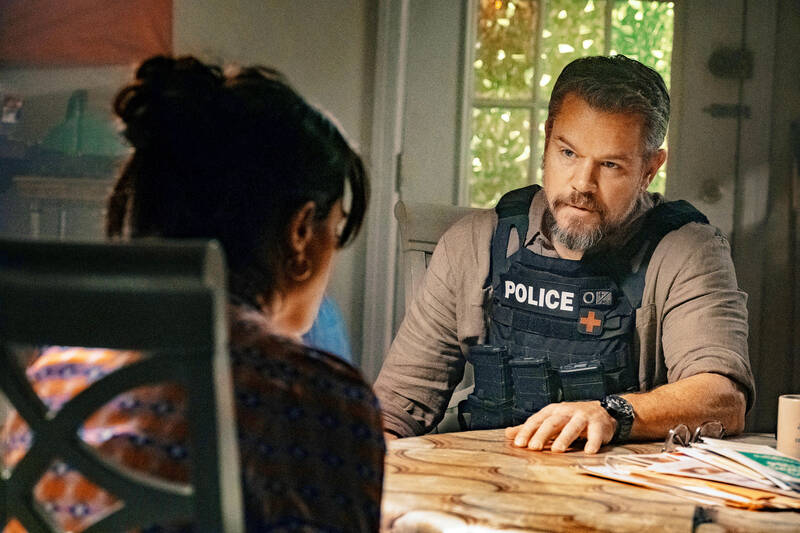
Photo: AP
The Rip, currently on Netflix, is a lean and potent-enough neo-noir where almost all the characters are police officers, yet it’s a mystery as to who’s a good guy and who’s not. It’s a nifty and timely premise, even if The Rip literally tattoos its message across itself.
When Dane sits down with the young woman (Sasha Calle) at the stash house who seems plausibly innocent, she looks at tattoos on his hands and asks what they mean. On one: “AWTGG”: “Are we the good guys?”
As much as the answer might seem a foregone conclusion in a movie starring Damon and Affleck, who are also producers, The Rip plays with and against type in ways that can keep you engrossed. (The cast also includes Teyana Taylor, Steven Yeun and Kyle Chandler.) However, the exposition is so light and hurried in The Rip that that’s almost all it plays with. We know almost nothing about our characters outside of the action in the movie, making all the potential double crosses ring hollow.
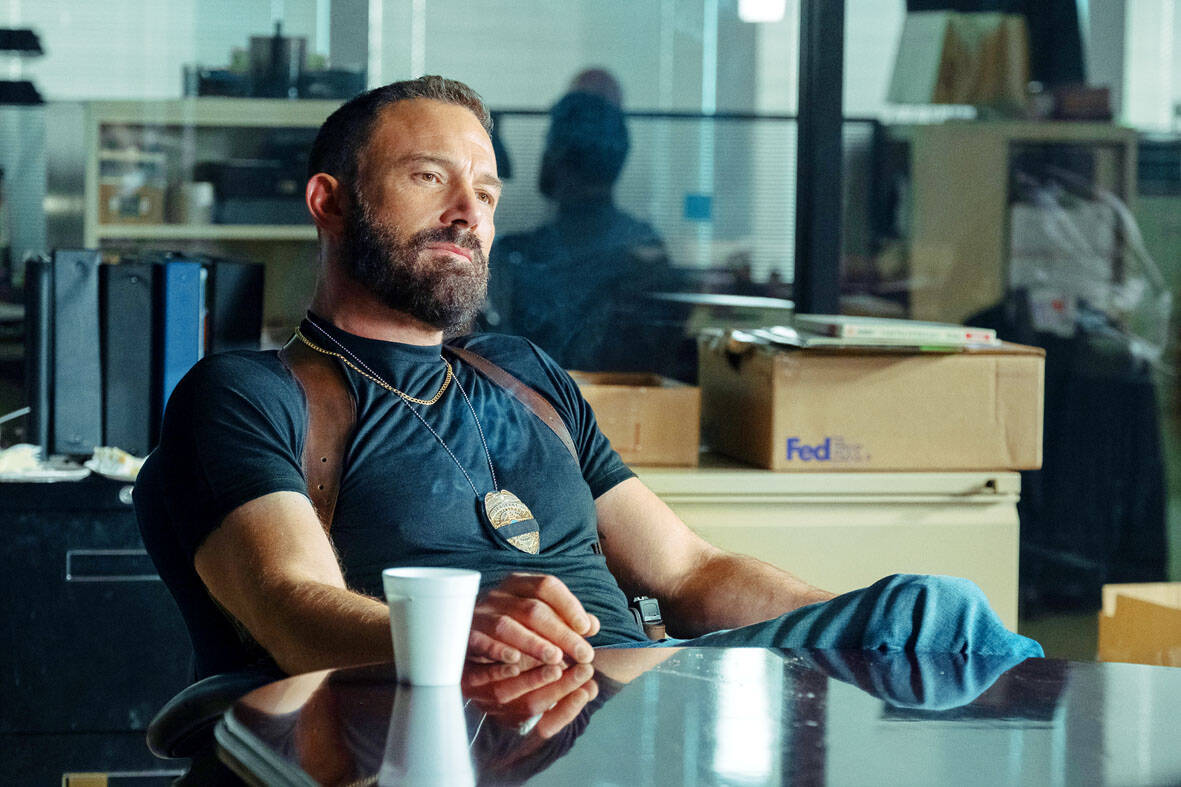
Photo: AP
Carnahan opens the film with a flurry of internal interrogations. The Miami police department is full of finger pointing after the fatal shooting, seen in the movie’s first moments, of a detective (Lina Esco). Cutting quickly between angry accusations and equally furious defensiveness, we get the sense that nobody in the department knows who’s clean and who’s dirty.
“I hate it, man,” Dane tells Byrne. “I hate being a cop.”
Various divisions intermingle, including the DEA agent Mateo “Matty” Nix (Chandler) and FBI agent Del Byrne (Scott Adkins). The omnipresence of drug cartels and the dysfunction in the department has made the police force into a den of thieves, in its own right. When we catch up with Dane’s crew, they don’t look particularly official. On a Friday afternoon, they’re sitting around outside drinking, with armored vehicles parked next to them. When Dane says he’s got a CrimeStopper tip he wants to check out, they go in civilian cars.
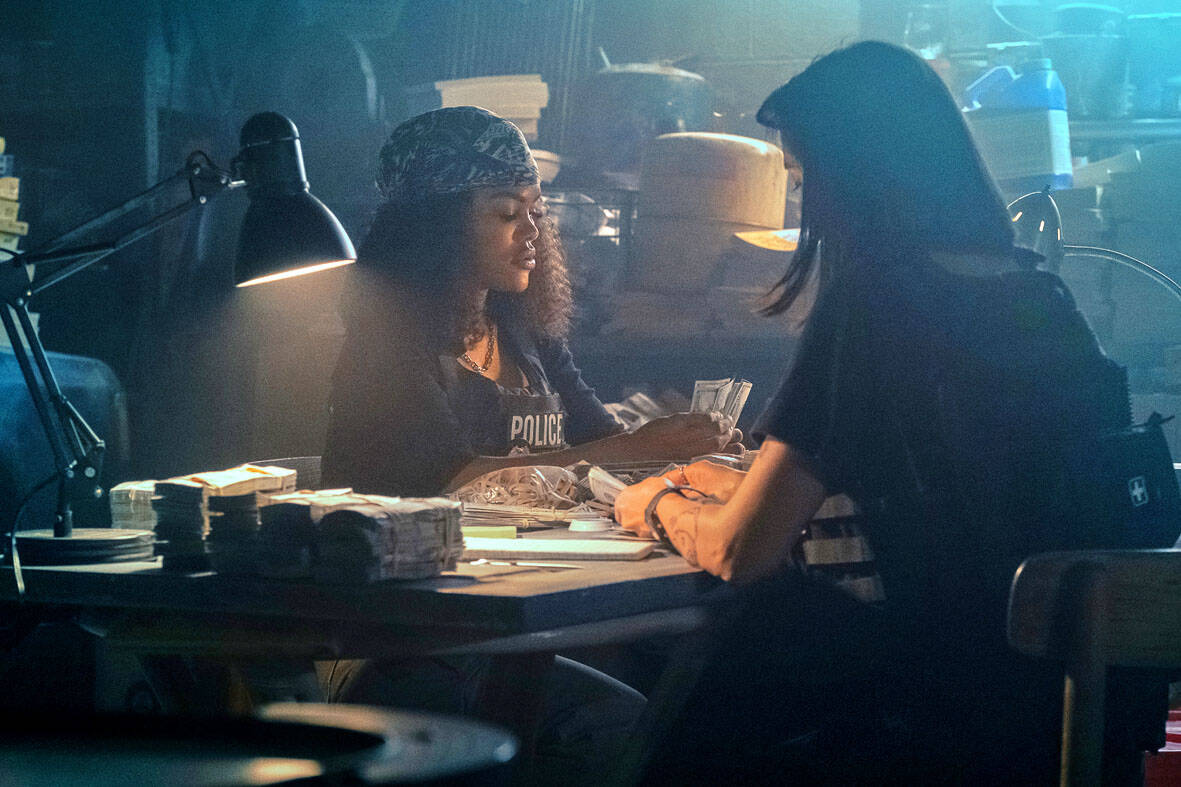
Photo: AP
With him are four other detectives: JD Byrne (Affleck), Mike Ro (Yeun), Numa Baptiste (an underused Taylor, which, coming off One Battle After Another, should be illegal) and Lolo Salazar (Catalina Sandino Moreno). Dane and JD, naturally, are tight. But after they find the money, the tone shifts. Dane doesn’t call the money into their superiors, and instead asks his crew to turn in their phones to him. Everyone begins to wonder: What’s going on? Is Dane crooked? A mysterious phone call comes in: Take US$150,000 and go, or everybody dies. It’s not the cartel calling.
Carnahan, who also wrote The Rip, has said the movie is inspired by real events as described to him by a Miami detective. But little in how the movie plays out will strike many as particularly plausible. Yet Carnahan, achieving of the same dense atmosphere of his Liam Neeson wolf thriller The Grey, albeit with a lot less snow, imbues The Rip with a good cop-bad cop muddiness that makes his film feel resonant.
Affleck and Damon have made more than a dozen movies together, but their collaborations seem to be increasing in frequency. They’ve often found often interesting ways — like in Ridley Scott’s The Last Duel — to shape and contort expectations for themselves on screen. Usually, that’s meant roles that are far from heroic, and often part of an ensemble. (Their production company, Artists Equity, operates with unusual profit participation for the cast and crew.)
As a B-movie with a couple of A-listers, The Rip will probably go down as a minor and flawed genre exercise. But even in their lesser efforts, the sincerity of Damon and Affleck’s buddy routine remains winning. Even in Miami.

The small platform at Duoliang Train Station in Taitung County’s Taimali Township (太麻里) served villagers from 1992 to 2006, but was eventually shut down due to lack of use. Just 10 years later, the abandoned train station had become widely known as the most beautiful station in Taiwan, and visitors were so frequent that the village had to start restricting traffic. Nowadays, Duoliang Village (多良) is known as a bit of a tourist trap, with a mandatory, albeit modest, admission fee of NT$10 giving access to a crowded lane of vendors with a mediocre view of the ocean and the trains

For many people, Bilingual Nation 2030 begins and ends in the classroom. Since the policy was launched in 2018, the debate has centered on students, teachers and the pressure placed on schools. Yet the policy was never solely about English education. The government’s official plan also calls for bilingualization in Taiwan’s government services, laws and regulations, and living environment. The goal is to make Taiwan more inclusive and accessible to international enterprises and talent and better prepared for global economic and trade conditions. After eight years, that grand vision is due for a pulse check. RULES THAT CAN BE READ For Harper Chen (陳虹宇), an adviser

Traditionally, indigenous people in Taiwan’s mountains practice swidden cultivation, or “slash and burn” agriculture, a practice common in human history. According to a 2016 research article in the International Journal of Environmental Sustainability, among the Atayal people, this began with a search for suitable forested slopeland. The trees are burnt for fertilizer and the land cleared of stones. The stones and wood are then piled up to make fences, while both dead and standing trees are retained on the plot. The fences are used to grow climbing crops like squash and beans. The plot itself supports farming for three years.

President William Lai (賴清德) on Nov. 25 last year announced in a Washington Post op-ed that “my government will introduce a historic US$40 billion supplementary defense budget, an investment that underscores our commitment to defending Taiwan’s democracy.” Lai promised “significant new arms acquisitions from the United States” and to “invest in cutting-edge technologies and expand Taiwan’s defense industrial base,” to “bolster deterrence by inserting greater costs and uncertainties into Beijing’s decision-making on the use of force.” Announcing it in the Washington Post was a strategic gamble, both geopolitically and domestically, with Taiwan’s international credibility at stake. But Lai’s message was exactly


 RSS
RSS