


Oct. 6 to Oct. 12
The lavish 1935 Taiwan Expo drew dignitaries from across the globe, but one of them wasn’t a foreigner — he was a Taiwanese making a triumphant homecoming.
After decades in China, Hsieh Chieh-shih (謝介石) rose to prominence in 1932 as the foreign minister for the newly-formed Japanese puppet state of Manchukuo in today’s Northeast China. As ambassador to Japan, he was to represent the last Qing emperor Puyi (溥儀) at the event’s Manchuria Pavillion, and Taiwan’s governor-general welcomed him with the honors of a state guest.
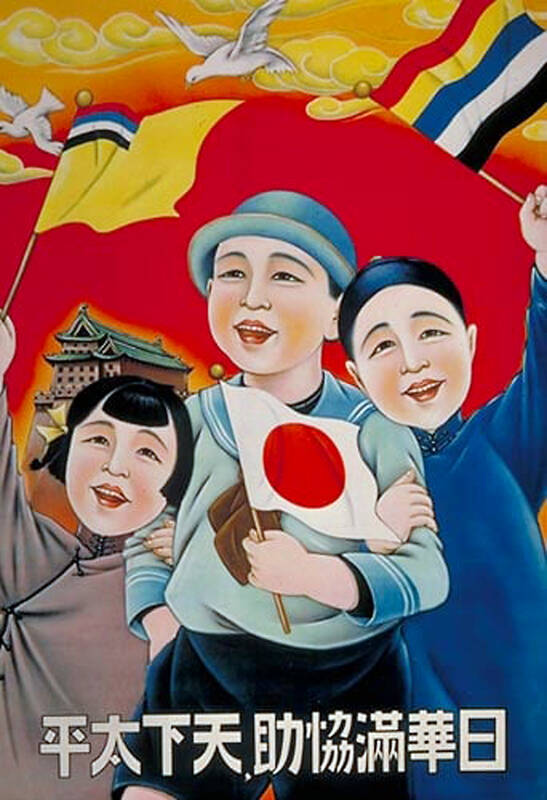
Photo courtesy of Wikimedia Commons
Hsieh also had personal matters to attend to — most notably his son’s wedding to the daughter of Cheng Chao-chi (鄭肇基), the wealthiest man in his hometown of Hsinchu. It was an opulent, three-day celebration that was the talk of the town. He also brought with him a pair of plaques personally inscribed by Puyi, which he presented to the City God Temple. The originals were lost after World War II, but replicas still hang there today.
At one point, he delivered a radio speech in Hoklo (commonly known as Taiwanese), encouraging his compatriots to seek opportunities in Manchukuo. By 1945, about 5,000 Taiwanese had done so, including Tsai Chieh-sheng (蔡潔生), father of former president Tsai Ing-wen (蔡英文), who went to Dalian in 1946 to work as an aviation mechanic.
PATH TO BEIJING
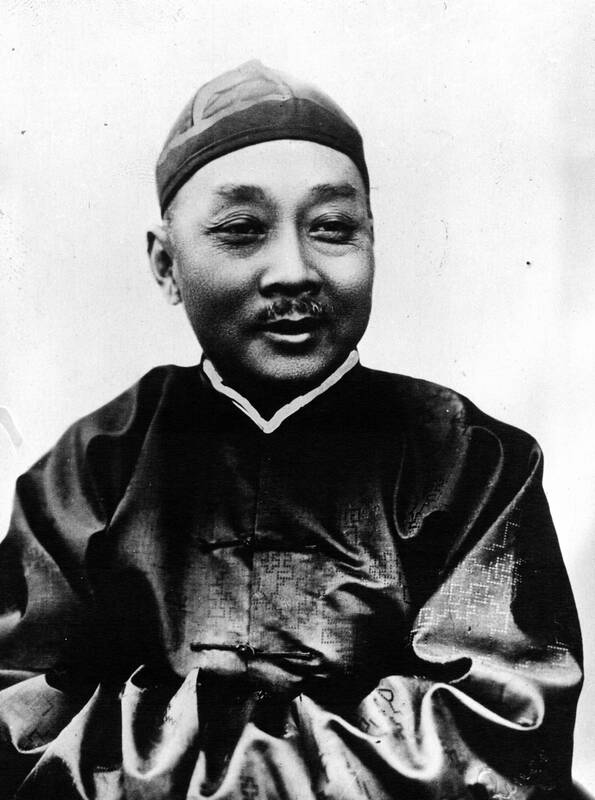
Photo courtesy of Wikimedia Commons
Historian Hsu Hsueh-chi (許雪姬) has written extensively about Taiwanese migration to Manchuria, including “Loyalist or Traitor? The Life and Identity of Hsieh Chieh-shih, Manchukuo’s Foreign Minister” (是勤王或叛國? 滿洲國外交部長謝介石的一生及其認同).
In 1931, Japan invaded Manchuria and established Manchukuo the following year, with Puyi as its nominal head of state. With educational and career opportunities restricted under Japanese colonial rule, many Taiwanese sought prospects there during this period. Hsieh, however, had already been active in the region for years — he even took part in Qing loyalist general Zhang Xun’s (張勳) attempt to restore Puyi to the throne in 1917.
Born in 1879 in Hsinchu, Hsieh was 16 when Japan colonized Taiwan. He attended a Japanese-language training school and began his career as an interpreter, later also working as a teacher. In 1904, the magistrate of Hsinchu Prefecture recommended him for the Taiwan Affairs School in Tokyo, where he trained Japanese officials and staff preparing to serve in Taiwan.
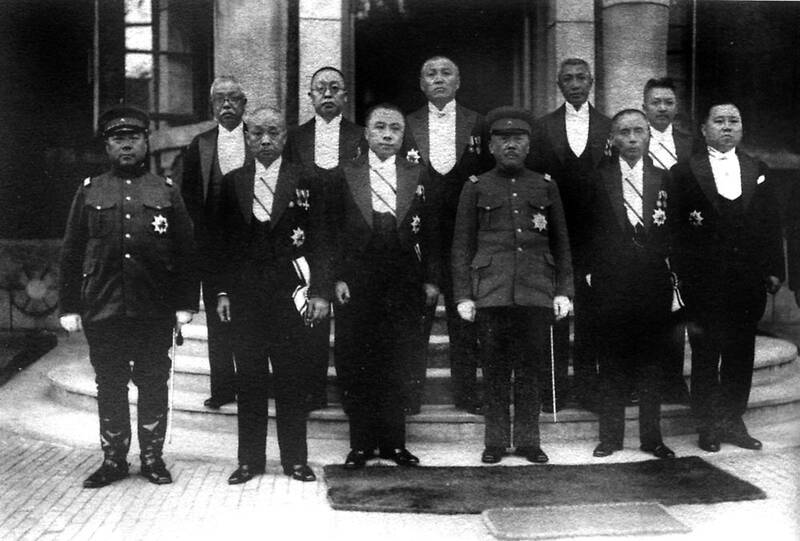
Photo courtesy of Wikimedia Commons
While in Japan, Hsieh enrolled in the Meiji Law School, where he earned top marks and set his sights to emulate Takamori Saigo, the samurai and statesman who helped bring about the Meiji Restoration.
A close friend and classmate was Zhang Xun’s son, a connection that helped him land a job as a legal consultant for the governor-general of Fujian and Zhejiang provinces in China. As anti-Qing revolutionaries captured Fuzhou, Hsieh moved to Beijing to directly work under Zhang.
MEETING THE LAST EMPEROR
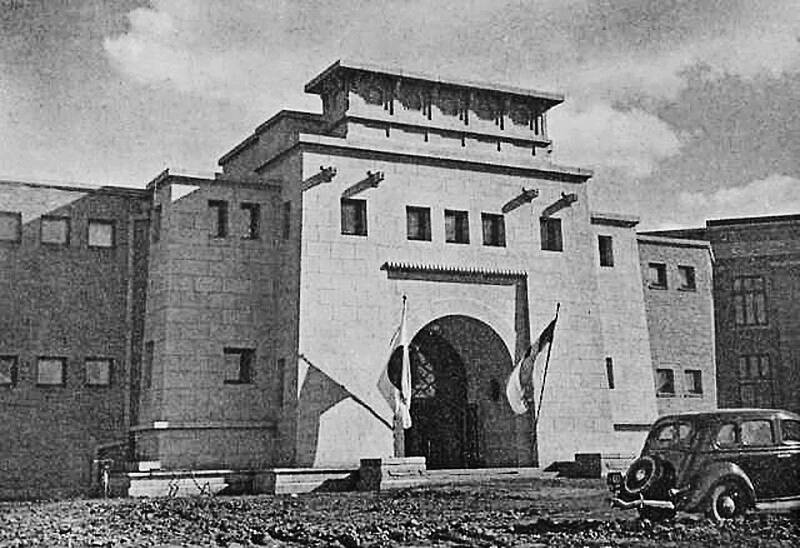
Photo: Public domain
After the fall of the Qing Dynasty, Hsieh returned to Taiwan briefly before moving to the northeastern province of Jilin to teach law and advise the provincial government. Before leaving, he penned a poem expressing his resolve to brave the harsh cold of an unfamiliar land in order to make a name for himself.
During this period, Hsieh married entertainer and poet Wang Hsiang-chan (王香禪), who had once been celebrated as one of Taiwan’s “Three Beauties,” and invited her to join him in Jilin. It’s said that after a failed marriage, Wang began publishing mournful poems in the Taiwan Daily News, which caught Hsieh’s attention.
In 1913, he briefly launched the Expose Daily, writing about corruption and misconduct among Republic of China (ROC) officials. However, likely due to his government role, he renounced his Japanese citizenship in 1914 in favor of the ROC. He then became Zhang Xun’s secretary-general, and in 1917 participated in the attempt to restore Puyi to the Qing throne, which lasted only 12 days.
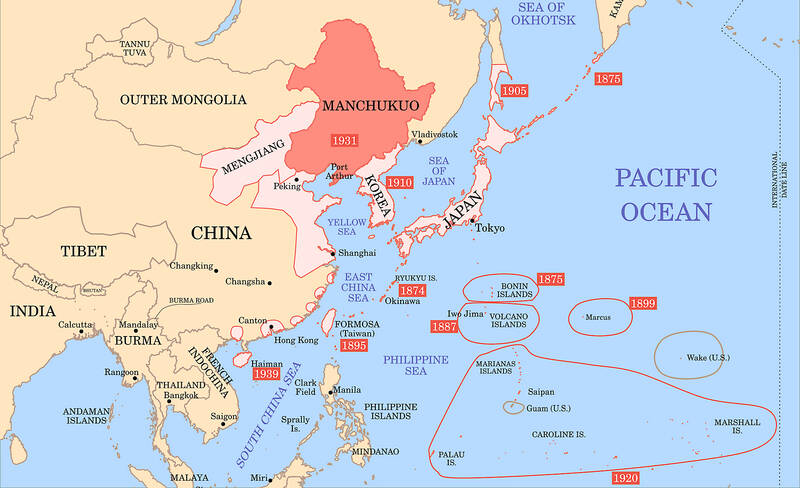
Photo courtesy of Wikimedia Commons
Despite the failure, Hsieh developed a lasting acquaintance with Puyi, which grew after the emperor’s expulsion from the Forbidden Palace to the Japanese concession in Tianjin. Puyi hoped that Hsieh could help secure Japanese support to restore the monarchy.
Staged by the Japanese, the Mukden Incident on Sept. 18, 1931, served as pretext for their invasion of Manchuria. By November, Puyi moved northeast and Hsieh followed, helping Manchu noble Xi Qia (熙洽) set up the government seat in Hsinking (today’s Changchun), and helping Puyi maintain favorable relations with the Japanese Kwantung Army. He later oversaw the administrative setup of Harbin.
DIPLOMATIC EFFORTS
By February 1932, the Kwantung Army and pro-Japanese local elites had finalized the cabinet for their puppet state, including Hsieh’s position. On March 1, Manchuria declared independence from China.
Hsieh’s first act as foreign minister was to draft a formal announcement expressing Manchukuo’s aspiration to become a nation of peace, order and progress after decades of bloodshed and instability under warlord rule. It invited 17 countries to establish diplomatic relations, including Japan, the US, the UK, France and even China.
All nations refused the invitation, except for Japan which accepted that September. To express gratitude, Hsieh went to Tokyo where he was received as a foreign diplomat — essentially the guest of the royal family — complete with a motorcade, security detail and personal audience with the emperor.
Hsieh’s first challenge was the League of Nations’ Lytton Commission, which arrived in the spring of 1932 to investigate Manchukuo’s legitimacy. He worked to present the new state’s case and counteract the commission’s findings, and in the end, the league was unable to enforce its recommendations.
He also negotiated consulate agreements with the bordering Soviet Union. In 1934, El Salvador became the second country to recognize Manchukuo.
That same year, Puyi was officially crowned emperor of Manchukuo. In April 1935, Hsieh accompanied him on a gratitude visit to Japan, and just a month later the Manchurian office in Tokyo was upgraded to an embassy with Hsieh as ambassador.
GLORIOUS HOMECOMING
On Sept. 27, 1935, Hsieh and his family arrived in Taiwan — his first return after the formation of Manchukuo. He would stay for 80 days.
After visiting the Taiwan Shinto Shrine, he met with governor-general Kenzo Nakagawa, who hosted a welcome reception for him at his office. The next day, he toured the Taipei Prefecture offices and attended a banquet put on by Taiwan Army commander Hisaichi Terauchi.
Hsieh returned to Hsinchu on Oct. 4 to yet another grand welcome, and on Oct. 9 he came back to Taipei for the Taiwan Expo’s grand opening.
On Oct. 18, Hsieh invited noted Taoist priests from across Taiwan to perform a 10-day Grand Celestial Offering to ward off natural disasters. On Oct. 26 his son’s wedding took place — a massive, grandiose affair. It took the entire procession from noon to sunset to reach the destination just 3km from town.
Hsieh retired from politics in May 1937 but remained in Manchuria, heading the Manchuria Real Estate Company, which built housing for the government in Hsinking and handled fire insurance and other services.
After World War II, Hsieh was arrested as a hanjian (漢奸) — traitor to the Chinese — and imprisoned, only to be released after the communist takeover. He was unable to return to Taiwan by then, dying in Beijing in 1954.
Taiwan in Time, a column about Taiwan’s history that is published every Sunday, spotlights important or interesting events around the nation that either have anniversaries this week or are tied to current events.
Ajay Verma, a consultant gastroenterologist at Kettering general hospital in Northamptonshire, says our gut is a “complex machine.” “It is constantly providing us with the nutrition we need, initially to grow and develop, and then for us to survive, thrive and repair from injury and illness.” How can we keep it functioning well? Put simply: “Make sure what you put into it is balanced, and that you clear out its waste products adequately,” Verma says. “In a general gastroenterology clinic, the most common conditions we see are irritable bowel syndrome (IBS), gastroesophageal reflux disease, inflammatory bowel disease and constipation,” says Nisha
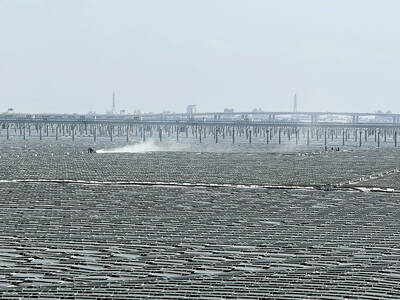
The arithmetic is straightforward and uncomfortable. By the end of 2025, Taiwan had committed itself to a 50-30-20 electricity mix — half natural gas, 30 per cent coal, 20 per cent renewables. The Ministry of Economic Affairs’s (MOEA) own monthly energy reports tell a different story. Natural gas reached 47.8 per cent of generation last year. Coal stood at 35.4 per cent, comfortably above its target ceiling. Renewables came in at 13.1 per cent, well short of the 20 per cent Taipei had pledged a decade earlier. Installed renewable capacity reached roughly half of the 12 gigawatts (GW) the government

Last week US President Donald Trump was asked by a reporter whether he would speak on the phone to the President of Taiwan. “l’ll speak to him. I speak to everybody. We have that situation very well in hand,” Trump said. This marked the second time in a couple of weeks he had said he would talk to the President of Taiwan. In 2016 he famously took a call from then-president Tsai Ing-wen (蔡英文), when he was president-elect. Despite warnings that the apocalypse was nigh because of a phone call, the world quickly forgot about the conversation between two democratically-elected presidents.
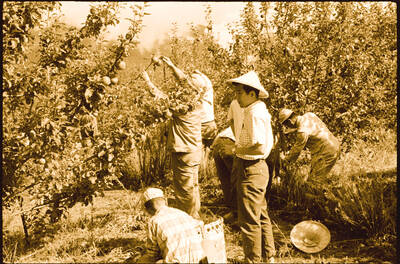
May 25 to May 31 Few believed that apples could be cultivated on a commercial scale in Taiwan’s high mountains. When horticulturalist Cheng Chao-hsiung (程兆熊) first proposed the idea in 1955, both American and Taiwanese colleagues dismissed it as implausible, arguing that temperate fruit could not be reliably grown on a subtropical island, especially on rugged terrain. However, it was this terrain in the Central Mountain Range where many Chinese Civil War veterans were resettled in the late 1950s. With limited job prospects and no family in Taiwan, they were placed on cooperative farms aimed toward self-sufficiency. Some say the conditions


 RSS
RSS