


March 31 to April 6
On May 13, 1950, National Taiwan University Hospital otolaryngologist Su You-peng (蘇友鵬) was summoned to the director’s office. He thought someone had complained about him practicing the violin at night, but when he entered the room, he knew something was terribly wrong.
He saw several burly men who appeared to be government secret agents, and three other resident doctors: internist Hsu Chiang (許強), dermatologist Hu Pao-chen (胡寶珍) and ophthalmologist Hu Hsin-lin (胡鑫麟). They were handcuffed, herded onto two jeeps and taken to the Secrecy Bureau (保密局) for questioning.
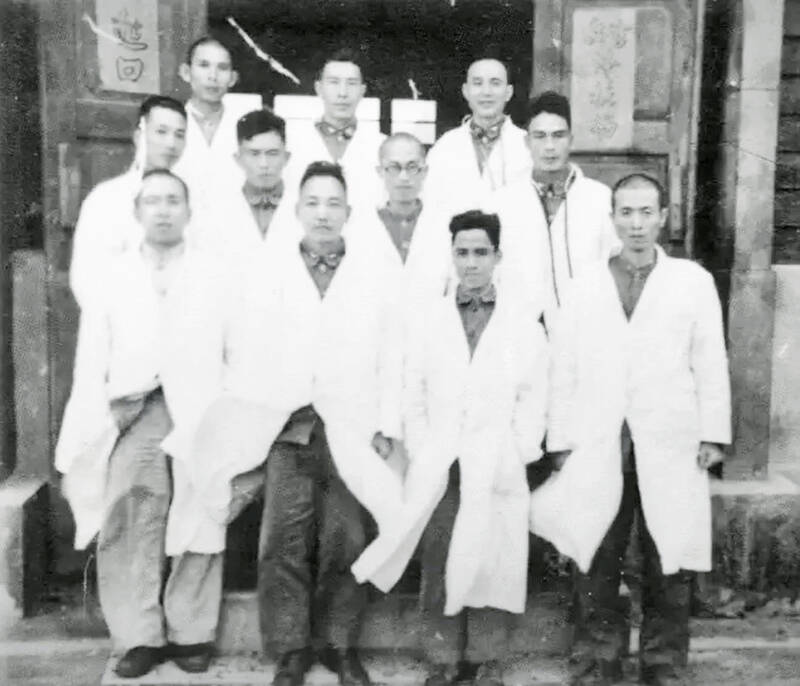
Photo courtesy of National Human Rights Museum
Su was still in his doctor’s robes at that time, and the director asked a nurse to bring him his suit jacket to change into before leaving. Unfortunately, in this jacket was a copy of Chinese writer Lu Xun’s (魯迅) Diary of a Madman (狂人日記), which he had kept on him to practice his Mandarin. Su didn’t know that the book was considered leftist material by the ruling Chinese Nationalist Party (KMT) — but this was the height of White Terror, and that was enough to convict him without a proper trial as a communist plotting to overthrow the government.
“It was a very absurd time,” he recalls in a video by the National Human Rights Museum.
While Hsu was sentenced to death, Su, Hu Pao-chen and Hu Hsin-lin each got 10 years and were sent to Green Island. The trio teamed up with several other prisoners who also had medical training, operating a “mini-hospital” with rudimentary equipment that served not only the prison but also local residents, saving them a trip to Taitung for medical emergencies.
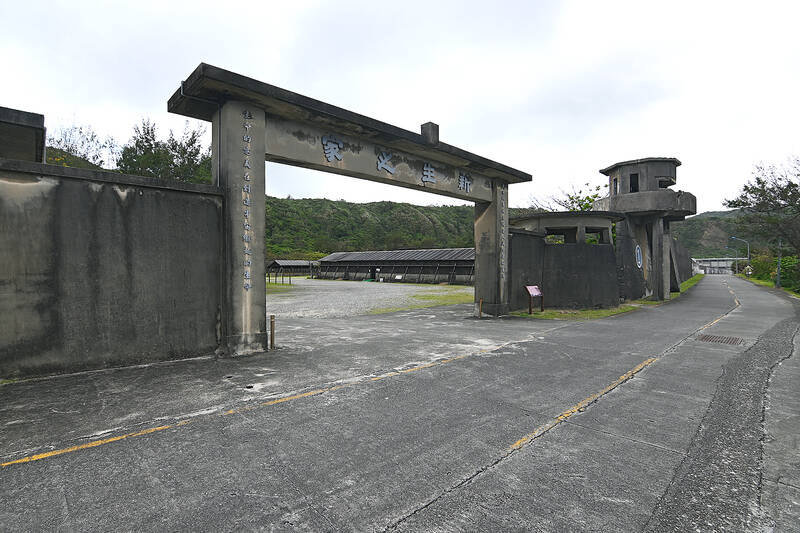
Photo courtesy of National Human Rights Museum
Their little-known story inspired the drama series Black Tide Island (星空下的黑潮島嶼), which is a fictional account of this team of doctor-prisoners produced by Hakka TV and Go Inside Ltd. It premieres today at 9pm on the channel as well as Chunghwa Telecom MOD and HamiVideo, and will also be shown on Taiwan Television (台視, TTV) every Saturday at 10pm beginning April 5.
PROMISING YOUTH
Born in 1926 to educated parents in Tainan, Su was trained in the Chinese classics as a child, displaying an astonishing memory and desire to learn. He was a star pupil, graduating from public school in Shanhua District (善化) in 1937 with the highest honors.
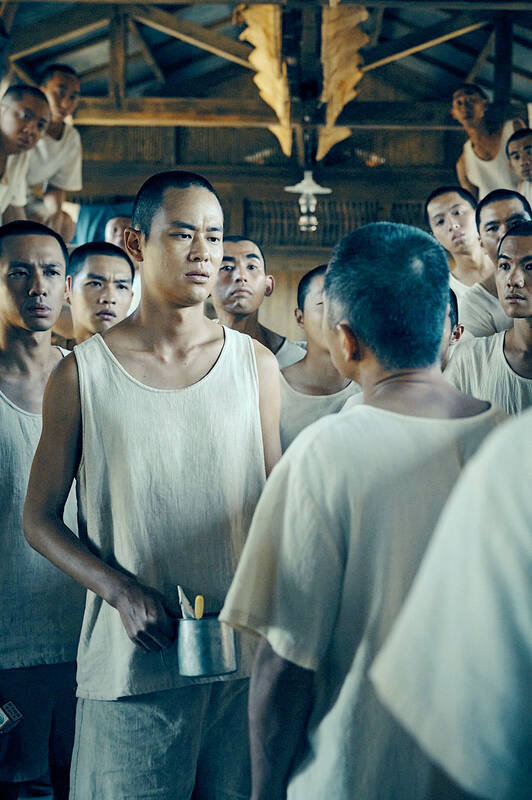
Photo courtesy of HamiVideo
He went on to Tainan Second High School, and while visiting a classmate’s house he discovered classical music, and was especially drawn to the sound of the violin in Beethoven’s Symphony No. 6. In 1943, he beat out stiff competition and made it into Taihoku Imperial University’s pre-med program in Taipei.
Outside of schoolwork, Su took lessons from violinist Yang Chun-huo (楊春火) and also sang in the Xiezhi Association’s (協志會) church choir. Through the association, he met fellow medical student Kuo Hsiu-tsung (郭琇琮), who was soon jailed by the Japanese authorities for his anti-government activities.
As World War II intensified and the US began dropping bombs all over Taiwan, Su was conscripted into the Japanese army’s student corps and sent to Guanyin Mountain (觀音山) as the first line of defense in the event of an Allied landing, essentially serving as cannon fodder.
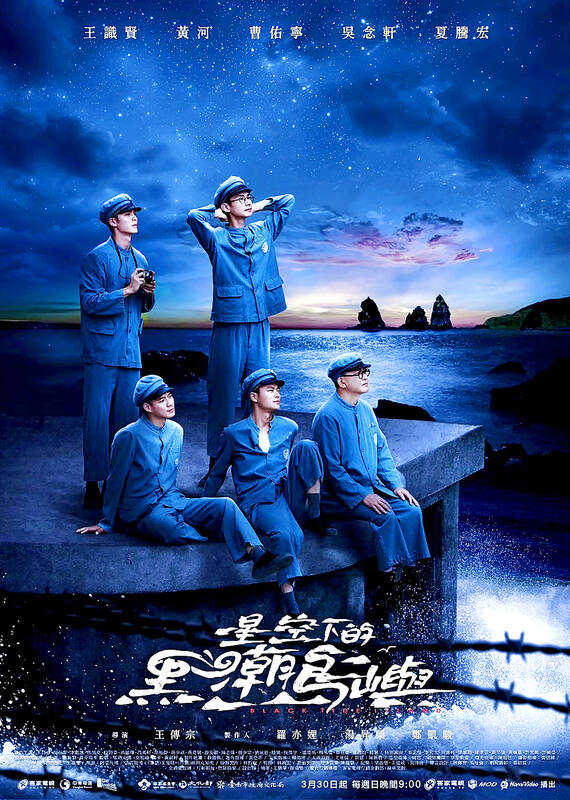
Photo courtesy of Hakka TV
After the war, Taihoku Imperial University became National Taiwan University (NTU) and Su resumed his studies. He graduated in 1949 and worked as a resident physician and teaching assistant at NTU hospital’s Department of Otolaryngology until his arrest.
SENTENCED TO JAIL
Su spent about a month in the Secrecy Bureau, and was then transferred to an overcrowded prison near today’s Taipei Bridge. There, he was surprised to see Kuo, whose legs were so swollen from being tortured that he could barely walk.
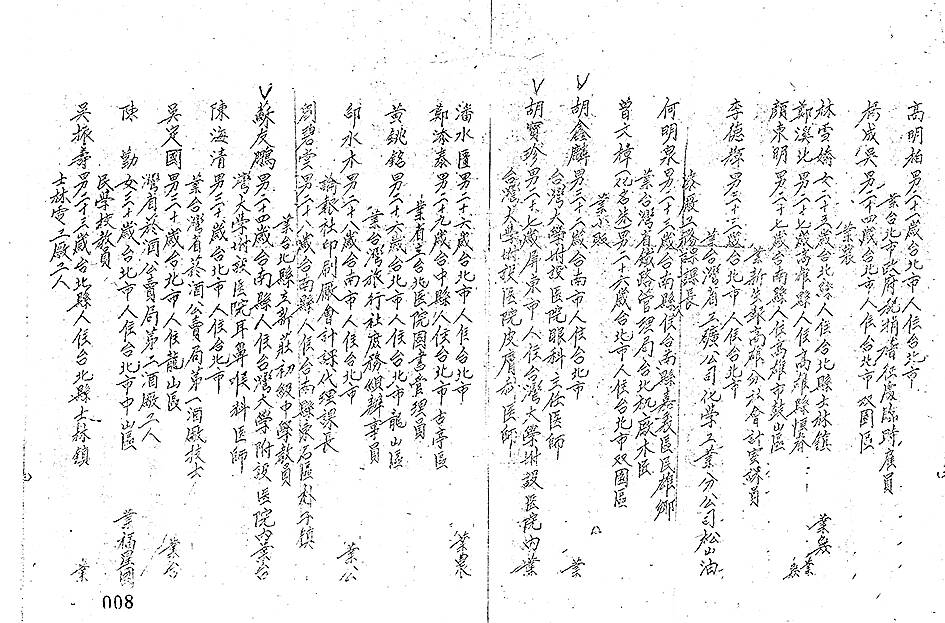
Photo courtesy of National Human Rights Museum
Kuo was released from jail after the war ended, and excelled as a disease prevention specialist for Taipei’s public health department. Once a staunch Chinese Nationalist Party (KMT) supporter who vehemently resented Japanese rule, he quickly became disillusioned and actively participated in the 228 Incident, an anti-government uprising that was violently suppressed. Afterward, he allegedly joined the Chinese Communist Party and ran its Taipei Work Committee (台北市工作委員會), recruiting other young doctors who were unhappy with Taiwan’s situation.
The KMT cracked down on local communist activity in 1949, with countless innocent people being swept up in the operation and punished with minimal evidence and farcical trials. A total of 50 people were nabbed in conjunction with the case, with 14, including Kuo, condemned to death; the rest were sent to Green Island for sentences ranging from one to 15 years.
Su says in the video that the interrogators acted as if the 50 detainees often plotted together to overthrow the government !a but in fact he barely knew any of them. While most sources confirm that Hsu Chiang and Hu Hsin-lin were communist members, Su insists that he never joined any such organization.
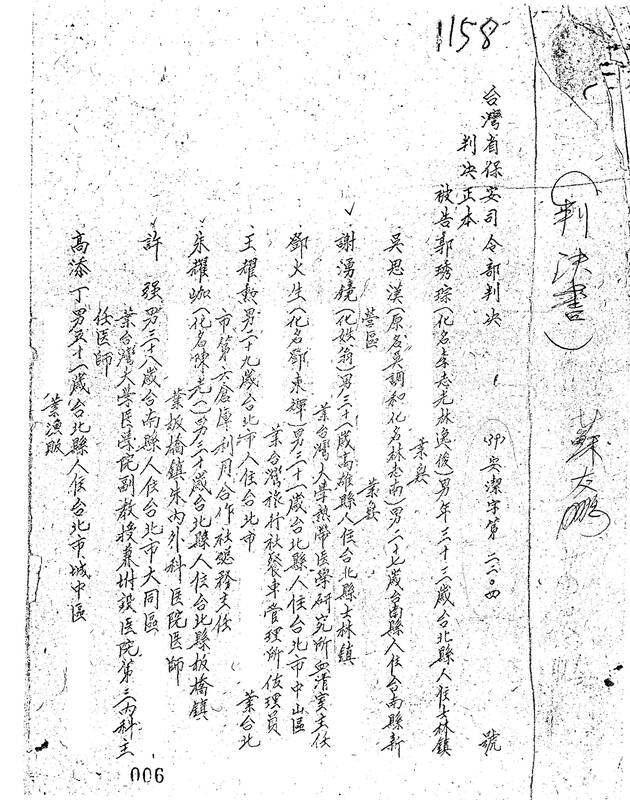
Photo courtesy of National Human Rights Museum
“After the 228 Incident, I further lost confidence in the government, and the communist party that advocated democratic reform resonated with the sentiment of the people,” Hu is quoted in a National Human Rights Museum exhibition.
MAKESHIFT HOSPITAL
On May 17, 1951, Su was shipped to Green Island, where he says there were barely any medical supplies. The prisoners asked their families to send medicine and basic materials, and after three years they had cobbled together a rudimentary clinic with 30 beds and a surgery room. They took care of all medical issues at the prison, even delivering babies for the spouses of prison officers.
“Those military physicians could just stand and watch when we operated,” Su says. “Everything was done by us political prisoners.”
Hu Hsin-lin, who was older and more experienced, was put in charge, and Su says that he and Hu Pao-chen, along with Qishan Hospital surgeon Lin En-kui (林恩魁) and Keelung Hospital gynecologist Wang Ching-shu (王荊樹) also took over at times. Pediatrician Chen Shen-fu (陳神傅), internists Lu Shui-ke (呂水閣), Hsu Shui-chuan (徐水泉) and Hsu Yao-lung (徐耀龍), and dentist Lin Hui-chi (林輝記) rounded out the roster, and also helping out were NTU medical student Yen Shih-hung (顏世鴻), two National Defense Medical Center students as well as several prisoners who had nursing training.
Using minimal resources, Lin recalls carrying out successful surgeries, crediting the stellar problem-solving ability of the team. However, they never received special privileges for their service, were still made to attend political re-education classes and perform hard labor. And not only were they unpaid, they sometimes had to obtain medicine and supplies with their own resources.
Su also played in the prison orchestra. At first there were no instruments, and fellow prisoner Lin Yi-hsu (林義旭) arranged vocal parts to Schubert’s Serenade, which they performed. A friend later mailed him a violin, which the prisoners made copies of. When US ambassador Karl Rankin visited, they put on a full show.
At midday, when everyone else was napping, Su and several others would sneak out and go swimming, risking solitary confinement for an hour or two of freedom. As the years passed, the medical team shrunk as prisoners returned home. After Hu Hsin-lin’s release in 1960, the clinic closed down.
Su says he was lucky to be able to resume his medical career once he was released; many prisoners had trouble due to stigma. He married in 1961, and although he was monitored by the government, he finished his 30-year career without further incident.
Taiwan in Time, a column about Taiwan’s history that is published every Sunday, spotlights important or interesting events around the nation that either have anniversaries this week or are tied to current events.
Ajay Verma, a consultant gastroenterologist at Kettering general hospital in Northamptonshire, says our gut is a “complex machine.” “It is constantly providing us with the nutrition we need, initially to grow and develop, and then for us to survive, thrive and repair from injury and illness.” How can we keep it functioning well? Put simply: “Make sure what you put into it is balanced, and that you clear out its waste products adequately,” Verma says. “In a general gastroenterology clinic, the most common conditions we see are irritable bowel syndrome (IBS), gastroesophageal reflux disease, inflammatory bowel disease and constipation,” says Nisha

And so, in the wake of US President Donald Trump’s trip to the People’s Republic of China (PRC), all the experts on the Strait of Hormuz suddenly became experts on US-China-Taiwan relations. The Internet has certainly expanded human knowledge. Lots of these sudden experts made noise this week about Trump’s words after the meeting with PRC dictator Xi Jin-ping (習近平). Trump is going to sell out Taiwan! Longtime Taiwan commentator J. Michael Cole summed the situation up neatly in the Guardian: “We need to keep in mind that he has a tendency to say many things — sometimes contradicting himself within

Last week US President Donald Trump was asked by a reporter whether he would speak on the phone to the President of Taiwan. “l’ll speak to him. I speak to everybody. We have that situation very well in hand,” Trump said. This marked the second time in a couple of weeks he had said he would talk to the President of Taiwan. In 2016 he famously took a call from then-president Tsai Ing-wen (蔡英文), when he was president-elect. Despite warnings that the apocalypse was nigh because of a phone call, the world quickly forgot about the conversation between two democratically-elected presidents.
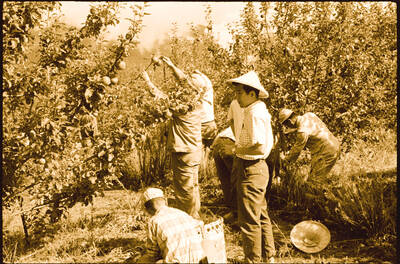
May 25 to May 31 Few believed that apples could be cultivated on a commercial scale in Taiwan’s high mountains. When horticulturalist Cheng Chao-hsiung (程兆熊) first proposed the idea in 1955, both American and Taiwanese colleagues dismissed it as implausible, arguing that temperate fruit could not be reliably grown on a subtropical island, especially on rugged terrain. However, it was this terrain in the Central Mountain Range where many Chinese Civil War veterans were resettled in the late 1950s. With limited job prospects and no family in Taiwan, they were placed on cooperative farms aimed toward self-sufficiency. Some say the conditions


 RSS
RSS