


The Democratic Progressive Party (DPP), Chinese Nationalist Party (KMT), and the country’s other political groups dare not offend religious groups, says Chen Lih-ming (陳立民), founder of the Taiwan Anti-Religion Alliance (台灣反宗教者聯盟).
“It’s the same in other democracies, of course, but because political struggles in Taiwan are extraordinarily fierce, you’ll see candidates visiting several temples each day ahead of elections. That adds impetus to religion here,” says the retired college lecturer.
In Japan’s most recent election, the Liberal Democratic Party lost many votes because of its ties to the Unification Church (“the Moonies”). Chen contrasts the progress made by anti-religion movements in Japan with the situation in Taiwan, where anti-religion sentiments “play no role” in politics and society.
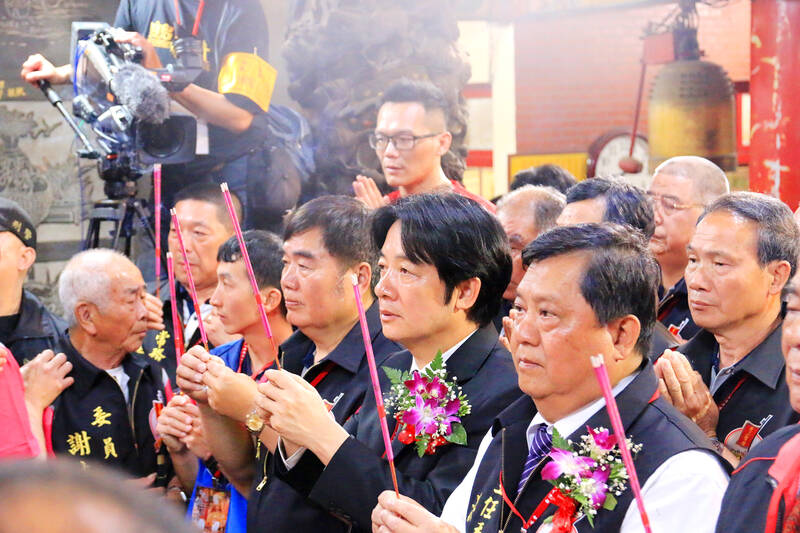
Photo: Wu Chun-feng, Taipei Times
On top of the natural spread of religion, there’s been “an important unnatural element.”
KMT AND RELIGION
Chen attributes the growth of what he calls “Buddhist megacorporations” to the KMT’s need to win votes. He regards it as no coincidence that the country’s major Buddhist organizations, with the singular exception of the Buddhist Compassionate Relief Tzu Chi Foundation (慈濟功德會, Tzu Chi), were founded by individuals who moved from China around the time of Chiang Kai-shek’s (蔣介石) retreat to Taiwan in 1949.
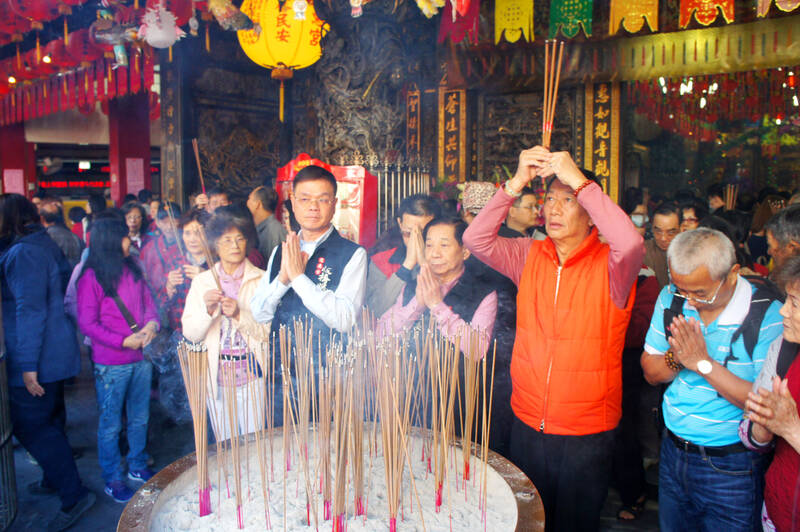
Photo courtesy of Cihui Temple
Chen says Tzu Chi benefited from its close ties with KMT-run media. Its founder, Master Cheng Yen (證嚴), is the older sister of a former editor-in-chief of the Central Daily News, a now-defunct but previously important Chinese-language newspaper. Tzu Chi espouses environmentalist principles, yet some allege it is Taiwan’s number one builder of illegal or unlicensed structures.
Albert Wu (吳孟軒), an associate research fellow in Academia Sinica’s Institute of History and Philology, says the Chinese Nationalists haven’t always cozied up to local religions. In China, between the 1920s to the 1940s — at the same time as they were tackling opium use, gambling, prostitution and illiteracy — the party was “very active in trying to stamp out religious practices it deemed superstitious, seeking to rid the Chinese landscape of temples, fortune-tellers and spirit mediums,” Wu says.
He adds that the Japanese colonial government ruling Taiwan between 1895 and 1945 launched similar campaigns against local temples, especially during the Kominka movement of the late 1930s. The colonial regime outlawed possession, forcing spirit mediums (known in Hoklo as tangki, 乩童) underground. Because millenarianism and folk beliefs had played a key role in the 1915 anti-Japanese uprising known as the Tapani Incident (西來庵事件), there were political and security angles to the repression of certain sects.
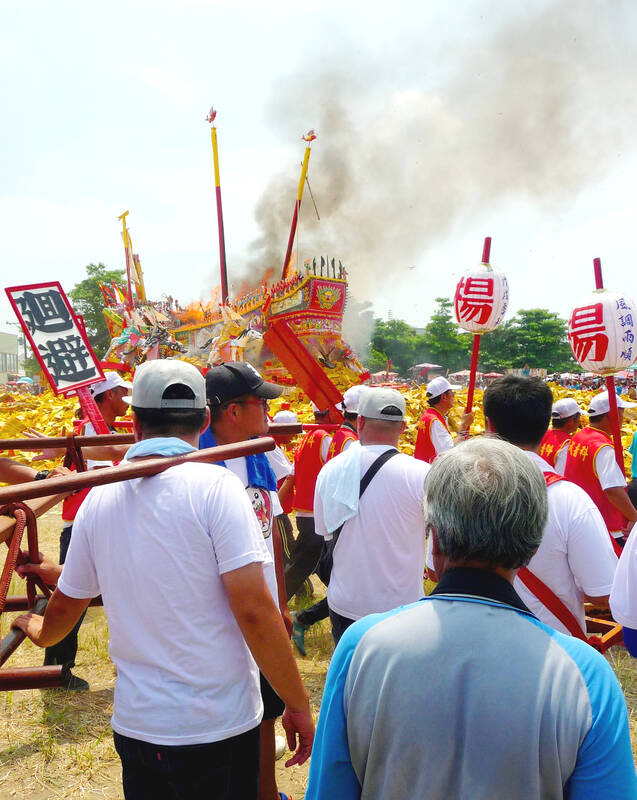
Photo: Steven Crook
Remnants of that type of secularism are still visible in Taiwan, Wu says. For instance, the Ministry of Education didn’t permit the teaching of courses on religion until quite recently.
Not long after the lifting of martial law, the ministry allowed Fu Jen Catholic University to set up Taiwan’s first Department of Religious Studies. National Chengchi University’s (NCCU) Graduate Institute of Religious Studies, established in 2000, remains the only department of its kind at a public university in Taiwan, and it doesn’t offer an undergraduate program. Since then, however, Fo Guang Shan (佛光山), Tzu Chi and other religious groups have established their own degree-granting institutions.
“I think one of the main reasons why there are so many religious people in Taiwan is partly to do with the outcome of the Chinese Civil War. Many of the refugees who fled to Taiwan from China came because of religious persecution, and they brought their religions with them,” Wu says.
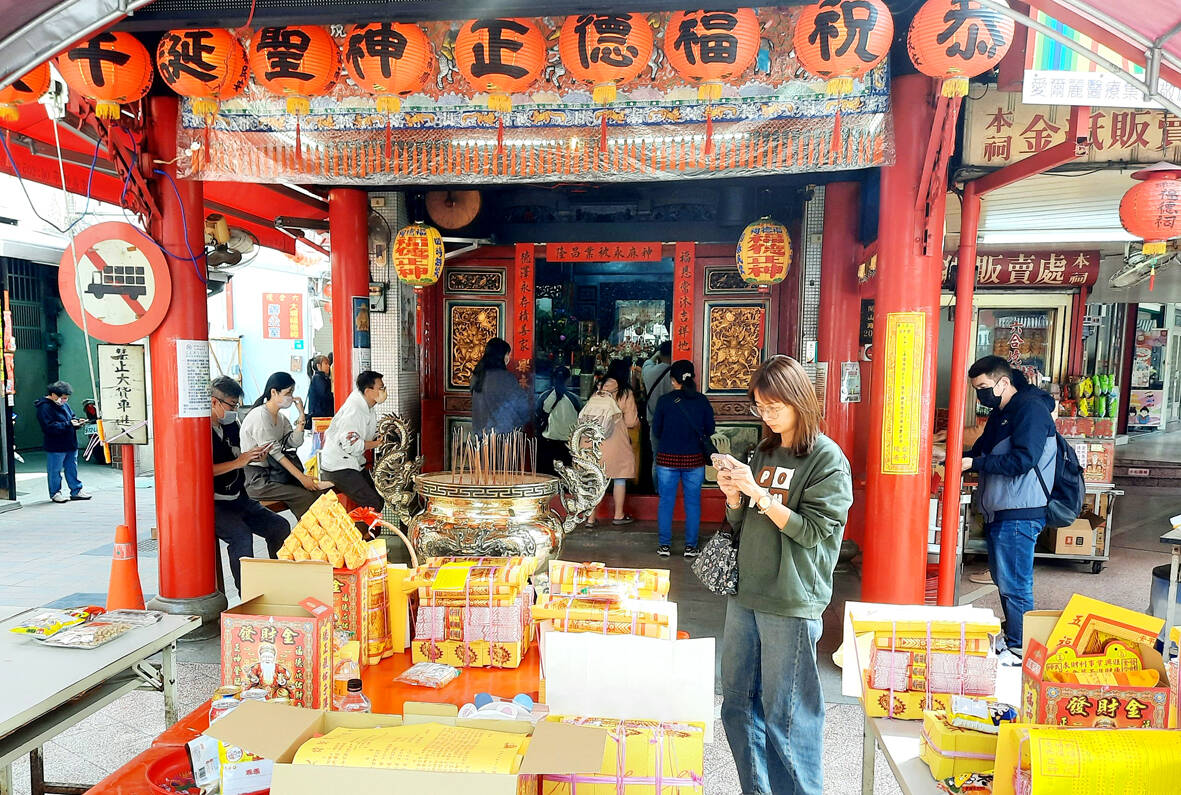
Photo:Steven Crook
Chiang’s regime, hoping to align itself with the free world, promoted nominal freedom of religion after 1949.
“Of course, during the authoritarian period, there were a lot of restrictions against religions they considered dangerous, such as their persecution of members of I-Kuan Tao (一貫道, Yiguandao), or their strict surveillance of members of the Presbyterian Church whom they suspected of fomenting Taiwanese independence,” Wu says.
He added: “But I think the religious landscape you see today is partly an outgrowth of liberalization after martial law, and how many of these religious groups — such as those involved in Matsu pilgrimages — have been able to link up with a sense of Taiwanese identity.”
RELIGION AND ACADEMIA
Religions have experienced little pushback from intellectuals. In Chen Lih-ming’s view, philosophy departments in local universities have failed to scrutinize the beliefs of sects and churches. Academic recognition of religions — which has come in the form of entities like National Taiwan University’s Center for Buddhist Studies — have been a step backward, he says.
Two years ago, Chen was outraged when Lee Fong-mao (李豐楙) was elected as an academician of Academia Sinica for his work on Taoism. Lee is currently an honorary professor in the Center for the Study of Chinese Religions at NCCU.
Chen doesn’t regard Taoist thought as a legitimate philosophy, saying the appointment is “absurd, an academic scandal… but my point isn’t about him personally, but rather the academic atmosphere in Taiwan. The core of Taoism is its cosmology, yet if it can’t be reconciled with astrophysics, studying it has little value or meaning.”
He has no objection to scholars who research obscure subjects. Rather, he’s unhappy with the members of Academic Sinica who elected Lee. He sees philosophy as a discipline that can check or control religion, and regards the prosperity of Taiwan’s religions over the past half century and Lee’s election as signaling that “now philosophy in Taiwan is in real trouble.”
Stephen M. Flanigan, a specialist in Taoism who holds master’s and doctoral degrees from the University of Hawaii, and is probably the only Westerner to learn the repertoire of the Taoist Ritual Master, offers Chen qualified support.
“I basically agree with some of Chen’s criticisms of Taiwanese academia’s relationship with local religions, though his overreaction to Lee’s recognition as a scholar not only ignores Professor Lee’s credentials and achievements as a scholar, it also, I think, reflects his biases about what constitutes legitimate philosophy. Evidently, for him, only certain Western forms of philosophy count,” Flanigan says.
‘PRO-RELIGIOUS BOOSTERISM’
The American describes local academic study of traditional Taiwanese religions as “in many cases largely a form of religious appreciation or pro-religious boosterism. Anything resembling criticism of religion, or forms of analysis that depart too far from believers’ own concepts, face serious resistance, especially from some undergraduate and graduate students who are committed religious practitioners themselves.”
He wonders if objective studies of local religions, akin to how Christianity and Judaism are studied in the West, are in fact currently possible in Taiwan. Domestic research on living religions is typically conducted, he says, “from an insider perspective, with any historical or anthropological analysis usually remaining within a safe zone of compatibility with belief and practice.”
Flanigan goes on to say that several notable local researchers have aggressively defended traditional religion against efforts to reduce the burning of incense and spirit money or the use of noisy pyrotechnics.
As one of very few Westerners to have truly immersed themselves in local religion, Flanigan is well-known among temple-goers. But he’s curtailed media appearances and certain forms of ritual performance, “precisely because I don’t want to be seen as promoting religious practice as a legitimate and beneficial way to solve problems like poor health or dangerous traffic behavior. Resorting to ritual solutions and constant appeals to spirits for advice are, I believe, real and serious obstacles to the adoption of rational and responsible forms of humanism as a more effective and liberating way of life.”
According to Flanigan, Chen and some other critics of religion fail to grasp the paramount importance of community in religion. Membership in a church or temple means belonging to a strong and often intimate community, he says.
“Oftentimes, people’s most important friendships are made in religious groups, and the temple or church serves as their primary social world. Regardless of the values or habits that various religions may promote, the sense of belonging and mutual support can be quite powerful, and stands in direct contrast to the increasing isolation and alienation experienced by individuals in more secularized societies,” he argues.
Local religion, in Flanigan’s opinion, is “noteworthy for its artistic and aesthetic power.”
He argues that “people should be able to engage with the positive dimensions of the religion, while also addressing the manifold negative aspects.” Among the latter, he says, is irrationality, a tendency toward fearful attitudes, and environmental damage.
Flanigan also disputes the claim that people consciously come to religion, calling attention to the fact that — especially in society where religious buildings and practices are visible in every neighborhood — “religion is already there in their social environment. It’s like language: it’s just there, and most people learn it in much the same way they acquire their mother tongue: through natural acculturation, not by conscious choice.”
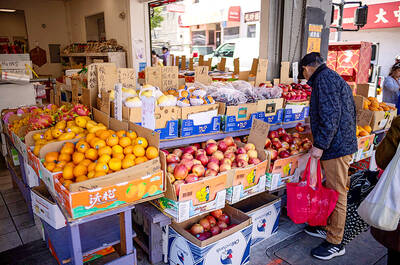
Ajay Verma, a consultant gastroenterologist at Kettering general hospital in Northamptonshire, says our gut is a “complex machine.” “It is constantly providing us with the nutrition we need, initially to grow and develop, and then for us to survive, thrive and repair from injury and illness.” How can we keep it functioning well? Put simply: “Make sure what you put into it is balanced, and that you clear out its waste products adequately,” Verma says. “In a general gastroenterology clinic, the most common conditions we see are irritable bowel syndrome (IBS), gastroesophageal reflux disease, inflammatory bowel disease and constipation,” says Nisha
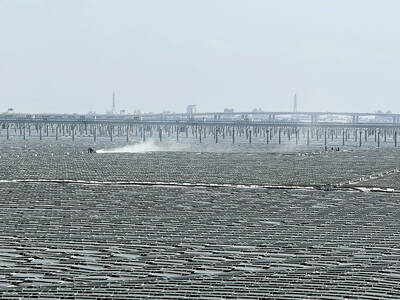
The arithmetic is straightforward and uncomfortable. By the end of 2025, Taiwan had committed itself to a 50-30-20 electricity mix — half natural gas, 30 per cent coal, 20 per cent renewables. The Ministry of Economic Affairs’s (MOEA) own monthly energy reports tell a different story. Natural gas reached 47.8 per cent of generation last year. Coal stood at 35.4 per cent, comfortably above its target ceiling. Renewables came in at 13.1 per cent, well short of the 20 per cent Taipei had pledged a decade earlier. Installed renewable capacity reached roughly half of the 12 gigawatts (GW) the government

Last week US President Donald Trump was asked by a reporter whether he would speak on the phone to the President of Taiwan. “l’ll speak to him. I speak to everybody. We have that situation very well in hand,” Trump said. This marked the second time in a couple of weeks he had said he would talk to the President of Taiwan. In 2016 he famously took a call from then-president Tsai Ing-wen (蔡英文), when he was president-elect. Despite warnings that the apocalypse was nigh because of a phone call, the world quickly forgot about the conversation between two democratically-elected presidents.
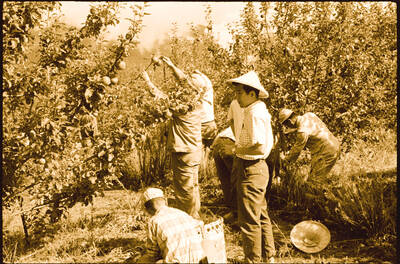
May 25 to May 31 Few believed that apples could be cultivated on a commercial scale in Taiwan’s high mountains. When horticulturalist Cheng Chao-hsiung (程兆熊) first proposed the idea in 1955, both American and Taiwanese colleagues dismissed it as implausible, arguing that temperate fruit could not be reliably grown on a subtropical island, especially on rugged terrain. However, it was this terrain in the Central Mountain Range where many Chinese Civil War veterans were resettled in the late 1950s. With limited job prospects and no family in Taiwan, they were placed on cooperative farms aimed toward self-sufficiency. Some say the conditions


 RSS
RSS