


Come Home, My Child (2023), by Taiwanese independent filmmaker Jasmine Ching-Hui Lee (李靖惠), will be making its Asia premiere next month at the Taiwan International Documentary Festival (TIDF). In this intimate documentary, Lee explores the life of Mama Yang, an elderly Chinese woman living in New York City who takes care of 45 high-security prison inmates as if they were her own children.
In November last year, I interviewed Lee at the San Diego Asian Film Festival where she gave me a behind-the-scenes peak at her filmmaking process.
Junobi Ree: First of all, congrats on the world premiere. How did you find such a remarkable topic?
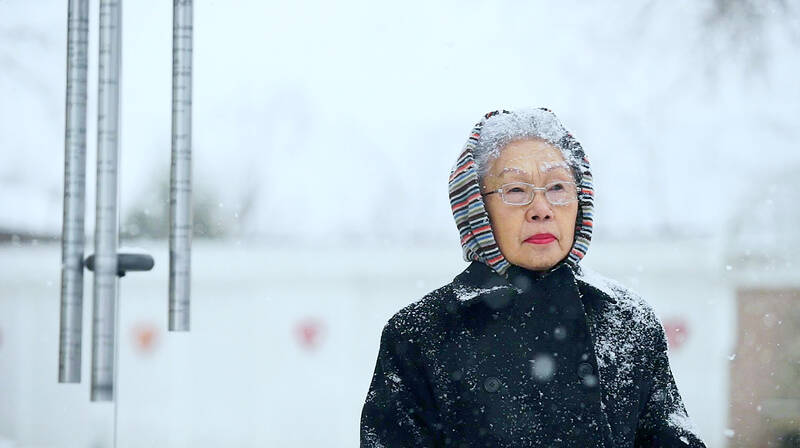
Photo courtesy of Money and Honey Film Production
Jasmine Lee: In 2013, my last documentary, Money and Honey was selected for a film festival in New York, and the audience loved it so much. Mama Yang [the main character of Come Home, My Child] hosts a radio program and interviewed me. That’s how I got to know her and her story. I’m interested in immigrant stories. Later, I found out she wrote to inmates. Most of them came from China and are undocumented immigrants. Mama Yang wrote thousands of letters. They were so touching. I found five inmates who became supporting characters. In the beginning, the story was about Mama Yang and the inmates. I had no idea about [her granddaughter] Ellen. Then, one day, Mama Yang said, “you are welcome to visit my home, and I will show you my photos.” That’s where I got to know Ellen. You know, Mama Yang could write very lovely letters to the inmates but she could not communicate with her granddaughter. Even though they lived together, they communicated by email or notes. The Ellen character is very important [to the film] because it shows Mama Yang is not a perfect person.
JR: I’m also a documentary filmmaker and I noticed how beautifully shot your film is. Did you have a vision for the atmosphere you wanted to create or did it come together on its own?
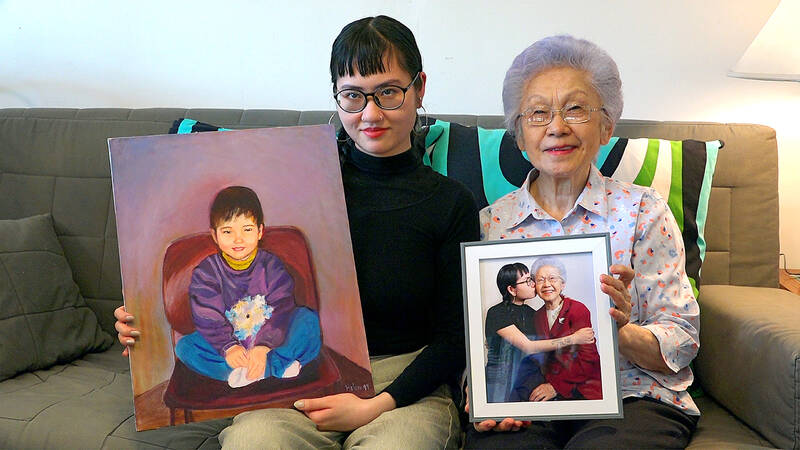
Photo courtesy of Money and Honey Film Production
JL: I felt that even though Mama Yang is a very simple person, she’s elegant. If the film was not poetic and beautiful how could an audience sympathize [with the characters]? So I thought photography was very important. Even if it’s a tough subject, you will see hope and love in the film.
JR: You touched on both Ellen and the presence of COVID-19 during filming. How did you incorporate the pandemic and the character Ellen into the film?
JL: You know, life is very dramatic but you must spend time to wait for something to happen. It took 10 years to find out about Ellen and then, the pandemic happened. During the pandemic, I lived with Ellen and Mama Yang. The ice between them actually began to break while I was there.
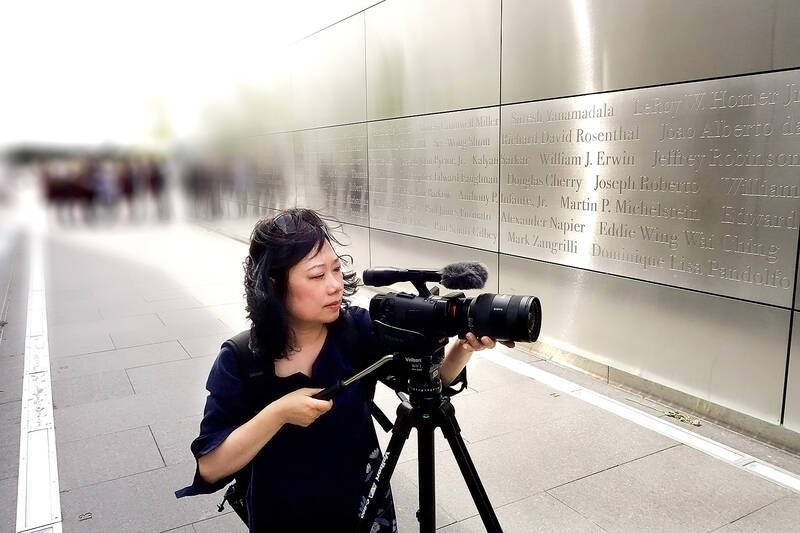
Photo courtesy of Money and Honey Film Production
JR: So it was during the pandemic when their relationship started to deepen?
JL: They could not go anywhere. I shared the rough cut [of the film] with them and they started to talk to each other. Ellen really didn’t know her grandma well but through the documentary she got to know her more. My supervising editor Liao Ching-sung (廖慶松), who is also the editor for [film director] Hou Hsiao-hsien (侯孝賢) said, “It’s more dramatic than fiction!”when he was making the final cut, and saw them talking.
JR: How are the inmates doing now? Will they watch your film?
JL: Unfortunately, the inmates cannot see the New York screening, but I will visit them. After the film festival season ends, we will have screenings in prisons in Taiwan.
JR: What are the differences between the US and Taiwan with regards to prisoner rights?
JL: I couldn’t believe the prison terms are so long in the US. And it’s very hard for Chinese inmates to fight in court — expenses are so high plus the limits of language and other racial problems. I know there are other documentaries about inmates, but Come Home, My Child is unique because these inmates are invisible, you know?
JR: I’ve read that your past films have also been focused on disadvantaged social groups. How did you decide you really wanted to do this, to help people or spread a message?
JL: Making documentaries is a very hard job. It is non-commercial and costs so much. So if you don’t love the subject, you will give up very quickly. It’s like falling in love with somebody. If you really love the person, you will be curious about him or her. You want to know more about them, right? I think love is the most important thing. So for me, I think it’s a calling from God. I am Taiwanese. I don’t know anyone in New York. But it’s amazing that I met someone like Mama Yang.
JR: What do you hope the younger generation will get out of your film?
JL: I think the younger generation will be touched by Ellen. Ellen lost her father and her mother, and she stayed with her grandma. So her childhood was not so happy. Many generations have similar experiences. Older and younger generations often don’t know how to share with each other. So I hope the new generation, when they watch the film, can start to talking to their families.
Junobi Ree is a filmmaker whose work in includes a short documentary for the BBC on Asian American teen identity and a short experimental documentary, The Valorant Ones, about multiple homelands and diaspora, depicted through different locations: Oregon, San Diego, South Korea and Oakland.
Ajay Verma, a consultant gastroenterologist at Kettering general hospital in Northamptonshire, says our gut is a “complex machine.” “It is constantly providing us with the nutrition we need, initially to grow and develop, and then for us to survive, thrive and repair from injury and illness.” How can we keep it functioning well? Put simply: “Make sure what you put into it is balanced, and that you clear out its waste products adequately,” Verma says. “In a general gastroenterology clinic, the most common conditions we see are irritable bowel syndrome (IBS), gastroesophageal reflux disease, inflammatory bowel disease and constipation,” says Nisha

And so, in the wake of US President Donald Trump’s trip to the People’s Republic of China (PRC), all the experts on the Strait of Hormuz suddenly became experts on US-China-Taiwan relations. The Internet has certainly expanded human knowledge. Lots of these sudden experts made noise this week about Trump’s words after the meeting with PRC dictator Xi Jin-ping (習近平). Trump is going to sell out Taiwan! Longtime Taiwan commentator J. Michael Cole summed the situation up neatly in the Guardian: “We need to keep in mind that he has a tendency to say many things — sometimes contradicting himself within

Last week US President Donald Trump was asked by a reporter whether he would speak on the phone to the President of Taiwan. “l’ll speak to him. I speak to everybody. We have that situation very well in hand,” Trump said. This marked the second time in a couple of weeks he had said he would talk to the President of Taiwan. In 2016 he famously took a call from then-president Tsai Ing-wen (蔡英文), when he was president-elect. Despite warnings that the apocalypse was nigh because of a phone call, the world quickly forgot about the conversation between two democratically-elected presidents.
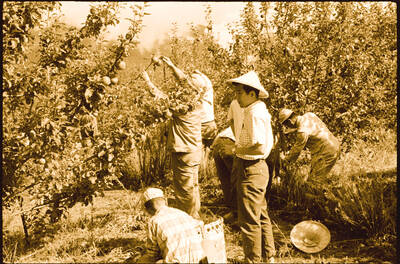
May 25 to May 31 Few believed that apples could be cultivated on a commercial scale in Taiwan’s high mountains. When horticulturalist Cheng Chao-hsiung (程兆熊) first proposed the idea in 1955, both American and Taiwanese colleagues dismissed it as implausible, arguing that temperate fruit could not be reliably grown on a subtropical island, especially on rugged terrain. However, it was this terrain in the Central Mountain Range where many Chinese Civil War veterans were resettled in the late 1950s. With limited job prospects and no family in Taiwan, they were placed on cooperative farms aimed toward self-sufficiency. Some say the conditions


 RSS
RSS