


“Sticks and stones may break my bones, but words will never hurt me” is a phrase often repeated to children in the hope that they will learn that they cannot be hurt by name-calling or verbal abuse. In fact, words are humans’ most powerful tools, and harsh language used against children can damage them for the rest of their life.
It is natural to respond to a “naughty” child by shouting — and children are forgiving of, and are surprisingly empathic in relation to, parental stress. But let us not deceive ourselves that verbal intimidation such as shouting, yelling or screaming at children leaves no scars. Or that being humiliated and ridiculed leaves children unaffected.
A pioneering systematic review on the impact of childhood verbal abuse by adults published this week suggests that over 40 percent of children are exposed to verbal aggression, verbal hostility or harsh verbal discipline from adults around them. For half, the experience is at least weekly — and for an unfortunate 10 percent, it is a daily experience.
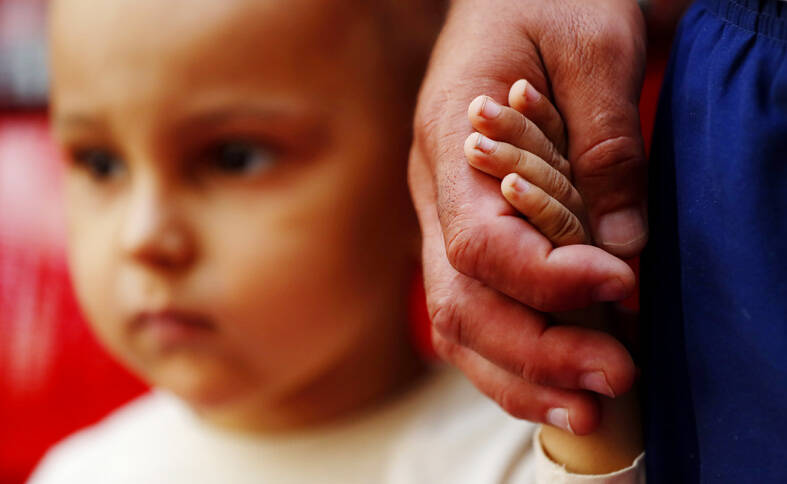
Photo: EPA-EFE
Using words to intimidate, shame and control may appear less obviously harmful than bodily threat, but the same risks accompany this misuse of language: low self-esteem, increased nicotine, alcohol and substance use, increased risk of anxiety, depression, even psychotic disorders. We know from hundreds of studies and this new systematic review that exposure to verbal abuse profoundly affects children, and is associated with persistent psychological distress, complex emotional and relational difficulties, physical as well as mental disorders, increased likelihood of recreating abusive situations in their lives (finding a partner who is abusive to them) as well as finding themselves repeating the abuse with others. Additionally, exposure to abusive language between others, for example interparental verbal violence, can carry the same risks for children’s mental and physical health as abusing them directly.
Decades of research have shown that authoritarian management of a child does harm and that reducing abuse — verbal and physical — is the single most effective way we can counteract the rise of mental disorder in children and young people. But as a society we are far less attuned to the long-term risks associated with verbal abuse.
From birth, children are programmed to know that their most important responsibility is to rely on the adults around them and learn from them for survival. They are genetically prepared to trust what adults say, since they need to rapidly absorb information that may be necessary. If we betray that trust by using words to abuse rather than teach, this can leave children isolated, excluded and unable to draw the full benefit of social learning.
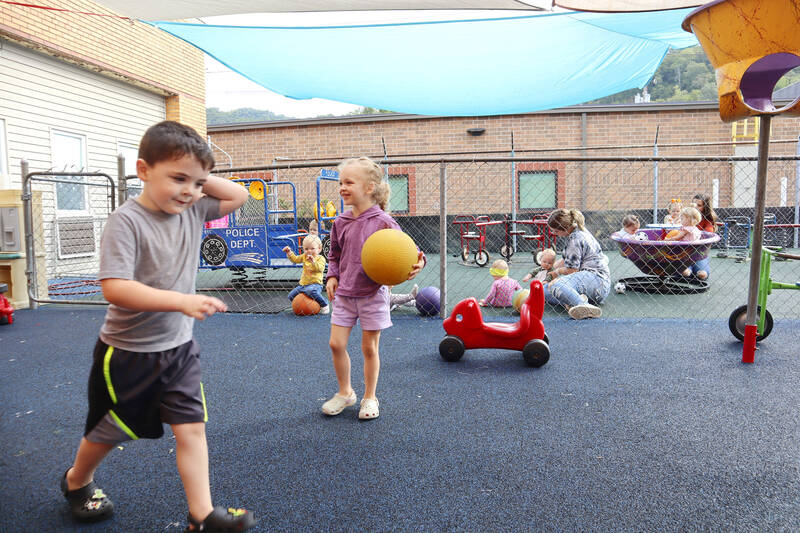
Photo: AP
It is in fact not until almost the second decade of life that children learn to understand irony, that adults may not literally mean what they say. They do not get the joke behind a phrase such as “you stupid boy” or “you wicked, wicked girl.” Considerable brain development is needed for a child to fully understand an adult’s intention that these and similar verbal putdowns are intended not to shame and humiliate, but are intended as educational devices to correct and shape their behavior.
Instead they dutifully incorporate such knowledge into their growing, increasingly complex understanding of the world. In this instance, it becomes part of their view of themselves as inadequate and bad. When I was eight, the janitor in the building that our apartment was in told me that she would cut off my legs if I did not wipe my feet before running up the stairs. I am sure she meant no harm, but it was a cruel thing to say, and six decades later, I still remember the fear. Research studies show that we tend, in hindsight, to rate our parents’ verbal aggressiveness higher than our parents rate it themselves.
Verbal abuse of children goes beyond the family and is commonly encountered in educational, sports and leisure contexts. In some contexts, dancing for example, the culture of bullying around extreme body consciousness and body shaming is pervasive and can leave dangerous, lasting sensitivities.
If we really want to “teach” our children to behave, we need to be kind, show appreciation, find the good amid the naughtiness, be as alert to effort as we are to signs of idleness and be far more ready to praise than find fault. Decades of evidence from studies of socialization are unequivocal: punishment is ineffective. Our prisons re-traumatize many already crippled by trauma. Not surprising that recidivism dominates over correction.
Supporting parents to deliver positive, consistent, rule-based parenting, even with wayward children, works to prevent antisocial behavior. In ordinary parenting, it is finding ways to praise our children when they do something we like, rather than holding them to account for what they do wrong, that helps shape their behavior and personality. Attention, warmth and kindness pay dividends. Excessively harsh words undermine attachment and trust, devaluing subsequent efforts at correction. The janitor could have encouraged and praised me for wiping my feet and it might have kept the stairs clean. In the event I just checked she was out of sight before galloping up the stairs with the muddiest of shoes.
The minds of children need to be built, not repaired.

Taiwan’s semiconductor industry consumes electricity at rates that would strain most national grids. Taiwan Semiconductor Manufacturing Co (TSMC) alone accounted for more than 9 percent, or 2,590 megawatts (MW), of the nation’s power demand last year. The factories that produce chips for the world’s phones and servers run around the clock. They cannot tolerate blackouts. Yet Taiwan imports 97 percent of its energy, with liquefied natural gas reserves measured in days. Underground, Taiwan has options. Studies from National Taiwan University estimate recoverable geothermal resources at more than 33,000 MW. Current installed capacity stands below 10 MW. OBSTACLES Despite Taiwan’s significant geothermal potential, the

In our discussions of tourism in Taiwan we often criticize the government’s addiction to promoting food and shopping, while ignoring Taiwan’s underdeveloped trekking and adventure travel opportunities. This discussion, however, is decidedly land-focused. When was the last time a port entered into it? Last week I encountered journalist and travel writer Cameron Dueck, who had sailed to Taiwan in 2023-24, and was full of tales. Like everyone who visits, he and his partner Fiona Ching loved our island nation and had nothing but wonderful experiences on land. But he had little positive to say about the way Taiwan has organized its

The entire Li Zhenxiu (李貞秀) saga has been an ugly, complicated mess. Born in China’s Hunan Province, she moved to work in Shenzhen, where she met her future Taiwanese husband. Most accounts have her arriving in Taiwan and marrying somewhere between 1993 and 1999. She built a successful career in Taiwan in the tech industry before founding her own company. She also served in high-ranking positions on various environmentally-focused tech associations. She says she was inspired by the founding of the Taiwan People’s Party (TPP) in 2019 by Ko Wen-je (柯文哲), and began volunteering for the party soon after. Ko
Chinese Nationalist Party (KMT) Chair Cheng Li-wun (鄭麗文) returned from her trip to meet People’s Republic of China (PRC) dictator Xi Jinping (習近平) bearing “a gift” for the people of Taiwan: 10 measures the PRC proposed to “facilitate the peaceful development of cross-strait relations.” “China on Sunday unveiled 10 new incentive measures for Taiwan,” wrote Reuters, wrongly. The PRC’s longstanding habit with Taiwan relations is to repackage already extant or once-existing policies and declare that they are “new.” The list forwarded by Cheng reflects that practice. NEW MEASURES? Note the first item: establishing regular communication mechanisms between the Chinese Communist Party


 RSS
RSS