


Taiwan’s semiconductor industry consumes electricity at rates that would strain most national grids. Taiwan Semiconductor Manufacturing Co (TSMC) alone accounted for more than 9 percent, or 2,590 megawatts (MW), of the nation’s power demand last year.
The factories that produce chips for the world’s phones and servers run around the clock. They cannot tolerate blackouts. Yet Taiwan imports 97 percent of its energy, with liquefied natural gas reserves measured in days.
Underground, Taiwan has options. Studies from National Taiwan University estimate recoverable geothermal resources at more than 33,000 MW. Current installed capacity stands below 10 MW.
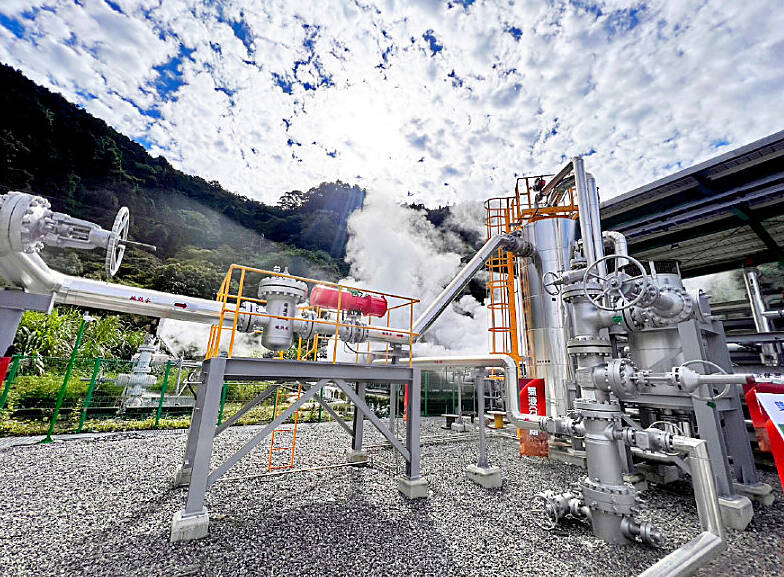
Photo: TT file photo
OBSTACLES
Despite Taiwan’s significant geothermal potential, the numbers tell a damning story. The government in 2016 set a target of 200 MW of installed geothermal capacity by last year. As of 2024, roughly 7 MW is in the ground. The reasons have little to do with geology. Rules requiring wells to be drilled vertically — unlike standard international practice, which allows directional drilling — force developers off the optimal geological path from the start. For example, Swedish geothermal company Baseload Capital first well in Hualien County took nearly a year to complete at a cost of NT$100 million (US$3.6 million). In Iceland, the same job takes six weeks.
The regulatory picture is no cleaner. In some cases, hot spring tourism laws — never designed for industrial power generation — are still being applied to commercial geothermal projects, producing inconsistent enforcement across jurisdictions. The most resource-rich areas often fall within Indigenous territories or protected national parks, making access both legally and politically fraught.
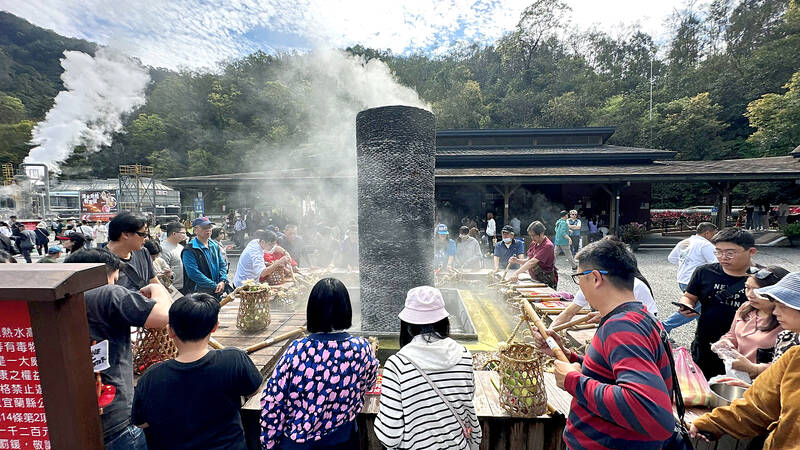
Photo courtesy of the Yilan County Government
Taiwan Power Co (Taipower, 台電) has long treated geothermal as a secondary concern, concentrating investment on solar and offshore wind. For a nation whose energy security hinges on import-independent, weather-proof baseload, that is a costly omission.
The gap between potential and reality matters. Global supply chains run on Taiwanese chips. Cut the power, and factories that feed the world’s tech industry go dark.
The government’s targets last year called for 200 MW of geothermal capacity. Deployment has fallen far short. Why? The answer lies in three geological provinces, each with its own promise and problems.
OPPORTUNITIES
Taiwan sits on the Pacific Ring of Fire. The Philippine Sea Plate subducts beneath the Eurasian Plate along the eastern coast. This collision generates volcanic activity and heat flows that few places on Earth can match.
The Tatun Volcano Group north of Taipei holds an estimated 2,886 MW of recoverable capacity. The Yilan Plain offers 6,170 MW. The Hua-Tung region, comprising Taitung and Hualien counties, accounts for 25,754 MW.
Each area has its own problems. At volcanic Datan Mountain Range (大屯火山), geothermal fluids are highly acidic. Hydrogen sulfide corrodes conventional steel casings within months. Developers must use titanium alloys or specialized coatings.
The resources also overlap with Yangmingshan National Park. Exploration drilling remains prohibited within park boundaries.
Sanja Margetic of Baseload Power said in an e-mail that surface exploration in Tatun confirmed strong potential. Development would depend on continued dialogue with relevant authorities and local communities, Margetic added.
In Yilan, different chemistry creates different problems. Carbonate-rich fluids deposit calcium scale inside wellbores and pipes. This scaling reduces flow rates and requires regular cleaning.
The Hua-Tung region holds the largest reserves. Its metamorphic geology creates fracture networks where hot water circulates at depth. But mountain terrain complicates construction.
HOW GEOTHERMAL WORKS
Geothermal power plants extract heat from underground reservoirs. Production wells bring hot water or steam to the surface. The thermal energy drives turbines. Injection wells return cooled fluid to the reservoir.
Taiwan’s volcanic systems offer temperatures exceeding 200 degrees Celsius in some locations. These high-enthalpy resources could support efficient flash steam plants.
Unlike solar or wind, geothermal plants produce power continuously. They operate at capacity factors above 90 percent, compared with 25 percent for solar and 35 percent for wind.
EXPLORATION RISK AND FINANCING GAPS
Lin Po-keng (林伯耕), deputy general manager at FengYeu Green Energy (豐宇綠能), operates plants at both Yilan County’s Datong Township (大同) and Sihuangzihping (四磺子坪) in New Taipei City. Lin said in an e-mail that financing remains the central obstacle.
Geothermal development requires substantial upfront investment before any revenue flows, Lin said. Financial institutions provide funding only after resource verification.
Yet verification itself requires capital. Exploratory drilling can cost millions of dollars per well with no guarantee of success. Banks want proof before lending. Developers need money to produce that proof.
At Datong Township, thermal output has depleted faster than models predicted, Lin said. Frequent well maintenance pushes operating costs higher than expected.
At Sihuangzihping, steep terrain and acidic gases demand expensive corrosion-resistant materials, he added.
If government cannot share exploration risk, many projects will struggle to advance, Lin told the Taipei Times.
SUPPLY CHAIN CONSTRAINTS
Money is not the only problem. Taiwan lacks the drilling rigs and trained crews that established geothermal countries take for granted.
Baseload Power told the Taipei Times that Taiwan has limited access to drilling services compared with mature markets such as Iceland or the Philippines.
In the Philippines, a drilling crew can be on site within months. In Taiwan, the wait is longer and the bill is higher.
France faced similar challenges. At Soultz-sous-Forets in Alsace, a European consortium spent two decades developing enhanced geothermal systems with public money. Private operators came in only after government funding had absorbed the early losses.
Bernard Sanjuan, a senior geothermal expert at the French Geological Survey (BRGM), which has strong links with Taiwan, has worked on volcanic island systems from Guadeloupe to Djibouti.
Sanjuan told the Taipei Times in a phone interview that he has observed similar patterns globally. Strong geological potential meets difficult financing conditions in volcanic contexts.
What changes outcomes is whether governments reduce early-stage risk for developers, Sanjuan said.
FOREIGN INTEREST, LOCAL HURDLES
Foreign money is starting to arrive. Baseload Power has completed surface exploration in both Tatun and Hualien County.
Margetic said the company plans to launch exploration drilling tenders for its project in Hualien County’s Ruisuei Township (瑞穗) in the second half of this year.
If successful, Ruisuei would become Taiwan’s first internationally financed geothermal project. Baseload Power has secured free, prior and informed consent agreements with indigenous communities in the area.
European energy companies with experience in renewable development are watching Taiwan’s geothermal sector. Several have established offshore wind operations and could expand into geothermal if the regulatory environment matures.
Yet foreign capital alone cannot resolve structural problems, Lin said. Taiwan still has only a limited number of operating commercial projects.
Financial institutions remain cautious, and the financing environment has not improved significantly, Lin added.
Sanjuan said that international experience shows governments must share early-stage risk to attract private investment. Foreign developers bring expertise but require policy certainty, he said.
STRATEGIC IMPLICATIONS
Geothermal does what solar and wind cannot. It runs day and night, rain or shine. It burns no fuel.
The war in Iran reminds us that Taiwan’s energy comes by ship across waters that could be closed in a crisis. Power that does not need tankers matters far more than electricity bills.
A single 50 MW geothermal plant operating at 90 percent capacity produces more annual energy than a 200 MW solar farm. The power flows day and night, summer and winter.
Lin said that demand from semiconductor manufacturers and artificial intelligence data centers could encourage clearer policy directions.
But regulatory and financing improvements cannot rely on demand growth alone, Lin added.
PATH FORWARD
Industry participants agree that Taiwan cannot scale its geothermal sector without policy changes. Lin identified three requirements.
Taiwan needs clearer permitting processes, government risk-sharing mechanisms and financial instruments tailored to long development timelines.
Whether Taiwan establishes these mechanisms will determine if its geothermal industry achieves meaningful scale, Lin said.
The numbers speak for themselves. Taiwan’s 33,000 MW of recoverable resources could cover a large share of national demand. Even a fraction of that would cut import dependence.
Geologists have mapped Taiwan’s heat for 50 years. What no one has built is the framework to tap into it.
Romain Blachier works in renewable energy and writes on energy geopolitics. He is a columnist, lecturer, trainer and consultant, and serves as president of Association France-Formosa, a paradiplomatic association.

Ajay Verma, a consultant gastroenterologist at Kettering general hospital in Northamptonshire, says our gut is a “complex machine.” “It is constantly providing us with the nutrition we need, initially to grow and develop, and then for us to survive, thrive and repair from injury and illness.” How can we keep it functioning well? Put simply: “Make sure what you put into it is balanced, and that you clear out its waste products adequately,” Verma says. “In a general gastroenterology clinic, the most common conditions we see are irritable bowel syndrome (IBS), gastroesophageal reflux disease, inflammatory bowel disease and constipation,” says Nisha
The arithmetic is straightforward and uncomfortable. By the end of 2025, Taiwan had committed itself to a 50-30-20 electricity mix — half natural gas, 30 per cent coal, 20 per cent renewables. The Ministry of Economic Affairs’s (MOEA) own monthly energy reports tell a different story. Natural gas reached 47.8 per cent of generation last year. Coal stood at 35.4 per cent, comfortably above its target ceiling. Renewables came in at 13.1 per cent, well short of the 20 per cent Taipei had pledged a decade earlier. Installed renewable capacity reached roughly half of the 12 gigawatts (GW) the government

Last week US President Donald Trump was asked by a reporter whether he would speak on the phone to the President of Taiwan. “l’ll speak to him. I speak to everybody. We have that situation very well in hand,” Trump said. This marked the second time in a couple of weeks he had said he would talk to the President of Taiwan. In 2016 he famously took a call from then-president Tsai Ing-wen (蔡英文), when he was president-elect. Despite warnings that the apocalypse was nigh because of a phone call, the world quickly forgot about the conversation between two democratically-elected presidents.
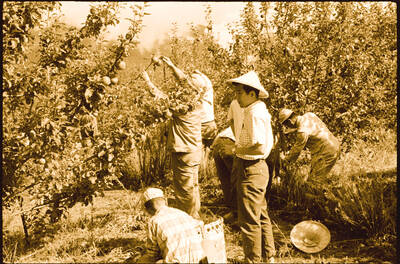
May 25 to May 31 Few believed that apples could be cultivated on a commercial scale in Taiwan’s high mountains. When horticulturalist Cheng Chao-hsiung (程兆熊) first proposed the idea in 1955, both American and Taiwanese colleagues dismissed it as implausible, arguing that temperate fruit could not be reliably grown on a subtropical island, especially on rugged terrain. However, it was this terrain in the Central Mountain Range where many Chinese Civil War veterans were resettled in the late 1950s. With limited job prospects and no family in Taiwan, they were placed on cooperative farms aimed toward self-sufficiency. Some say the conditions


 RSS
RSS