


Lisa Woollett grew up on the Isle of Sheppey, at the mouth of the Thames. As a child she became fascinated by what the estuary had swallowed and what it coughed up; she searched the shingle below her parents’ house for fossils and shark’s teeth. In her 40 or more years of beachcombing and mudlarking since, she has been more likely to retrieve and hoard manmade flotsam, clay pipes and bits of pots; cereal-box toys and toothbrushes. She sifts and sorts them, and sometimes fashions them into starbursts of color, or boxes them in old typesetters’ cases, like exhibits in a museum of curiosities.
In some ways, as this absorbing memoir of shoreline collecting reveals, Woollett was born to this obsession. Her grandfather was a dustman, and back beyond that there were, among the Tolladays on her mother’s side, generations of scavengers, the lowest of the low of London’s raucous street life, scrounging for everything that was not chucked into the Thames, and selling it on.
Woollett has written two more practical guides to what can be found on the beach near her home in Cornwall, one for adults and one for children (she often goes fossicking with her daughter, 11 at the time of writing this book, who has become her fiercest competitor on the shingle, swapping some finds, keeping the best under her bed, out of reach). This book has the more poetic apparatus of a quest. For the bulk of it, over the course of a year, she travels along the Thames shoreline, pocketing fragments that might offer clues to the kinds of lives her forebears lived, telling the stories of the things people threw away, before throwing away became the great national pastime.
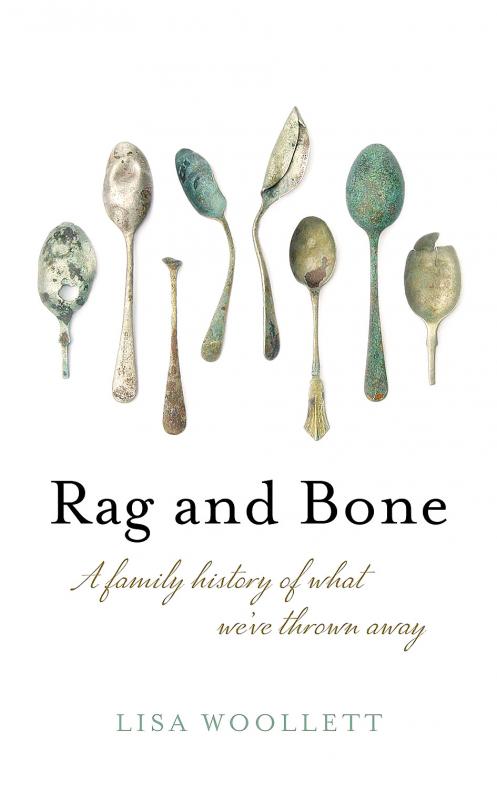
Woollett borrows something of the flavor of Peter Ackroyd’s teeming London histories and Iain Sinclair’s satiric urban rambling for this journey, but adds a different dimension to the city, sensing it not through its books or its marginal characters, but through its habits of disposal and recycling. As she dredges up coins and buttons she also uncovers the desperate lives of “toshers” and shoremen and the rag-and-bone families, men like her great-grandfather out collecting rubbish all day, while women and children raked through what came into the yard. Early Victorian London was essentially a zero-waste city; rags and paper and scrap metal all had ready buyers, oyster shells went to builders for hardcore, vegetable matter was collected as pig food and the ash that remained was bagged as fertiliser.
By the end of the 19th century, however, this cottage industry was overwhelmed, and more and more rubbish found its way downriver to the marshes. As Woollett’s chapters follow this progress, she also brings us closer to the present and the place where she fell to earth. Her parents moved out to Sheppey in the early 1970s when the great revolution in plastic disposable culture was really taking hold. The decades that follow are likely to be known by future mudlarks and paleontologists as the era of maximum detritus.
There is a kind of poignancy as well as a great deal of despair in this prospect. Woollett has a gift for bringing to life the strange borderlands of the foreshore, whether it is the tidal beaches of the Embankment or the weird hinterland of the estuary around Deadman’s Island where the shallow paupers’ graves are beginning to disinter the bones of the dead. She can’t help but look for something of a similar elegiac tone in some of the flotsam she finds. She stages and photographs the limbless deserters from vast armies of toy soldiers on the shingle, frames golf balls that have become indistinguishable from marine life, Monopoly houses and hotels resisting ruin. Our instinct — and hers to a degree — might be to humanize these finds, to see little flashes of nostalgia in these single-use relics as if they were our equivalent of the belt buckles of ancient warriors unearthed from the tundra. But there are just so many of them.
Woollett is very much alive to the irony of her finds, but also what they represent. In 1997 a container ship bound for New York pitched steeply and a cargo of 5m pieces of Lego was dumped in the sea off Land’s End. Many of the pieces were from sea-themed sets, divers’ flippers and life rafts; 20-odd years later, she and her daughter are still fishing these relics up from the shore. Some have been found in the gullets of seabirds and the gills of fish. They become emblematic for her of the world that we have created and that which we are destroying.
“What will survive of us is love,” Philip Larkin suggested hopefully.
In fact, what will survive of us, in Woollett’s compulsive telling, is more likely to be untold billions of plastic bottle tops and free-gift figurines, biro lids and party poppers and cassette tapes, coming and going on the eternal tide.
What was the population of Taiwan when the first Negritos arrived? In 500BC? The 1st century? The 18th? These questions are important, because they can contextualize the number of babies born last month, 6,523, to all the people on Taiwan, indigenous and colonial alike. That figure represents a year on year drop of 3,884 babies, prefiguring total births under 90,000 for the year. It also represents the 26th straight month of deaths exceeding births. Why isn’t this a bigger crisis? Because we don’t experience it. Instead, what we experience is a growing and more diverse population. POPULATION What is Taiwan’s actual population?
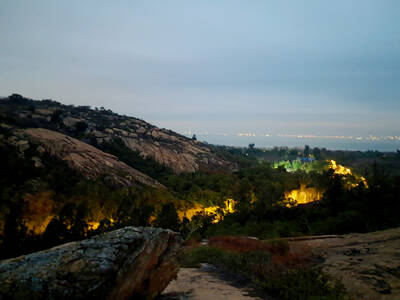
For the past five years, Sammy Jou (周祥敏) has climbed Kinmen’s highest peak, Taiwu Mountain (太武山) at 6am before heading to work. In the winter, it’s dark when he sets out but even at this hour, other climbers are already coming down the mountain. All of this is a big change from Jou’s childhood during the Martial Law period, when the military requisitioned the mountain for strategic purposes and most of it was off-limits. Back then, only two mountain trails were open, and they were open only during special occasions, such as for prayers to one’s ancestors during Lunar New Year.

You would never believe Yancheng District (鹽埕) used to be a salt field. Today, it is a bustling, artsy, Kowloon-ish “old town” of Kaohsiung — full of neon lights, small shops, scooters and street food. Two hundred years ago, before Japanese occupiers developed a shipping powerhouse around it, Yancheng was a flat triangle where seawater was captured and dried to collect salt. This is what local art galleries are revealing during the first edition of the Yancheng Arts Festival. Shen Yu-rung (沈裕融), the main curator, says: “We chose the connection with salt as a theme. The ocean is still very near, just a
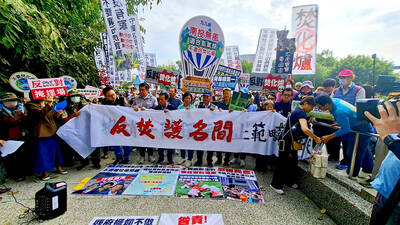
A key feature of Taiwan’s environmental impact assessments (EIA) is that they seldom stop projects, especially once the project has passed its second stage EIA review (the original Suhua Highway proposal, killed after passing the second stage review, seems to be the lone exception). Mingjian Township (名間鄉) in Nantou County has been the site of rising public anger over the proposed construction of a waste incinerator in an important agricultural area. The township is a key producer of tea (over 40 percent of the island’s production), ginger and turmeric. The incinerator project is currently in its second stage EIA. The incinerator


 RSS
RSS