


You would never believe Yancheng District (鹽埕) used to be a salt field. Today, it is a bustling, artsy, Kowloon-ish “old town” of Kaohsiung — full of neon lights, small shops, scooters and street food.
Two hundred years ago, before Japanese occupiers developed a shipping powerhouse around it, Yancheng was a flat triangle where seawater was captured and dried to collect salt.
This is what local art galleries are revealing during the first edition of the Yancheng Arts Festival.
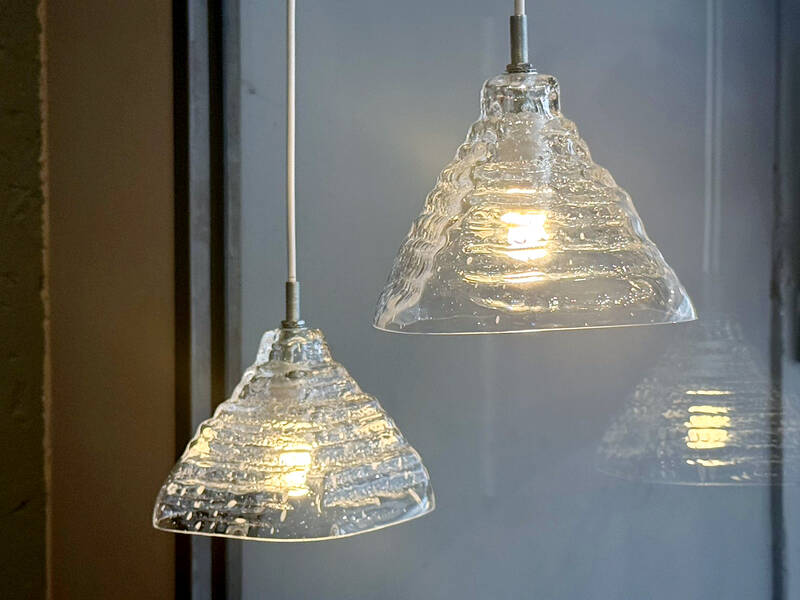
Photo: Julien Oeuillet
Shen Yu-rung (沈裕融), the main curator, says: “We chose the connection with salt as a theme. The ocean is still very near, just a few blocks away, but the salt fields disappeared. So we asked ourselves, did salt vanish or did it turn into something cultural?”
He shows us the work of a few artists on this theme, exhibited at 55 Mobler (屋物工作室).
Shen says that Liu Chien-kuang (劉建廣), a Taiwanese artist living in Sweden, was inspired by the shape of the hills of salt gathered after harvest. He works with glass, so he created lampshades with spots of salt injected inside. It sparkles under the light and emulates the feeling we would have had watching mounts of salt.
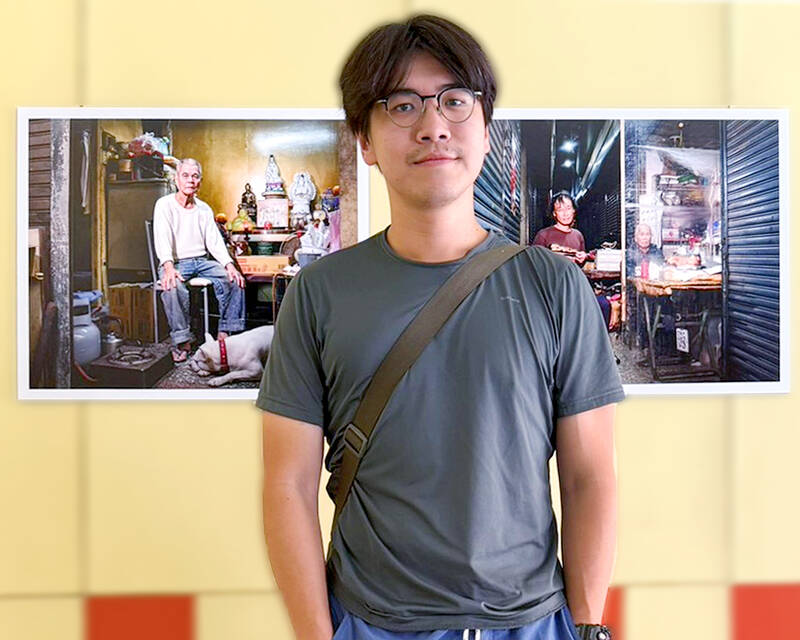
Photo: Julien Oeuillet
Lee Jyun-yi (李俊熠) collected pieces of driftwood he found at nearby beach and turned them into household objects. “I… sandblasted it further to get the grain of salt-washed wood.”
Shen also shows us the work of ceramist Chen Ching-ming (陳慶銘), whose surfaces and colors are also inspired by salt and a local landmark called Monkey Mountain that overlooks Yancheng.
Shen says they organized the festival without any government help or public money. He added that at its core, it is four curators from various art galleries in Yancheng, associated with a total of eleven venues exhibiting the work around the neighborhood, and with the financial support of some local businesses too.
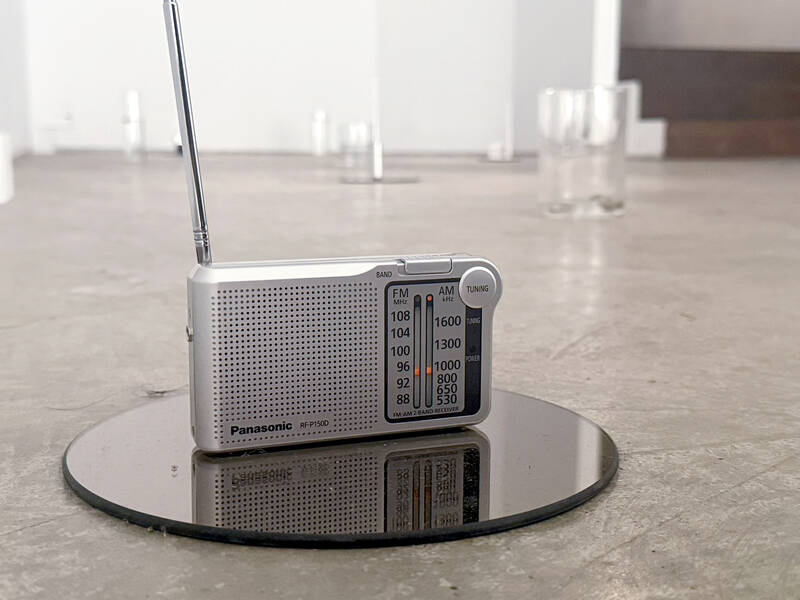
Photo: Julien Oeuillet
Shen also organiszd conferences with artists on the themes of materials, art movements and how to showcase art in the city.
The festival includes artists from New Zealand, Malaysia, South Korea and Taiwan.
Malaysian photographer Tang Yi-Choon (鄧毅駿) worked at Yancheng’s historic covered market.
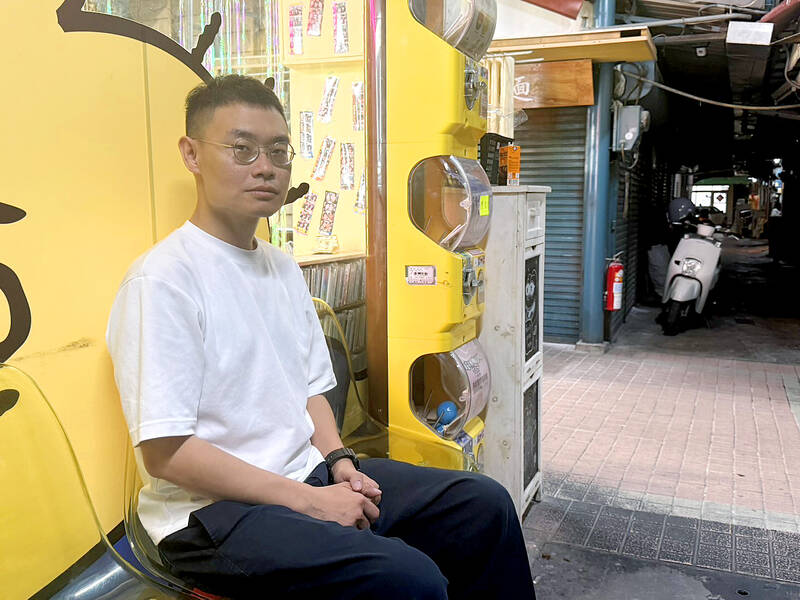
Photo: Julien Oeuillet
“I tried to do landscape pictures at first but there was no emotion in them, so I spent time chatting with shopkeepers, getting to know them, and it became portraits,” he said.
Tang adds: “You need to build up a relationship with people to make their portrait. It’s a good way to include locals in the art festival too.”
Another local art gallery known as A Jian Space (一菅空間) welcomes an exhibition by Iris Chang (張君慈), made of a collection of small vintage radio receivers and volcanic stones floating in water. Chang says she was inspired by the shape of pumice that she found floating in the sea while doing an art residency in Hualien.
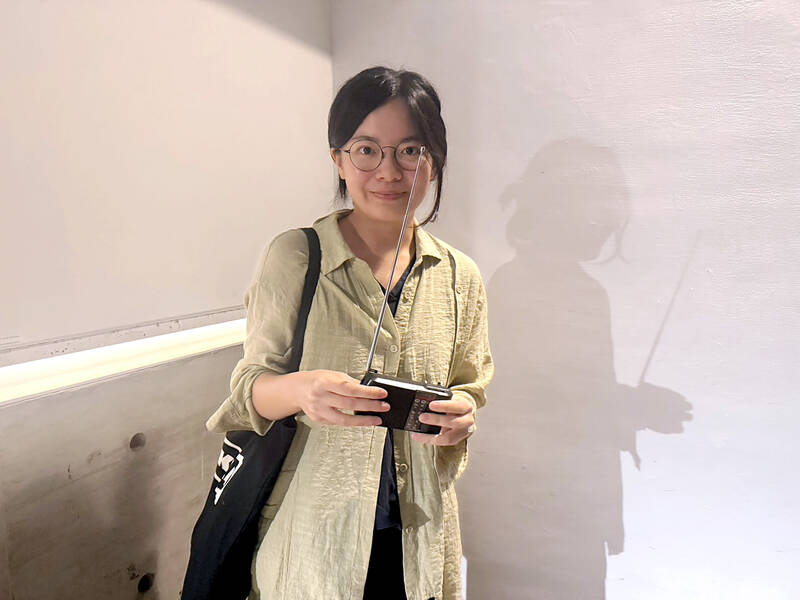
Photo: Julien Oeuillet
“The shape fascinated me, and this is a stone that could travel enormous distances. I saw it as a metaphor of a tiny island carried by the current. The way pumice travels made me think: what if it could carry the signal, the message of the ocean? And the sound of waves reminded me of static on radio, which is also linked to signals. So I combined the two ideas.”
The little radios emit static, or the sound of traffic she recorded in the neighborhood.
“The exhibition varies from one city to another because the signals you catch are different, and so are the sound recordings, and whether I will find pumices or not and what kind,” she says.
Chang says that the pumice found in Kaohsiung is significantly smaller due to erosion.
“It’s like saving them from gradual disappearance. And the radio signal travels through the ionosphere, it may be maintained or be lost, it’s fascinating.
She also invites the audience to change the radio’s frequency, thus changing the sound in the room.
“It’s not about finding the right channel,” she says, “it’s about tuning as an end in itself, being attentive and listening to the sound, being present.”
The gallery’s owner, Sung Hsiang-pang (宋相邦), says: “This place was a gallery before I took it back a couple of years ago. We were a group of young artists struggling to find a place to exhibit our work. So when we saw it was closed, we thought it was an opportunity to use it as a platform for other Southern Taiwanese artists.”
Other spaces used for the exhibition are unused spaces that the local artists have reclaimed: empty little shops or abandoned corners turned into pop-up exhibitions.
Sung says that Yancheng is difficult to define. “We all love the pace of the place. None of us have been living here for long, just one to four years. So in Yancheng we are all foreigners but at the same time no one is really foreign here. I grew up in another part of Kaohsiung, but Yancheng is the best place.”
“Everyone is foreign in Yancheng, and yet we all have a deep connection to each other,” Shen says.

As mega K-pop group BTS returns to the stage after a hiatus of more than three years, one major market is conspicuously missing from its 12-month world tour: China. The omission of one of the group’s biggest fan bases comes as no surprise. In fact, just the opposite would have been huge news. China has blocked most South Korean entertainment since 2016 under an unofficial ban that also restricts movies and the country’s popular TV dramas. For some Chinese, that means flying to Seoul to see their favorite groups perform — as many were expected to do for three shows opening
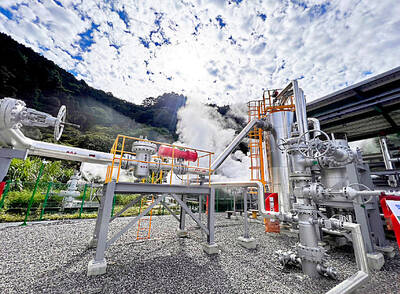
Taiwan’s semiconductor industry consumes electricity at rates that would strain most national grids. Taiwan Semiconductor Manufacturing Co (TSMC) alone accounted for more than 9 percent, or 2,590 megawatts (MW), of the nation’s power demand last year. The factories that produce chips for the world’s phones and servers run around the clock. They cannot tolerate blackouts. Yet Taiwan imports 97 percent of its energy, with liquefied natural gas reserves measured in days. Underground, Taiwan has options. Studies from National Taiwan University estimate recoverable geothermal resources at more than 33,000 MW. Current installed capacity stands below 10 MW. OBSTACLES Despite Taiwan’s significant geothermal potential, the

In our discussions of tourism in Taiwan we often criticize the government’s addiction to promoting food and shopping, while ignoring Taiwan’s underdeveloped trekking and adventure travel opportunities. This discussion, however, is decidedly land-focused. When was the last time a port entered into it? Last week I encountered journalist and travel writer Cameron Dueck, who had sailed to Taiwan in 2023-24, and was full of tales. Like everyone who visits, he and his partner Fiona Ching loved our island nation and had nothing but wonderful experiences on land. But he had little positive to say about the way Taiwan has organized its
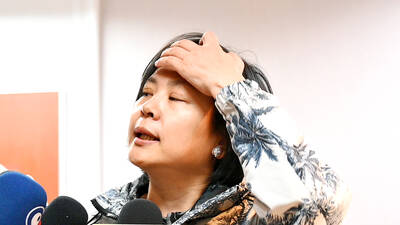
The entire Li Zhenxiu (李貞秀) saga has been an ugly, complicated mess. Born in China’s Hunan Province, she moved to work in Shenzhen, where she met her future Taiwanese husband. Most accounts have her arriving in Taiwan and marrying somewhere between 1993 and 1999. She built a successful career in Taiwan in the tech industry before founding her own company. She also served in high-ranking positions on various environmentally-focused tech associations. She says she was inspired by the founding of the Taiwan People’s Party (TPP) in 2019 by Ko Wen-je (柯文哲), and began volunteering for the party soon after. Ko


 RSS
RSS