


The government has budgeted NT$44.2 billion (US$1.38 billion) to cultivate Taiwan’s uncrewed aerial vehicle (UAV) industry over the next five years, which would make the nation a major player in the industry’s democratic supply chain in the Asia-Pacific region, Premier Cho Jung-tai (卓榮泰) said yesterday.
Cho made the remarks during a visit to the facilities of Cub Elecparts Inc (為升電裝).
Democratic Progressive Party (DPP) Legislator Chen Su-yueh (陳素月) and Chinese Nationalist Party (KMT) Legislator Hsieh Yi-fong (謝依鳳) also participated in the trip.
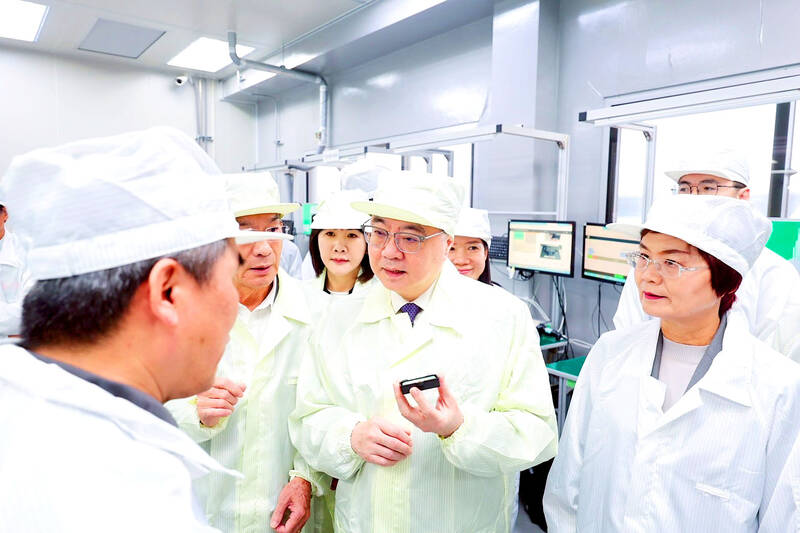
Photo courtesy of the Executive Yuan
Cub Elecparts has transitioned from the automotive industry to the defense industry, which is the top priority among the nation’s five most trusted industries, Cho said.
The company managed to build a comprehensive counter-drone defense system that covers detection, identification, tracking, and “soft-kill” and “hard-kill” measures, he said.
Cub Elecparts’ system meets modern military standards, and offers effective protection of military bases, airports, key infrastructure and venues where crowds gather, he added.
The Executive Yuan has approved the Ministry of Economic Affairs’ plan to spend NT$44.2 billion to cultivate the domestic UAV industry, Cho said.
“The economic output generated by drones reached NT$12.9 billion last year, 2.5 times more than that of 2024. Drone exports last year also increased 21 times to reach NT$2.95 billion,” he said.
Taiwan has become indispensable in the non-red supply chain, Cho said, adding that the UAV industry is one of the nation’s 13 key strategic industries.
“Taiwan’s drone industry would experience a huge blow if the legislature passes a version of the defense budget that does not take it into account. Therefore, we would make every effort to secure the Legislative Yuan’s support for the Executive Yuan’s budget proposal,” Cho said, calling on Chen and Hsien to support the Cabinet’s NT$1.25 trillion bill to shore up the nation’s defense capabilities in the next eight years.
Taiwan can only gain truly dignified peace by building a “Taiwan shield” that is able to produce and supply high-technology products, he said.
The legislature’s Foreign Affairs and National Defense Committee is scheduled to review the draft act today, on Wednesday and Thursday.
Separately, Vice Premier Cheng Li-chiun (鄭麗君) said the Integrated Plan for the Development of the Unmanned Vehicle Industry would bolster drone applications in various fields, including national defense and security; disaster prevention and response; smart manufacturing; smart transportation; healthcare logistics; agricultural monitoring and precision farming operations; and maritime and airspace governance.
The plan aims to create a non-red drone supply chain by next year by stimulating domestic demand for drones through procurement from the government sector, establishing a cybersecurity testing system that aligns with international standards and improving the management system of domestic testing facilities, she said, adding that the government’s general budget plan has also allocated more than NT$7.2 billion for those tasks.
In the “Silicon Prosperity Declaration and the Taiwan-US Joint Statement on Economic Security Cooperation” signed in January, the alignment of Taiwan-US drone cybersecurity certification mechanisms and cooperation on drones in the “non-red supply chain” were among the seven key areas of collaboration between the two nations, Cheng said.
More than 90 percent of drones made in Taiwan are exported to the Czech Republic, Poland and the US, she said, adding that it showed that Taiwan has gradually become a reliable supply.
The continued delay by the legislature in reviewing the Cabinet’s draft special defense act could hinder the development of Taiwan’s UAV industry, she added.
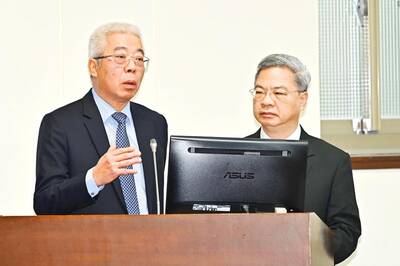
Taiwan has arranged for about 8 million barrels of crude oil, or about one-third of its monthly needs, to be shipped from the Red Sea this month to bypass the Strait of Hormuz and ease domestic supply pressures, CPC Corp, Taiwan (CPC, 台灣中油) said yesterday. The state-run oil company has worked with Middle Eastern suppliers to secure routes other than the Strait of Hormuz, through which about 20 percent of the world’s oil and liquefied natural gas typically passes, CPC chairman Fang Jeng-zen (方振仁) said at a meeting of the legislature’s Economics Committee in Taipei. Suppliers in Saudi Arabia have indicated they
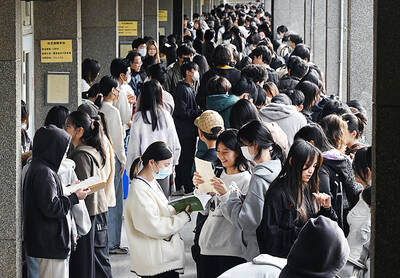
A global survey showed that 60 percent of Taiwanese had attained higher education, second only to Canada, the Ministry of the Interior said. Taiwan easily surpassed the global average of 43 percent and ranked ahead of major economies, including Japan, South Korea and the US, data from the Organisation for Economic Co-operation and Development (OECD) for 2024 showed. Taiwan has a high literacy rate, data released by the ministry showed. As of the end of last year, Taiwan had 20.617 million people aged 15 or older, accounting for 88.5 percent of the total population, with a literacy rate of 99.4 percent, the data
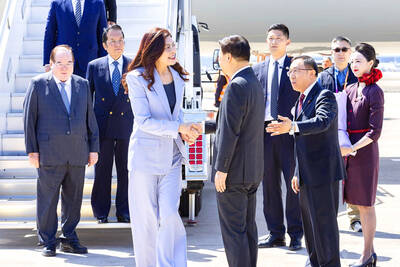
CCP ‘PAWN’? Beijing could use the KMT chairwoman’s visit to signal to the world that many people in Taiwan support the ‘one China’ principle, an academic said Chinese Nationalist Party (KMT) Chairwoman Cheng Li-wun (鄭麗文) yesterday arrived in China for a “peace” mission and potential meeting with Chinese President Xi Jinping (習近平), while a Taiwanese minister detailed the number of Chinese warships currently deployed around the nation. Cheng is visiting at a time of increased Chinese military pressure on Taiwan, as the opposition-dominated Legislative Yuan stalls a government plan for US$40 billion in extra defense spending. Speaking to reporters before going to the airport, Cheng said she was going on a “historic journey for peace,” but added that some people felt uneasy about her trip. “If you truly love Taiwan,

NEW LOW: The council in 2024 based predictions on a pessimistic estimate for the nation’s total fertility rate of 0.84, but last year that rate was 0.69, 17 percent lower An expected National Development Council (NDC) report expects the nation’s population to drop below 12 million by 2065, with the old-age dependency ratio to top 100 percent sooner than 2070, sources said yesterday. The council is slated to release its latest population projections in August, using an ultra-low fertility model, the sources said. The previous report projected that Taiwan’s population would fall to 14.37 million by 2070, but based on a new estimate of the total fertility rate (TFR) — the average number of children born to a woman over her lifetime — the population is expected to reach 12 million by


 RSS
RSS