


The downsizing of Taiwan’s armed forces over the past two decades has freed up lots of land, some of it prime real estate.
During the late 1990s, Taiwan was defended by around 450,000 servicemen and women, many of whom were conscripts. According to an article published in Foreign Policy just over a month ago, the Ministry of National Defense (MND) currently budgets for 188,000 personnel in all branches of the military, and almost one-fifth of those positions are unfilled.
In addition to the closure or relocation of several bases, almost all the low-rise neighborhoods in which soldiers and their families lived (known as military dependents’ villages, 眷村) have been cleared.
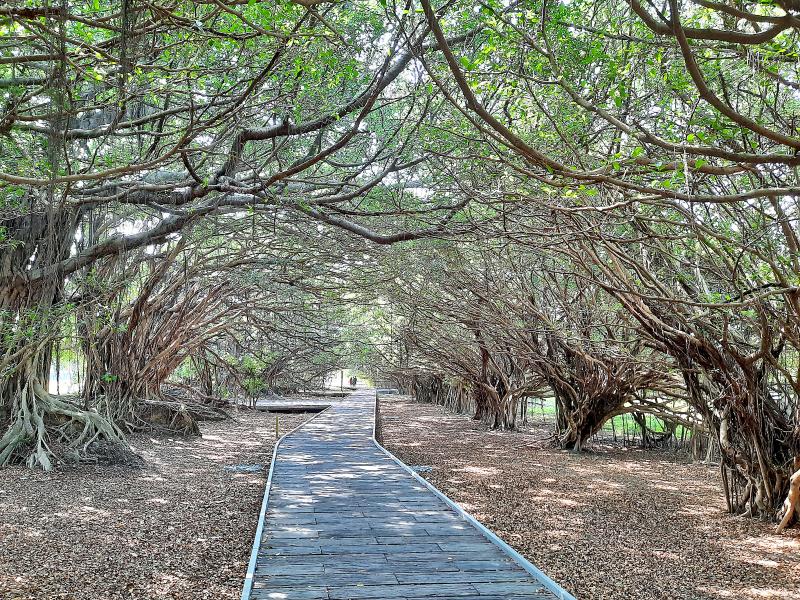
Photo: Steven Crook
Around 5km east of Tainan Railway Station (台南火車站), Pingshih Park (平實公園) covers one part of what used to be a sprawling military dependents’ village. Another part of the village has become a parking lot for Tainan TS Dream Mall (南紡購物中心), while developers have begun preselling residential units they plan to build on the remaining plots.
Scores of mature trees have been left in place, but many others are doomed. What could have become, if simply left alone, a “green lung” on a par with Aozihdi Forest Park (凹子底森林公園) in Kaohsiung, will instead be sliced up for profit. If Tainan needed extra houses, I’d find this more understandable. But there’s a huge number of unoccupied houses and apartments throughout Taiwan — an estimated 1.2 million, according to a 2017 Ministry of Interior survey.
When Tainan City Government announced the opening to the public of the former Changsheng Barracks (長勝營區) earlier this month, I decided I should see it sooner rather than later. Chinese-language media say that 63 percent of the 11.34-hectare site in Sinying District (新營區) will be opened up for commercial and residential projects. Development may well commence before the end of the year.
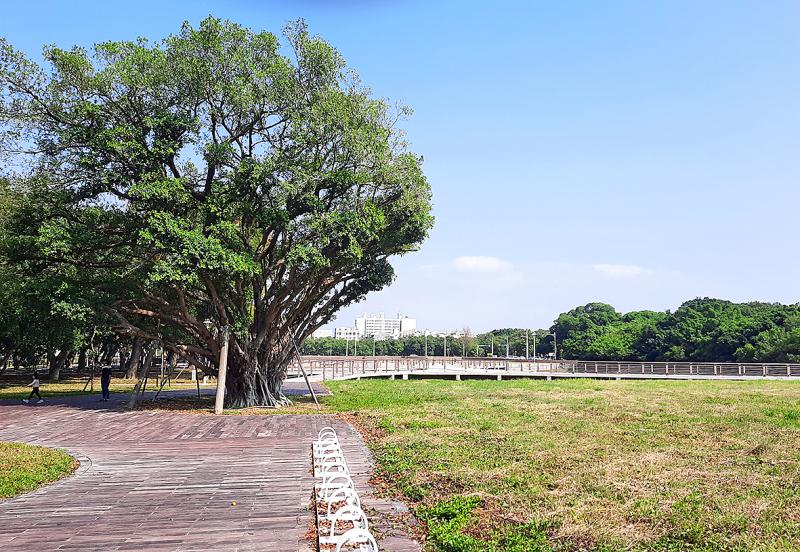
Photo: Steven Crook
Between the late 1970s and its closure in 1999, the base served as the main training ground for the army’s signal corps. Since the army moved out, the authorities have been planning, demolishing, and tidying.
Apart from the lack of public bathrooms — a very surprising omission — it’s as well done as most government projects in this country, which is to say pretty good. Officialdom does things right, more or less, if often very slowly and not all that cheaply. Of course, the government’s response to the ongoing COVID-19 crisis shows it’s capable of moving fast when lives depend on it. On the subject of COVID-19, the former Changsheng Barracks wasn’t crowded, even on a pleasant Sunday afternoon. You can enjoy a good stroll here without breaching “social distancing” etiquette.
According to the Liberty Times, the Chinese-language sister newspaper of Taipei Times, renovations and preparations cost a total NT$24.15 million. The same article points out that 37 trees were relocated, but the majority were left in place.
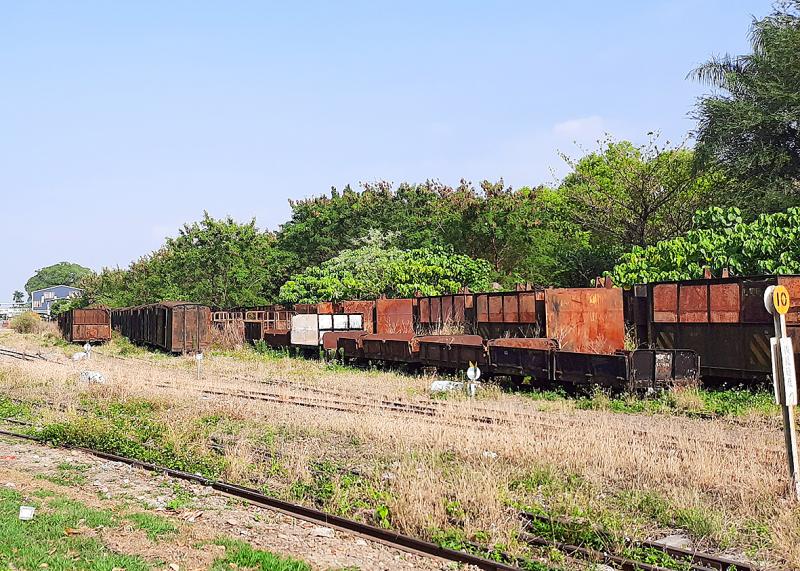
Photo: Steven Crook
For many visitors, the most interesting trees are the Chinese banyans that form Changsheng Barracks Green Tunnel (長勝營區綠色隧道). It’s said that this canopy was purposely created to hide tanks from aerial reconnaissance. I’m not sure that’s true. The M48 and CM-11 Brave Tiger tanks which used to be the backbone of Taiwan’s army are about 3.1m high, so it would have been a very tight fit.
Through the tunnel and beyond, a boardwalk has been added to protect the ground from erosion, and to ensure visitors don’t get their shoes muddy.
Mango trees provide much of the cover elsewhere on the former base. At the time of our visit, less than a week ago, the ground was littered with green and yellow mangoes, many part-eaten by squirrels. The single mahogany tree was a center of attention, thanks to its glorious yellow-green leaves.
The only buildings preserved on the site are a smallish rectangular structure formerly used to store ammunition, and two sentry boxes on the northern perimeter.
Back when this was an active military base, access was no doubt difficult. Nowadays, no fence encloses the site, and it’s open 24 hours daily.
At the center of the site, a substantial area has been excavated to create a flood detention basin. Local families make the most of the curving concrete platform that covers part of the basin. It’s an ideal spot for riding bikes or rollerblading.
A trip to Changsheng Barracks can be combined with a look at Sinying Taisugar Railway Cultural Park (新營鐵道地景公園), also known as Sinying Railway Scenic Park (新營鐵道地景公園). As with the old barracks, there’s no admission charge.
Like almost every other sugar-making facility in Taiwan, the refinery here ceased operations years ago. However, much of the industry’s narrow-gauge railway infrastructure remains in place. There are extensive sidings, plus lots of old rolling stock. Visitors are free to wander across the tracks and among the rusting wagons. If you decide to explore, do so cautiously. Hidden in the undergrowth, there’s plenty that can trip you up.
Steven Crook has been writing about travel, culture, and business in Taiwan since 1996. He is the co-author of A Culinary History of Taipei: Beyond Pork and Ponlai, and author of Taiwan: The Bradt Travel Guide, the third edition of which has just been published.
Google unveiled an artificial intelligence tool Wednesday that its scientists said would help unravel the mysteries of the human genome — and could one day lead to new treatments for diseases. The deep learning model AlphaGenome was hailed by outside researchers as a “breakthrough” that would let scientists study and even simulate the roots of difficult-to-treat genetic diseases. While the first complete map of the human genome in 2003 “gave us the book of life, reading it remained a challenge,” Pushmeet Kohli, vice president of research at Google DeepMind, told journalists. “We have the text,” he said, which is a sequence of
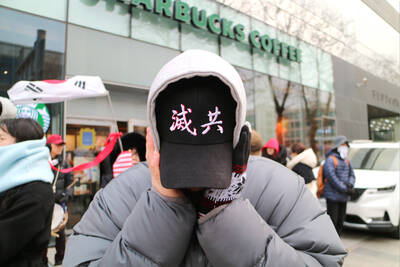
On a harsh winter afternoon last month, 2,000 protesters marched and chanted slogans such as “CCP out” and “Korea for Koreans” in Seoul’s popular Gangnam District. Participants — mostly students — wore caps printed with the Chinese characters for “exterminate communism” (滅共) and held banners reading “Heaven will destroy the Chinese Communist Party” (天滅中共). During the march, Park Jun-young, the leader of the protest organizer “Free University,” a conservative youth movement, who was on a hunger strike, collapsed after delivering a speech in sub-zero temperatures and was later hospitalized. Several protesters shaved their heads at the end of the demonstration. A
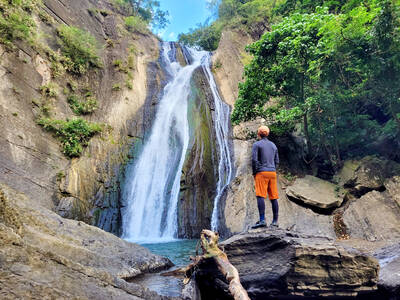
Every now and then, even hardcore hikers like to sleep in, leave the heavy gear at home and just enjoy a relaxed half-day stroll in the mountains: no cold, no steep uphills, no pressure to walk a certain distance in a day. In the winter, the mild climate and lower elevations of the forests in Taiwan’s far south offer a number of easy escapes like this. A prime example is the river above Mudan Reservoir (牡丹水庫): with shallow water, gentle current, abundant wildlife and a complete lack of tourists, this walk is accessible to nearly everyone but still feels quite remote.
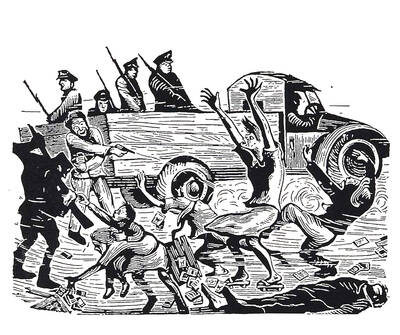
In August of 1949 American journalist Darrell Berrigan toured occupied Formosa and on Aug. 13 published “Should We Grab Formosa?” in the Saturday Evening Post. Berrigan, cataloguing the numerous horrors of corruption and looting the occupying Republic of China (ROC) was inflicting on the locals, advocated outright annexation of Taiwan by the US. He contended the islanders would welcome that. Berrigan also observed that the islanders were planning another revolt, and wrote of their “island nationalism.” The US position on Taiwan was well known there, and islanders, he said, had told him of US official statements that Taiwan had not


 RSS
RSS