


President William Lai (賴清德) has proposed a NT$1.25 trillion (US$40 billion) special eight-year budget that intends to bolster Taiwan’s national defense, with a “T-Dome” plan to create “an unassailable Taiwan, safeguarded by innovation and technology” as its centerpiece.
This is an interesting test for the Chinese Nationalist Party (KMT), and how they handle it will likely provide some answers as to where the party currently stands.
Naturally, the Lai administration and his Democratic Progressive Party (DPP) are for it, as are the Americans. The Chinese Communist Party (CCP) is not.
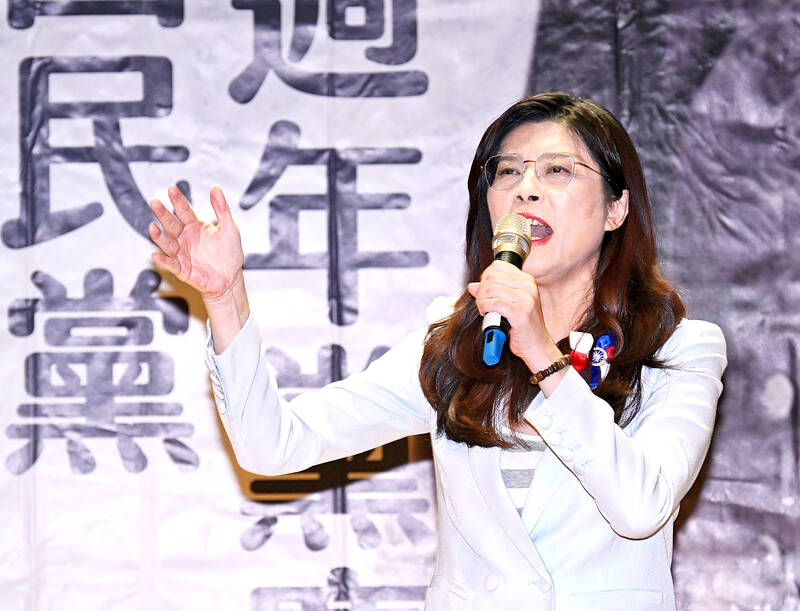
Photo: Fang Pin-chao, Taipei Times
The interests and agendas of those three are clear, but what about the KMT and the Taiwan People’s Party (TPP)? To pass the legislature, one of these parties will have to vote for it.
TPP Chairman Huang Kuo-chang (黃國昌) said of the bill that the public absolutely supports measures to increase the nation’s self-defense capabilities, but with budgets running to more than NT$1 trillion and the lackluster results of defense procurements, Lai must provide guarantees that the special budget would translate into a direct increase in combat readiness.
This suggests that the TPP is broadly in favor, but if the KMT moves against the bill, will Huang’s caucus follow his party’s ideology, or his coalition partners?
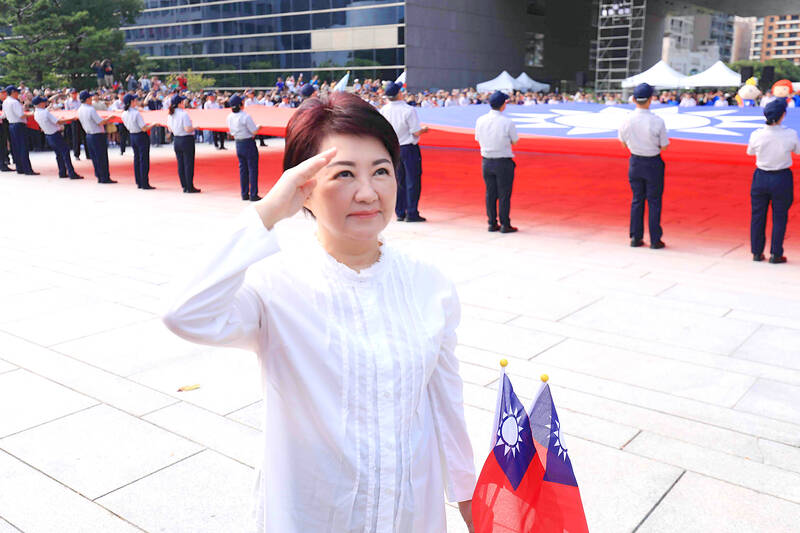
Photo: Tsai Shu-yuan, Taipei Times
National defense is a litmus test for the KMT. The party is internally split on how to handle the issue.
The party is largely unified on wanting to open negotiations with the CCP with an eye on establishing more peaceful relations.
Some in the KMT believe a strong military would put Taiwan in a stronger negotiating position.
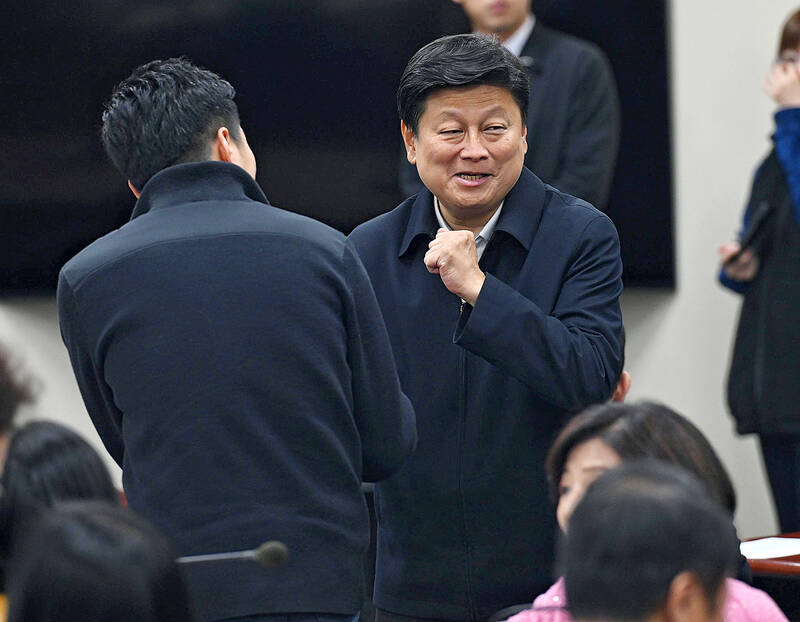
Photo: Chang Chia-ming, Taipei Times
Others view increasing defense spending as “provocative” to China and risks inviting an attack. They also believe that the US is using Taiwan as an “ATM” to make money through arms sales.
There are three key people to watch in how this plays out, and it is unclear which is more dominant in the party.
CHENG LI-WUN’S HARDLINERS
One is the new party Chairwoman Cheng Li-wun (鄭麗文), who calls Lai’s proposals “playing with fire” that risks turning Taiwan into an “ammo dump and munitions factory.” She is a committed Chinese nationalist and on taking office on Nov. 1 almost immediately sent her two vice chairs to China to open dialogue.
She is hoping to negotiate peace with Beijing and hopes to have something worked out prior to the 2028 national elections. She wants a concrete peace plan to pitch to the Taiwanese voters.
If her party’s caucus votes for this bill, she likely fears it would derail her plans.
In Taiwan, party chairs are traditionally powerful and the voice of the party. Cheng controls the mechanisms of power within the party, including the power of the purse and the nomination process for the party’s political candidates.
However, before her election as chair, Cheng was at most a mid-level player within the party and lacked a power base. The party is also severely strapped for cash, further limiting her options.
She is charismatic and determined, and it is possible she could use her authority as leader of the party to build support and rally the party behind her. It is not yet clear how much influence she has, and this is her first big test.
LU SHIOW-YEN’S ELECTABLE MODERATES
Another key player is Taichung Mayor Lu Shiow-yen (盧秀燕). She is the party’s most popular politician and is widely presumed to be the party’s next presidential candidate, which also makes her a standard-bearer for the party.
Lu represents a more widely popular and electable moderate voice in the party. Many in the party are openly concerned that Cheng’s views are too far outside mainstream opinion, and it could cost them in elections.
These figures could gravitate to Lu, who is a party heavyweight and has more support than Cheng.
Lai’s special budget plans put Lu in a quandary. If she takes stances too far from Cheng’s, she risks party unity and alienating the party leadership put in place by Cheng. To win in 2028, party unity and backing will be important.
However, if she sides too closely with Cheng, voters will be alienated.
She is aware that the KMT has a credibility problem with the public on national defense, and cannot appear weak or soft on the subject — and crucially must come across as sincere.
Former president Ma Ying-jeou (馬英九) talked strong on defense when campaigning and promised to increase defense spending to 3 percent of GDP, but once in office, he let spending wither to below 2 percent.
This caused many voters to distrust the KMT on defense. Lai won an unprecedented third straight term for the DPP by promising to continue his predecessor’s policies on China, foreign affairs and defense. The DPP is more trusted by independent voters to safeguard sovereignty, if at times not much else.
Lu has traditionally been supportive of national defense, and her initial response to Lai’s proposals were moderate. She reiterated her support for the military, but also called for legislative oversight to ensure the huge budget was spent effectively and not wasted.
However, in an interview with the KMT-friendly United Daily News, she sounded more critical and said she supports appropriately increasing the national defense budget, but it must not turn Taiwan into a “poor country with poor citizens,” or even “bankrupt the nation.” She also added: “Blindly pursuing increases in defense spending may even lead a country toward militarism and authoritarianism” and raised concerns about corruption, citing Ukraine’s current problems as an example — despite the fact that the allegedly corrupt officials were in the energy sector and not in the military sphere, which is closely monitored to ensure continued European support.
FU KUN-CHI’S CAUCUS
The third key player in getting Lai’s bill passed is KMT legislative caucus convener Fu Kun-chi (傅?萁). He is a powerful figure, and at times over the last year appeared to be more the leader of the party than former Chairman Eric Chu (朱立倫).
He and his caucus introduced deep cuts and freezes in this year’s defense budget. However, despite the cuts, the budget still increased overall.
Additionally, when under pressure during the recalls, they rolled back almost all of the defense budget freezes.
Fu is ideologically a hardliner, but he is more fond of money and power. He knows that if they entirely reject the special budget outright, this could hurt the party at the ballot box. There are also juicy defense contracts in the plan, which could be well received by constituents.
The KMT’s legislative caucus has opted to delay, refusing to put it on the agenda for now. They are reasonably demanding more detail on Lai’s plans, saying they do not want to hand him a blank check.
They are also stalling by demanding that Lai address the legislature — which Lai has suggested he is open to — but also that he must submit to questioning by lawmakers, which Lai is not open to. Fu has pragmatically suggested that Lai address the legislature, and that Lai hold a press conference and open himself to questions by the press instead of by lawmakers.
Others in the party are continuing to demand the Q&A in the legislature.
Another shoe yet to drop is a trade agreement with the US, which could skew the debate if the details are unpopular. Though the Americans view these issues as separate, many in Taiwan will not.
The KMT does not appear to have a clear direction on this yet. They will likely continue to stall while they work this out internally.
However it does shake out, it may give us a clearer idea of how much power Cheng really has over the party, and whose voices are the most influential.
Donovan’s Deep Dives is a regular column by Courtney Donovan Smith (石東文) who writes in-depth analysis on everything about Taiwan’s political scene and geopolitics. Donovan is also the central Taiwan correspondent at ICRT FM100 Radio News, co-publisher of Compass Magazine, co-founder Taiwan Report (report.tw) and former chair of the Taichung American Chamber of Commerce. Follow him on X: @donovan_smith.

Just after 6am, I walked up to the ticket gate at Taipei Main Station and entered the Taiwan Railway platform without scanning any ticket; instead, I flashed the Sanrio Fun Rail pass on my phone to the gate worker and was admitted. I found my train and prepared to board. My destination? This very same station. I was embarking on a 13-hour journey on one of two round-the-island trains operated by ezTravel. They run each day, one counterclockwise around the island and one clockwise. They differ in a number of ways from an ordinary Taiwan Railway train and can make for
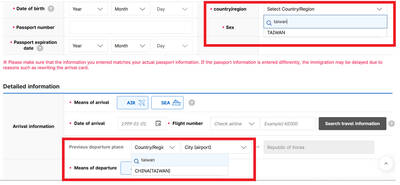
Jason Han says that the e-arrival card spat between South Korea and Taiwan shows that Seoul is signaling adherence to its “one-China” policy, while Taiwan’s response reflects a reciprocal approach. “Attempts to alter the diplomatic status quo often lead to tit-for-tat responses,” the analyst on international affairs tells the Taipei Times, adding that Taiwan may become more cautious in its dealings with South Korea going forward. Taipei has called on Seoul to correct its electronic entry system, which currently lists Taiwan as “China (Taiwan),” warning that reciprocal measures may follow if the wording is not changed before March 31. As of yesterday,
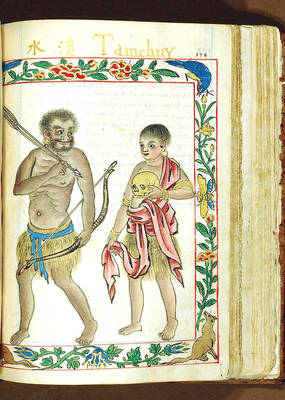
The Portuguese never established a presence on Taiwan, but they must have traded with the indigenous people because later traders reported that the locals referred to parts of deer using Portuguese words. What goods might the Portuguese have offered their indigenous trade partners? Among them must have been slaves, for the Portuguese dealt slaves across Asia. Though we often speak of “Portuguese” ships, imagining them as picturesque vessels manned by pointy-bearded Iberians, in Asia Portuguese shipping between local destinations was crewed by Asian seamen, with a handful of white or Eurasian officers. “Even the great carracks of 1,000-2,000 tons which plied
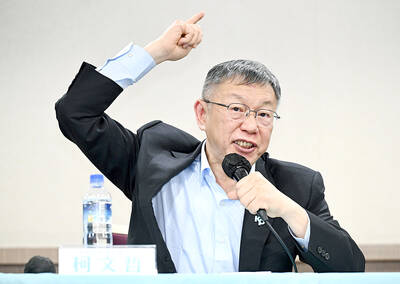
On Thursday, former Taipei mayor and founder of the Taiwan People’s Party (TPP) Ko Wen-je (柯文哲) was sentenced to 17 years in prison and had his civil rights suspended for six years over corruption, embezzlement and other charges. Seven others related to the case were also handed prison sentences, while two were found not guilty. It has been a bad week for the TPP. On Tuesday, prosecutors charged Chinese immigrant Xu Chunying (徐春鶯) with suspicion of taking part in Beijing-directed election interference. Xu has strong links to the TPP, which once offered her a party list legislator nomination. Tuesday also


 RSS
RSS