


The Directorate-General of Budget, Accounting and Statistics (DGBAS) told legislators last week that because the Chinese Nationalist Party (KMT) and Taiwan People’s Party (TPP) are continuing to block next year’s budget from passing, the nation could lose 1.5 percent of its GDP growth next year. According to the DGBAS report, officials presented to the legislature, the 2026 budget proposal includes NT$299.2 billion in funding for new projects and funding increases for various government functions. This funding only becomes available when the legislature approves it. The DGBAS estimates that every NT$10 billion in government money not spent shaves 0.05 percent off economic growth.
The pro-China parties are blocking funding intended for local governments, delaying childcare and other welfare programs, Childcare Policy Alliance spokesman Wang Chao-ching (王兆慶) said at a press conference last week. Because of the delay, Lin Yue-chin (林月琴) of the Democratic Progressive Party (DPP) pointed out at the press conference, the parents of the 100,000 or so children born last year will not receive their NT$100,000 subsidy. She also said that the pro-China parties and their supporters frequently criticize the young for not getting married and having babies, while attacking programs intended to encourage that.
DPP legislator Lai Hui-yuan (賴惠員) also warned that the budget impasse could disrupt the nationwide TPASS system for public transport. The subsidies will cease next month if not refunded. The KMT accused the DPP of “emotional blackmail” of the public. According to the DGBAS, the increase in funds for economic development affairs includes a subsidy for the Taiwan Railway Administration (TRA) to cover “the gap between TRA fares and reasonable costs,” a subsidy that will disappear if the budget is not passed. What will happen to the TRA then?

GRAPHIC: TT
Meanwhile the budget remains, unreviewed by the legislature. The proposed special budget for defense spending was blocked in committee again last week. The approving media noise over the US$11 billion weapons sale the administration of US President Donald Trump has proposed for Taiwan has masked the critical fact that several of those weapons systems acquisitions comes out of that budget. For example, the indispensable Taiwan Defense News Tracker pointed out on X that the first 60 Paladin self-propelled artillery systems come out of the special budget, while the second batch of 60 are planned for the annual defense budget. Obviously defense acquisition will suffer if the special budget is not passed.
In a Commercial Times interview, Premier Cho Jung-tai (卓榮泰) said that the budget impasse was created by the KMT and TPP demand that the revised version of the Act Governing the Allocation of Government Revenues and Expenditures (財政收支劃分法) be used, meaning that the Executive Yuan would have to rewrite the budget it had already submitted in August. He added that several local governments had already prepared their budgets based on that. Moreover, he observed, if the budget is not passed, then the government will have to use this year’s budget, meaning that important AI and flood control programs will be affected. Other programs for driving domestic demand, such as tourism and elder care, will also be hurt. Flood control projects cannot wait, he noted. They must be completed before the rains arrive in April and May.
The premier’s refusal to countersign the amendments to the fiscal allocation act, amendments intended by the KMT and TPP to shift government revenues to local governments, which are largely controlled by the KMT, has to be weighed against this budgetary pressure. Cho said of his refusal that the amendments would force the government to borrow an additional NT$264.6 billion (US$8.45 billion) next year to fund project-based subsidies for local government, driving total borrowing to NT$560 billion, or 17.1 percent of the total budget. That would exceed the mandated debt ceiling of 15 percent, he said.
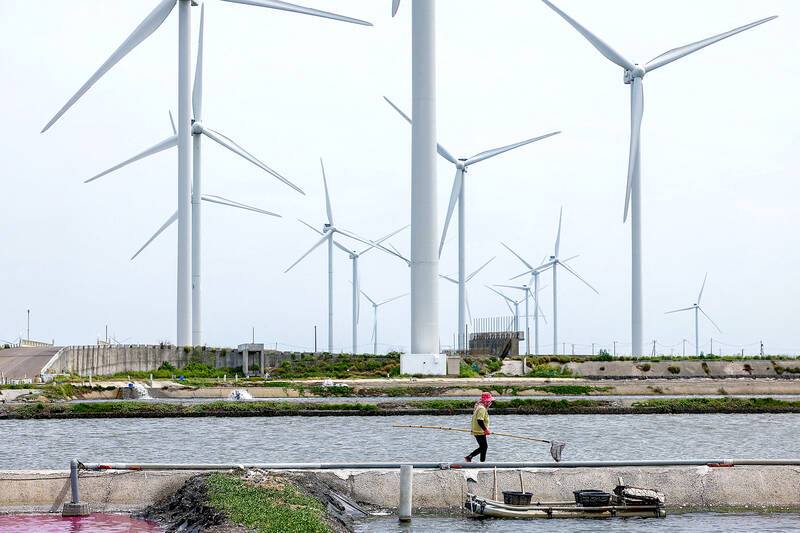
Photo: Reuters
KMT legislators have also demanded that the administration add military pay raises and increased retirement benefits for police, firefighters and coast guard personnel (all traditional KMT constituencies) already passed by the legislature. If not, they would continue to obstruct the budget. The KMT position is actual blackmail, not emotional blackmail, leveraging the future of the nation.
Constitutional issues swirl. The Executive, not the legislature, can only propose budgets. Premier Cho argued that letting the legislature force the government to borrow money to pay for amended budget distribution is tantamount to letting it set the budget. The premier’s seemingly unconstitutional refusal to sign the amendments to the revenue allocation act has to be seen against that background.
This simple fact is vital: the pro-China parties have forwarded little legislation intended for the general welfare of the people. The noise they make about spouses from the People’s Republic of China (PRC) and their rights, the defense budget, and similar, are intended to distract from this real, distressing fact. Where are their competing, concrete proposals on immigration, renewable energy, the birth rate decline, the distribution of wealth, wages and other pressing issues? The nation cannot reap the benefits of having a competing opposition party because it does not compete. Rather, it merely obstructs.
Photo: EPA
By the same token, the DPP spending proposal is a typical developmentalist state budget, created by planners for whom it is always the Chiang Ching-kuo (蔣經國) era. Its AI program is called the “Ten Major AI Infrastructure Projects,” an echo of the Ten Major Construction projects of the 1970s, which included the Taoyuan airport, the north-south highway and the port in Taichung. The DPP is also spreading infrastructure programs around different regions, to help with the unbalanced regional development of the nation, long a DPP goal.
Fortunately, the DPP’s renewable energy plan calls for renewable energy to reach 20 percent of power demand by the end of next year (it is roughly 13 percent for this year). That seems ambitious to many observers. As I noted a few weeks ago (“Institutional barriers to renewable success”, Oct. 13, 2025), if renewable energy is ever to take off, the central government will have to create offices at the local level to see programs through, especially in areas run by the KMT, where foot-dragging is the norm. That problem is a reminder that KMT obstructionism is not limited to the legislature, but permeates every level of national political life.
The budget battle conceals that in these revolutionary times, this is a business-as-usual budget, funding large projects and handing out subsidies. According to the DGBAS, 27.4 percent of it is going to social welfare spending, while defense spending remains too low at 18.1 percent. Both the DPP subsidy proposals for births, and the pro-China parties’ proposed “Taiwan Future Accounts” will have little effect on the birth rate, even if the latter passes constitutional muster.
KMT obstructionism does more than stop the nation from advancing while advancing the interests of Beijing. The wrangling over debt laws and the constitution highlights the limits of a debate whose borders end at taxing the nation’s wealthy. As long as the nation debates the constitutionality of this or that, it is not debating how to tax the rich.
Notes from Central Taiwan is a column written by long-term resident Michael Turton, who provides incisive commentary informed by three decades of living in and writing about his adoptive country. The views expressed here are his own.

Yesterday, the Democratic Progressive Party (DPP) nominated legislator Puma Shen (沈伯洋) as their Taipei mayoral candidate, the Chinese Nationalist Party (KMT) put their stamp of approval on Wei Ping-cheng (魏平政) as their candidate for Changhua County commissioner and former legislator Tsai Pi-ru (蔡壁如) of the Taiwan People’s Party (TPP) has begun the process to also run in Changhua, though she has not yet been formally nominated. All three news items are bizarre. The DPP has struggled with settling on a Taipei nominee. The only candidate who declared interest was Enoch Wu (吳怡農), but the party seemed determined to nominate anyone
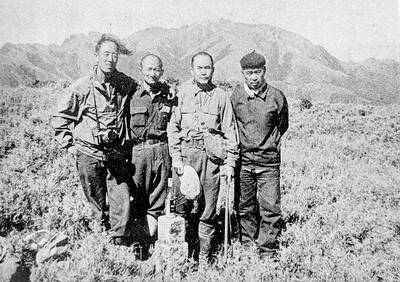
May 18 to May 24 Gathered on Yangtou Mountain (羊頭山) on Dec. 5, 1972, Taiwan’s hiking enthusiasts formally declared the formation of the “100 Peaks Club” (百岳俱樂部) and unveiled the final list of mountains. Famed mountaineer Lin Wen-an (林文安) led this effort for the Chinese Alpine Association (中華山岳協會). Working with other experienced climbers, he chose 100 peaks above 10,000 feet (3,048m) that featured triangulation points and varied in difficulty and character. The list sparked an alpine hiking craze, inspiring many to take up mountaineering and competing to “conquer” the summits. A common misconception is that the 100 Peaks represent Taiwan’s 100 tallest
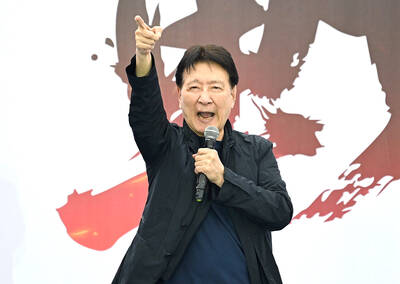
In a sudden move last week, opposition lawmakers of the Chinese Nationalist Party (KMT) and Taiwan People’s Party (TPP) passed a NT$780 billion special defense budget as a preemptive measure to stop either Chinese leader Xi Jinping (習近平) or US President Donald Trump from blocking US arms sales to Taiwan at their summit in Beijing, said KMT heavyweight Jaw Shaw-kong (趙少康), speaking to the Taipei Foreign Correspondents Club on Wednesday night in Taipei. The 76-year-old Jaw, a political talk show host who ran as the KMT’s vice presidential candidate in 2024, says that he personally brokered the deal to resolve
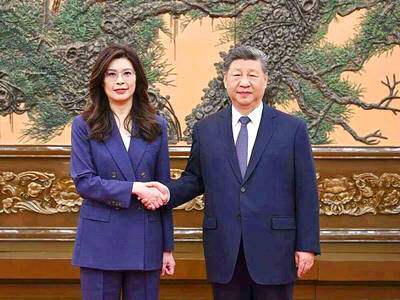
The Chinese Nationalist Party (KMT), alongside their smaller allies the Taiwan People’s Party (TPP), are often accused of acting on behalf of the Chinese Communist Party (CCP). Some go so far as to call them “traitors.” It is not hard to see why. They regularly pass legislation to stymie the normal functioning of the ruling Democratic Progressive Party’s (DPP) administration, and they have yet to pass this year’s annual budget. They slashed key elements of the government’s proposed NT$1.25 trillion (US$40 billion) special military budget, and in the smaller NT$780 billion package they did pass, it is riddled with provisions that


 RSS
RSS