


Growing up in a rural, religious community in western Canada, Kyle McCarthy loved hockey, but once he came out at 19, he quit, convinced being openly gay and an active player was untenable.
So the 32-year-old says he is “very surprised” by the runaway success of Heated Rivalry, a Canadian-made series about the romance between two closeted gay players in a sport that has historically made gay men feel unwelcome.
Ben Baby, the 43-year-old commissioner of the Toronto Gay Hockey Association (TGHA), calls the success of the show — which has catapulted its young lead actors to stardom -- “shocking,” and says viewers have bought into its authentic portrait of a relationship.

Photo: AP
McCarthy and Baby are not alone — Heated Rivalry is a veritable cultural phenomenon. The show, an adaptation of a series of hockey-themed queer romance novels by Rachel Reid, charts the budding careers and secret relationship of two young hockey stars — one Canadian, one Russian — over a series of years.
After premiering on the Canadian streaming platform Crave in late November, the series hit HBO Max and took off, becoming one of its most popular shows by Christmas.
Variety called it “the biggest TV surprise” of last year, and the show has even reportedly drawn a massive audience in China, where fans are watching pirated episodes.
The stars, Connor Storrie and Hudson Williams, were unknown, struggling actors before being cast.
Now, they are being mobbed by fans, joining A-listers on red carpets like at the Golden Globes, and have made their late night talk show debuts.
“Our expectations were kind of nonexistent,” Storrie said on the Globes red carpet. “For it to turn out so good and also go on HBO and be involved in this level is unreal.”
’TOXIC, HOMOPHOBIC’
Writing in Maclean’s magazine in December, Reid — who is Canadian — said the novels were inspired by her “lifelong love of hockey, but also an awareness of the problems with the sport’s culture more broadly.”
“I thought a lot about how difficult it would be to be a closeted pro player.”
For McCarthy, hockey was his first love — until it wasn’t.
“My brother played, my sister played, my dad coached us all,” he said. “Hockey was 100 percent of my life.”
But by age 12, as he began to realize he was gay, McCarthy became uncomfortable in a sport he said had a “toxic, homophobic” culture.
Quitting hockey at 19 “was awful,” he said.
“I love the game and didn’t want to walk away from it,” he said. But his gear sat unused in his garage “for eight, nine years.”
Then he reconnected with the sport through a Vancouver-based LGBTQ+ hockey association now called The Cutting Edges, where he is president.
’SAFE SPACE’
Baby grew up in the northern Ontario city of Timmins, which, like many small Canadian communities, has a deeply rooted hockey culture.
He said he feared playing as a child, because he “instinctively” knew it “wouldn’t have been a safe space.”
After moving to Toronto as a teenager in the late 90s and discovering the TGHA, Baby took up the sport.
Hockey has made advances toward being more inclusive over the last 20 years, he said, but noted progress has been uneven.
He said the NHL’s decision in 2023 to ban the use of rainbow-colored Pride tape on sticks was a “fiasco.”
The league ultimately rescinded the ban due to player and public outrage.
BROADER IMPACT?
The NHL is alone among the so-called Big Four male professional sports leagues with no active or retired players who have come out as gay.
Luke Prokop, a prospect drafted in 2020 who is gay, has not yet appeared in an NHL game.
For McCarthy, the absence of an openly gay NHL player is “100 percent” due to persistent issues with hockey culture.
Baby nevertheless credited the NHL with quieter efforts to make LGBT fans feel welcome and applauded the league’s apparent embrace of << “There are so many ways to get hooked on hockey and, in the NHL’s 108-year history, this might be the most unique driver for creating new fans,” the league said last month. Baby noted that popular podcasts hosted by “straight hockey bros” are offering commentary on each episode. “Queer characters are often flat, one-sided and stereotypical,” but the leads in Heated Rivalry are “complex,” he said. “They’re rich, they’re interesting. They’re the antidote to stereotypes.” Asked whether he believed Heated Rivalry could make hockey more welcoming for the LGBTQ community, McCarthy said: “I hope it can, I don’t know that it will.”

The small platform at Duoliang Train Station in Taitung County’s Taimali Township (太麻里) served villagers from 1992 to 2006, but was eventually shut down due to lack of use. Just 10 years later, the abandoned train station had become widely known as the most beautiful station in Taiwan, and visitors were so frequent that the village had to start restricting traffic. Nowadays, Duoliang Village (多良) is known as a bit of a tourist trap, with a mandatory, albeit modest, admission fee of NT$10 giving access to a crowded lane of vendors with a mediocre view of the ocean and the trains
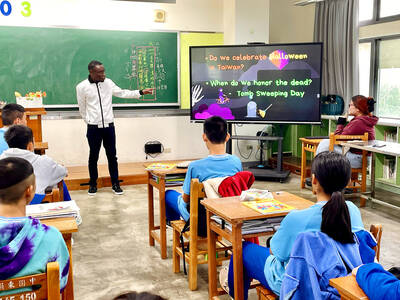
For many people, Bilingual Nation 2030 begins and ends in the classroom. Since the policy was launched in 2018, the debate has centered on students, teachers and the pressure placed on schools. Yet the policy was never solely about English education. The government’s official plan also calls for bilingualization in Taiwan’s government services, laws and regulations, and living environment. The goal is to make Taiwan more inclusive and accessible to international enterprises and talent and better prepared for global economic and trade conditions. After eight years, that grand vision is due for a pulse check. RULES THAT CAN BE READ For Harper Chen (陳虹宇), an adviser
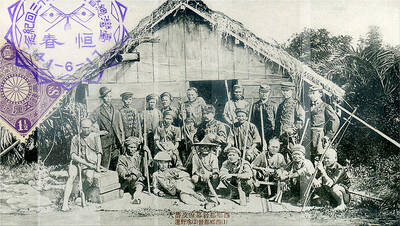
Traditionally, indigenous people in Taiwan’s mountains practice swidden cultivation, or “slash and burn” agriculture, a practice common in human history. According to a 2016 research article in the International Journal of Environmental Sustainability, among the Atayal people, this began with a search for suitable forested slopeland. The trees are burnt for fertilizer and the land cleared of stones. The stones and wood are then piled up to make fences, while both dead and standing trees are retained on the plot. The fences are used to grow climbing crops like squash and beans. The plot itself supports farming for three years.

President William Lai (賴清德) on Nov. 25 last year announced in a Washington Post op-ed that “my government will introduce a historic US$40 billion supplementary defense budget, an investment that underscores our commitment to defending Taiwan’s democracy.” Lai promised “significant new arms acquisitions from the United States” and to “invest in cutting-edge technologies and expand Taiwan’s defense industrial base,” to “bolster deterrence by inserting greater costs and uncertainties into Beijing’s decision-making on the use of force.” Announcing it in the Washington Post was a strategic gamble, both geopolitically and domestically, with Taiwan’s international credibility at stake. But Lai’s message was exactly


 RSS
RSS