


Internal documents from a Chinese artificial intelligence (AI) company indicated that China has been using the technology to intervene in foreign elections, including propaganda targeting Taiwan’s local elections next year and presidential elections in 2028, a Japanese newspaper reported yesterday.
The Institute of National Security of Vanderbilt University obtained nearly 400 pages of documents from GoLaxy, a company with ties to the Chinese government, and found evidence that it had apparently deployed sophisticated, AI-driven propaganda campaigns in Hong Kong and Taiwan to shape public opinion, the Yomiuri Shimbun reported.
GoLaxy provides insights, situation analysis and public opinion-shaping technology by conducting network surveillance and identifying key public opinion influencers. It analyzes those people’s psychological tendencies, values and linguistic characteristics, including specific dialect expressions, and creates a fictional character with similar traits, the paper reported.
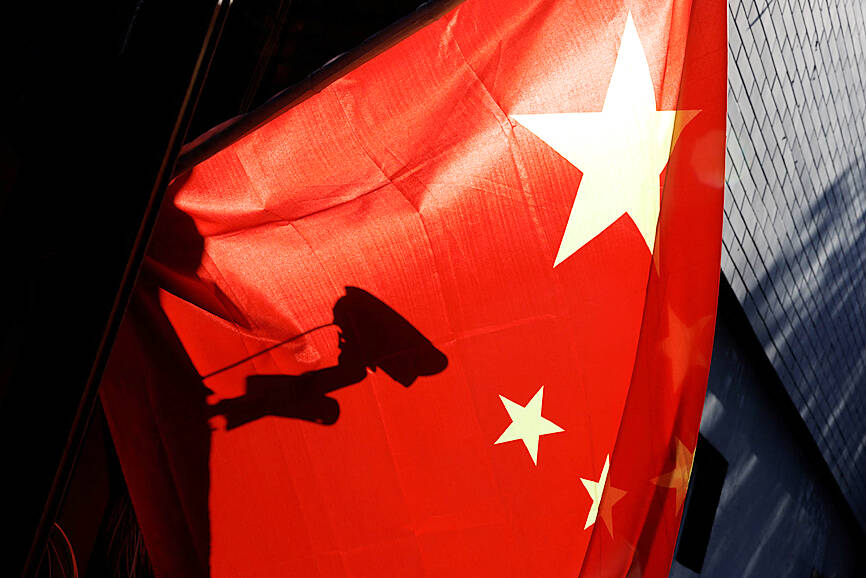
Photo: Reuters
The fictional characters not only unilaterally spread disinformation, but could also engage in online discussions with their target audience to influence them, it said.
A person working in Taiwan’s AI industry told the newspaper that given the advancement in AI, it is nearly impossible to identify AI-generated characters on social media.
GoLaxy denied it was creating any sort of “bot network or psychological profiling,” or that it had done any work related to Hong Kong or other elections, the New York Times reported in August.
The Yomiuri Shimbun report said that as Chinese President Xi Jinping’s (習近平) administration aims to block President William Lai (賴清德) from getting re-elected in 2028, public opinion warfare in the nine-in-one local elections next year — often seen as the prelude to the presidential election — is expected to be intensified.
The Mainland Affairs Council’s advisory committee during a Dec. 1 meeting raised deep concerns regarding that issue, and called for enhanced efforts to combat misinformation online and to improve the public’s media literacy.
The Yomiuri Shimbun also discussed how China might have interfered in Taiwan’s previous elections, citing three leaked audio files circulating online in October.
The audio files allegedly contained discussions between the head of the Chinese People’s Liberation Army (PLA) Strategic Support Force No. 56 Research Institute and the manager of a Beijing-based data analytics company before the 2018 Kaohsiung mayoral election, the newspaper cited a national security official as saying.
“This election is very important, and even though he [then-mayoral candidate Han Kuo-yu (韓國瑜), now legislative speaker] might lose, he will eventually get elected,” the voice allegedly belonging to the No. 56 Research Institute head said.
The other person, allegedly the data analytics company manager, said: “Our data volume is increasing, with Facebook accounts in Taiwan increasing from 5.8 million to 60 million, and will increase to 100 million.”
The newspaper also reported that the national security official did not directly use the word “intervention,” but implied that the PLA had intended to intervene to help Han win and sought assistance from the company.
The conversations on the audio files also implied that China had prepared 20 million yuan (US$3 million) for work related to the Kaohsiung mayoral election in 2018 and the 2020 presidential election.
When Han unexpectedly won as mayor and online search volume about him had skyrocketed, there were speculations about public opinion manipulation.

‘NO SECURITY RISK’: The Railway Bureau reassured the public that the technicians’ activities were limited to technical guidance and did not involve sensitive systems The Railway Bureau yesterday said it had invited eight Chinese technicians to assist with an airport MRT construction project. The bureau issued the confirmation after an Internet user said Chinese nationals had entered the construction zone of Taiwan Taoyuan International Airport’s Terminal 3 project. They asked why “individuals from an enemy state” were allowed access to such a major national infrastructure project, which raised serious concerns over Taiwan’s industrial safety, sensitive systems and information security. The bureau’s Northern Region Engineering Branch Office said subcontractor Taiwan Handle Industrial Co (台灣手把工業) of the Taoyuan airport MRT’s “Contract No. CU05 Project A14 Station Civil, MEP &

A US uncrewed surface vessel (USV) encountered multiple Chinese warships during an autonomous transit of the Taiwan Strait, US defense company Seasats said in a statement on Wednesday. Seasats announced that a Lightfish USV had completed the first autonomous transit of the Taiwan Strait. Over five days, the USV traversed the entire length of the Strait while constantly monitoring surface vessel traffic, the company said. The Lightfish encountered multiple Chinese warships, one of which was a Chinese People’s Liberation Army Navy (PLAN) Type 056 corvette, it said. The Chinese vessels were operating “well within Taiwan’s exclusive economic zone without transmitting their identity via the

Taiwan is still in the process of assessing the possibility of recruiting workers from Eswatini, the Ministry of Foreign Affairs said yesterday, adding that its goal is to help Eswatini upgrade its vocational training centers. If there are plans to recruit workers from Eswatini, safeguarding national security, protecting public health and ensuring the employment rights of Taiwanese would be prerequisites, Department of West Asian and African Affairs Director-General Yen Chia-liang (顏嘉良) told a news conference. Key considerations would also include filling labor shortages in specific industries, and fostering bilateral professional and technical exchanges, he said. Yen was asked about the progress of labor
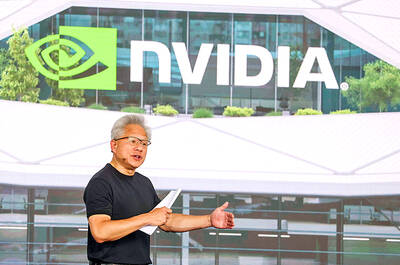
‘BOOMING’: ’ The number of partners we have here is incredible. You can see from their stock prices. They’re doing so well, they’re so happy,’ Jensen Huang said Nvidia Corp’s spending in Taiwan has ballooned to about US$150 billion a year, 10 times the US$10 billion to US$15 billion the company spent five years ago, Nvidia chief executive officer Jensen Huang (黃仁勳) said yesterday, suggesting Taiwan’s strategic importance in the global artificial intelligence (AI) supply chain. “Taiwan is the epicenter of the AI revolution. This is where the chips come, packaging comes. This is where the systems are made. This is where AI supercomputers were created,” Huang said at a meeting for the company’s employees in Beitou-Shilin Technology Park (北投士林科技園區) in Taipei, the planned site of Nvidia’s Taipei headquarters. “Taiwan


 RSS
RSS