


Pingtung County-based Tjimur Dance Theatre (蒂摩爾古薪舞集) has had a busy year at home and abroad.
They took their 2017 production, Varhung — Heart to Heart (Varhung — 心事誰人知), to the Vancouver International Dance Festival in March, to the Brighton Festival in the UK in May, to the Dance Bridges Festival in Kolkata, India, in August, as well as hosting members of the Kashiki Dance Academy from Odissi, India, and other performers at the company’s Tjimur Arts Festival in July, in addition to their outreach programs at schools and communities around Taiwan.
All the while they have been working on the latest creation of choreographer Baru Madiljin, ai~sa sa (哎~撒撒), which premiers this weekend at the Pingtung Performing Arts Center before two shows in Taipei next week.

Photo courtesy of Tjimur Dance Theatre
The 60-minute production takes a light-hearted look at contemporary Paiwan society, especially how new expressions have become part of everyday life crept into the Paiwan language.
Madiljin says “ai~sa sa” (哎撒撒) is a new expression, used as an interjection to laugh at one’s own attitude, a way of saying “get over yourself.” It can be a gasp of surprise, or a spur to “shake it off.”
While he wanted to explore how Paiwan society is changing as more people move from the old mountain communities into more urban areas, he was also inspired by a CD of French music that he found abandoned on a Paris street.

Photo courtesy of Tjimur Dance Theatre
The music made him wonder what it is that humans need and desire and he decided that we all crave love, which can bring us together, get us laughing, but also can bring tears, pain and grief.
“One must undergo all human emotions,” Madiljin wrote. “You have to peel away each layer to see what lies beneath.”
Those emotions can be expressed in sounds — and in movement.
■ Tonight and tomorrow at 7:30pm, Sunday at 2:30pm
■ Pingtung Performing Arts Center ( 屏東演藝廳-音樂廳), 4-17 Minsheng Rd, Pingtung City (屏東市民生路4-17號);
■ Friday and Saturday next week at the National Experimental Theater (國家戲劇院實驗劇場), 21-1 Zhongshan N Rd, Taipei City (台北市中山南路21-1號)
■ Only tickets left for this weekend’s performances are the “sponsor-level” NT$2,500 seats. Tickets for the two Taipei shows are NT$600 and NT$2,500; available at the NTCH and Eslite ticket desks, online at www.artsticket.com and at convenience store ticket kiosks

Ajay Verma, a consultant gastroenterologist at Kettering general hospital in Northamptonshire, says our gut is a “complex machine.” “It is constantly providing us with the nutrition we need, initially to grow and develop, and then for us to survive, thrive and repair from injury and illness.” How can we keep it functioning well? Put simply: “Make sure what you put into it is balanced, and that you clear out its waste products adequately,” Verma says. “In a general gastroenterology clinic, the most common conditions we see are irritable bowel syndrome (IBS), gastroesophageal reflux disease, inflammatory bowel disease and constipation,” says Nisha

And so, in the wake of US President Donald Trump’s trip to the People’s Republic of China (PRC), all the experts on the Strait of Hormuz suddenly became experts on US-China-Taiwan relations. The Internet has certainly expanded human knowledge. Lots of these sudden experts made noise this week about Trump’s words after the meeting with PRC dictator Xi Jin-ping (習近平). Trump is going to sell out Taiwan! Longtime Taiwan commentator J. Michael Cole summed the situation up neatly in the Guardian: “We need to keep in mind that he has a tendency to say many things — sometimes contradicting himself within

Last week US President Donald Trump was asked by a reporter whether he would speak on the phone to the President of Taiwan. “l’ll speak to him. I speak to everybody. We have that situation very well in hand,” Trump said. This marked the second time in a couple of weeks he had said he would talk to the President of Taiwan. In 2016 he famously took a call from then-president Tsai Ing-wen (蔡英文), when he was president-elect. Despite warnings that the apocalypse was nigh because of a phone call, the world quickly forgot about the conversation between two democratically-elected presidents.
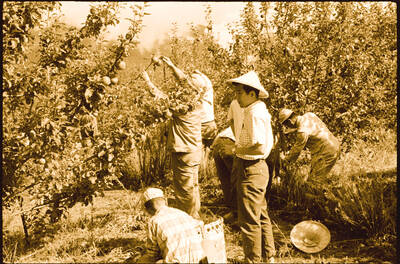
May 25 to May 31 Few believed that apples could be cultivated on a commercial scale in Taiwan’s high mountains. When horticulturalist Cheng Chao-hsiung (程兆熊) first proposed the idea in 1955, both American and Taiwanese colleagues dismissed it as implausible, arguing that temperate fruit could not be reliably grown on a subtropical island, especially on rugged terrain. However, it was this terrain in the Central Mountain Range where many Chinese Civil War veterans were resettled in the late 1950s. With limited job prospects and no family in Taiwan, they were placed on cooperative farms aimed toward self-sufficiency. Some say the conditions


 RSS
RSS