


In the beginning of A Sun (陽光普照), driving instructor A-wen (Chen Yi-wen, 陳以文) argues with his wife Qin (Samantha Ko, 柯淑勤) about their delinquent son, who is about to be sent to a juvenile correction facility.
“I hope they lock him up until he gets old, lock him up until he dies,” A-wen exclaims.
Of course A-wen isn’t cold-blooded. The complex combination of emotions — anger, disappointment, grief, sadness, love — of a repressed man who avoids facing his feelings by pretending he doesn’t care is evident in that one line.
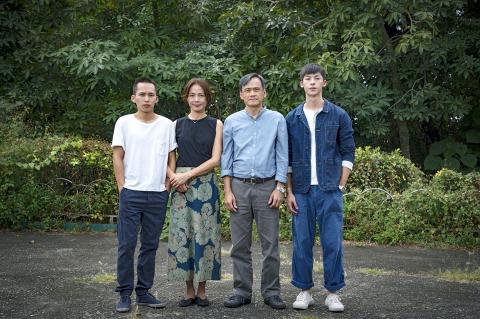
Photo courtesy of atmovies.com
Qin provides the contrast. She’s the one facing the family issues directly, but she also remains mostly stoic and matter-of-fact, taking whatever life throws at the family even though she’s obviously exhausted.
This kind of family dynamic is fairly common in Taiwanese society. Although every family member deeply cares for each other, they shut each other out and even say hurtful things, often preferring to secretly “help” in ways that cause even more discord. A-wen’s character exemplifies this archetype — frail, crooked and wrinkled but unwilling to bend even a little bit.
The bulk of the action and dramatics revolves around the son A-he (Wu Chien-ho, 巫建和), who is as inept as his father at expressing himself, preferring to solve problems through violence. He frequently says “I’m fine,” when he’s clearly not. Wu also does a superb job with the troubled character’s development over the four years in which the film takes place, serving as a believable catalyst for the entire film’s events.
However, it is Chen and Ko’s subtle yet powerful performances that drive the suffocating tension that carries the two-and-a-half hour film and makes this ordinary story about ordinary people shine. It takes top-notch acting to make such a layered drama work, and the supporting actors such as Liu Kuan-ting (劉冠廷), who plays A-he’s old delinquent buddy and the movie’s “villain,” also hold their own.
This is the latest work by acclaimed director Chung Mong-hong (鍾孟宏), who won a Golden Horse for best director for the 2010 The Fourth Portrait (第四張畫), which is also about troubled youth. The cinematography is rich and vibrant, making masterful use of darkness and light, especially sunlight — whether soft or blinding — echoing the title of the film.
The sun, although warm and life-sustaining, can also burn. What if there are no more shadows to protect us from the burning sun? laments A-he’s handsome and successful elder brother A-hao (Greg Hsu, 許光漢). Although he doesn’t have a major role in the movie, he inadvertently becomes the “sun” that eats up the shadows and forces everything into the open.
No matter how loving a family is, very few can be completely open with each other, each harboring some deep and often dark secret. Sometimes it takes pain and misfortune to expose them, and the family either disintegrates or becomes closer through the process.
Even though the movie is 155-minutes long, there are parts that could have been elaborated on. For example, perhaps A-hao could have had a more prominent role, as his stark contrast to A-he as the family’s “golden boy,” and clearly the father’s favorite, would have made for some interesting development.
Although Qin plays the strong motherly role well, the story is still more about father-and-son as well as the ties between fellow delinquents and gangsters, namely male-to-male relationships. There are also some intriguing female bonds in the story, such as A-he’s young and pregnant girlfriend Xiaoyu (Wu Tai-ling, 吳岱凌) whom Qin takes under her wing, but this part is left largely unexplored.
But that’s just nitpicking. Chung handles the subtleties and complexities of humanity extremely well, and A Sun will probably win many awards come Golden Horse time and leave its mark among the masterpieces of Taiwanese cinema.


The US war on Iran has illuminated the deep interdependence of Asia on flows of oil and related items as raw materials that become the basis of modern human civilization. Australians and New Zealanders had a wake up call. The crisis also emphasizes how the Philippines is a swatch of islands linked by jet fuel. These revelations have deep implications for an invasion of Taiwan. Much of the commentary on the Taiwan scenario has looked at the disruptions to world trade, which will be in the trillions. However, the Iran war offers additional specific lessons for a Taiwan scenario. An insightful
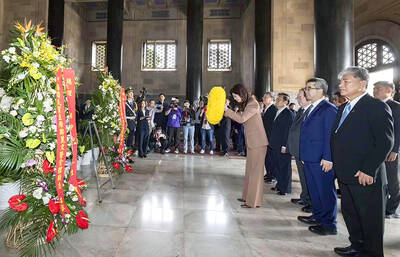
The problem with Marx’s famous remark that history repeats itself, first as tragedy, the second time as farce, is that the first time is usually farce as well. This week Chinese Nationalist Party (KMT) Chair Cheng Li-wun (鄭麗文) made a pilgrimage to the People’s Republic of China (PRC) “to confer, converse and otherwise hob-nob” with Chinese Communist Party (CCP) officials. The visit was an instant international media hit, with major media reporting almost entirely shorn of context. “Taiwan’s main opposition leader landed in China Tuesday for a rare visit aimed at cross-strait ‘peace’”, crowed Agence-France Presse (AFP) from Shanghai. Rare!

Polling data often confirms what we expect, but sometimes it throws up surprises. When examined over time, some patterns appear that speak to something bigger going on. In this column, whenever possible, Formosa’s polls are used. Despite the sometimes cringeworthy antics of Formosa’s Chairman, Wu Tzu-Chia (吳子嘉), the data produced includes detailed breakdowns crucial for analysis. It has also been conducted monthly 11-12 times a year for many years with many of the same questions, allowing for analysis over time. When big shifts do occur between one month and the next it is usually in response to some event in
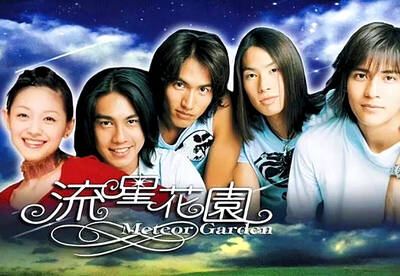
April 6 to April 13 Few expected a Japanese manga adaptation featuring four tall, long-haired heartthrobs and a plucky heroine to transform Taiwan’s television industry. But Meteor Garden (流星花園) took the nation by storm after premiering on April 12, 2001, single-handedly creating the “idol drama” (偶像劇) craze that captivated young viewers across Asia. The show was so successful that Japan produced its own remake in 2005, followed by South Korea, China and Thailand. Other channels quickly followed suit, with more than 50 such shows appearing over the following two years. Departing from the melodramatic


 RSS
RSS