


The US war on Iran has illuminated the deep interdependence of Asia on flows of oil and related items as raw materials that become the basis of modern human civilization. Australians and New Zealanders had a wake up call. The crisis also emphasizes how the Philippines is a swatch of islands linked by jet fuel. These revelations have deep implications for an invasion of Taiwan.
Much of the commentary on the Taiwan scenario has looked at the disruptions to world trade, which will be in the trillions. However, the Iran war offers additional specific lessons for a Taiwan scenario.
An insightful Twitter post by former US treasury secretary Evan A. Feigenbaum uses Indonesia to illustrate the dilemma many Asian nations are facing. Indonesia’s president recently announced ambitious fuel subsidies and a school lunch program, but now faces an ugly choice between scrapping these programs and taking a political hit, or continuing them and blowing up the budget, affecting financial markets. The choice is all the more difficult because, like Taiwan, Indonesia has statutory limits on how much debt it can take on.
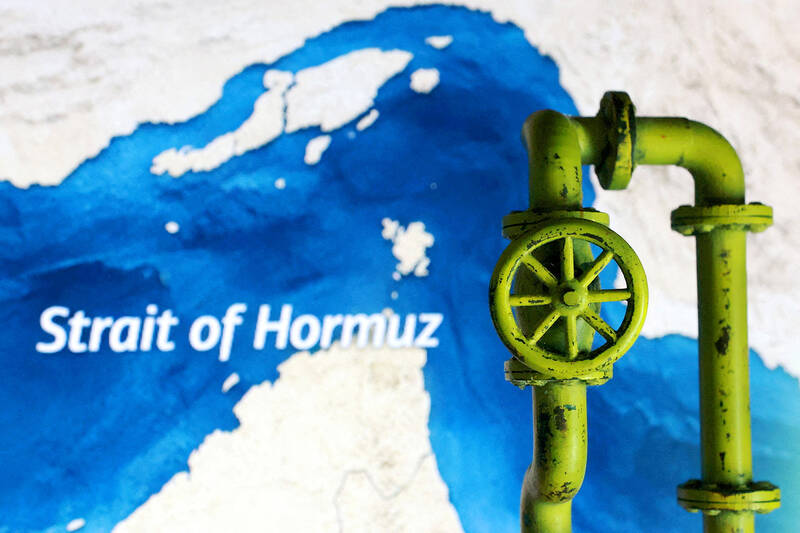
Photo: Reuters
IMPACT ON ASIA
The Iran war has been devastating for Southeast Asia. The Philippines announced a national fuel emergency soon after the war started, moving its schools and government offices to 4-day weeks. Its airlines have eliminated certain routes. Vietnam is now engaged in fuel rationing. Myanmar has banned driving on alternate days.
It’s not just oil for gasoline and power. Jet fuel is also a key component of modern transportation systems, especially for archipelagic states like Indonesia and the Philippines. In a Taiwan scenario, major producers, including the US, the People’s Republic of China (PRC), Russia and Japan, will all be at war with each other. Indeed, Taiwan itself produces jet fuel.
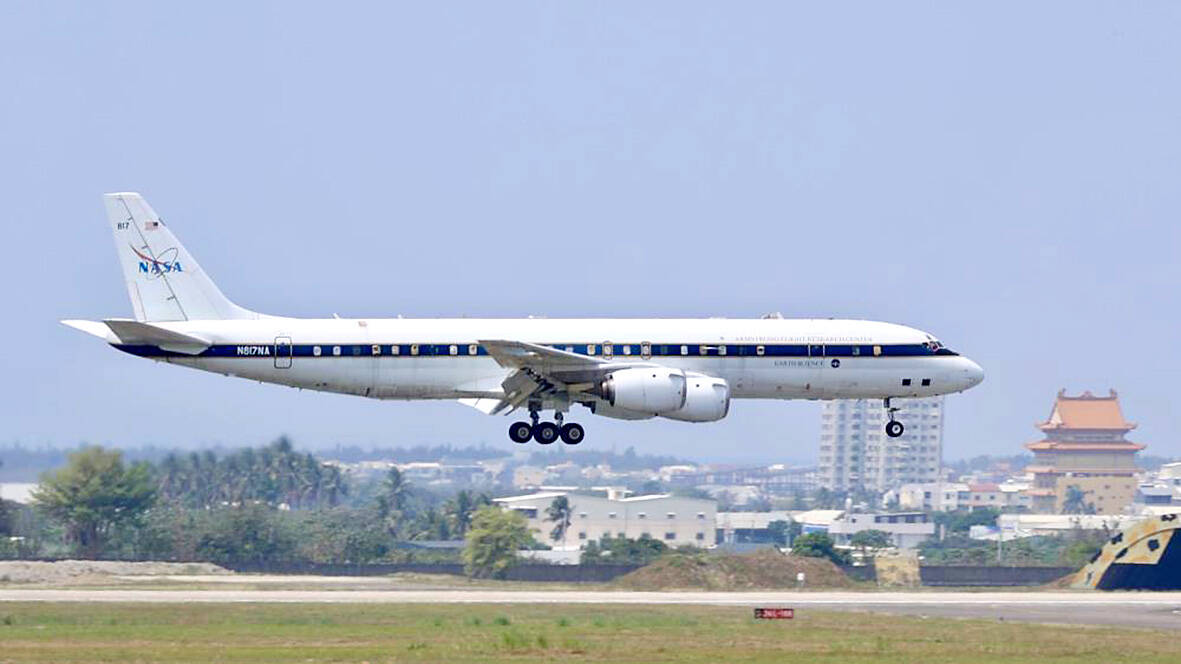
Photo courtesy of the Ministry of Environment
Other producers such as South Korea, whose jet fuel production is critical for many Southeast Asian and Pacific nations, India and Canada may also be involved in the war in various ways. Even if they stay out, fuel shipments may be blocked as the major powers fight it out across air and sea spaces from Madagascar to Alaska.
Another critical product lost to US President Donald Trump’s war is sulfuric acid. Important producers are Russia, the PRC, the US and India. Sulfuric acid is important in fertilizer production, but also in mining, a key industry in the Philippines and Indonesia, major producers of nickel and copper. Of course, it is used in semiconductor production.
One obvious inference is that in a Taiwan scenario, not only will the US have to provide broad logistical support, it will also have to schlepp in vital products, including fertilizer, fuels and food, to the Philippines, a net importer of all three, as well. Otherwise the US will have two collapsed allied economies on its hands. Other Southeast Asian states may require support as well.
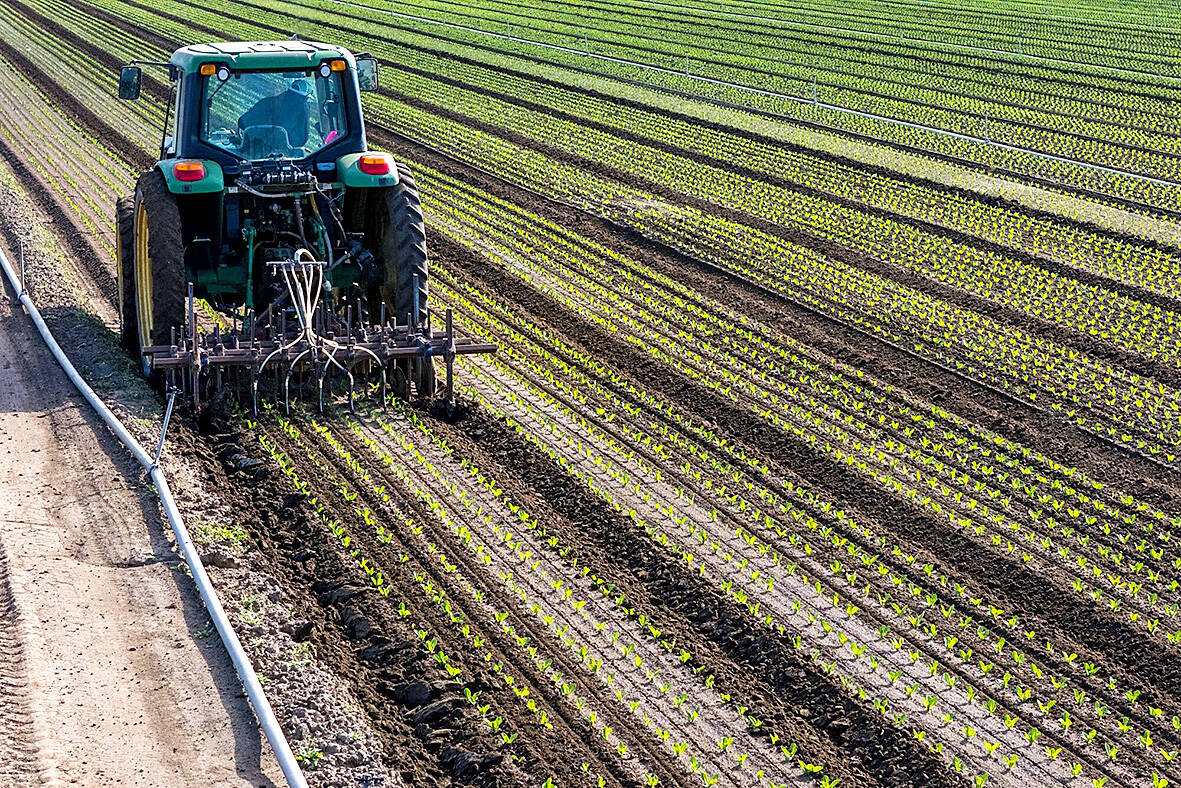
Photo: Bloomberg
Since the west coast of the Philippines is adjacent to the South China Sea, currently under PRC control, a port on the east side of Luzon will probably have to be used. US planners need to start pressing and perhaps funding the Philippines to enlarge and harden a couple of ports on the east side of Luzon, such as Legazpi’s currently inadequate port. The US should also be pushing the Philippines and Taiwan to cooperate more closely on logistics between Luzon and Taiwan, and on geothermal and renewable power exports to Taiwan.
The PRC will almost certainly work with its allies within the Philippines to incite domestic unrest in the case of widespread fuel shortages due to the PRC’s invasion of Taiwan. This will further complicate both wartime logistics and the Philippines’ support of Taiwan and US.
STRESSED ECONOMIES
Another aspect of the Taiwan scenario illuminated by the Iran war is pressure on the US to end the war quickly because Asian economies are under such deep stresses. For example, Australia has no strategic petroleum reserve, as such. Instead the government requires private producers to hold reserves. However, at present these may run out at the end of May. US allied states such as Australia, Japan and the Philippines, whether directly involved in a Taiwan scenario or not, will put pressure on the US in various ways, including attempting to cut deals with the PRC, to get Washington to stop fighting, just as we are seeing today with the Iran war. This will be especially true of Australia: its most important export destinations will all be at war with each other.
As Southeast Asian nations lurch towards economic collapse in the Taiwan scenario, they will not blame the PRC for invading, but the US and Japan for resisting (“if the US wasn’t fighting it would all be over in a few days!”). Moreover, they know that the US will be more amenable to pressure than the PRC. At home, as prices rise and shortages of Asian products develop, US leaders will face domestic pressure along with pressure from businessmen whose factories run on intermediate inputs from China.
If the US was concerned about making a case for fighting for Taiwan, the Iran war offers many fruitful insights. The effect on US prices is obvious to even the most clueless voter, and the loss of major intermediate inputs such as sulfur to US producers shows how businesses can suffer deep effects. Destruction of facilities in the Middle East will be mirrored in a Taiwan scenario in both Taiwan and in China. The US government should be explaining to its people how supporting Taiwan prevents these problems by stopping the war. It can draw on the Iran debacle to show what happens when important waterways are closed and critical production facilities are destroyed in war.
Further, because the PRC’s expansion will not stop at Taiwan, a fact that the US needs to be constantly pointing out to voters, the crisis will extend as long as the PRC expands. The US should start laying the groundwork internationally and domestically to show how PRC expansionist violence is the cause of the problem, not democratic resistance. A key component of this has to be the State Department speaking up regularly and forcefully about the PRC’s fake history.
A final lesson of the Iran war is how economic effects will shape war plans as the war develops. For example, destruction of PRC factories will affect the supply of everything from vitamin C to rare earths. Complicated pressures may arise where the US may demand that Taiwan refrain from destroying PRC factories in retaliation for PRC destruction of Taiwan’s facilities, because US manufacturers will need them after the war. Planning must begin now.
That’s right: the Iran war has made decoupling all the more urgent.
Notes from Central Taiwan is a column written by long-term resident Michael Turton, who provides incisive commentary informed by three decades of living in and writing about his adoptive country. The views expressed here are his own.
Ajay Verma, a consultant gastroenterologist at Kettering general hospital in Northamptonshire, says our gut is a “complex machine.” “It is constantly providing us with the nutrition we need, initially to grow and develop, and then for us to survive, thrive and repair from injury and illness.” How can we keep it functioning well? Put simply: “Make sure what you put into it is balanced, and that you clear out its waste products adequately,” Verma says. “In a general gastroenterology clinic, the most common conditions we see are irritable bowel syndrome (IBS), gastroesophageal reflux disease, inflammatory bowel disease and constipation,” says Nisha

And so, in the wake of US President Donald Trump’s trip to the People’s Republic of China (PRC), all the experts on the Strait of Hormuz suddenly became experts on US-China-Taiwan relations. The Internet has certainly expanded human knowledge. Lots of these sudden experts made noise this week about Trump’s words after the meeting with PRC dictator Xi Jin-ping (習近平). Trump is going to sell out Taiwan! Longtime Taiwan commentator J. Michael Cole summed the situation up neatly in the Guardian: “We need to keep in mind that he has a tendency to say many things — sometimes contradicting himself within

Last week US President Donald Trump was asked by a reporter whether he would speak on the phone to the President of Taiwan. “l’ll speak to him. I speak to everybody. We have that situation very well in hand,” Trump said. This marked the second time in a couple of weeks he had said he would talk to the President of Taiwan. In 2016 he famously took a call from then-president Tsai Ing-wen (蔡英文), when he was president-elect. Despite warnings that the apocalypse was nigh because of a phone call, the world quickly forgot about the conversation between two democratically-elected presidents.
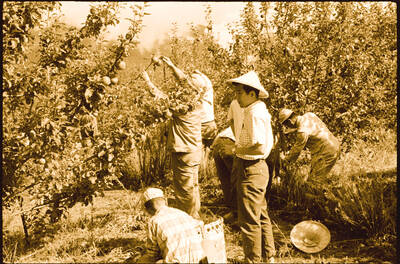
May 25 to May 31 Few believed that apples could be cultivated on a commercial scale in Taiwan’s high mountains. When horticulturalist Cheng Chao-hsiung (程兆熊) first proposed the idea in 1955, both American and Taiwanese colleagues dismissed it as implausible, arguing that temperate fruit could not be reliably grown on a subtropical island, especially on rugged terrain. However, it was this terrain in the Central Mountain Range where many Chinese Civil War veterans were resettled in the late 1950s. With limited job prospects and no family in Taiwan, they were placed on cooperative farms aimed toward self-sufficiency. Some say the conditions


 RSS
RSS